
When divers talk about the best dive sites in the Gili Islands, names like Shark Point, Turtle City, and Halik usually come up first.
Hans Reef is different.
It doesn’t have dramatic drift dives, not huge schools of fish and isn’t famous for sharks.
Instead, Hans Reef rewards divers who slow down.
This is a dive site for people who enjoy looking closely.
The magic is often hidden in plain sight.
And for underwater photographers, it can be one of the most rewarding dives in the Gili Islands.

Where is Hans Reef?
Hans Reef is located off the eastern coast of Gili Air.
The site sits in relatively shallow water and is protected from many of the stronger currents that affect some of the more exposed dive sites around the islands.
At first glance, the reef may not look particularly impressive.
There are no dramatic walls.
No deep canyons or spectacular drop-offs.
But that is exactly what makes Hans Reef special.
The site is all about the details.

What Does Hans Reef Look Like?
Hans Reef has a very different layout from most dive sites in the Gili Islands.
The dive often starts near the site’s main feature, a large coral formation known as The Brainiac. This coral-covered pinnacle acts as the centre point of the dive and is where many guides begin searching for marine life.
From The Brainiac, a chain of coral bommies and reef formations stretches both north and south. These coral structures are separated by sandy patches and rubble areas, creating ideal habitat for macro life. Much of the dive is spent slowly exploring these coral islands while searching for hidden critters.
Directly below The Brainiac, at around 21 metres, lies a small deeper reef. This area is well known amongst local guides and is often home to a resident leaf scorpionfish.
Following the reef south, divers eventually reach the end of the main coral formations. After approximately 40 metres, the reef appears to fade away into open sand. However, experienced guides know that this is where the dive becomes particularly interesting.
Turning away from the main reef and swimming towards the blue reveals a second, outer reef system. This outside reef is one of Hans Reef’s hidden highlights and is rarely explored by divers unfamiliar with the site.
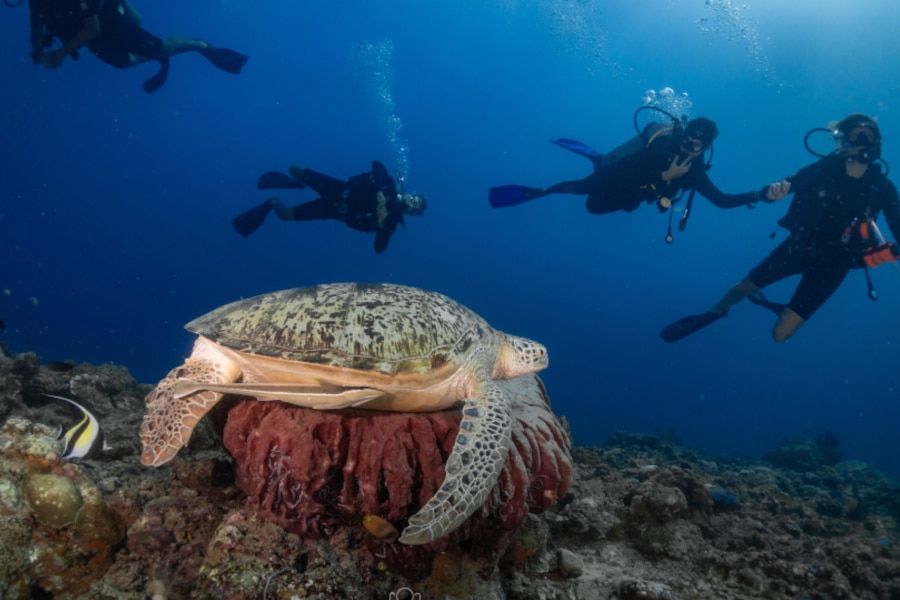
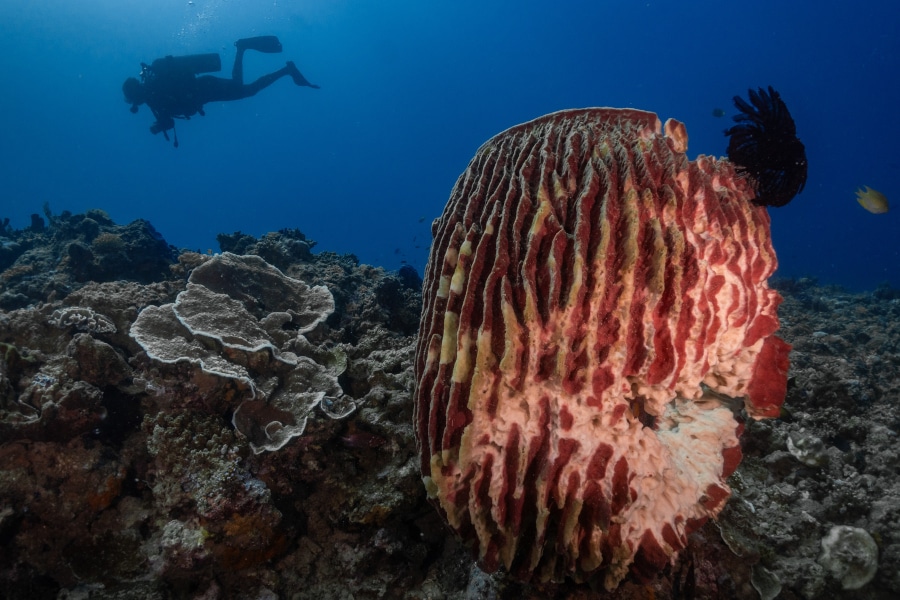
Large sponge corals dominate this area and provide shelter for some of Hans Reef’s most famous residents. Green sea turtles frequently use these giant sponges as resting places, often sleeping peacefully inside them during the day. Finding a sleeping turtle tucked away inside a sponge coral is one of the most memorable encounters the site has to offer.
The northern end of the reef offers something completely different. Here, divers will find several coral restoration projects that have become home to schools of juvenile fish, nudibranchs, pipefish, and countless other small reef creatures. These artificial reef structures continue to attract marine life and provide an interesting contrast to the natural reef formations found around The Brainiac and the outer reef.
This combination of coral bommies, sandy macro habitat, deeper reef sections, coral restoration projects, and the hidden outer reef gives Hans Reef far more variety than many divers expect from a macro dive site.

Why is Hans Reef Famous?
Hans Reef is also often called Frogfish Point.
For many years, the site became known for its frogfish sightings.
Divers travelled specifically to search for these strange and fascinating animals.
Frogfish are masters of camouflage.
They don’t swim much but just sit and wait.
Their appearance can vary dramatically depending on their surroundings.
Some look like sponges.
Others resemble algae-covered rocks.
Finding one can feel like discovering buried treasure.
However, the nickname can sometimes create unrealistic expectations.
Today, frogfish are less common at Hans Reef than they once were.
In recent years, local guides have often found more frogfish at Bounty Wreck and some of the macro dive sites along the nearby Lombok coast.
That doesn’t make Hans Reef any less interesting.
It simply means divers should appreciate the site for everything it offers, not just a single species.

A Paradise for Macro Divers
Hans Reef is one of the best macro dive sites in the Gili Islands.
Every dive feels like a treasure hunt.
One moment you are looking at a nudibranch.
The next you discover a leaf scorpionfish.
Then a shrimp no larger than your fingernail.
Ghost pipefish are regular visitors.
Flatworms are common.
Pipefish hide amongst the coral.
Scorpionfish blend perfectly into the reef.
Even experienced guides continue finding new surprises.
This is not a dive where you rush.
The slower you move, the more you see.
Why Photographers Love It
Hans Reef is a dream for underwater photographers.
Macro subjects are everywhere.
Visibility is often good.
Currents are generally manageable.
And the shallow depth allows for long dive times.
Photographers can spend several minutes with a single subject without worrying too much about air consumption or no-decompression limits.
Many divers leave Hans Reef with memory cards full of images despite covering very little distance underwater.
Sometimes the best dive is the one where you hardly move at all.
The Importance of a Good Guide
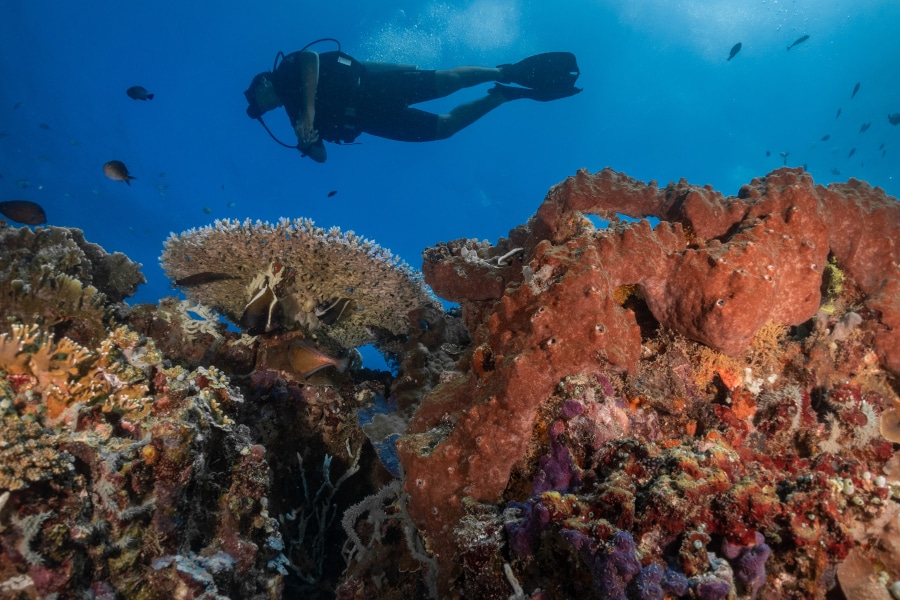
Hans Reef is one of those dive sites where a knowledgeable guide makes a huge difference.
To an untrained eye, much of the reef can appear ordinary.
But experienced local guides know exactly where to look.
They know which coral bommies often hide ghost pipefish.
Or where leaf fish like to sit.
They know which rubble patches regularly produce unusual critters and where to find the sleeping turtles on the outer reef.
A good guide can transform the dive from enjoyable to exceptional.
Who Should Dive Hans Reef?
Almost anyone can enjoy Hans Reef.
The shallow depth and generally mild conditions make it suitable for beginners.
Macro enthusiasts love it.
Marine life nerds love it.
Even divers who normally prefer larger animals often find themselves surprised by how interesting the smaller creatures can be.
It is also an excellent second or third dive of the day when divers want something slower and more relaxed.
Is Hans Reef Worth Diving?
Absolutely.
In fact, many divers make the mistake of judging Hans Reef only by its reputation for frogfish.
That misses the point entirely.
The site is valuable because of its diversity.
Every dive is different.
Every coral bommie has the potential to reveal something unexpected.
And unlike many famous dive sites, Hans Reef rarely feels crowded during the morning.
It remains one of the quieter and more underrated dives in the Gili Islands.
When Is the Best Time to Dive Hans Reef?
Hans Reef can be dived throughout the day, but most guides agree that morning dives are the best.
Visibility is often at its clearest.
Marine life tends to be more relaxed.
And the site is generally much quieter.
In the afternoon, Hans Reef can become busy as many dive centres from Gili Air schedule dives here. While the reef remains enjoyable, the increased diver traffic can make the experience feel less intimate.
For the best visibility and the most relaxed conditions, early morning is hard to beat.
If you’d like to discover more of the incredible underwater world surrounding the islands, be sure to explore our Complete Guide to Dive Sites in the Gili Islands, where you’ll find detailed information on Shark Point, Turtle City, Deep Turbo, Halik Reef, Meno Wall, and many other dive sites around Gili Trawangan, Gili Meno, Gili Air, and Lombok.