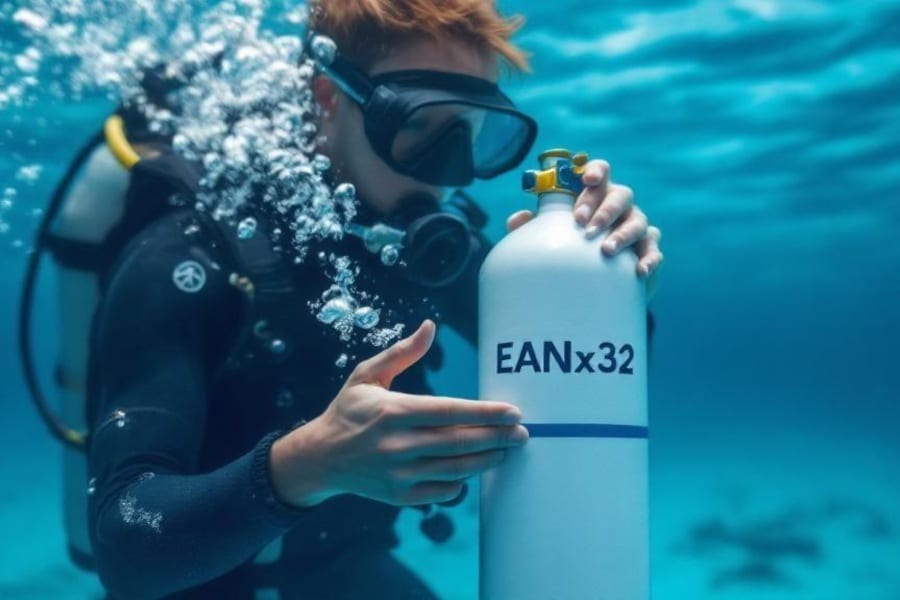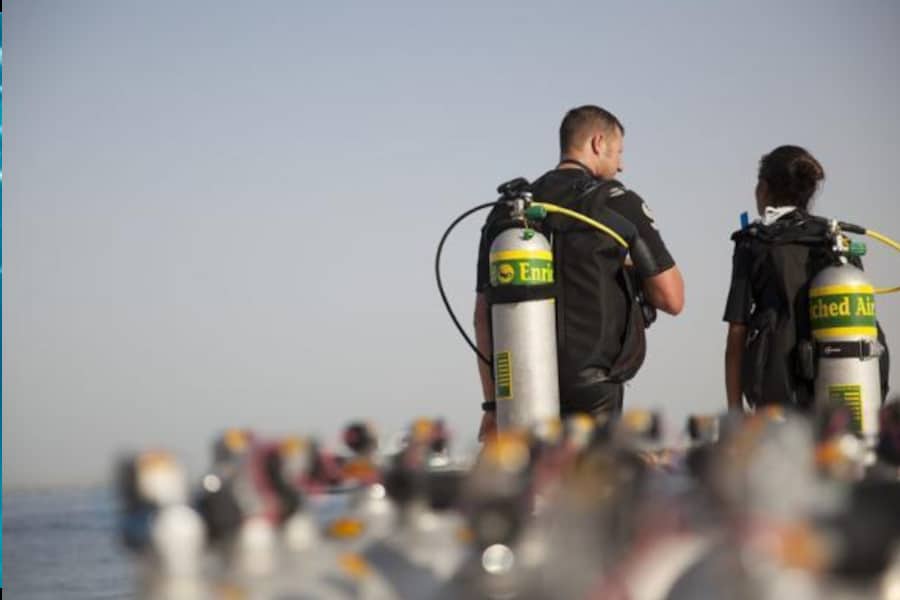

For new divers, Nitrox can sound a little intimidating — almost like something only technical divers use deep underwater. But the truth is much simpler. Enriched air is just another breathing gas, and for many recreational divers, it can make diving more comfortable and enjoyable.
At Divine Divers Gili Meno, Nitrox has become increasingly popular among divers exploring the beautiful reefs of the Gili Islands. Especially during dive holidays with multiple dives per day, many divers quickly discover why enriched air has such a loyal fan base.
So, What Exactly Is Nitrox?
Normal air tanks contain around 21% oxygen and 79% nitrogen. Nitrox — also called Enriched Air Nitrox — simply contains a higher percentage of oxygen and less nitrogen.
The most common mixes are:
- Nitrox 32 (32% oxygen)
- Nitrox 36 (36% oxygen)
The important part is not really the extra oxygen. It is the reduced nitrogen.
When we dive, our body absorbs nitrogen because of the increased underwater pressure. The deeper and longer we stay underwater, the more nitrogen we absorb. Too much nitrogen can increase fatigue and, in serious situations, contribute to decompression sickness.
Because Nitrox contains less nitrogen, divers absorb less nitrogen during their dives.
That is why so many people love it.
Why Divers Use Nitrox
One of the biggest advantages of Enriched Air is longer no-decompression limits. In simple terms, divers can stay at intermediate depths (between 20 and 30 meters) longer before their dive computer tells them it is time to go up.
This becomes especially useful on dive holidays. Places like Gili Meno are perfect for repetitive diving. Warm water, easy conditions, and beautiful reefs make it tempting to dive several times a day.
Many divers also say they feel less tired after diving Nitrox. Scientifically, opinions are mixed, but experienced divers often notice they feel more refreshed after multiple dives compared to regular air.
And honestly, after a full day of diving, sunsets, and island life in the Gilis, feeling slightly less exhausted can make a big difference.
Another reason divers choose Nitrox is simply peace of mind. Even when they do not stay at depth longer, some divers enjoy knowing they are absorbing less nitrogen overall. It creates a slightly more conservative dive profile, which many people appreciate.
But Enriched Air Also Has Disadvantages
Nitrox is not perfect, and it is important to understand its limitations.
The biggest disadvantage is depth.
While oxygen enriched air reduces nitrogen, the higher oxygen content creates another concern: oxygen toxicity. At deeper depths, oxygen can become dangerous under pressure. Because of this, Nitrox has shallower maximum depth limits than regular air.
For recreational diving, this is usually not a problem. Most dives around the Gili Islands stay well within safe Nitrox limits. But it does mean divers need proper training and must pay attention to their dive computer settings. Find your Nitrox dive ite here.
Nitrox also costs slightly more than regular air because producing enriched air requires additional equipment and testing.
Is Nitrox Worth It?
For many divers, absolutely.
The PADI Nitrox course is one of the easiest and most useful scuba specialties available. It only takes a short time to complete, but the benefits can improve almost every future dive trip.
At Divine Divers Gili Meno, many divers choose to complete their Nitrox certification while enjoying the relaxed island atmosphere of Gili Meno.
In the end, Nitrox is not about diving deeper or pushing limits. It is about diving smarter, feeling better after repetitive dives, and enjoying more time underwater doing what we all came here for — exploring the ocean.