
Most people imagine the Gili Islands as perfect tropical paradise.
White sand beaches. Turquoise water. Turtles swimming over coral reefs.
And honestly, many days really do feel like that.
But there is another side to island life that travelers also need to understand.
Plastic pollution.
Especially during rainy season.
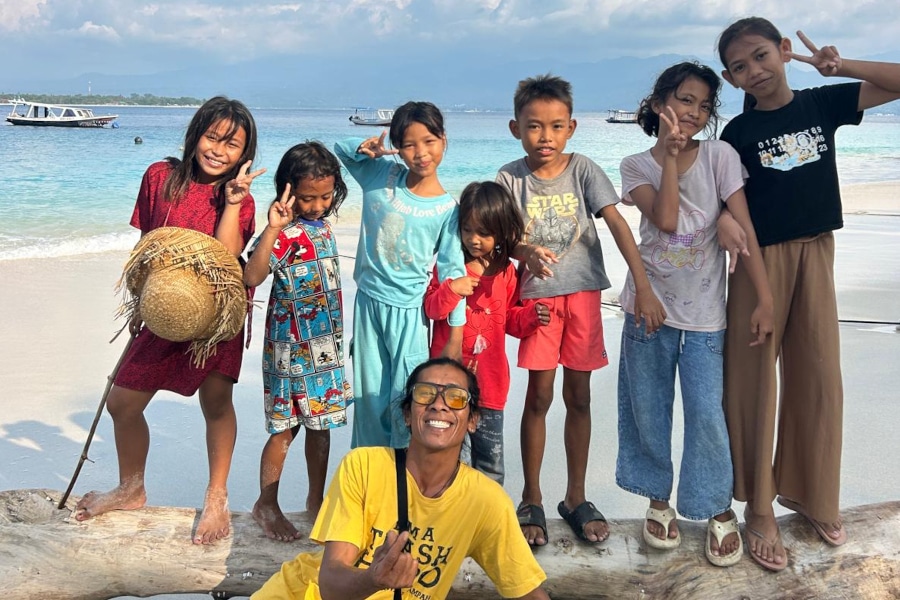
At Trash Hero, volunteers around the world work to reduce waste, organize cleanups, and create awareness about plastic pollution in coastal communities. And in places like the Gilis, that work matters enormously.
Because islands do not create all the trash that washes onto their beaches.
Much of it arrives from elsewhere.
Why the Plastic Problem Gets Worse During Rainy Season
During rainy season, rivers on mainland Lombok and nearby islands carry huge amounts of waste toward the ocean.
Then currents and weather patterns push much of that plastic back onto beaches around the Gilis.
Some mornings during the rainy season, beaches can suddenly look completely different overnight.
- Plastic bottles.
- Food packaging.
- Flip-flops.
- Fishing rope.
- Plastic bags.
And honestly, it can feel shocking for travelers who only expected postcard-perfect beaches.
Many resorts will clean the beaches twice a day but there is also the beaches that are not occupied by resorts.
The difficult reality is that ocean pollution is not isolated to one island or one country. Marine currents connect everything.
Even islands trying hard to stay clean are affected by waste drifting through the ocean.
The Trash Hero Gili Meno Initiative
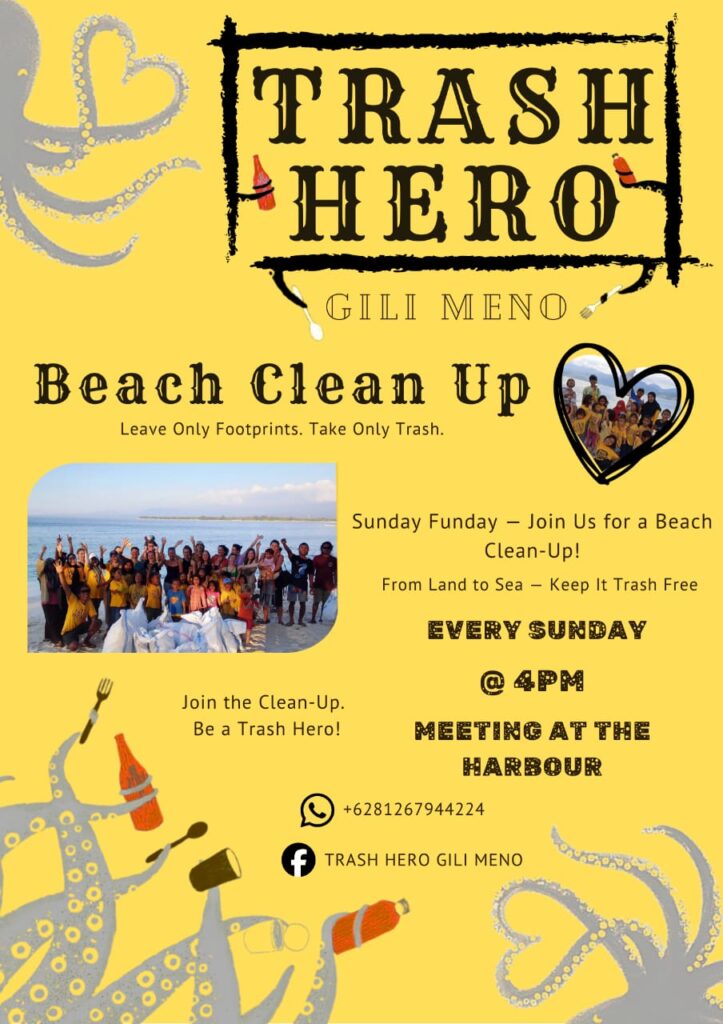
On Gili Meno, the local Trash Hero initiative has become an important part of the community.
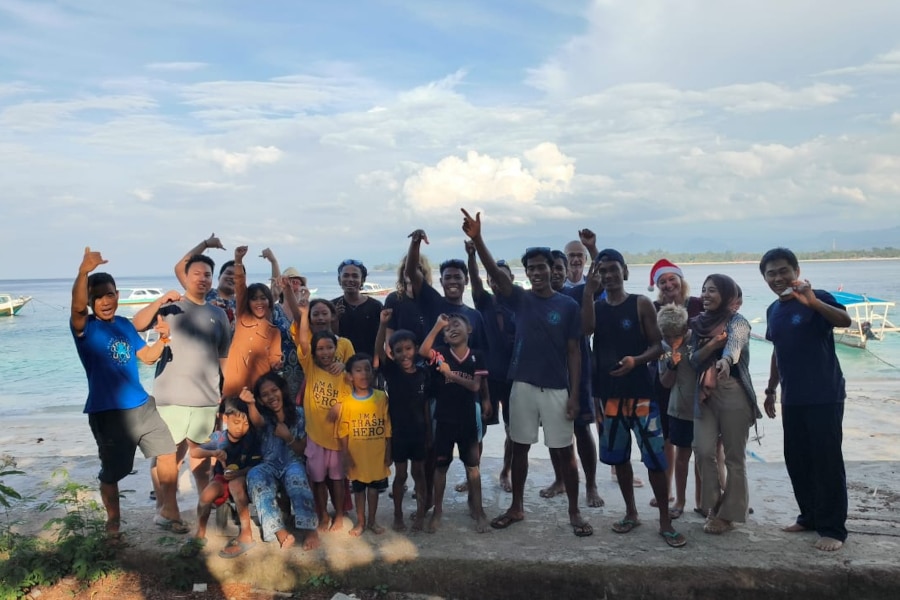
Every Sunday at 16.00, volunteers gather to clean beaches, collect rubbish, and help reduce the amount of plastic entering the ocean around the island.
And honestly, the cleanups are about much more than simply picking up trash.
They bring together locals, kids, businesses, divers, travelers, and residents who all care deeply about protecting the island. Some people join once during their holiday. Others return every single week.
The atmosphere is surprisingly positive and social despite the serious environmental problem behind it.
Because seeing people actively care about the island gives many visitors hope.
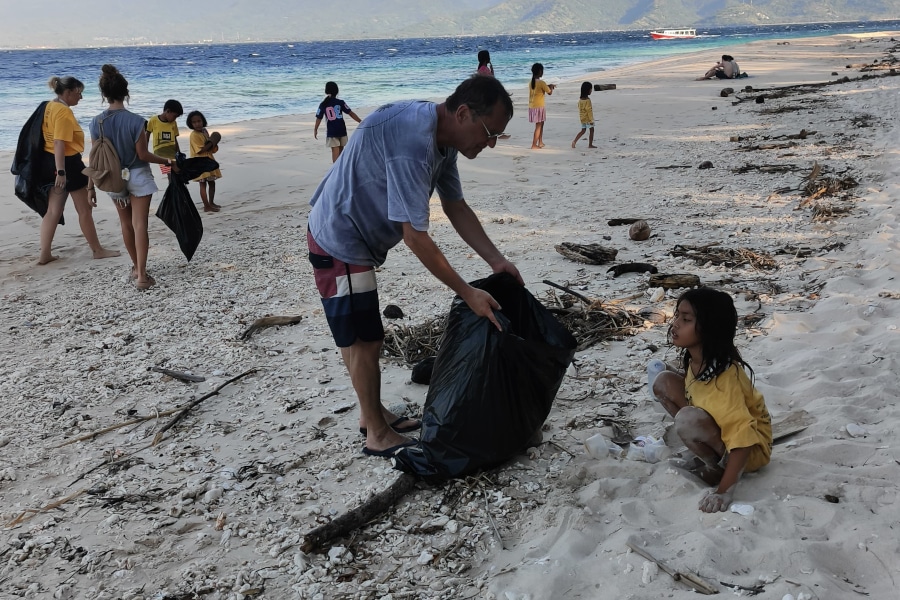
At Divine Divers Gili Meno, environmental awareness has become an increasingly important part of island life too. Divers see firsthand how plastic affects reefs, turtles, and marine ecosystems underwater.
Why This Matters So Much
Plastic pollution is not only an aesthetic problem.
It directly affects marine life.
Turtles mistake plastic bags for jellyfish. Coral reefs become damaged by trapped waste. Fish ingest microplastics. Birds become entangled in fishing line or packaging.
And once plastic enters the ocean, it does not simply disappear.
It breaks down slowly into smaller and smaller pieces that become almost impossible to fully remove.
For places that depend heavily on tourism and healthy marine ecosystems, this becomes a serious long-term challenge.
The reefs around the Gili Islands are the reason many people visit in the first place. Protecting them is not optional.
What Travelers Can Do
Most visitors genuinely want to help once they understand the problem.
And honestly, the best changes are often very simple:
- Refill reusable water bottles
- Avoid single-use plastics
- Join local beach cleanups
- Use reef-safe sunscreen
- Dispose of trash responsibly
- Support environmentally conscious businesses
None of these actions alone will solve ocean pollution.
But collectively, they reduce pressure on fragile island ecosystems.