
One of the first things divers hear about the Gili Islands is that they have currents.
For some visitors, especially newly certified divers, this can sound intimidating. In reality, currents are one of the reasons why diving in the Gili Islands is so spectacular.
The movement of water brings nutrients, improves visibility, supports healthy coral reefs, and attracts marine life ranging from sea turtles and reef sharks to schools of fusiliers, barracuda, and occasionally eagle rays.
Understanding how currents work can help divers feel more confident and appreciate why the Gili Islands have become one of Indonesia’s most popular diving destinations.
Why Are There Currents in the Gili Islands?
The Gili Islands are located between Bali and Lombok, two large islands separated by the Lombok Strait.
The Lombok Strait forms part of the Indonesian Throughflow, a massive movement of water that connects the Pacific Ocean with the Indian Ocean. As tides rise and fall, large volumes of water move through the channels surrounding the Gili Islands.
This constant exchange of water creates the currents that divers experience throughout the year.
Unlike some destinations where currents are unpredictable, the majority of current movement around the Gili Islands follows tidal patterns and can usually be anticipated by experienced dive professionals.
Are Currents Dangerous?
Not necessarily.
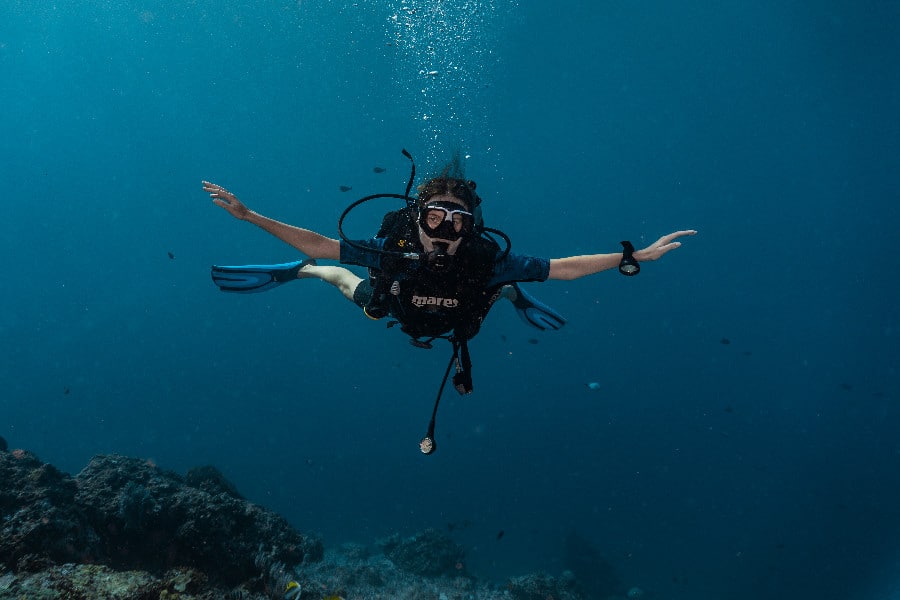
Most diving in the Gili Islands is conducted as drift diving, meaning divers simply move with the current rather than swimming against it.
In many cases, diving in a gentle current is actually easier than swimming in still water because the current does most of the work.
Professional dive centres carefully monitor conditions and choose dive sites based on the experience level of their divers. Sites with stronger currents are generally reserved for experienced divers, while beginners are taken to locations with more manageable conditions.
For newly certified divers, understanding that currents are a normal part of diving in the Gili Islands often helps remove much of the initial concern.
The Benefits of Currents
Currents are one of the main reasons the reefs around the Gili Islands remain so vibrant.
Moving water delivers oxygen and nutrients to corals while carrying plankton that feeds countless marine organisms. Areas exposed to moderate currents often support larger schools of fish and more active marine life than sheltered reefs.
Currents can also improve visibility by flushing suspended particles away from the reef.
This is one reason why dive sites such as Shark Point, Halik Reef, and Sunset Reef often enjoy some of the clearest water in the region.
For many experienced divers, a gentle drift dive is one of the most enjoyable forms of diving because it allows them to effortlessly explore large sections of reef while conserving energy.
Incoming and Outgoing Tides
The direction and strength of currents around the Gili Islands are largely influenced by tidal movement.
As the tide rises, water flows in one direction. As the tide falls, the current reverses and flows in the opposite direction.
This means that the same dive site can feel completely different depending on the stage of the tide.
Experienced dive guides carefully plan dives around these tidal changes to maximise comfort, safety, and marine life encounters.
Drift Diving in the Gili Islands
Many of the most famous dive sites in the Gili Islands are drift dives.
During a drift dive, divers enter the water at one point and allow the current to gently carry them along the reef. The dive boat follows the group and collects them at the end of the dive.
This style of diving is particularly common at sites such as:
- Shark Point
- Halik Reef
- Sunset Reef
- Deep Turbo
- Soraya Reef
For many divers, drift diving quickly becomes one of the highlights of their trip.
Instead of focusing on swimming, divers can relax and concentrate on marine life, coral formations, and underwater photography.
Would you like to learn more about scuba diving the Gili Islands? Check our complete guide.
Thermoclines
Occasionally divers in the Gili Islands experience a phenomenon known as a thermocline.
A thermocline occurs when water layers of different temperatures meet. As divers pass through these layers, the temperature can suddenly drop by several degrees.
Visibility may also appear distorted for a brief moment as the two water masses mix.
Thermoclines are completely normal and often indicate the movement of nutrient-rich water through the area.
Downcurrents and Upcurrents
Although uncommon, divers occasionally encounter vertical water movement.
An upcurrent pushes water upward, while a downcurrent pushes water downward.
These conditions are most likely to occur near walls, reef corners, or areas where strong tidal flows interact with underwater topography.
When encountered, the best approach is to remain calm, stay close to the reef, follow your guide’s instructions, and adjust buoyancy as necessary.
Professional dive guides are trained to recognise and avoid conditions where strong vertical currents may occur.
Which Dive Sites Have the Strongest Currents?
While conditions vary daily, the following sites are generally considered the most current-exposed:
Deep Turbo
One of the most dynamic dive sites in the Gili Islands, known for stronger currents, deeper profiles, and large schools of fish.
Soraya Reef
An advanced drift dive where currents can occasionally become challenging.
Shark Point
Current strength varies considerably but can produce excellent shark encounters when water movement increases.
Halik Reef
Usually manageable but capable of producing stronger drift dives during certain tidal phases.
Currents and Marine Life
Many of the marine life encounters that make the Gili Islands famous are directly linked to currents.
Reef sharks often patrol areas with stronger water movement.
Large schools of fusiliers, trevallies, and barracuda gather where currents concentrate food.
Sea turtles frequently use current-protected areas to rest while cleaner fish establish stations in locations with reliable water flow.
In other words, the same currents that concern some new divers are often the reason for the incredible marine life encounters they experience underwater.
Final Thoughts
Currents are a natural and important part of diving in the Gili Islands.
Far from being something to fear, they help create the healthy reefs, excellent visibility, and abundant marine life that attract divers from around the world.
With experienced guides, proper dive planning, and a basic understanding of how currents work, divers of all levels can safely enjoy one of the most exciting aspects of diving in the Gili Islands.
For many visitors, their first drift dive quickly becomes one of the most memorable dives of their entire trip.