


Almost everybody knows Nemo.
The little orange clownfish from the Finding Nemo introduced millions of people to coral reefs, sea turtles, sharks, and life beneath the ocean surface.
And honestly, the movie deserves a lot of credit.
Many divers and marine biologists first became fascinated by the ocean because of it.
But if Nemo had been a real clownfish, the story would have looked very different.
Very different.
Let’s take a look at what Pixar got right—and what real clownfish would have done instead.
Nemo’s Dad Would Have Become His Mom
Let’s start with the biggest one.
At the beginning of the movie, Nemo’s mother Coral dies, leaving Marlin alone to raise Nemo.
Heartbreaking.
But biologically impossible.
Why?
Because clownfish are sequential hermaphrodites.
All clownfish are born male.
Within a clownfish family, the largest fish becomes the breeding female, while the second-largest fish becomes the breeding male.
If the female dies, the dominant male changes sex and becomes female.
The next-largest juvenile then becomes the breeding male.
So in real life, shortly after Coral’s death:
Marlin would have become female.
And Nemo would eventually have become her breeding partner.
Yes.
That gets awkward very quickly.
Probably not quite the family-friendly storyline Pixar was aiming for.
Nemo Would Never Have Been an Only Child
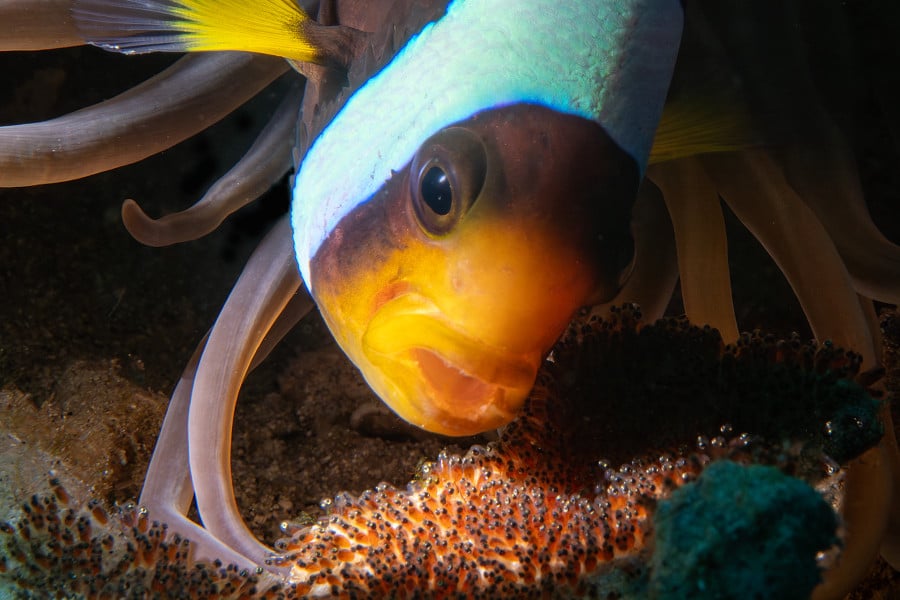
Real clownfish lay hundreds or even thousands of eggs at a time.
While many of those eggs do not survive, it would be extremely unusual for a single baby clownfish to remain.
In reality, Nemo would likely have grown up surrounded by brothers and sisters.
The movie simply focused on one fish to keep the story easier to follow.
Which is probably fair.
Finding Several Hundred Nemos would have been a much longer film.
Clownfish Rarely Leave Their Anemone
One of the biggest adventures in the movie is Nemo and Marlin traveling enormous distances across the ocean.
Real clownfish would never voluntarily do this.
Clownfish are homebodies.
Extremely home-oriented homebodies.
Most spend their entire lives within a few meters of the same sea anemone.
Some clownfish never venture more than a few body lengths away from their host.
To them, leaving the anemone is basically the equivalent of moving to another planet.
The Anemone Is Their Fortress
The relationship between clownfish and sea anemones is one of the most famous partnerships in nature.
The stinging tentacles of the anemone protect the clownfish from predators.
In return, the clownfish help keep the anemone clean and may even defend it from certain threats.
Without their anemone, clownfish become much more vulnerable.
Which is why Nemo’s cross-ocean journey is even less realistic.
A real clownfish would probably spend most of the trip desperately trying to find another anemone.
Clownfish Are Surprisingly Aggressive
Nemo is adorable.
Real clownfish?
Sometimes not so much.
Ask any diver or underwater photographer.
Clownfish are famous for aggressively defending their anemones.
Despite being tiny, they will often charge at fish, divers, cameras, and anything else they perceive as a threat.
Many underwater photographers have been “attacked” by clownfish far smaller than their hand.
And honestly, their confidence is impressive.
Meeting Nemo on the Gili Islands
One of the great things about diving and snorkeling around the Gili Islands is that you do not have to travel across the ocean to find Nemo.
He is already here.
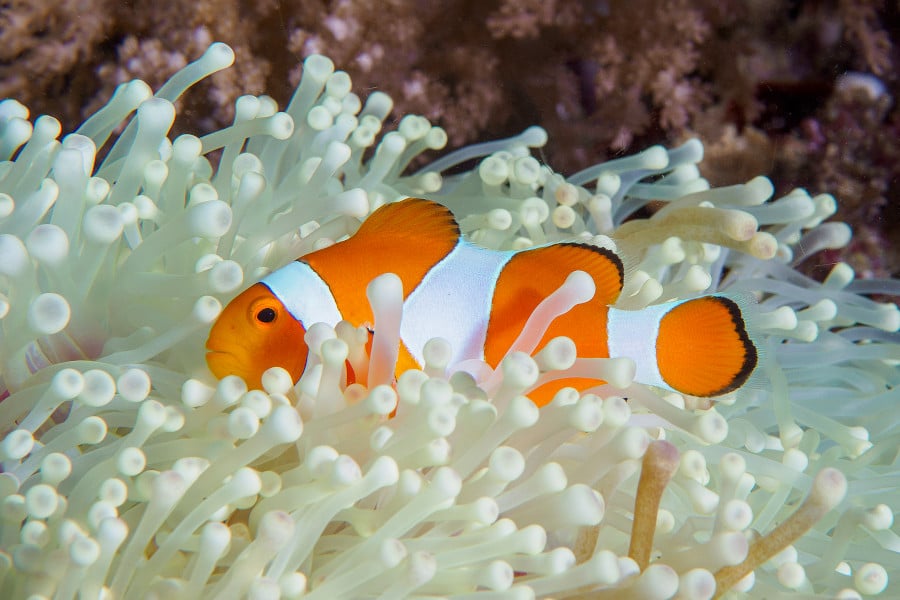
Anemonefish are commonly found throughout the reefs surrounding the Gilis, particularly around healthy coral gardens where sea anemones provide shelter and protection. Divers and snorkelers regularly spot them at sites such as:
- Halik Reef
- Hans Reef
- Turtle Heaven
- Sunset Reef
- Bounty Wreck
Once you know what to look for, they are surprisingly easy to find.
Look for a sea anemone gently waving in the current and chances are a pair of clownfish will be peeking out from between the tentacles.
The best part?
You do not even need to scuba dive to see them.
Many of the shallow reefs around Gili Meno are accessible directly from shore, allowing snorkelers to observe clownfish in their natural habitat only a few meters from the beach.
And unlike in the movie, these little fish rarely venture far from home.
Spend a few minutes watching them and you will quickly notice their personalities. They dart in and out of their anemone, defend their territory with surprising confidence, and carefully keep watch over their underwater home.
For underwater photographers, clownfish are often among the first reef fish they learn to photograph. Their bright orange colors stand out beautifully against the greens, purples, and browns of the anemone tentacles.
After learning the real story behind Nemo, spotting an anemonefish on the reefs of the Gilis becomes even more fascinating.
Because hidden inside that tiny orange fish is one of the most remarkable life stories on the entire reef.