


Table of Contents
The Gili Islands are home to some of Indonesia’s most accessible and diverse scuba diving. Despite covering a relatively small area, the waters surrounding Gili Trawangan, Gili Meno, and Gili Air offer an impressive variety of dive sites, ranging from shallow turtle-filled reefs and colourful coral gardens to exhilarating drift dives, artificial reefs, and shark encounters.
One of the unique advantages of diving in the Gili Islands is that most dive sites can be reached within just a few minutes by boat. This allows divers to experience a remarkable range of underwater environments during a single holiday, regardless of which island they choose as their base.
Whether you are a newly certified Open Water diver searching for calm conditions and abundant marine life, an underwater photographer looking for rare macro creatures, or an experienced diver seeking stronger currents and pelagic encounters, there is a dive site suited to your interests and experience level.
In this guide, you’ll find detailed information on the most popular dive sites in the Gili Islands, including depth ranges, current conditions, marine life highlights, photography opportunities, and recommendations for different experience levels. We’ve also included local insights gathered from thousands of dives around the islands to help you choose the right dive site for your next underwater adventure.
From the famous turtle encounters of Turtle City and Meno Wall to the shark-filled reefs of Shark Point and the exciting drift dives of Halik, this guide covers everything you need to know about diving the Gili Islands. And if you would still like to learn more check our complete guide to scubadiving the Gili Islands.
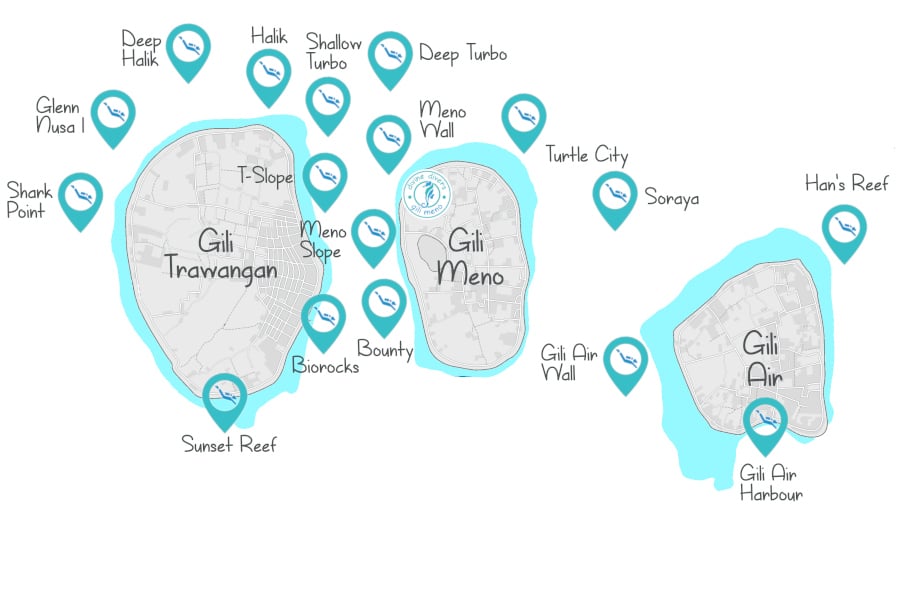
Dive Site Map
The dive sites of the Gili Islands are spread around Gili Trawangan, Gili Meno, Gili Air, and the northwest coast of Lombok. While most sites can be reached within a short boat ride, their location, underwater topography, and exposure to currents vary considerably.
Quick Comparison Table
With more than 15 dive sites spread across the Gili Islands and the nearby coast of Lombok, choosing where to dive can sometimes feel overwhelming. This quick comparison table provides an at-a-glance overview of depth, current strength, marine life, photography opportunities, and experience level requirements, helping you identify the dive sites that best match your interests and certification level.
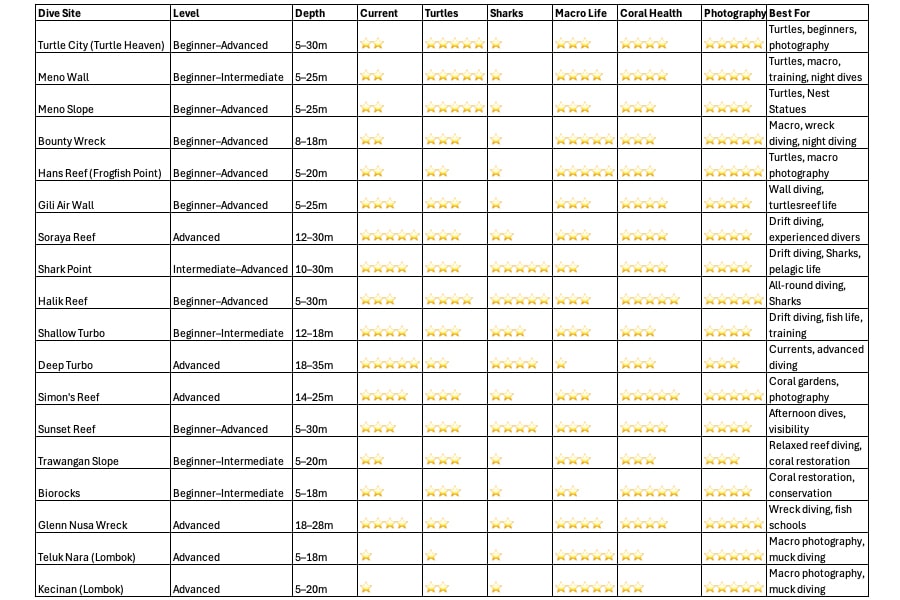
Current Rating Guide
⭐ Minimal Current – Suitable for beginners and training dives
⭐⭐ Mild Current – Suitable for beginners and training dives
⭐⭐⭐ Moderate Drift – Some drift diving experience beneficial
⭐⭐⭐⭐ Strong Drift – Best suited to confident certified divers
⭐⭐⭐⭐⭐ Advanced Conditions – Experienced divers only, conditions can vary significantly
If you would like to get a deeper understanding of currents o the Gili Islands please check here.
Best Dive Sites for Beginners
The Gili Islands are one of the best places in Indonesia to learn scuba diving, thanks to warm water, excellent visibility, and a number of beginner-friendly dive sites. Turtle City (Turtle Heaven), Meno Wall, Halik, and Bounty Wreck are particularly well suited to newly certified divers and students.
These sites typically feature shallow depths, manageable currents, and abundant marine life, including sea turtles, reef fish, and healthy coral reefs.
Even experienced divers continue to enjoy these sites due to their rich biodiversity and excellent photography opportunities. Learn more here.
Best Dive Sites for Experienced Divers
Divers seeking stronger currents, deeper profiles, and more dynamic conditions will find plenty to explore in the Gili Islands.
Shark Point, Deep Turbo, Soraya Reef, and Glenn Nusa Wreck are among the most challenging and rewarding dive sites in the region. These sites often attract larger schools of fish, reef sharks, eagle rays, and other pelagic visitors.
Stronger currents can create exhilarating drift dives and provide some of the most exciting underwater encounters available around the islands. Learn more here.
Best Dive Sites for Turtle Encounters
Sea turtles are the undisputed stars of diving in the Gili Islands, and several sites are famous for their reliable turtle sightings. Turtle City (Turtle Heaven) is widely regarded as the best turtle dive site in the region, often producing multiple encounters during a single dive. Meno Wall, Meno Slope, and Halik Reef are also excellent choices, with green sea turtles frequently seen resting beneath coral ledges, grazing on algae, or surfacing for air.
Hawksbill turtles are less common but can often be spotted around Turtle City, Bounty Wreck, and Sunset Reef. Learn more about turtle diving dive sites here.
Best Dive Sites for Shark Encounters
While the Gili Islands are not a destination for large predatory sharks, they offer excellent opportunities to observe whitetip and blacktip reef sharks in their natural habitat.
Shark Point is the most famous shark dive site and regularly delivers sightings of both species. Halik Reef, Deep Turbo, and Sunset Reef also provide reliable shark encounters, particularly when currents are present.
These graceful predators are naturally shy and are an important indicator of the healthy marine ecosystems found around the islands. Learn more here.
Best Dive Sites for Macro Photography
Beyond turtles and sharks, the Gili Islands hide an impressive world of small and unusual marine creatures.
Hans Reef (Frogfish Point) is the premier macro site, famous for frogfish, leaf fish, nudibranchs, shrimp, and other cryptic species.
Bounty Wreck, Meno Wall, and Meno Slope are also popular among underwater photographers searching for nudibranchs, ghost pipefish, scorpionfish, and juvenile reef species.
An absolute macro diving highlight is located just across the water on Lombok, only a 25-minute boat ride away. Kecinan, Teluk Nare and Mentigi Bay are outstanding dive sites for macro photographers, with an incredible variety of small and unusual marine life.
Individual Dive Sites of the Gili Islands
From turtle-filled coral gardens and colourful reef walls to exhilarating drift dives and fascinating macro hotspots, the Gili Islands offer a remarkable variety of underwater experiences.
Explore the dive site guides below to discover what makes each site unique and find the perfect dive for your interests and experience level.
Turtle Heaven / Turtle City (Gili Meno)
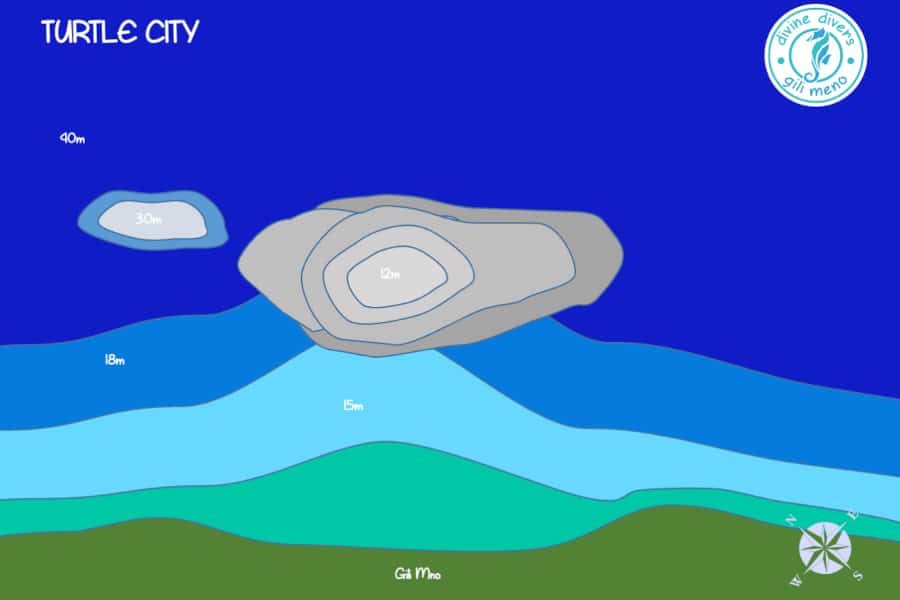
Depth: 5–30 metres
Level: Beginner to Advanced
Turtle City, also known as Turtle Heaven, is arguably one of the most famous dive sites in the Gili Islands and one of the best places in Indonesia to encounter sea turtles.
Located on the northern side of Gili Meno, the site features a gently sloping reef covered in healthy hard corals, soft corals, sea fans, and patches of sand.
The site earned its name thanks to its remarkable turtle population.
Green sea turtles are encountered on the vast majority of dives, often resting beneath coral ledges, grazing on algae, or swimming effortlessly across the reef.
Hawksbill turtles have also become increasingly common in recent years, making it possible to observe both species during a single dive.
Beyond its famous turtles, Turtle City supports an impressive variety of marine life.
Divers regularly encounter cuttlefish, octopus, moray eels, sweetlips, surgeonfish, parrotfish, and large schools of fusiliers. During certain times of the year, bumphead parrotfish, eagle rays, and even reef sharks make occasional appearances.
The site’s gentle slope allows dive profiles suitable for every experience level.
Shallow sections are ideal for beginners, Open Water students, and underwater photographers, while deeper areas offer interesting terrain for experienced divers and specialty training dives.
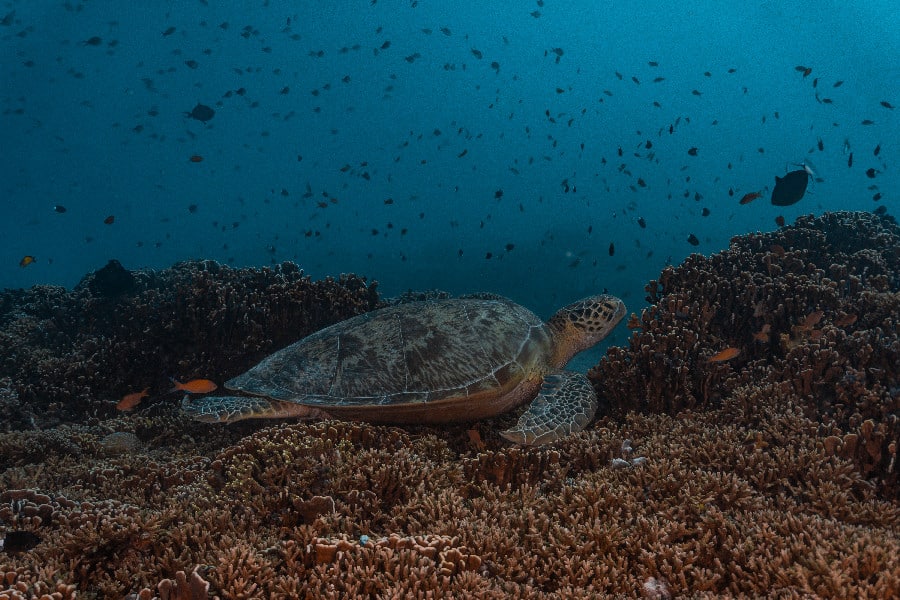
Highlights
- Green sea turtles
- Hawksbill turtles
- Healthy coral gardens
- Excellent visibility
- Ideal for underwater photography
Insider Tip
Morning dives often provide the quietest conditions and some of the best turtle encounters, before increased boat activity later in the day.
Turtle City at a glance
| Maximum depth | 35 meters (for advanced and deep specialty), best in between 5 and 25 meters |
| Typical visibility | 20-35 meters |
| Current strength | low to medium |
| Best marine life | Turtles, Octpus, Cuttle fish, Anemone fish, Scorpion fish, Moray eels, bumphead parrot fish |
| Certification level | All levels |
Shark Point (Gili Trawangan)
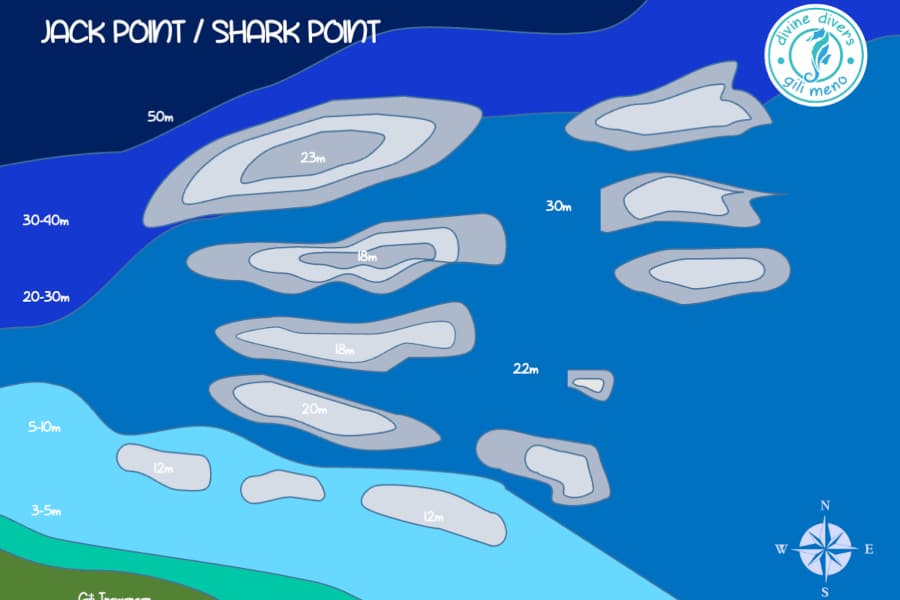
Depth: 10–30 metres
Level: Intermediate to Advanced
Shark Point is one of the most iconic dive sites in the Gili Islands and a favourite among experienced divers.
Located off the northern coast of Gili Trawangan, the site consists of a series of reef slopes, ridges, and coral-covered outcrops that attract an abundance of marine life.
As its name suggests, Shark Point is best known for its reef shark encounters.
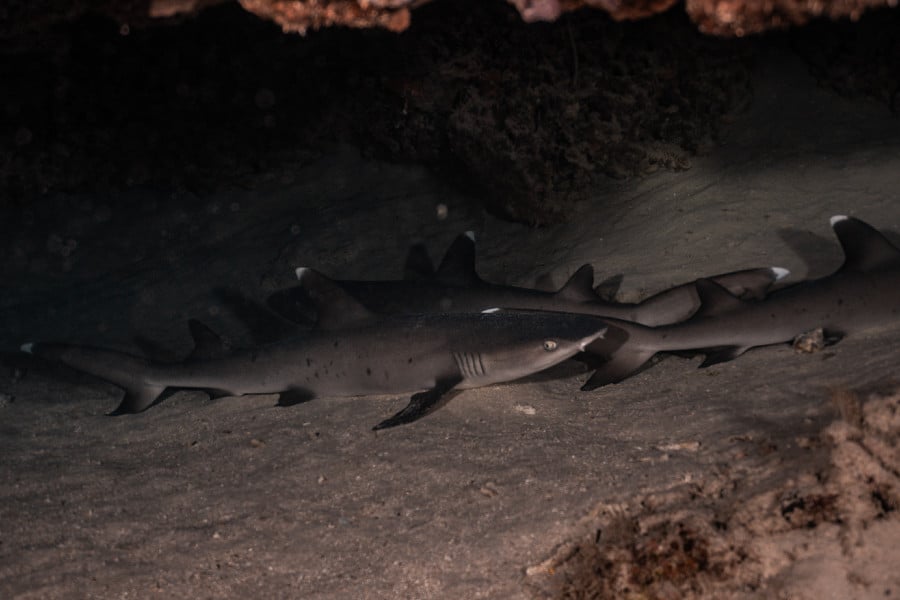
Whitetip reef sharks are regularly spotted resting beneath coral ledges and overhangs, while blacktip reef sharks are often seen cruising along the reef.
During the right conditions, divers may also encounter eagle rays, mobula rays, and large schools of fusiliers, trevallies, and barracuda.
The site benefits from nutrient-rich currents that support healthy coral growth and attract larger marine life.
Current strength can vary significantly depending on tides and moon phases, making every dive slightly different.
While conditions are often suitable for less experienced divers, Deep Shark Point is generally best enjoyed by confident divers comfortable with drift diving. It is also an excellent site to dive with Nitrox.
The reef itself is remarkably diverse, with hard corals, sea fans, sponges, and numerous cleaning stations frequented by turtles and reef fish.
Great visibility and frequent marine life encounters make Shark Point one of the most exciting and rewarding dives in the Gili Islands.
Highlights
- Frequent sightings of whitetip and blacktip reef sharks
- Schooling fish
- Drift diving
- Excellent visibility
- Occasional eagle rays or mobula (devil) rays
Insider Tip
Moderate current often produces the best shark sightings. You will find swimming sharks in between the ridges at a depth of approximately 25 meters.
Shark Point at a glance
| Maximum depth | 40 meters (for advanced and deep specialty), best in between 15 and 25 meters |
| Typical visibility | 20-35 meters |
| Current strength | medium to strong |
| Best marine life | White tip reef sharks, Blacktip reef sharks, large green turtles, bluespotted sting rays, octpus, cuttle fish, leaf fish, |
| Certification level | Intermediate to Advanced, Beginner friendly with mild conditions |
Meno Wall (Gili Meno)
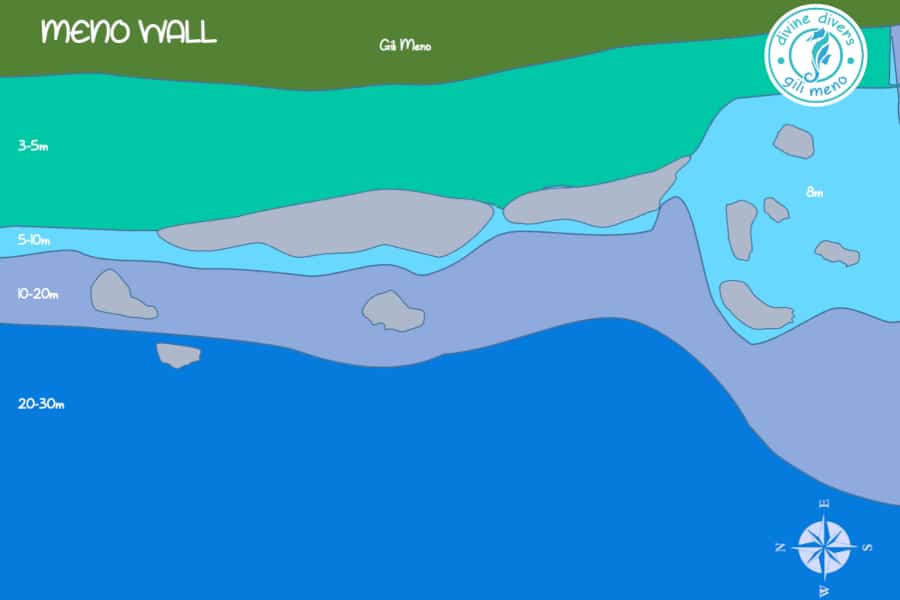
Depth: 5–25 metres
Level: Beginner to Intermediate
Meno Wall is a diverse and enjoyable dive site in the Gili Islands.
Located off the north-western coast of Gili Meno, the site features a gently sloping reef that transitions into a coral-covered wall adorned with sponges, sea fans, soft corals, and small overhangs.
The site is particularly famous for its sea turtle encounters.
Green sea turtles are frequently seen resting beneath ledges, visiting cleaning stations, or swimming slowly along the wall.
Hawksbill turtles also make occasional appearances, especially around the healthier shallow coral sections.
While turtles are the main attraction, Meno Wall offers much more than its larger residents.
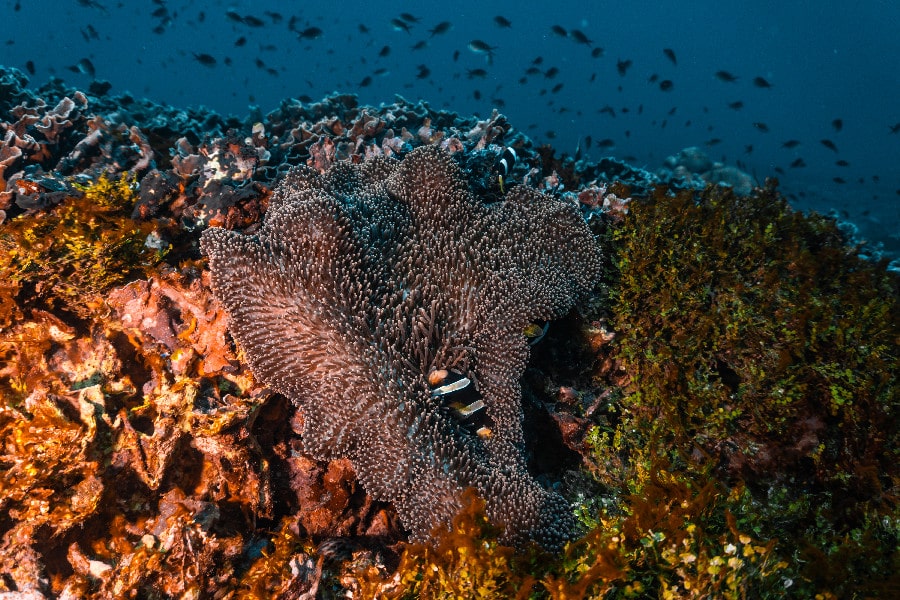
The reef is home to nudibranchs, scorpionfish, moray eels, shrimp, leaf fish, and countless colourful reef fish. The combination of macro life and larger marine animals makes it a favourite among underwater photographers.
Thanks to its shallow depth, generally gentle conditions, and excellent visibility, Meno Wall is suitable for newly certified divers, training dives, and relaxed fun dives.
Experienced divers also appreciate the site’s healthy reef ecosystem and the chance to slow down and search for smaller marine life hidden amongst the corals.
Highlights
- Frequent turtle encounters
- Colourful coral wall
- Nudibranchs and macro life
- Excellent macro photography opportunities
- Often calm conditions
- Suitable for all experience levels
Insider Tip
Meno Wall is the housereef of Divine Divers which allows divers and snorkelers to access the site from shore.
Meno Wall at a glance
| Maximum depth | 25 meters |
| Typical visibility | 25-25 meters |
| Current strength | low to medium |
| Best marine life | Green turtles, anemone fish, lobster, nudibranch, bat fish, snappers, crabs, shrimp, goby, octopus |
| Certification level | All levels |
Halik Reef
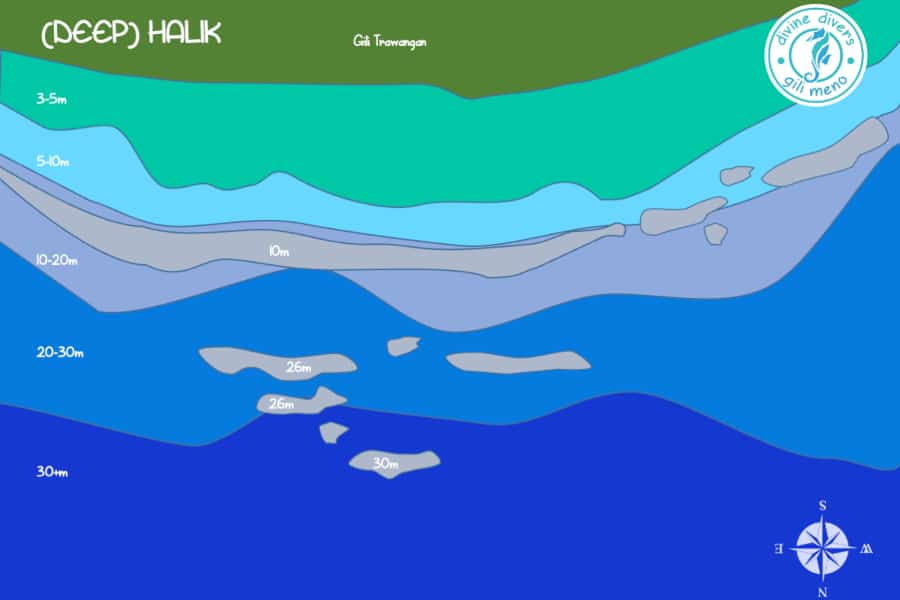
Depth: 5–30 metres
Level: Beginner to Advanced
Halik Reef is often considered one of the most complete dive sites in the Gili Islands. Located north of Gili Trawangan, the site offers two very different experiences.
The shallow section is ideal for beginners and newly certified divers.
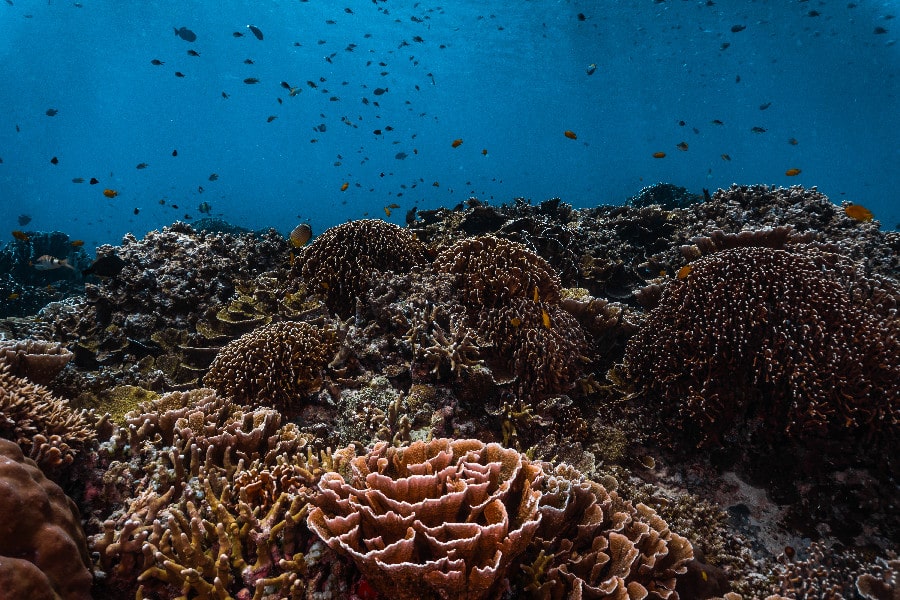
Healthy hard corals, excellent visibility, and an incredible abundance of marine life create what many divers describe as a natural aquarium.
Green sea turtles are frequently encountered throughout the reef, while whitetip reef sharks are regularly in little caves.
As the reef drops deeper, Halik transforms into a very different dive site.
A series of ridges and channels create underwater topography similar to Shark Point and Deep Turbo.
These deeper sections are exposed to stronger currents and attract larger schools of fish, reef sharks, barracuda, trevallies, and occasional pelagic visitors.
The combination of healthy coral reefs, exciting topography, and abundant marine life makes Halik one of the best all-round dive sites in the Gili Islands.
Highlights
- Some of the healthiest coral reefs in the Gili Islands
- Frequent turtle and reef shark encounters
- Excellent site for cuttlefish and octopus
- Large schools of fish
- Great visibility
- Suitable for all levels
Insider Tip
Keep an eye on the sandy patches between the coral formations. These areas are often overlooked but regularly reveal octopus, blue-spotted stingrays, garden eels, and other fascinating marine life hidden in plain sight.
Halik at a glance:
| Maximum depth | 40 meters (great for deep specialty dives) |
| Typical visibility | 25-35 meters |
| Current strength | low to strong, really depends on the tide |
| Best marine life | Reef sharks (both white tip and blacktip), Green turtles (lots!), Hawksbill turtles, angelfish, cuttle fish, bluespotted stingrays, unicorn fish, schooling fish, |
| Certification level | All levels |
Bounty Wreck
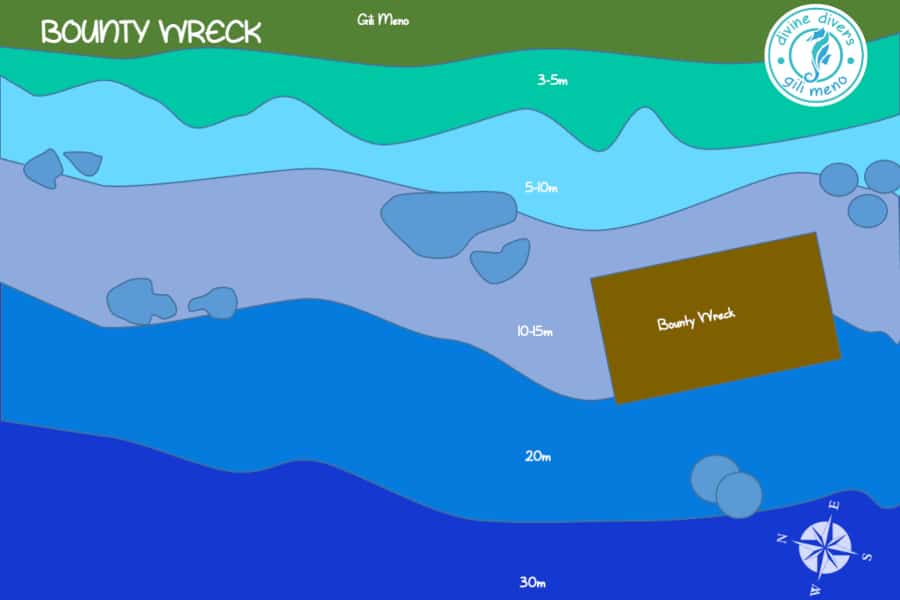
Depth: 8–18 metres
Level: Beginner to Advanced
Bounty Wreck is a unique dive sites in the Gili Islands. Originally a floating pontoon, the structure broke free during a storm and sank just off Gili Meno, where it has since transformed into a thriving artificial reef teeming with marine life.
Today, the wreck is almost completely covered in corals, sponges, and marine growth, creating shelter for countless reef inhabitants.
Large schools of glassfish, snapper, and batfish often surround the structure, while turtles are regularly spotted resting nearby or cruising past the wreck.
The site is particularly popular among underwater photographers and macro enthusiasts.
Frogfish, leaf fish, nudibranchs, ghost pipefish, scorpionfish, and a variety of shrimp species can often be found hiding amongst the wreckage and surrounding reef.
Every dive offers the possibility of discovering something new.
Thanks to its relatively shallow depth and generally mild conditions, Bounty Wreck is suitable for divers of all experience levels. It is also a popular night dive sites in the Gili Islands, when hunting lionfish, octopus, cuttlefish, and other nocturnal creatures emerge from their hiding places.

Highlights
- Artificial reef covered in marine life
- Excellent macro photography opportunities
- Frequent sightings of frogfish and ghost pipefish
- Night diving
- Easy diving conditions
Insider Tip
Don’t spend all your time on the wreck itself. Some of the best macro life is often found on the surrounding sandy patches and rubble areas, where frogfish, pigmy seahorses, ghost pipefish, and nudibranchs can be hiding just a few metres away from the main structure.
Bounty Wreck at a glance
| Maximum depth | 20 meters |
| Typical visibility | 15-25 meters |
| Current strength | low to medium |
| Best marine life | Frogfish, ornate ghost pipefish, scorpionfish, Colorful nudibranchs, leaf fish, porcelain crabs, Dense clouds of glassfish, batfish, yellow snapper, and sweetlips. Green sea turtles and blue-spotted stingrays |
| Certification level | All levels |
Sunset Reef
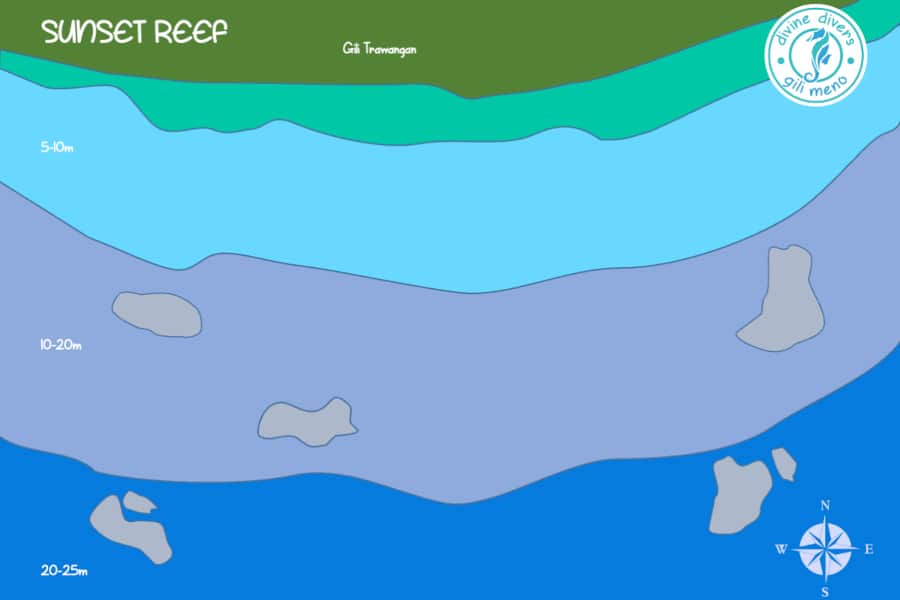
Depth: 5–30 metres
Level: Beginner to Advanced
Sunset Reef is a large and diverse dive site located on the southern side of Gili Trawangan.
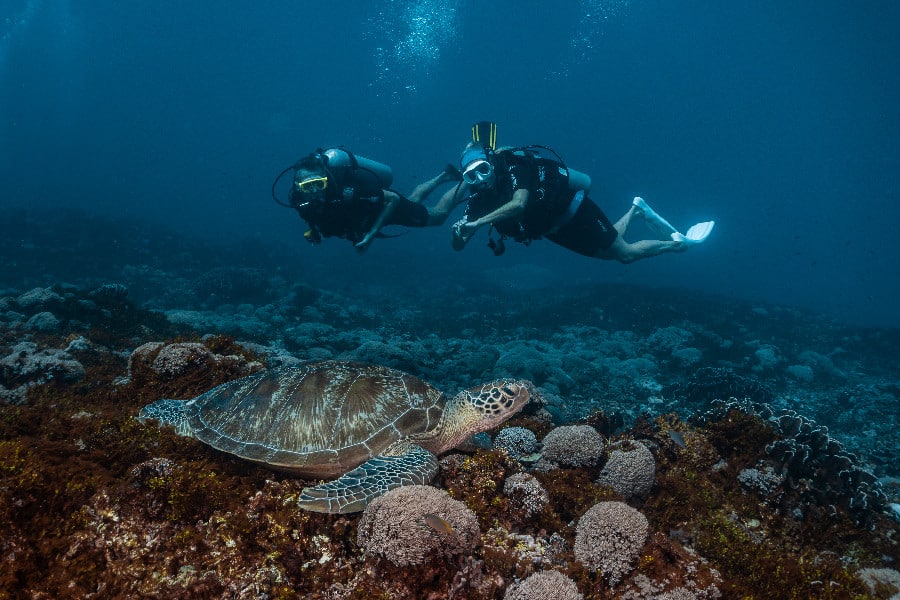
Known for its healthy coral formations, excellent visibility, and generally mild currents, the site is suitable for divers of all experience levels and regularly delivers enjoyable dives throughout the year.
The reef is covered in beautiful hard corals, sea fans, and colourful reef fish, creating a vibrant underwater landscape.
Green sea turtles are frequently encountered, while whitetip and blacktip reef sharks are regular visitors, particularly around the deeper sections of the reef.
Large schools of fusiliers, surgeonfish, sweetlips, and snapper add to the site’s lively atmosphere.
Despite sometimes being referred to as Manta Point, the name can be somewhat misleading. Unlike true manta dive sites, Sunset Reef does not have a manta cleaning station and manta ray sightings are extremely rare.
The site’s reputation is instead built on its healthy coral reefs, excellent visibility, and reliable encounters with turtles and reef sharks.
One of the great advantages of Sunset Reef is its flexibility. The site is beautiful both in the morning and in the afternoon.
Morning dives often offer calm conditions and crystal-clear visibility, while afternoon dives benefit from stunning light conditions that make the corals and reef fish particularly photogenic.
Highlights
- Excellent visibility
- Generally mild currents
- Green sea turtles
- Healthy coral reefs
- Reef sharks and schooling fish
Insider Tip
The site’s alternative name, Manta Point, comes from the diver who first explored the reef and encountered a manta ray during the initial exploratory dive
Sunset Reef at a glance
| Maximum depth | 30 meters |
| Typical visibility | 20-30 meters |
| Current strength | mild to a low medium |
| Best marine life | Sometimes reef mantas and devil rays, White-tip and black-tip reef sharks, Green and hawksbill sea turtles, Large schools of sweetlips, snappers, and batfish |
| Certification level | All levels |
Deep Turbo
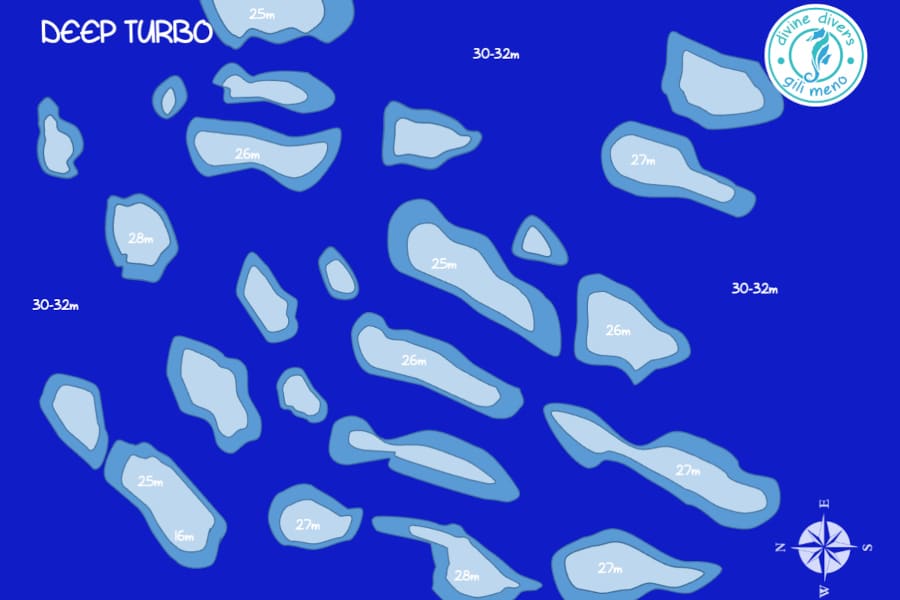
Depth: 18–35 metres
Level: Advanced
Deep Turbo is widely regarded as one of the most exciting dive sites in the Gili Islands. Located in the channel north of Gili Trawangan and Gili Meno, the site is famous for its strong currents, dramatic underwater topography, and frequent encounters with larger marine life.
The dive site is characterised by a series of ridges, valleys, and coral-covered formations that create a dynamic underwater landscape. These structures funnel nutrient-rich currents through the area, attracting large schools of fusiliers, trevallies, surgeonfish, and barracuda.
Unlike many of the shallower reefs around the islands, Deep Turbo feels wild and adventurous.
Conditions can change significantly depending on tides and moon phases. Strong currents often create exhilarating drift dives and provide excellent opportunities to observe marine life in action.
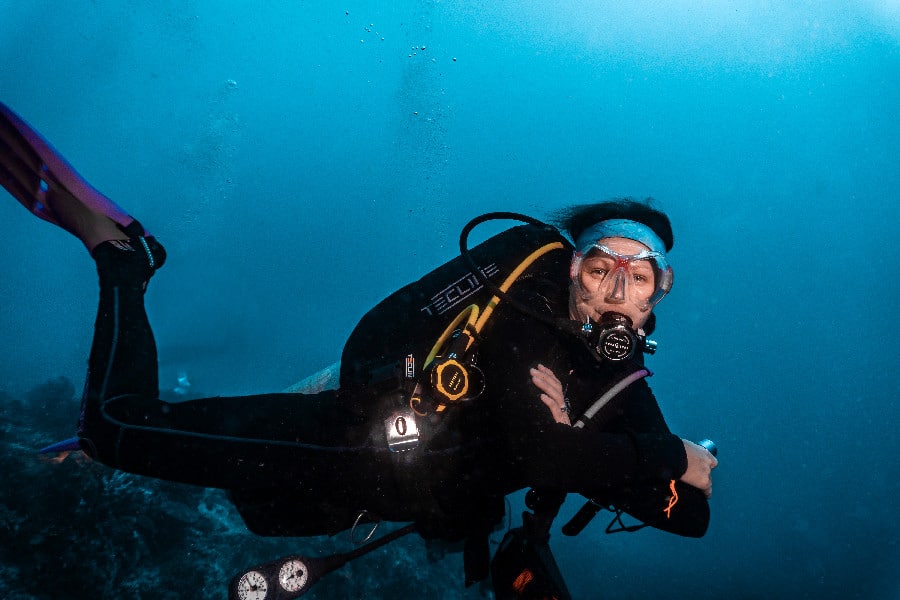
Due to its depth and current exposure, Deep Turbo is best suited to experienced divers who are comfortable with drift diving, Nitrox, and deeper dive profiles.
Highlights
- Dramatic ridges and underwater topography
- Strong drift diving conditions
- Frequent reef shark encounters
- Large schools of fish
- Occasional eagle rays and mobula rays
- One of the most exciting advanced dive sites in the Gilis
Insider Tip
Deep Turbo is one of the best dive sites in the Gili Islands to dive on Nitrox. With much of the dive spent between 20 and 30 metres, the increased no-decompression limits provided by enriched air allow divers to enjoy longer bottom times and spend more time exploring the site’s ridges, coral formations, and marine life.
Deep Turbo at a glance
| Maximum depth | 35 meters |
| Typical visibility | 25-35 meters |
| Current strength | medium to strong |
| Best marine life | White-tip and black-tip reef sharks, giant trevally, barracuda, blue-spotted stingrays, batfish, bright red-tooth triggerfish, hidden pygmy seahorses, ornate ghost pipefish, and colorful nudibranchs. |
| Certification level | Advanced levels only |
Shallow Turbo
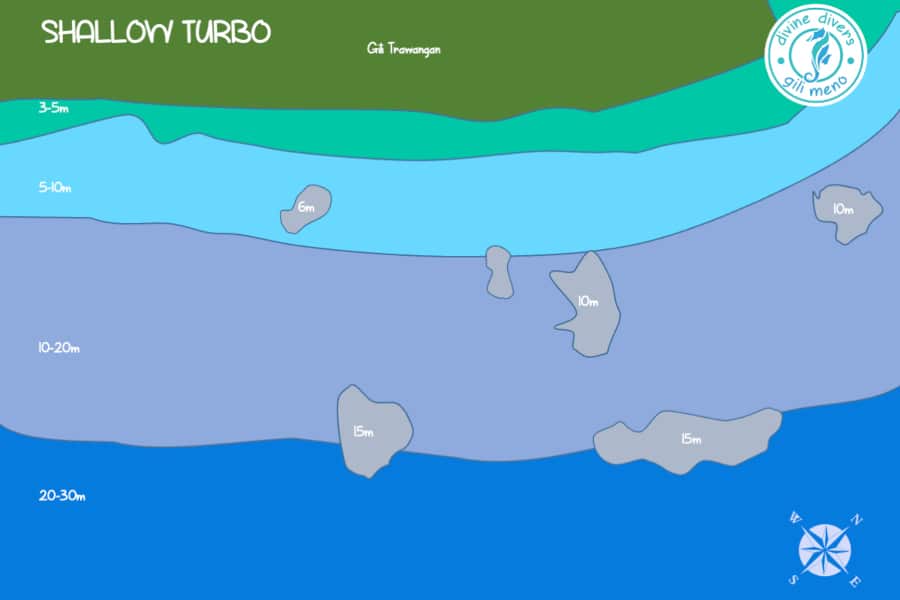
Depth: 5–18 metres
Level: Beginner to Intermediate
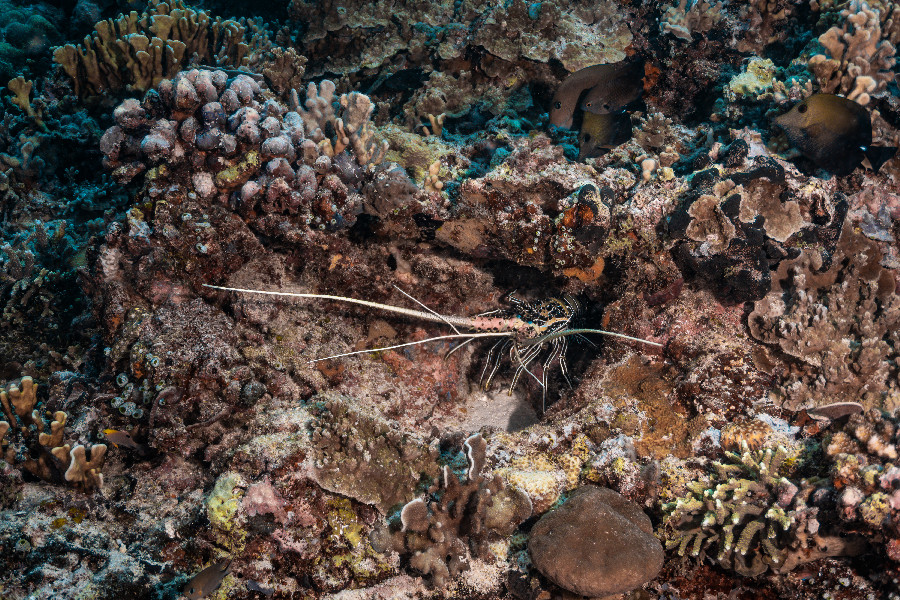
Shallow Turbo is one of the most underrated dive sites in the Gili Islands. Located on the north eastern tip of Gili Trawangan, the site features a beautiful shallow reef with healthy corals, scattered coral blocks, and a surprising diversity of marine life.
The top reef is particularly attractive making it an excellent shallow dive site. Hard corals, sea fans, and countless reef fish create a vibrant underwater landscape.
Turtles are common visitors, while blacktip reef sharks are frequently encountered cruising the reef. In the shallower sections, divers occasionally spot juvenile whitetip reef sharks resting amongst the coral formations.
Shallow Turbo is also an excellent site for divers who enjoy searching for smaller marine life.
The scattered coral blocks provide habitat for nudibranchs, leaf fish, shrimp, scorpionfish, and a variety of other macro subjects.
A marble ray is often encountered resting across the sandy areas between the reef structures.
Towards the western end of the site, Shallow Turbo gradually merges into Halik Reef. This transition area is particularly beautiful, combining healthy coral growth, schools of reef fish, and excellent opportunities for both wide-angle and macro photography.
Highlights
- Beautiful shallow coral reef
- Frequent blacktip reef shark encounters
- Juvenile whitetip reef sharks in the shallows
- Excellent macro life
- Suitable for beginners and experienced divers alike
Insider Tip
Shallow Turbo is best enjoyed in mild to moderate current. During stronger tidal flows, the current can push divers away from the reef and into open water, reducing the opportunity to explore the coral blocks and macro life that make this site special.
If strong currents are present, many local guides will choose a different dive site and return to Shallow Turbo when conditions are more favourable.
Shallow Turbo at a glance
| Maximum depth | 30 meters |
| Typical visibility | 20-25 meters |
| Current strength | mild to medium (avoid on strong current) |
| Best marine life | Sea turtles, whitetip reef sharks, blacktip reef sharks, garden eels, batfish, star pufferfish, red-tooth triggerfish, long-jaw mackerel, fusiliers, trevally, stingrays, unicornfish, scorpionfish, trumpetfish, ornate ghost pipefish, nudibranchs, and diverse marine invertebrates. |
| Certification level | All levels |
Simon’s Reef
Depth: 14–25 metres
Level: Advanced
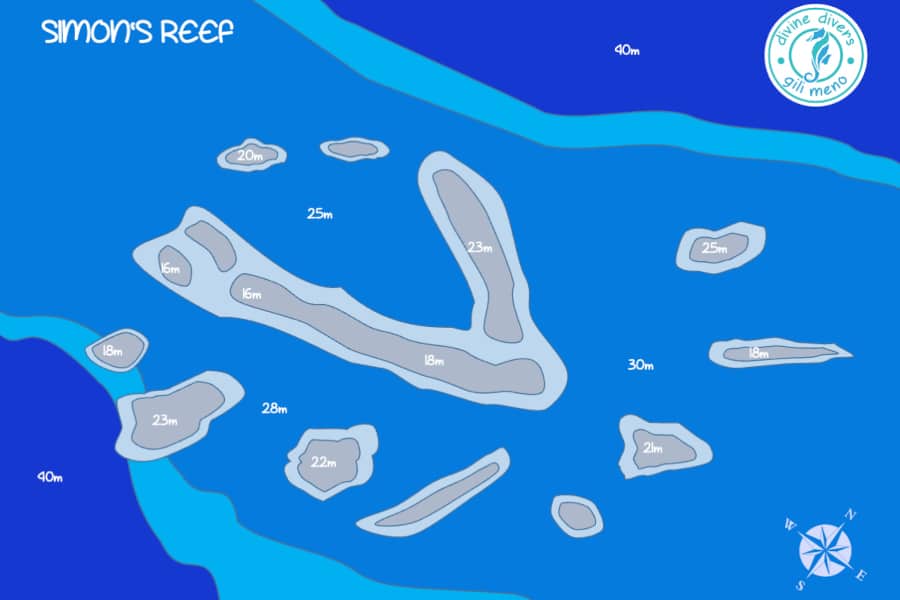
Simon’s Reef is located on the northern side of Gili Trawangan, the site is often overlooked in favour of nearby Shark Point and Halik, yet many local dive guides consider it one of the most beautiful reefs in the area.
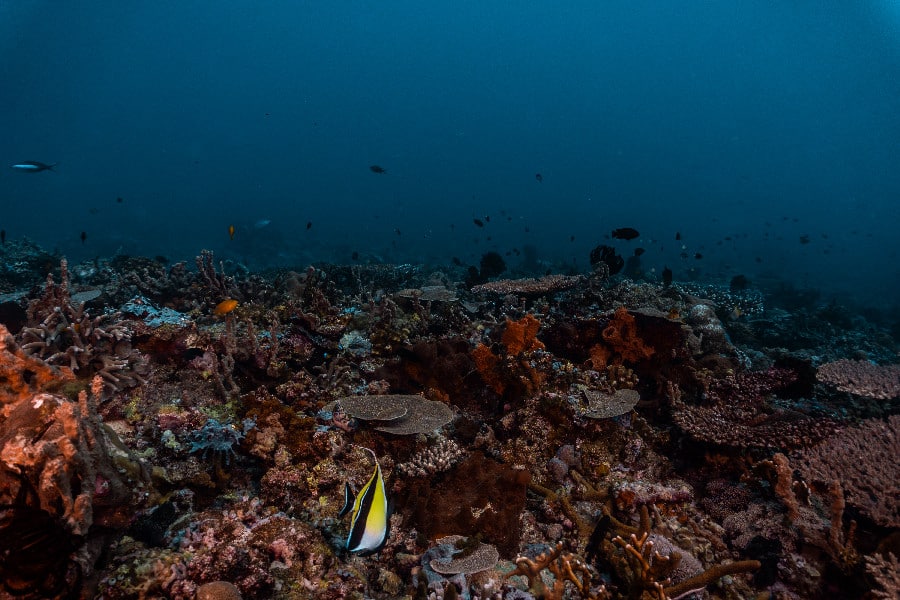
The site is characterised by extensive hard coral formations, large coral bommies, and healthy reef structures that support an impressive variety of marine life.
The coral coverage here is among the best in the Gili Islands, making it a fantastic dive for wide-angle photography and divers who simply appreciate pristine reef scenery.
Simon’s Reef is located outside the Gili Matra Marine Park.
Green sea turtles are commonly encountered throughout the dive, while blacktip and whitetip reef sharks make regular appearances.
Large schools of fusiliers, surgeonfish, snapper, and sweetlips patrol the reef, particularly when currents are present.
The combination of healthy corals and fish life often gives the impression of diving in a much more remote location.
Current strength can vary considerably and often creates enjoyable drift dives along the reef. The site’s exposed position allows nutrient-rich water to reach the corals, helping maintain the exceptional reef health for which Simon’s Reef is known.
For divers looking for beautiful coral gardens, healthy reefs, and fewer boats than the more famous sites, Simon’s Reef is one of the best choices in the Gili Islands.
Highlights
- Some of the healthiest coral reefs in the Gili Islands
- Frequent turtle encounters
- Regular sightings of reef sharks
- Large schools of reef fish
- Excellent wide-angle photography opportunities
- Less visited than many neighbouring dive sites
Insider Tip
Many divers pass over Simon’s Reef in favour of Shark Point, but on days with good visibility the coral quality here is often even more impressive. If you enjoy healthy reefs as much as big marine life, Simon’s Reef is one of the most rewarding dives in the Gilis.
Simon’s Reef at a glance
| Maximum depth | 30 meters |
| Typical visibility | 20-30 meters |
| Current strength | mild to strong |
| Best marine life | Whitetip reef sharks, spotted eagle rays, blue-spotted stingrays, green sea turtles, hawksbill turtles, barracudas, tuna, trevally, fusiliers, bumphead parrotfish, garden eels, cuttlefish, octopus, giant moray eels, anthias, chromis, batfish, lionfish, pygmy seahorses, ornate ghost pipefish, hairy squat lobsters, porcelain crabs, nudibranchs, giant gorgonian sea fans, and massive barrel sponges. |
| Certification level | Advanced |
Glenn Nusa Wreck
Depth: 18–28 metres
Level: Advanced Open Water and above
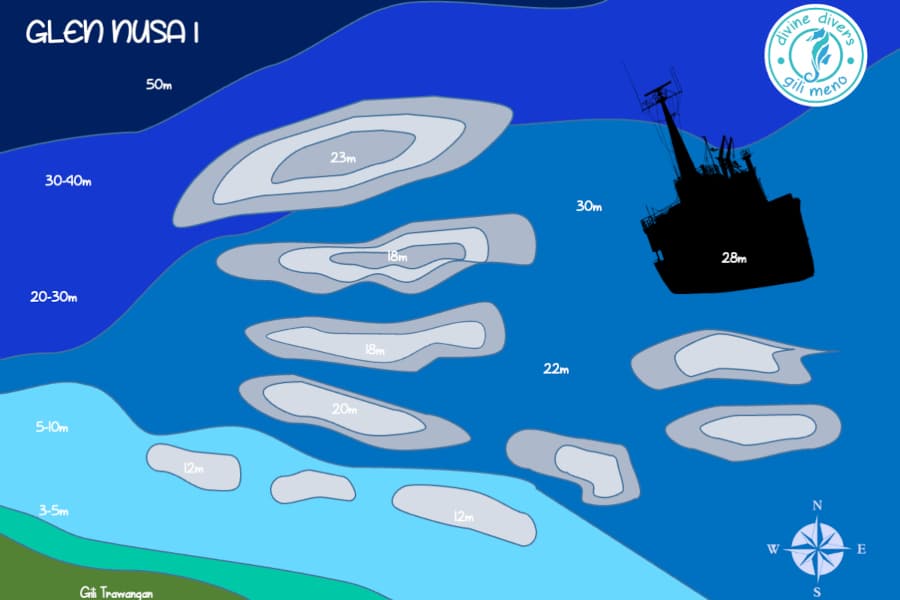
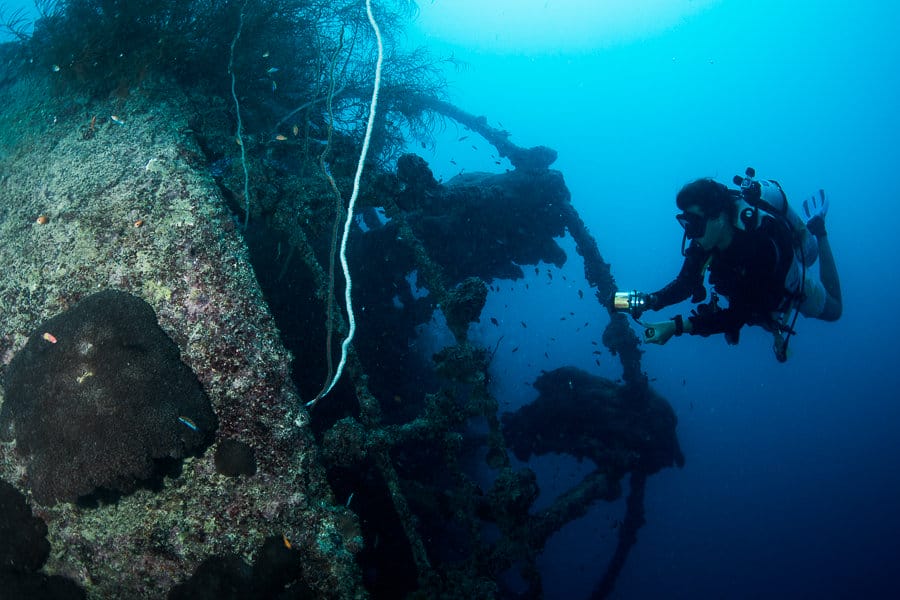
The Glenn Nusa Wreck is one of the newest dive sites in the Gili Islands.
Originally a decommissioned patrol vessel, it was intentionally sunk off the coast of Gili Trawangan in 2016 to create an artificial reef and new marine habitat.
Today, the wreck has become a thriving ecosystem covered in soft corals, sponges, and marine growth.
Schools of fusiliers, batfish, snapper, and trevally are commonly encountered around the structure, while lionfish, moray eels, and nudibranchs can often be found hiding amongst the wreckage.
The site is generally best suited to experienced divers due to its depth and strong currents.
However, for those interested in wreck diving, underwater photography, or marine conservation, the Glenn Nusa is one of the most rewarding dives in the region.
Highlights
- Artificial reef and wreck diving
- Schools of fish
- Soft coral growth
- Underwater photography
- Marine conservation success story
Insider Tip
Glenn Nusa is often best dived on Nitrox. The wreck sits at a depth where no-decompression limits can quickly become a factor, and Nitrox allows significantly more time to explore the structure, photograph the marine life, and appreciate the details of the wreck before beginning your ascent
Glenn Nusa at a glance
| Maximum depth | 30 meters |
| Typical visibility | 15-25 meters |
| Current strength | medium to strong |
| Best marine life | White-tip and black-tip, Giant trevally, barracuda, and jacks fish, batfish, snapper, and sweetlips, Blue-spotted stingrays and large groupers |
| Certification level | Advanced |
Hans Reef (Frogfish Point)
Depth: 5–20 metres
Level: Beginner to Advanced
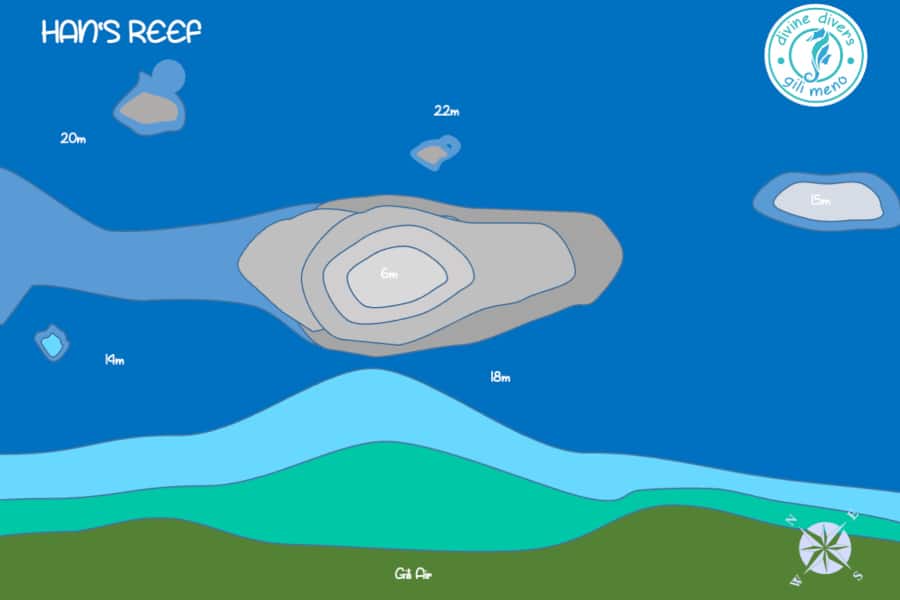
Hans Reef, sometimes referred to as Frogfish Point, is the premier macro dive site in the Gili Islands.
Located off the eastern coast of Gili Air, the site may not offer the dramatic coral formations of Halik or Shark Point, but what it lacks in scenery it more than makes up for in rare and unusual marine life.
The main reef consists of coral bommies, sandy patches, rubble areas, and small coral outcrops that provide ideal habitat for some of the ocean’s most fascinating critters.
Patient divers may encounter leaf scorpionfish, ghost pipefish, nudibranchs, shrimp, pipefish, flatworms, and a variety of other cryptic species.
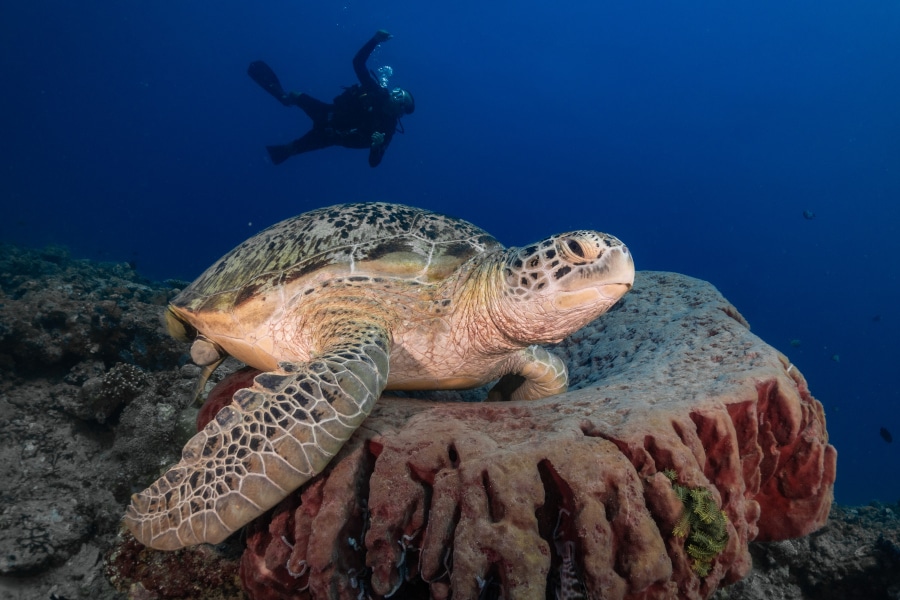
Despite its reputation as a macro site, Hans Reef also attracts larger marine life. Green sea turtles are frequently encountered sleeping in sponge corals. Schools of reef fish, boxfish, cowfish, and juvenile fish species are common throughout the dive.
Beautiful coral growth, massive sponges and large sponge corals can be found all along the outside reef.
The relatively shallow depth and generally mild currents make Hans Reef suitable for divers of all experience levels.
However, the site is best appreciated by those willing to slow down, look carefully, and let their guide reveal the hidden creatures that make this dive so special.
Highlights
- Best macro dive site in the Gili Islands
- Frequent frogfish sightings
- Ghost pipefish, leaf fish, and nudibranchs
- Excellent underwater photography opportunities
- Suitable for all experience levels
- Regular turtle encounters
Insider Tip
Despite its nickname, frogfish are no longer as common at Hans Reef as they once were. In recent years, divers have often had more success finding frogfish at Bounty Wreck and on the dive sites along the nearby Lombok coast. Hans Reef remains an excellent macro dive, however.
Hans Reef at a glance
| Maximum depth | 20 meters |
| Typical visibility | 15-25 meters |
| Current strength | mild to a low medium |
| Best marine life | Ghost pipefish, leaf fish, and colorful nudibranchs, cuttlefish, octopuses, schools of reef squid, Green sea turtles regularly use giant barrel sponges as beds. Fields of garden eels, stingrays, flounders, and mantis shrimp. Frogfish. |
| Certification level | All levels |
Soraya Reef (Hidden Reef / Secret Reef / Mirko’s)
Depth: 12–30 metres
Level: Advanced
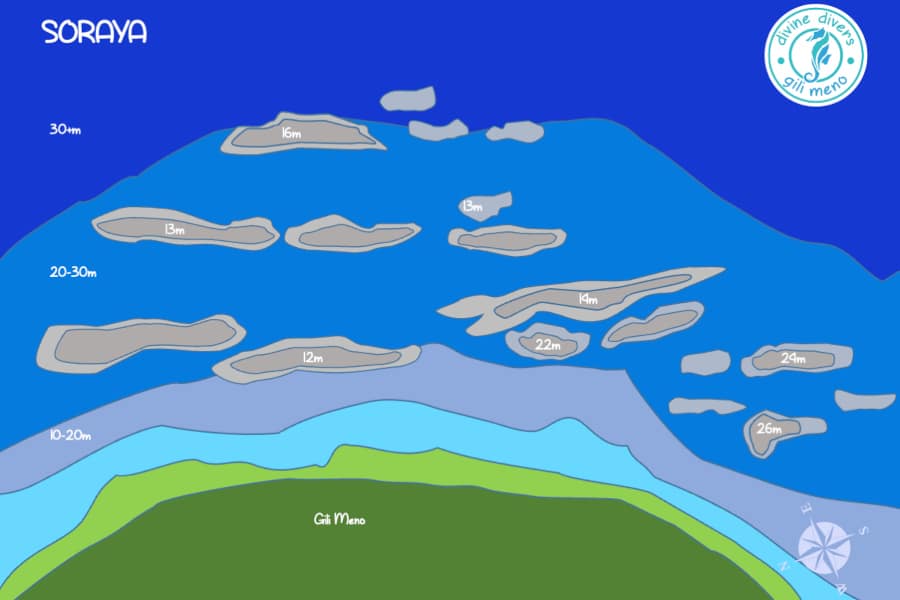
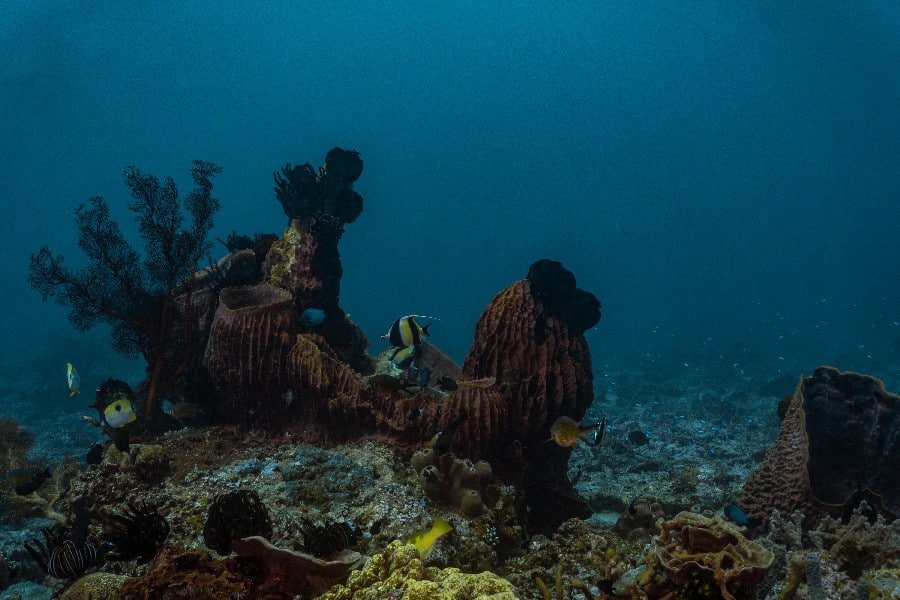
Also known as Hidden Reef, Secret Reef or Mirko’s, Soraya Reef is one of the less frequently visited dive sites in the Gili Islands. Located in the channel between Gili Meno and Gili Air, the site is known for its healthy coral formations, strong currents, and excellent fish life.
Due to the often challenging conditions, Soraya Reef is best suited for experienced divers.
Green sea turtles, schooling fish, and a variety of reef species can be encountered along the dive.
Highlights
- Advanced drift diving
- Healthy coral reefs
- Green sea turtles
- Schooling fish
- Fewer divers than other sites
Insider Tip
Soraya is highly dependent on current strength and direction. On days with moderate current, it can be one of the best dives in the Gili Islands.
When the current becomes too strong, however, even experienced divers may find conditions challenging. Timing is everything at this site, which is why local knowledge and careful dive planning are particularly important.
Soraya at a glance
| Maximum depth | 12-30 meters |
| Typical visibility | 15-25 meters |
| Current strength | medium to strong |
| Best marine life | Giant trevally, tuna, barracuda, sweetlips, snappers, and batfish, Giant and fimbriated moray eels |
| Certification level | Advanced |
Air Wall
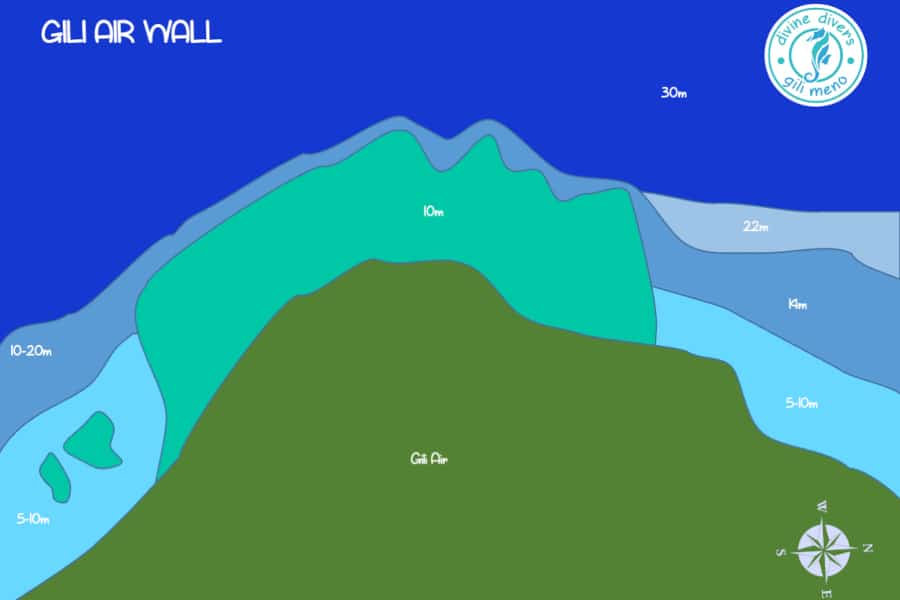
Depth: 5–25 metres
Level: Beginner to Advanced
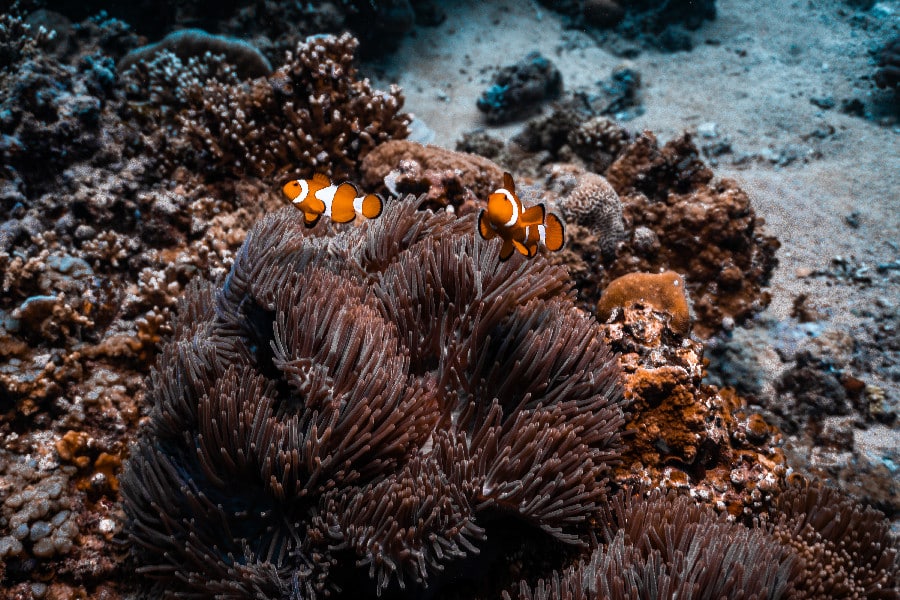
Gili Air Wall is located off the western side of Gili Air. The site features a gently sloping reef (sometimes considered a different dive site called Air Slope) that transitions into a wall covered in hard corals, soft corals, sponges, and sea fans.
The wall provides habitat for a wide variety of marine life.
Green sea turtles are frequently encountered cruising along the reef or resting beneath overhangs, while schools of fusiliers, sweetlips, surgeonfish, and snapper bring constant movement to the site.
Moray eels and nudibranchs add further interest for divers who take the time to explore the reef closely.
One of the highlights of Gili Air Wall is its healthy coral coverage in the shallows and relaxed atmosphere. Visibility is often excellent, and currents are usually manageable, making the site suitable for both beginner and experienced divers.
The combination of colourful reef life and interesting topography also makes it a popular site for underwater photography.
Highlights
- Beautiful wall covered in corals and sponges
- Frequent turtle encounters
- Healthy reef ecosystem
- Excellent visibility
- Great for photography
- Suitable for all experience levels
Insider Tip
Gili Air Wall can experience surprisingly strong vertical water movement during periods of strong tidal flow.
Upcurrents and downcurrents are occasionally encountered along the wall, particularly where the reef changes shape or drops into deeper water.
While these conditions are not common, divers should stay close to the reef, monitor their buoyancy carefully, and follow their guide’s instructions when currents are stronger than usual.
Air Wall at a glance
| Maximum depth | 12-30 meters |
| Typical visibility | 15-30 meters |
| Current strength | mild to strong |
| Best marine life | Rare pygmy seahorses, ornate ghost pipefish, and vibrant nudibranchs. Green sea turtles frequently nestle into the small caves and ledges of the wall. The wall is covered in colorful soft corals, gorgonian fans, and yellow tube corals. |
| Certification level | All levels |
Meno Slope
Depth: 5–25 metres
Level: Beginner to Advanced
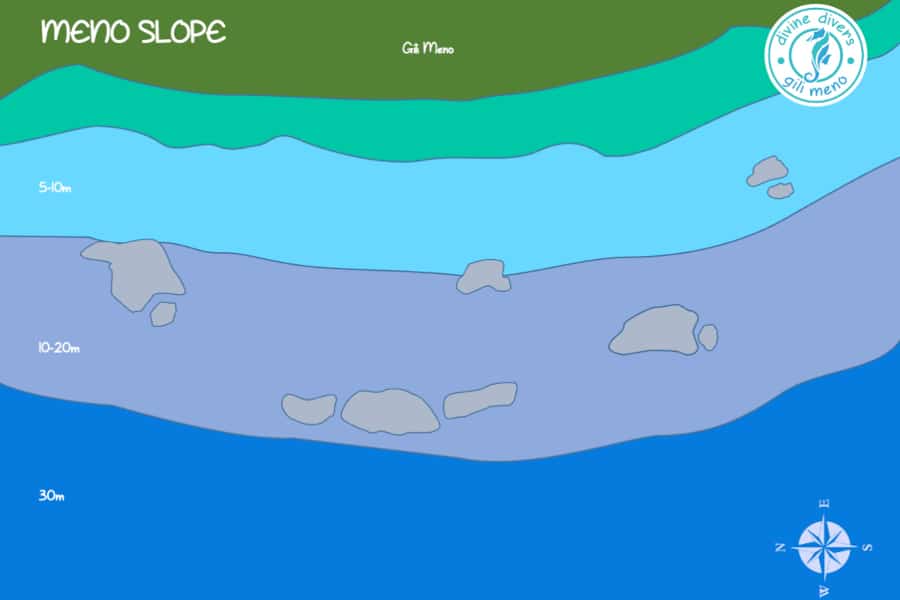
Meno Slope is a gently sloping reef on the western side of Gili Meno. While the coral coverage is not as impressive as at sites such as Halik or Turtle City, the site is renowned for its exceptional turtle encounters.
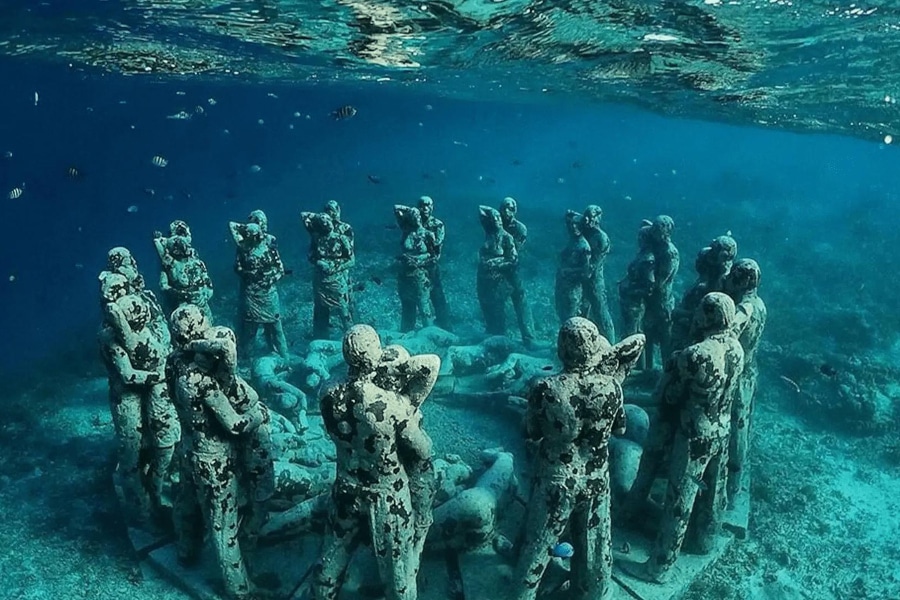
The site is also home to the famous Bask Nest underwater sculptures, one of the most photographed attractions in the Gili Islands.
Due to the sculptures’ very shallow depth, however, the Nest is generally considered more of a snorkelling attraction than a dive site.
Thanks to its gentle profile, good visibility, and abundant marine life, Meno Slope remains a popular dive site for both beginner and experienced divers. It is also a nice and long drift dive.
Highlights
- Green sea turtles
- Macro photography
- Bask Nest underwater sculptures
- Healthy coral reefs
- Suitable for all experience levels
Insider Tip
Many visitors specifically request this site to see the Bask Nest statues, but expectations should be realistic.
As the artificial reef has grown in popularity, boat traffic and the number of snorkellers above the statues have increased significantly.
Divers will often spend much of their time looking up at a cloud of kicking fins rather than enjoying the statues themselves.
Strong buoyancy control is essential to dive the area safely and comfortably. The good news? The surrounding reef, turtles, and marine life are often far more impressive than the statues and are the real highlight of the dive.
Meno Slope at a glance
| Maximum depth | 5-20 meters |
| Typical visibility | 10-20 meters |
| Current strength | mild to medium |
| Best marine life | Green and hawksbill sea turtles, frogfish, leaf fish, ghost pipefish, yellow-backed fusiliers, damselfish, and surgeonfish |
| Certification level | All levels |
Trawangan Slope (Goodheart)
Depth: 5–20 metres
Level: Beginner to Intermediate
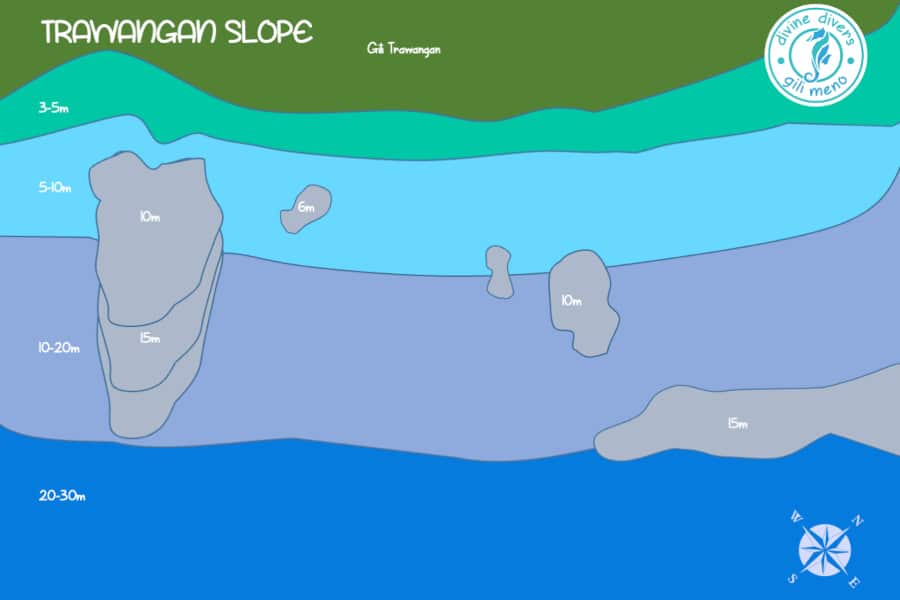
Trawangan Slope, sometimes referred to as Goodheart Reef, is a relaxed dive site located off the eastern side of Gili Trawangan.
The site consists of a gentle reef slope, artificial reef structures, and coral bommies that provide habitat for a wide variety of marine life.
The shallow profile and generally mild conditions make Trawangan Slope a popular choice for beginner divers and training dives.
The site is also home to several coral restoration projects that have helped create a thriving reef ecosystem. Artificial reef structures attract juvenile fish, moray eels, octopus, and a variety of smaller marine creatures, making the site enjoyable for both wide-angle and macro photography.
Highlights
- Beginner-friendly dive site
- Frequent turtle encounters
- Healthy coral growth and restoration projects
- Excellent for training dives
- Good macro and wide-angle photography opportunities
- Relaxed diving conditions
Insider Tip
Many divers overlook Trawangan Slope in favour of the more famous sites nearby, but this can be a mistake.
Other Dive Sites
Gili Air Harbour
Depth: 2–12 metres
Level: Beginner to Advanced
Current: Minimal
Gili Air Harbour is a unique shore dive located directly in front of the harbour on Gili Air.
While the site may not look particularly impressive from the surface, it is one of the most rewarding dives in the Gili Islands for macro enthusiasts and underwater photographers.
The shallow reef consists of coral patches, seagrass beds, rubble areas, and artificial structures that provide habitat for a surprising variety of marine life.
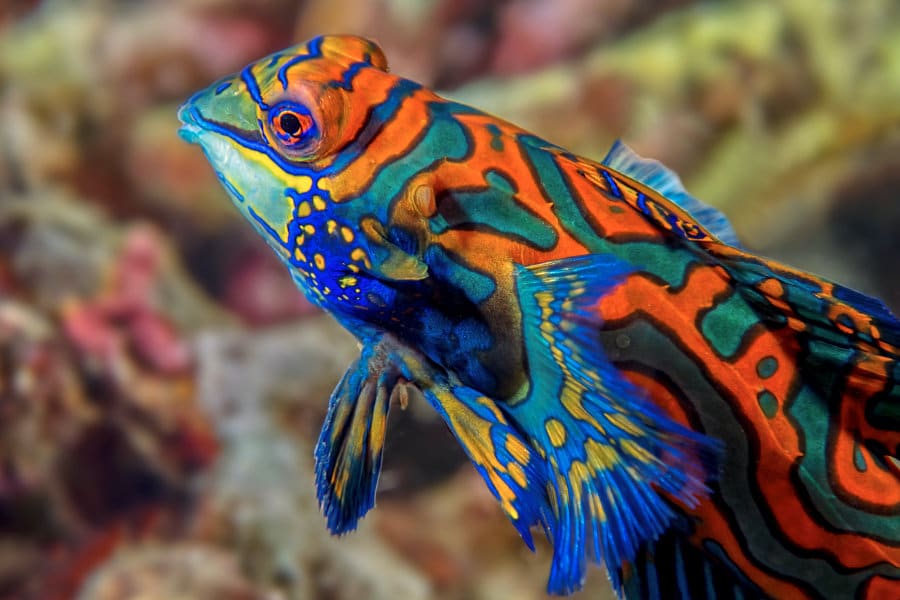
The site’s main attraction is the resident population of mandarin fish, which can be observed during the late afternoon and around sunset as they emerge from the coral to feed and perform their famous mating displays.
In addition to mandarin fish, divers regularly encounter pipefish, nudibranchs, shrimp, octopus, juvenile reef fish, scorpionfish, and a range of other small critters.
The calm, shallow conditions make it an ideal site for photographers looking to spend time searching for subjects without worrying about depth or current.
Unlike most dive sites in the Gili Islands, diving at Gili Air Harbour is only permitted as a shore dive.
Highlights
- Best site in the Gili Islands for mandarin fish
- Excellent macro photography opportunities
- Calm and shallow conditions
- Shore dive only
- Ideal for sunset and dusk dives
- Wide variety of critters and juvenile marine life
Insider Tip
Arrive shortly before sunset for the best chance of seeing mandarin fish. During the final hour of daylight, males emerge from the coral and perform their spectacular courtship displays, creating one of the most sought-after photography opportunities in the Gili Islands.
Biorocks
Depth: 5–18 metres
Level: Beginner to Intermediate
Current: Mild to Moderate
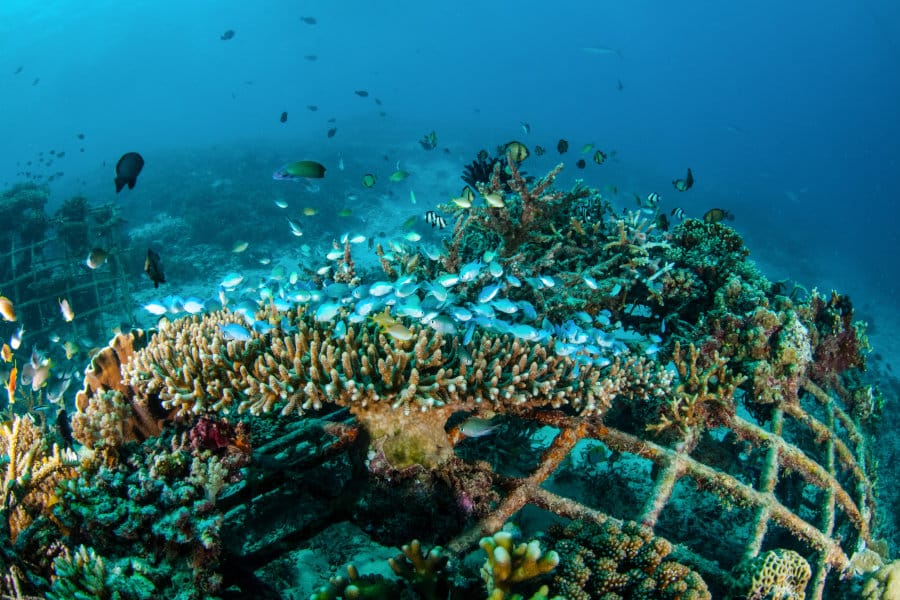
Biorocks is a fascinating example of successful reef restoration. Located off the eastern coast of Gili Trawangan, the site is home to an extensive network of artificial reef structures created using the Biorock method, which uses low-voltage electrical currents to accelerate coral growth and reef recovery.
Over the years, these structures have become covered in healthy corals and now provide habitat for a wide variety of marine life.
Green sea turtles are regularly encountered, while schools of reef fish, juvenile fish, moray eels, octopus, and numerous smaller reef creatures can be found amongst the artificial reefs.
The shallow depth and generally mild conditions used to make make Biorocks suitable for beginners, training dives, and underwater photographers.
While the site itself is relatively easy to dive, its location close to shore and near a busy boating area can make conditions more adventurous than expected. The combination of dive boats, snorkelling boats, and local traffic requires good awareness from both divers and guides.
Highlights
- One of the largest Biorock reef restoration projects in the region
- Excellent example of coral conservation
- Frequent turtle encounters
- Artificial reefs covered in coral growth
- Great for underwater photography
- Suitable for beginners and training dives
Insider Tip
Biorocks offers a fascinating look at coral restoration, but it is also one of the least relaxing dive sites in the Gili Islands.
The site lies directly beneath the route used by fast boats travelling between Bali and the Gilis, as well as local snorkelling and supply boats.
It is not uncommon for boats to pass overhead during the dive, and local vessels occasionally drop anchors with little warning. For this reason, many experienced guides consider Biorocks best suited to divers with good buoyancy control and strong situational awareness. While the reef restoration project is impressive, the boat traffic can detract from the overall diving experience compared to many of the quieter sites around the islands.
Lombok Muck Dive Sites
Teluk Nare
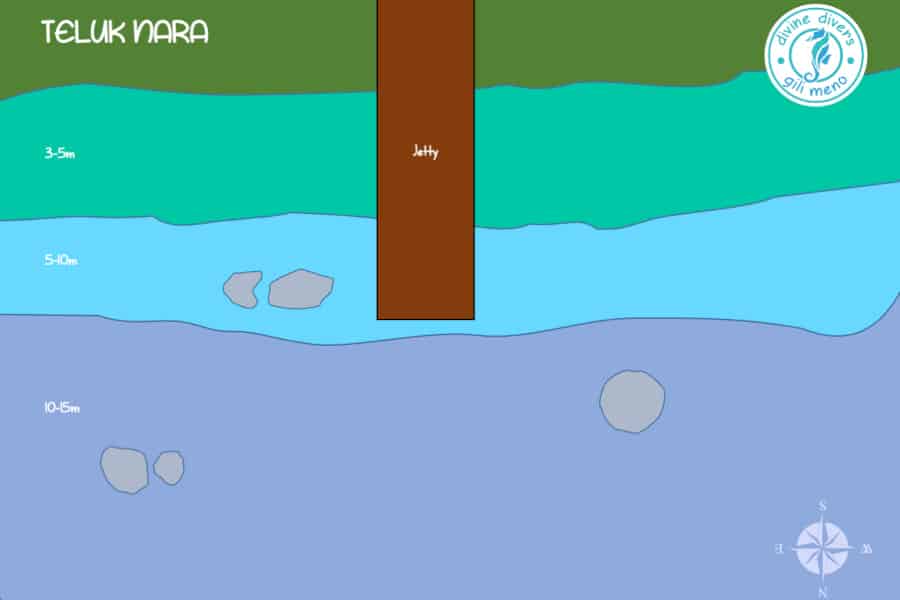
Depth: 5–18 metres
Level: Beginner to Intermediate but really it’s for macro lovers
Current: Mild
Located on the northwest coast of Lombok, Teluk Nare offers a very different diving experience from the coral reefs surrounding the Gili Islands.
The site is characterised by dark volcanic sand, scattered coral bommies, seagrass patches, and lots of rubbish that create excellent habitat for macro life and juvenile fish.
While the reef itself is absolutely not spectacular, Teluk Nara is a rewarding dive for those interested in finding unusual marine life.
Divers regularly encounter pipefish, scorpionfish, octopus, nudibranchs, shrimp, juvenile reef fish, and a variety of critters that blend perfectly into the black sand environment.
Unfortunately, Teluk Nara is heavily affected by boat traffic. The bay serves as a major departure point for fast boats travelling between Lombok and the Gili Islands, while snorkelling boats and local transport vessels are constantly moving through the area. Surface conditions can therefore feel busy and noisy compared to the more remote dive sites around the islands.
Despite these challenges, Teluk Nara remains an interesting alternative for underwater photographers looking to experience black sand diving and search for marine life that is rarely encountered on the coral reefs of the Gilis.
Highlights
- Unique black sand environment
- Excellent macro and critter diving
- Calm and shallow conditions
- Different marine life from the Gili reefs
- Easy access from Lombok
Insider Tip
Teluk Nara is best approached as a muck dive rather than a reef dive. If you arrive expecting colourful coral gardens, you may be disappointed. Slow down, focus on the black sand and rubble areas, and let your guide point out the hidden marine life.
The site can be surprisingly rewarding for photographers and critter hunters, even if the constant boat traffic overhead means it will never be the most tranquil dive in the region.
Kecinan
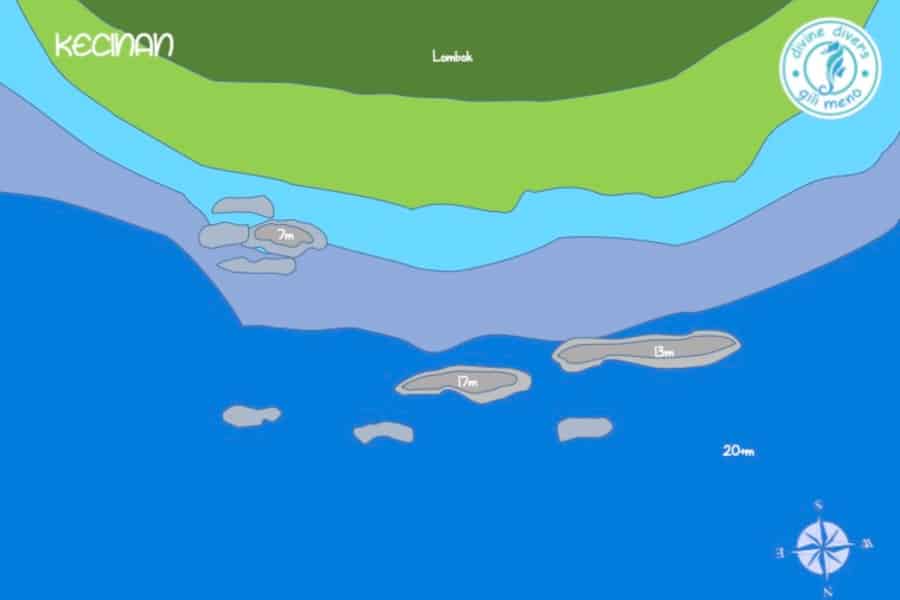
Depth: 5–20 metres
Level: Beginner to Advanced
Current: Mild to Moderate
Located along the northwest coast of Lombok, Kecinan is one of the region’s most rewarding muck dive sites. While it lacks the dramatic coral formations found around the Gili Islands, the site has earned a reputation among underwater photographers and critter hunters for its impressive diversity of small marine life.
The dive site consists of sandy areas, rubble patches, artificial reef structures, and numerous anchor lines that have become home to a surprising variety of creatures.
Seahorses are one of the main attractions and can often be found clinging to seagrass, ropes, and sponges.
Frogfish are also encountered regularly, alongside ghost pipefish, nudibranchs, shrimp, octopus, and a range of other cryptic species.
The artificial reef structures have developed into thriving habitats that attract juvenile fish and provide shelter for countless small marine animals. Unlike many reef dives, Kecinan rewards divers who move slowly and carefully inspect every rope, coral fragment, and piece of structure.
While the site is suitable for all experience levels, it is best appreciated by divers who enjoy searching for unusual marine life rather than covering large distances. For underwater photographers, Kecinan can easily provide enough subjects for multiple dives.
Highlights
- Excellent macro and critter diving
- Frequent seahorse sightings
- Regular frogfish encounters
- Artificial reef structures
- Great underwater photography opportunities
- Suitable for all experience levels
Insider Tip
Many of Kecinan’s most sought-after critters are found on and around the anchor lines. Seahorses, frogfish, ghost pipefish, and numerous other small creatures often use the ropes as shelter and camouflage. While most divers focus on the reef structures, experienced guides know that some of the site’s best discoveries are hanging just a few metres above the seabed.
Mentigi Bay
Depth: 5–20 metres
Level: Beginner to Advanced
Current: Mild to Moderate
Located along the northwest coast of Lombok, Mentigi Bay, also known as Seahorse Bay, is a quieter alternative to Teluk Nare and a rewarding site for macro and muck diving. The site has fewer anchor lines than Kecinan and less boat traffic than Teluk Nare, while larger coral blocks provide shelter for a variety of marine life.
Seahorses are certainly one of the main attractions, and the site can also produce plenty of other small and unusual creatures for patient divers and underwater photographers.
The combination of coral blocks, sandy areas and relatively low boat traffic makes Mentigi Bay a particularly enjoyable site for slow-paced exploration and macro photography.
Highlights
- Good seahorse sightings
- Excellent macro and muck diving
- Coral blocks with abundant marine life
- Less boat traffic than Teluk Nare
- Good conditions for underwater photography
Insider Tip
Perfect your buoyancy before heading into the sandy sections. Staying just above the bottom keeps the water clear and gives you a much better chance of spotting small marine life without disturbing the habitat—or the divers behind you.
Seasonal Conditions
The Gili Islands offer excellent diving throughout the year, with warm water temperatures between 27°C and 30°C and reliable marine life encounters in every season.
April to November generally provides the best visibility, calm weather, and ideal diving conditions. Visibility often exceeds 20 metres and currents can attract larger schools of fish, reef sharks, and occasional pelagic species.
December to March brings occasional tropical rain showers and slightly reduced visibility, but diving remains excellent and marine life is abundant.
Current strength is influenced more by tides and moon phases than by the season itself, meaning conditions can vary daily. Learn more about the Gili currents here.
Experienced dive guides select the daily dive sites based on the conditions and diver experience levels.
Please also check our complete guide to scuba diving on the Gili Islands.
Frequently Asked Questions
Which dive site is best for beginners?
Turtle City, Meno Wall, Meno Slope, Bounty Wreck are among the best dive sites for beginners. They offer shallow depths, generally mild currents, excellent visibility, and abundant marine life.
Which dive site has the most turtles?
Turtle City (also known as Turtle Heaven) is widely considered the best site for turtle encounters in the Gili Islands. Meno Wall, and Halik Reef also offer frequent sightings of green and hawksbill turtles.
Where can I see sharks in the Gili Islands?
Shark Point is the most famous shark dive site in the region. Halik Reef, and Sunset Reef, also regularly produce sightings of whitetip and blacktip reef sharks.
Which dive site has the strongest currents?
Deep Turbo, Simon’s Reef and Soraya Reef typically experience the strongest currents and are best suited to experienced divers. Shark Point can also have challenging conditions depending on tides and moon phases.
What is the best macro dive site?
Hans Reef and Bounty Wreck are considered the top macro dive sites in the Gili Islands. For dedicated critter hunting, Kecinan and Teluk Nara as well as Mentigi on Lombok can be even more rewarding.
Can beginners dive Shark Point?
Conditions at Shark Point vary considerably. On calm days, Open Water divers are be able to enjoy the site, while stronger currents may require more experience.
What is the deepest dive site in the Gili Islands?
Deep Turbo is one of the deepest regularly visited dive sites, with depths reaching around 35 metres. Glenn Nusa Wreck is another deeper dive often explored by Advanced Open Water divers.
Which dive site is best for underwater photography?
For wide-angle photography, Halik Reef, and Turtle City are excellent choices. Macro photographers often prefer Hans Reef, Bounty Wreck, Kecinan, and Mentigi.
Are there wreck dives in the Gili Islands?
Yes. Glenn Nusa Wreck and Bounty Wreck are wreck dives in the Gili Islands and have become artificial reefs attracting schools of fish and other marine life.
What is the most underrated dive site?
Many local guides would choose Soraya, Simon’s Reef or Shallow Turbo. These sites are often overlooked in favour of more famous locations but regularly provide excellent coral, marine life, and photography opportunities.