
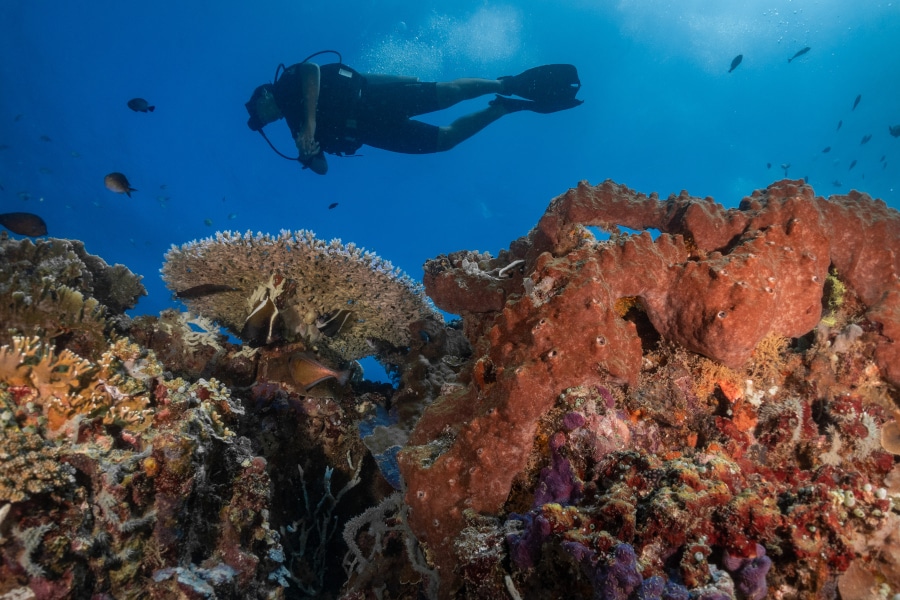
Most people arrive on the Gili Islands dreaming about turtles, coral reefs, and crystal-clear tropical water.
And yes, the underwater world here really is incredible.
But many divers do not immediately realize something important:
Diving can either help protect the ocean — or slowly damage it.
That sounds dramatic, but it is true.
Poor buoyancy, touching coral, chasing turtles, plastic pollution, careless anchoring, and irresponsible marine tourism all place pressure on fragile reef ecosystems worldwide.
The good news?
Divers can also become part of the solution.
That is exactly where eco-friendly diving begins.
What Is Eco-Friendly Diving?
Eco-friendly diving simply means exploring the underwater world responsibly while minimizing environmental impact.
It is not about making diving less fun.
To be honest, it usually makes diving better.
Divers who move calmly underwater, control their buoyancy properly, and respect marine life often enjoy more relaxed dives, better wildlife encounters, and healthier reefs overall.
According to sustainable diving initiatives like Green Fins, environmentally responsible diving includes:
- Good buoyancy control
- Not touching coral or marine life
- Reducing plastic waste
- Using reef-safe sunscreen
- Respecting wildlife behavior
- Supporting sustainable dive operators
And honestly, these small habits matter far more than people think.
Why This Matters So Much on the Gili Islands
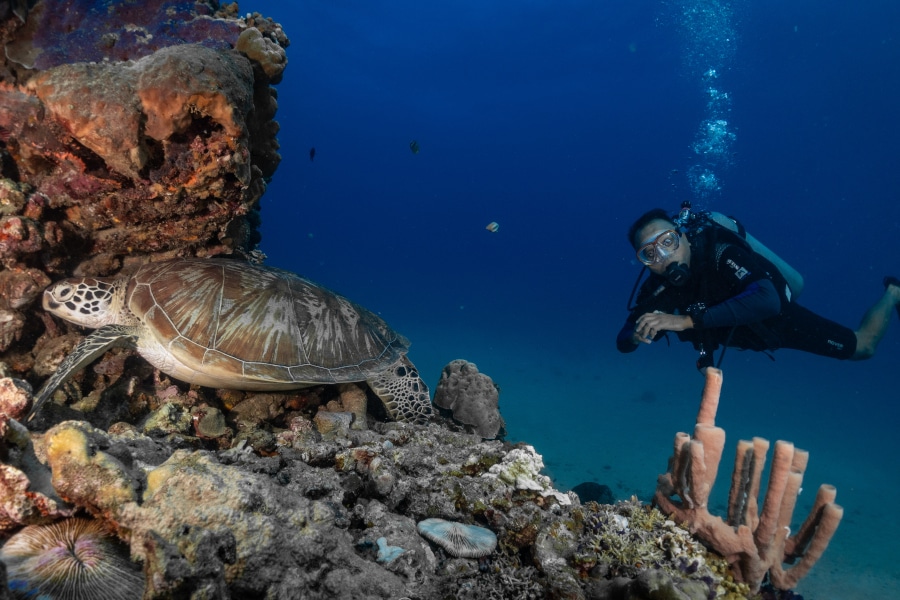
The reefs around the Gili Islands are one of the main reasons people visit in the first place.
Turtles swim directly from shore.
Reef sharks are slowly returning.
Healthy coral reefs still surround many dive sites.
But these ecosystems are also fragile.
And because the Gilis are such a popular diving destination, the long-term impact of tourism becomes extremely important.
Healthy reefs are not guaranteed forever.
They need active protection.
What Makes Divine Divers Different?
At Divine Divers Gili Meno, eco-friendly diving is part of daily operations.
Divine Divers is proud to be the only Green Fins Gold Member on the Gili Islands.
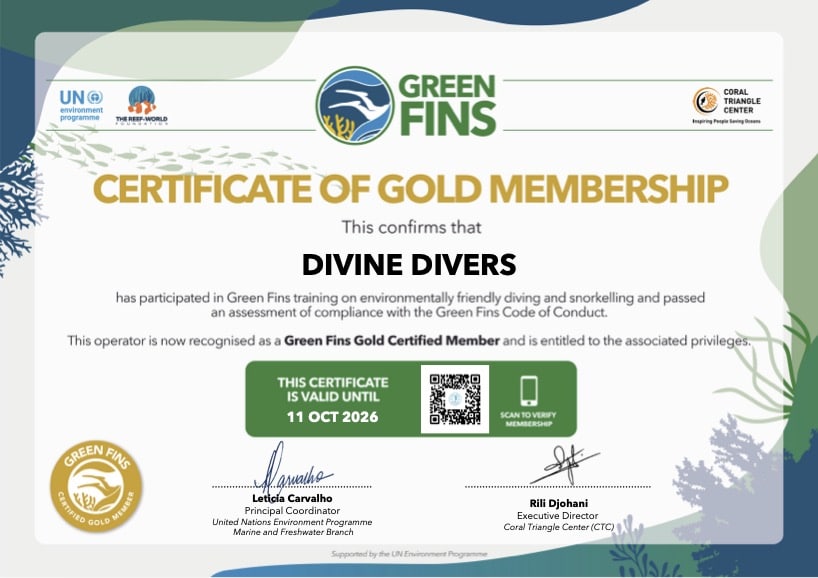
The Green Fins Gold certification represents the highest level of Green Fins membership and recognizes dive centers that successfully implement environmentally responsible diving practices on a daily basis.
Protecting Coral Reefs From Anchor Damage
One of the biggest hidden threats to reefs is anchor damage.
Dropping anchors directly onto coral can destroy reef structures that took decades to grow.
Smaller Groups and Better Diving
At Divine Divers, smaller dive groups help reduce underwater stress for both marine life and divers themselves.
Instead of crowded groups surrounding turtles and reefs, dives feel calmer and more relaxed.
And interestingly, respectful slower diving often leads to much better marine life encounters anyway.
Turtles stay calmer.
Fish behave naturally.
The whole underwater experience feels more peaceful.
Education Matters More Than People Think
One of the most important parts of eco diving is education.
Many divers simply do not realize the damage certain behaviors can cause underwater.
That is why instructors at Divine Divers Gili Meno place strong emphasis on:
- Buoyancy control
- Reef awareness
- Respectful turtle encounters
- Marine conservation
- Responsible underwater behavior
Once people see healthy reefs and turtles up close, protecting the ocean suddenly becomes less abstract.
Waste Separation and Composting
Eco diving also continues above the waterline.
Living on a small tropical island means waste management matters enormously.
That is why Divine Divers actively works with:
- Waste separation
- Composting systems
- Reducing single-use plastics
- Refillable water bottles
- More sustainable daily operations
Because protecting reefs does not stop once the dive ends.
Why Eco Diving Creates Better Experiences
The funny thing is that eco-friendly diving does not feel restrictive.
It usually feels more connected.
Divers move slower.
Observe more carefully.
Respect the underwater environment more deeply.
And honestly, those are usually the divers who enjoy the ocean most.
Because the goal is not only seeing marine life.
It is helping ensure turtles, coral reefs, sharks, and healthy oceans still exist here for future generations too.