
One of the questions we hear most often is:
“Where are we diving tomorrow?”
The answer might surprise you.
We usually plan our dive schedule only one or two days in advance.
That isn’t because we like to leave things until the last minute.
It’s because the ocean changes every single day.
Currents shift.
Visibility changes.
The weather evolves.
Marine life moves between dive sites.
A reef that offers spectacular diving today may not be the best choice tomorrow.
For that reason, we don’t believe there is a single “best dive site” in the Gili Islands.
There is only the best dive site for today.
And choosing it is one of the most important jobs our instructors do.
Three Boat Trips Every Day
At Divine Divers, we head out three times a day:
- 08:30 – Morning dives
- 11:00 – Late morning dives
- 14:30 – Afternoon dives
In addition, we organise night dives whenever two or more divers would like to explore the reef after sunset.
Each trip may visit different dive sites depending on the conditions and the divers joining us.
No two days are exactly alike.
Planning Starts the Morning Before
Although our schedule is normally published one or two days in advance, the planning begins even earlier.
At the end of each diving day, our instructors compare notes.
Where was the visibility best?
How strong were the currents?
Which direction were they flowing?
Were sharks particularly active at Shark Point?
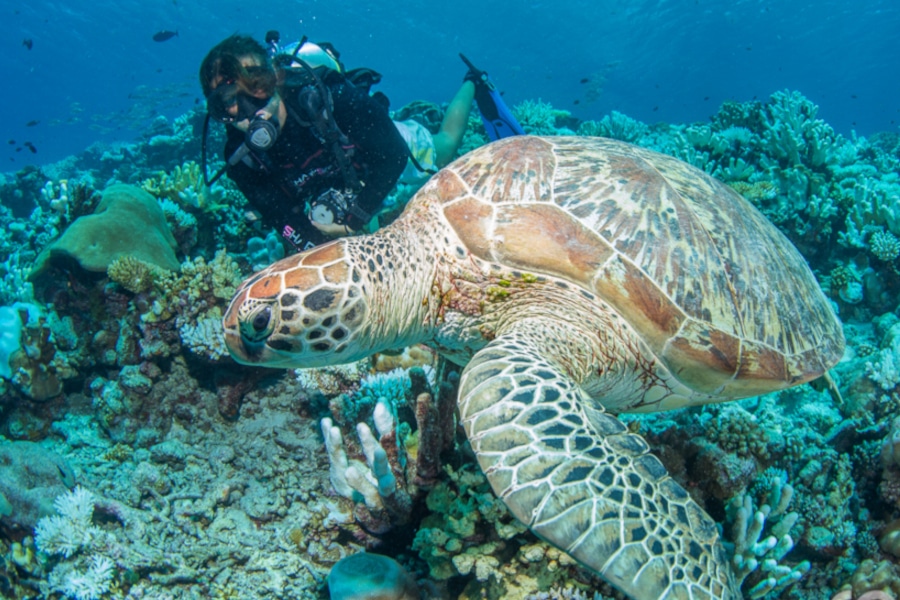
Were turtles sleeping on the outside reef at Hans Reef?
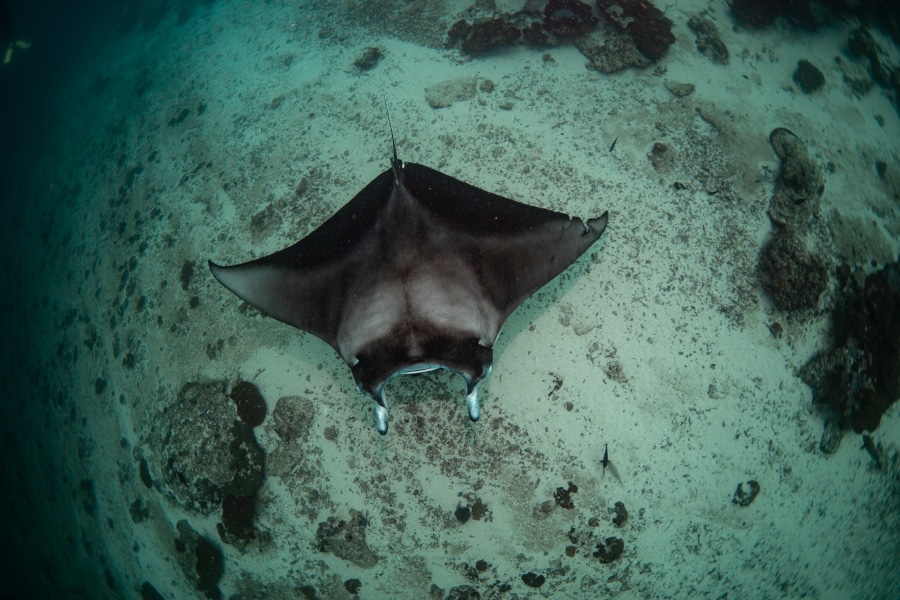
Did anyone see eagle rays in the channel at Air Wall?
Are the frogfish still on the Bounty Wreck?
Every observation helps us build a picture of what the reefs are doing.
Combined with weather forecasts and tide charts, those observations help us choose the best dive sites for the following days.
Current Direction Comes First
Around the Gili Islands, currents influence almost everything.
They determine:
- Which direction we drift.
- How comfortable the dive will be.
- Which entry and exit points are safest.
- Where marine life is likely to gather.
- Whether a site is suitable for beginners or experienced divers.
A dive site that is perfect with a gentle north-to-south current may become completely different if the current changes direction or increases in strength.
Understanding these patterns only comes from diving the reefs every day.
Reading the Tide Charts
Before deciding on the schedule, we always consult the tide charts.
The tides allow us to predict:
- Current direction
- Current strength
- Slack water
- The best times to visit certain dive sites
Because the three Gili Islands sit in the Lombok Strait, currents are influenced by large volumes of water moving between the Bali Sea and the Indian Ocean.
The result is a dynamic environment where conditions can change significantly throughout the day.
Planning around the tides helps us choose the right dive site at the right time.
Watching the Weather
The weather plays a much bigger role than many divers realise.
Every day we monitor:
- Wind direction
- Wind strength
- Wave height
- Cloud cover
- Rain forecasts
Strong winds may make one side of the islands choppy while the opposite side remains calm.
Rain can temporarily affect visibility, especially after heavy showers on neighbouring Lombok.
By understanding these patterns, we can often choose the side of the islands with the best diving conditions.
Visibility Matters
The Gili Islands are famous for crystal-clear water.
But visibility is never exactly the same.
It depends on many factors:
- Rainfall
- Wind
- Wave action
- Plankton blooms
- Current direction
Because our instructors dive these reefs every day, they know where the clearest water has been and how conditions are changing.
Sometimes the difference between two nearby dive sites is remarkable.
Following the Sun
One factor that is often overlooked is sunlight.
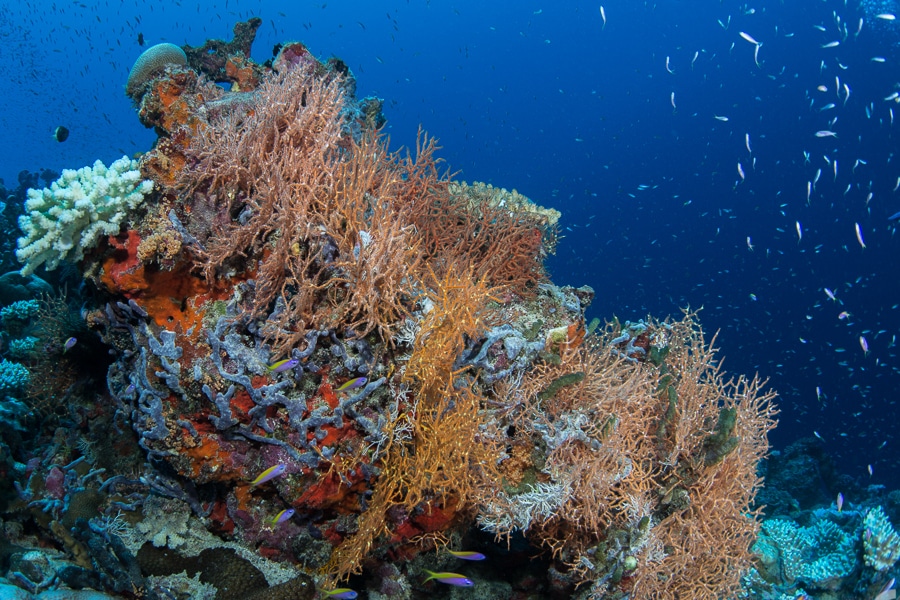
Coral reefs always look their best when the sun shines onto them.
Colours become brighter.
Visibility feels better.
Underwater photography improves dramatically.
Whenever possible, we try to choose dive sites where the reef is illuminated rather than sitting in shadow.
The same reef can look completely different depending on the time of day.
Matching the Dive Site to the Divers
Choosing a dive site isn’t only about the ocean.
It is also about the people on the boat.
Every group is different.
Some divers have just completed their Open Water course. Therefore they might be more drawn to dive sites for beginner divers.
Others have hundreds of dives and are looking for stronger currents or deeper profiles.
Some want to see turtles.
Others are hoping to photograph nudibranchs or frogfish.
Before every trip, we consider:
- Certification level
- Diving experience
- Confidence in current
- Air consumption
- Interests and goals
The aim is simple.
Choose the dive site that will give every diver the best possible experience.
Marine Life Changes Every Day
One of the greatest advantages of diving every day is seeing how the reef changes.
Marine life is never static.
Some weeks we see more reef sharks.
Other weeks octopus are everywhere.
Cuttlefish begin laying eggs.
Ghost pipefish suddenly appear.
Schools of fusiliers move across the reefs.
Sometimes eagle rays are regularly cruising through the channels between the islands.
These daily observations are shared between our instructors and often influence the following day’s schedule.
Special Events Beneath the Surface
The reef also has its own seasonal calendar.
During certain times of the year we may observe:
- Coral spawning
- Cuttlefish breeding
- Octopus mating
- Seasonal fish aggregations
- Changes in water temperature
- Plankton blooms
These natural events can make one dive site particularly special for a short period.
Planning around them allows us to make the most of what the ocean is offering.
There Is No “Best” Dive Site
People often ask us:
“What’s the best dive site in the Gili Islands?”
The honest answer is…
There isn’t one.
Yesterday it may have been Shark Point.
Today it might be Hans Reef.
Tomorrow it could be Sunset Reef or Turtle City.
The best dive depends on:
- The current
- The weather
- The visibility
- The marine life
- The sun
- And, most importantly, the divers joining us.
That’s why we remain flexible.
Nature doesn’t follow a timetable, and neither do we.
Final Thoughts
Choosing the best dive site is a mixture of science, experience and local knowledge.
Every day our instructors combine tide charts, weather forecasts, visibility reports and fresh underwater observations to create the best possible dive schedule.
That planning starts long before the boat leaves the beach.
Because for us, diving isn’t about visiting the same reefs every week.
It’s about finding the right reef, in the right conditions, at exactly the right moment.
And that’s why every day of diving in the Gili Islands is different.
Want to explore more? Check out our Complete Guide to Dive Sites in the Gili Islands for detailed information on every major dive site, including Shark Point, Halik Reef, Turtle City, Deep Turbo, Meno Wall, and many more.