


Part of our Gili Marine Life Guide | Diving with Divine Divers Gili Meno
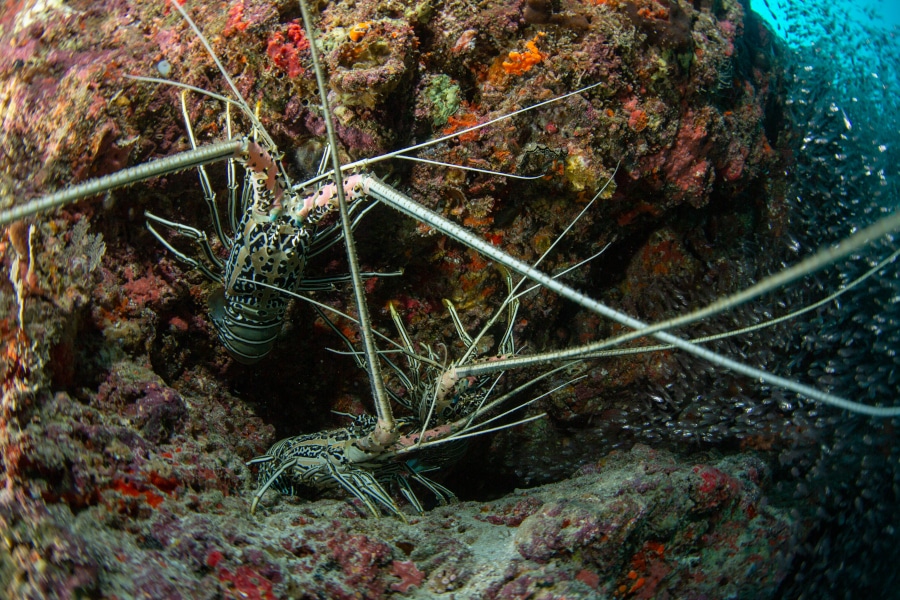
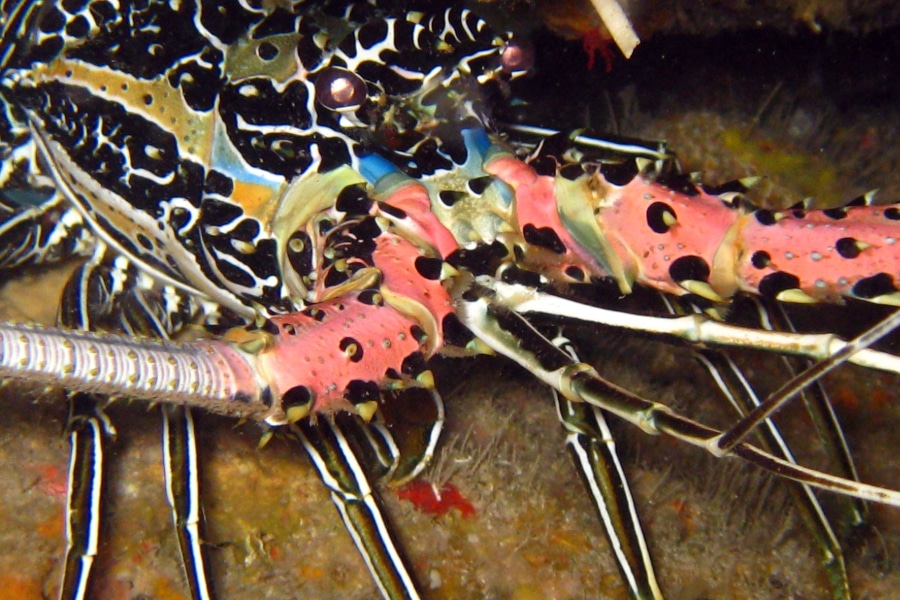
Peer into a dark reef crack along Meno Wall, and your dive torch beam might catch two long, stark-white whips twitching out from the shadows. Follow those antennae back into the recess, and you will meet an armored face, beady black eyes, and a body painted in electric blues, golds, and blacks.
Lobsters are among the most charismatic yet secretive crustaceans living around Gili Meno, Gili Air, and Gili Trawangan. Often envisioned by non-divers as sluggish seafood with oversized pinching claws, tropical reef lobsters are an entirely different breed. Clawless, agile, highly vocal, and perfectly adapted for life inside the reef’s darkest corridors.
Life in the Shadows: The Spiny and Slipper Lobsters
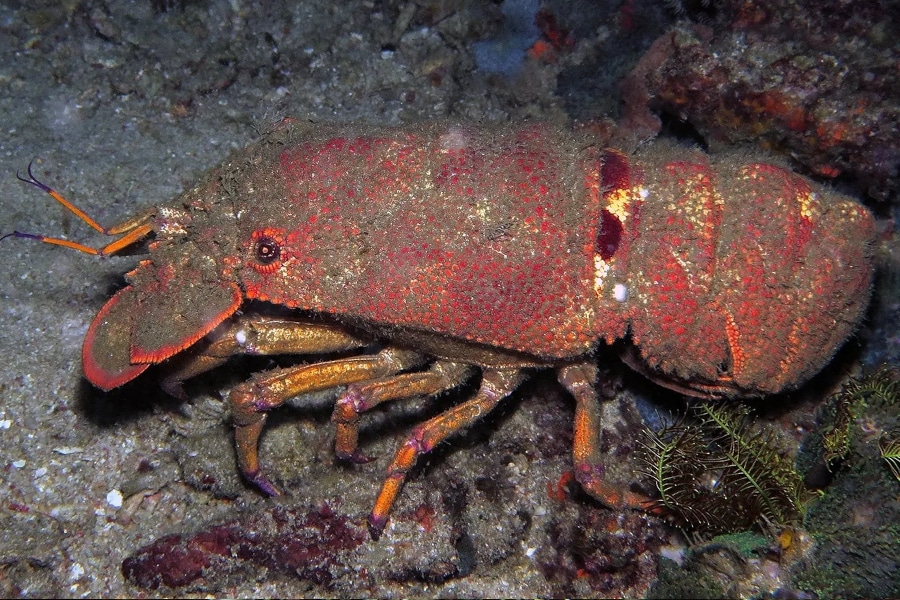
Unlike cold-water Atlantic lobsters made famous on restaurant menus, tropical lobsters belonging to the spiny lobster and slipper lobster families have no heavy crushing claws.
Without bulky claws to defend themselves, they rely on speed, heavy body armor, and reclusive habits:
Spiny Lobsters: Sleek, colorful, and armed with forward-pointing spines across their carapaces. They sport prominent, whip-like antennae that can measure longer than their entire bodies, acting as high-sensitivity sensory probes.
Slipper Lobsters: Bizarre, flattened crustaceans nicknamed “shovel-nosed lobsters.” They trade long antennae for broad, plate-like paddles, using incredible mottled camouflage to blend invisibly against limestone ceilings and sandy rubble.
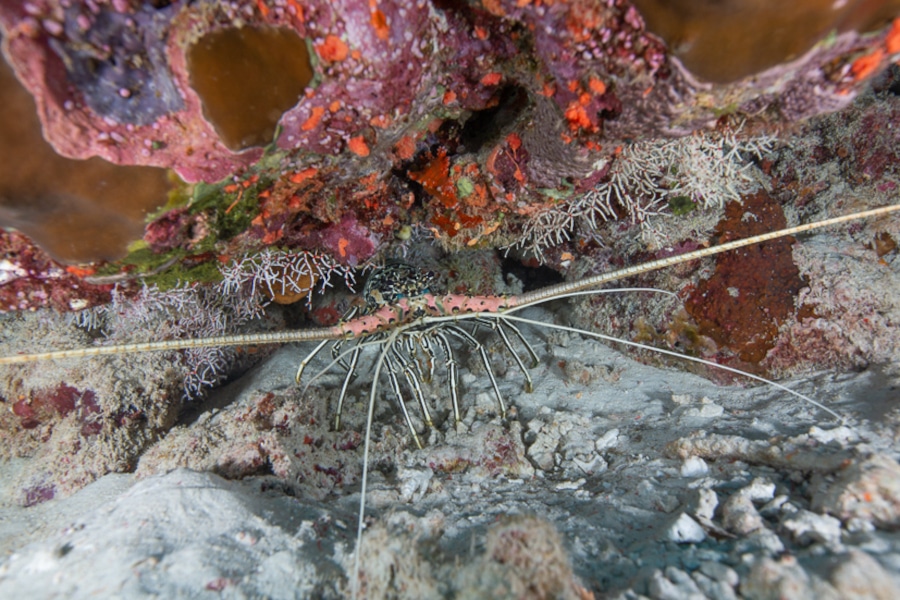
During daytime dives, both varieties spend their hours wedged tightly into coral undercuts, cavern roofs, and wreck frames. Once the sun dips below the horizon, they emerge to forage across open sand flats for snails, clams, crabs, and urchins.
5 Fascinating Facts About Reef Lobsters
They “Scream” Using Violin Mechanics: Spiny lobsters can produce a loud, raspy screech underwater to deter predators. They do this through stridulation. This means they are rubbing a specialized plectrum at the base of their antennae against a grooved file on their head. Much like a bow drawn across a violin string. The acoustic screech can be heard by divers several meters away.
Backward Jet Propulsion: When caught out in the open by an aggressive reef predator like a moray eel or nurse shark, a lobster flexes its powerful tail fan in rapid succession. This triggers a lightning-fast backward escape rocket known as the caridoid escape reaction.
Molting Their Entire Armor: To grow, lobsters must periodically shed their hard, calcified exoskeleton. During this molting phase, the animal absorbs water to crack its old shell. It then pulls its entire soft body through a seam in its back, and hides for days until its new, expanded shell hardens.
Single-File Mass Migrations: While often solitary or found in small harems inside crevices, certain spiny lobsters are famous for forming underwater conga lines. Guided by Earth’s magnetic field and sensory cues from the antennae of the lobster behind them, dozens of individuals march head-to-tail across open sand plains during seasonal shifts.
Drifting Larvae for Nearly a Year: Lobster reproduction produces bizarre, paper-thin, transparent larvae called phyllosoma. These spider-like drift organisms spend anywhere from several months to nearly a year floating in open ocean currents. After that they metamorphose into miniature lobsters and settling onto a coral reef.
Major Threats Facing Tropical Lobsters
Despite their nocturnal camouflage and heavy armor, reef lobster populations face severe pressures across Southeast Asia and the wider Indo-Pacific:
Relentless Fishing Pressure: Lobsters remain one of the world’s most lucrative luxury seafood commodities. In many parts of the region, unregulated hand-collection by free-divers, night spearfishing, and wire-mesh fish traps have stripped reefs of mature breeding adults.
The “Puerulus” Seed Harvest: A massive aquaculture trend in Southeast Asia involves catching wild, transparent post-larval lobsters (pueruli) using floating light traps before they can ever settle on the reef. Removing billions of wild seed larvae severely depletes future reef populations.
Habitat Destruction and Boat Traffic: As coral reefs suffer from destructive anchoring, warming ocean temperatures, and coastal runoff, the structural complexity of the reef crumbles. Without deep crevices and stable bommies to shelter inside during the day, lobsters become easy targets for predators.
Around the Gili Islands, the establishment of marine protected zones and active dive-community reef stewardship offer these shy creatures a much-needed sanctuary. Sites with complex topography and artificial structures allow them to rest, breed, and thrive safely.
Diver Etiquette: How to Observe Shy Cave Dwellers
Use Indirect Torch Light: Avoid pointing high-powered primary dive torches directly into a lobster’s face. Diffuse your beam or shine it slightly to the side; harsh, concentrated light stresses the animal and causes it to scramble deeper into the rock.
Hands Off the Antennas: Never attempt to tug or touch a lobster’s antennae. These are vital, delicate sensory organs packed with chemical and tactile receptors that break off easily under stress.
Watch Your Buoyancy: Lobsters love deep undercuts. Avoid kneeling on the seabed or brushing your fins against fragile hard corals while peeking under ledges.
Discover the Secret Corners of the Reef
From colorful spiny lobsters tucked into vertical drop-offs to grazing green turtles and stealthy reef sharks, the reefs of Gili Meno are full of wonders that reveal themselves to those who know where to look.
Whether you are seeking your next certification or eager to join relaxed, small-group fun dives, our knowledgeable guides will help you discover the hidden life thriving across our home waters.