

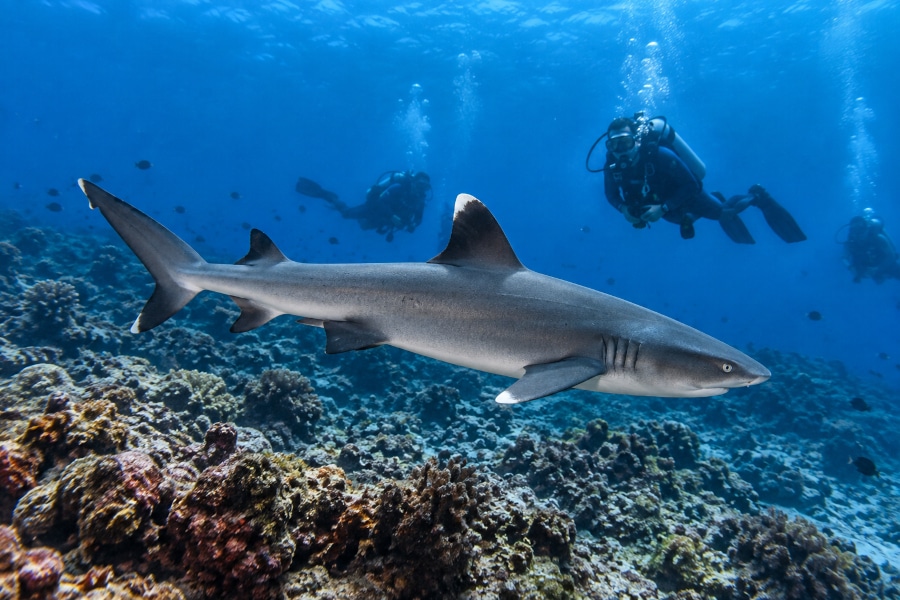
Sharks are one of the most exciting animals to encounter around the Gili Islands. The species you are most likely to see are whitetip reef sharks and blacktip reef sharks, while whale sharks occasionally pass through and hammerheads have been reported from deeper waters around Lombok.
The story of sharks around the Gilis is also a conservation story. Shark populations were once heavily affected by fishing, but protection, research and local conservation efforts are helping bring sharks back.
Whitetip Reef Sharks
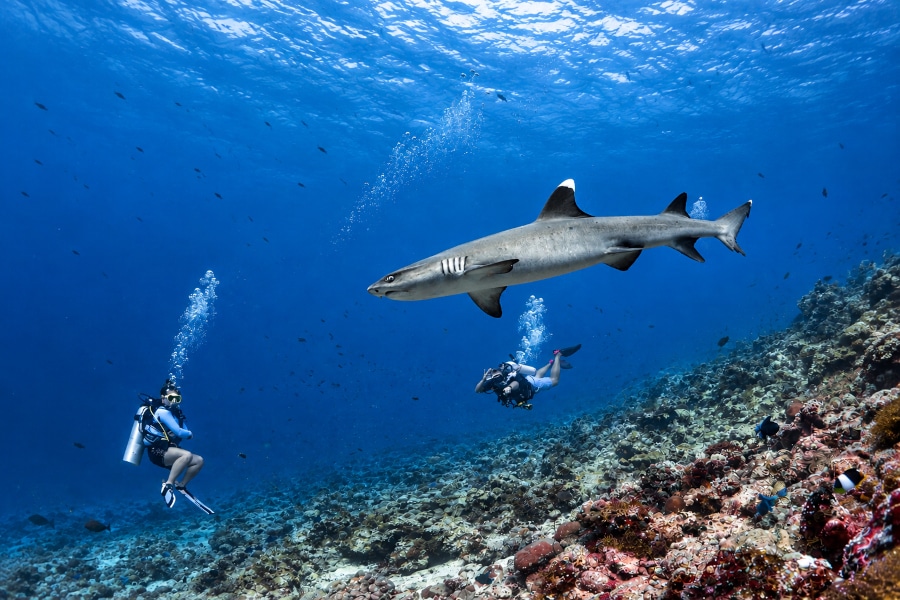
Whitetip reef sharks are the sharks we see most frequently around the Gili Islands.
At some dive sites, seeing one is almost guaranteed.
Whitetips are particularly easy to find because they are comfortable resting on the seabed or inside small caves and overhangs. Unlike some shark species, they do not need to keep swimming continuously.
At Halik, whitetips can often be found sleeping in small caves along the reef. At Shark Point and Glenn Nusa, they are frequently seen resting on sandy areas or directly on the bottom.
If you see a whitetip lying completely still, there is nothing wrong with it. This is normal behaviour.
They are also generally calm around divers. Give them space and they will often continue resting while you pass.
Blacktip Reef Sharks
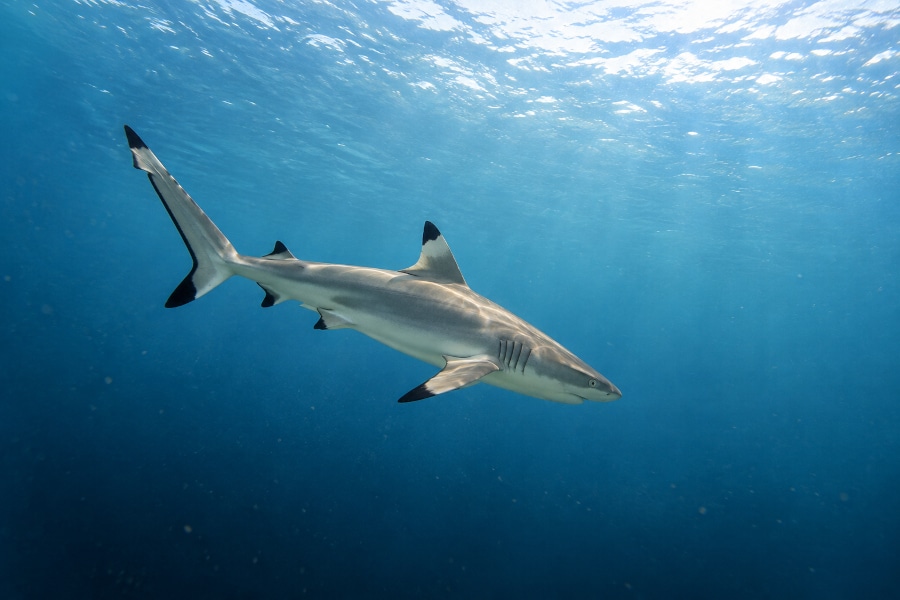
Blacktip reef sharks are another resident of the Gili Islands, although they are less common than they once were.
Thankfully, we are now seeing more blacktip reef sharks again, particularly during the cooler part of the dry season.
Blacktips are more active than whitetips and generally need to keep swimming to move water over their gills. They can sometimes be seen cruising along the reef, particularly in shallower areas.
We have a separate article about The Return of Sharks to the Gili Islands, including how shark populations have changed and what local conservation projects are doing to protect them.
Baby Blacktip Reef Sharks
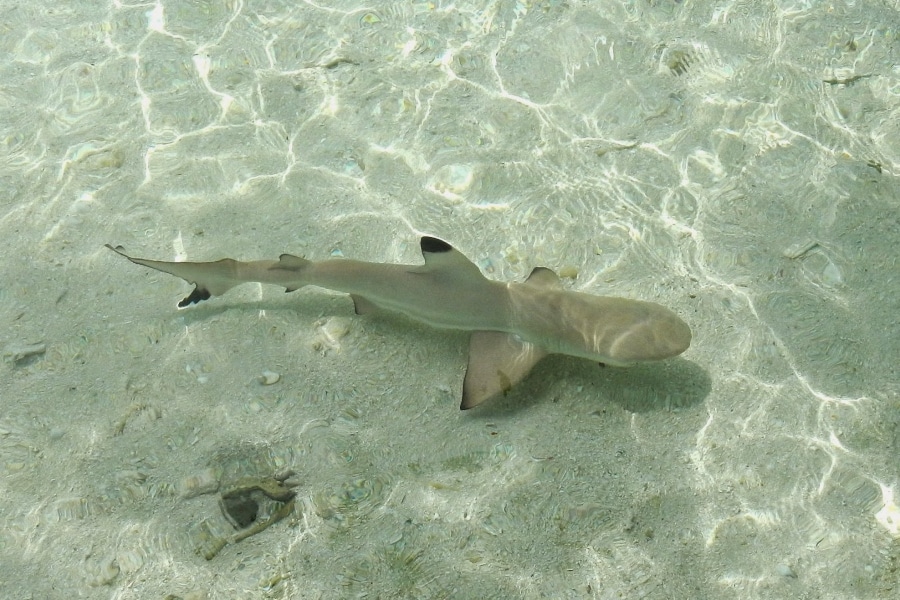
If you want to see baby blacktip reef sharks, you don’t need to go diving. The shallow lagoon on the northwest side of Gili Meno is one of the places where juvenile blacktips can often be seen while snorkelling.
The young sharks spend time in the lagoon because the shallow water provides a relatively sheltered nursery habitat. Its protected conditions and abundance of small fish and other prey give juvenile sharks a safer place to grow before they become large enough to spend more time around the outer reefs.
Their small size makes them particularly interesting to watch. You may see them cruising through the shallow water, often keeping their distance from snorkellers.
They are not interested in people. If you stay calm and give them plenty of space, they will usually continue moving through the lagoon naturally.
Whitetip vs Blacktip Reef Sharks: What Is the Difference?
The different sharks can look quite similar at first, but there are some easy differences to spot underwater.
Whitetip reef sharks have a slender body, a broad head and distinctive white tips on their dorsal and upper tail fins.
Blacktip reef sharks are generally more streamlined and have distinctive black markings on the tips of their fins, especially the first dorsal fin. They are more active swimmers and normally need to keep moving to push water over their gills.
| Whitetip Reef Shark | Blacktip Reef Shark | |
|---|---|---|
| Appearance | Slender body, broad head, white-tipped fins | Streamlined body with dark/black fin tips |
| Behaviour | Often rests on the bottom or in caves | Usually keeps swimming |
| Where we see them | Caves, reef ledges and sandy bottoms | Cruising along reefs and in shallower water |
| Gili Islands | Very common | Less common, but frequent sightings |
A useful rule when diving is simple: if the shark is lying on the bottom, it is likely to be a whitetip. If it is cruising continuously along the reef, it is more likely to be a blacktip.
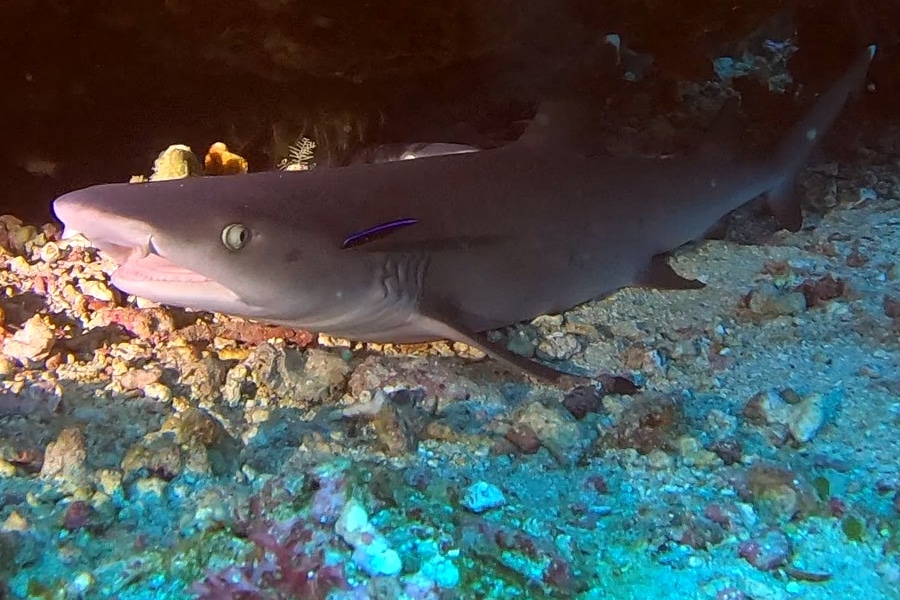
Why Do Sharks Open and Close Their Mouths?
One of the most common things people notice when watching a shark is its mouth opening and closing.
It can look quite threatening.
But it isn’t trying to bite you.
Sharks open and close their mouths to help move water across their gills, allowing them to extract oxygen from the water.
Different shark species use different methods of moving water across their gills. This is one reason a whitetip can rest on the bottom while a blacktip reef shark generally needs to keep swimming.
So if a shark slowly opens and closes its mouth while you watch it, don’t panic. It is simply breathing.
Are Sharks Attracted to Blood?
No. The idea that sharks are automatically attracted to human blood and will attack divers is largely a myth.
Sharks have an extremely sensitive sense of smell and can detect chemicals in very small concentrations, but detecting something does not mean they will automatically approach or attack it.
The reef sharks around the Gilis are not looking at recreational divers as prey.
In fact, most reef sharks will actively avoid close contact with people.
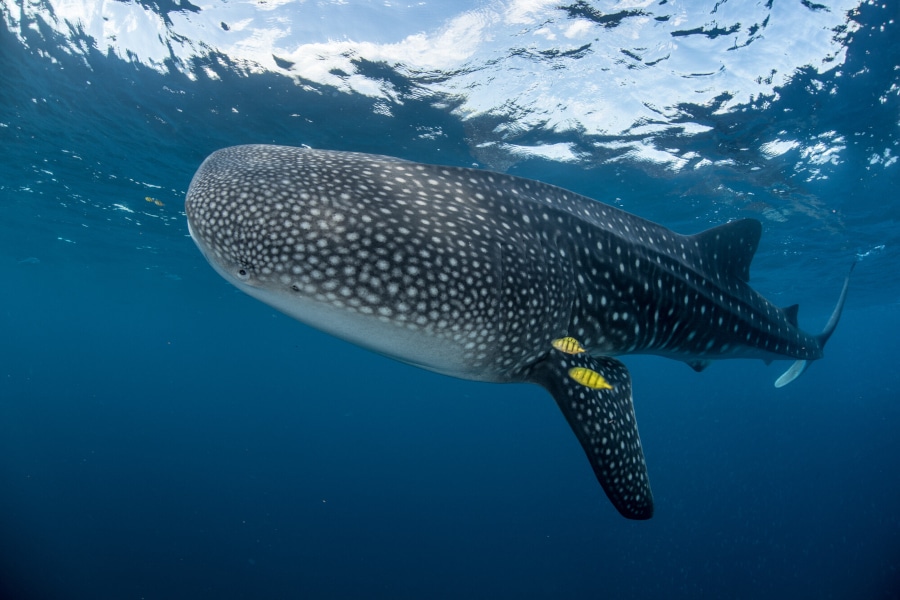
Whale Sharks in the Gili Islands
Every now and then, we get something much bigger.
Whale sharks are occasionally seen around the Gili Islands.
These encounters are rare. We may go for months without seeing one and then suddenly receive a report.
They are most likely to appear when there is a lot of plankton in the water, which provides an abundant food source for these enormous filter-feeding sharks.
Despite their size, whale sharks are very different from the predatory image many people associate with sharks. They feed by filtering tiny organisms from the water.
Seeing one around the Gilis is a genuinely special encounter.
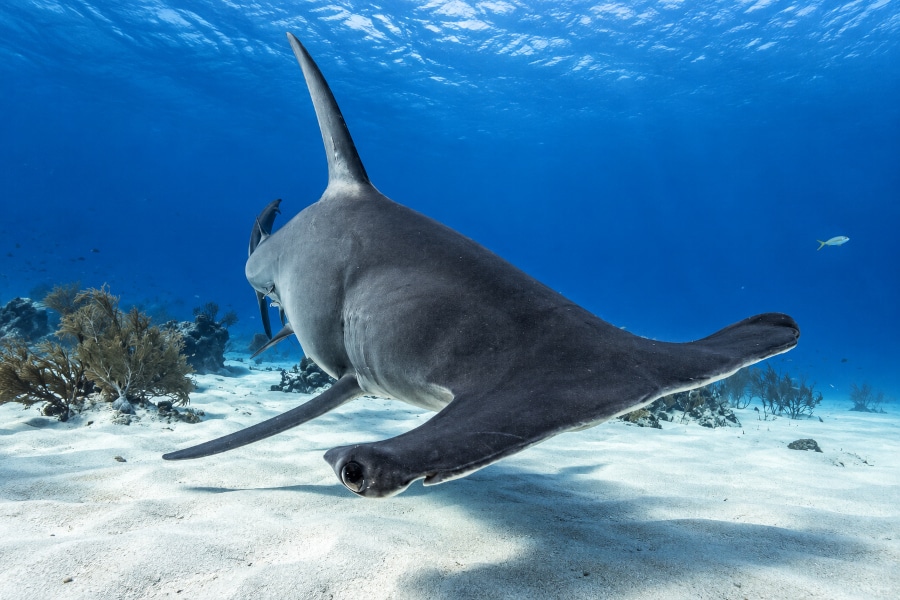
What About Hammerhead Sharks?
Hammerheads are not a regular sight around the recreational dive sites, but they have been reported in deeper waters around Lombok.
Sightings have been reported from deep technical diving sites such as Linda Reef and the steep walls off Lombok.
The Return of Sharks to the Gili Islands
Today, seeing a whitetip resting underneath a reef ledge can feel completely normal.
In the more distant past, fishing boats would sometimes move onto the dive sites as soon as the dive boats had left. Longlines were set around the reefs, and divers sometimes encountered sharks that had been caught and finned.
Thankfully, those days are largely behind us.
The Gili Islands are part of the Gili Matra Marine Protected Area, and shark populations have been monitored around the islands for years. Gili Shark Conservation and its research partners have identified more than 45 individual whitetip and blacktip reef sharks since beginning their studies in 2016. Their ongoing work includes photo identification, survey dives, remote underwater video and monitoring of juvenile whitetip sharks.
Gili Shark Conservation
Gili Shark Conservation, a Gili Air non profit organisation has been studying shark populations in the Gili Matra Marine Park since 2016.
Their research focuses on understanding which sharks live around the islands, where they move and how they use different habitats. Current research also focuses on juvenile whitetip reef sharks and their residency, movements and habitat preferences.
This kind of long-term monitoring is important.
Seeing a few sharks on a dive is encouraging, but identifying individual animals and tracking populations over time tells us much more about whether sharks are actually recovering.
Project Hiu: Turning Shark Fishermen Into Conservationists
Shark conservation in Indonesia also needs to address the people who depend on shark fishing.
This is where Project Hiu (based in Kuta Lombok) takes an interesting approach.
Rather than simply telling shark fishermen to stop fishing, Project Hiu works with fishing communities in Lombok to help fishermen transition towards other livelihoods, particularly tourism.
Their programme has repurposed shark-fishing vessels and brought former shark fishermen into tourism and conservation work. Project Hiu says its programmes saved more than 2,700 sharks in 2025 by repurposing shark fishing vessels.
The organisation also supports shark research and works with fishing communities to create alternatives to shark fishing.
This is an important part of conservation that is sometimes overlooked: protecting sharks also means creating sustainable alternatives for the people who previously depended on catching them.
Indonesia and the Shark Fin Trade
Indonesia has a complicated relationship with sharks.
It is one of the world’s major shark-fishing nations, and shark fishing remains a significant issue in the country. Project Hiu states that 80% of shark species caught in Indonesia are considered endangered, vulnerable or near threatened.
The shark-fin trade is a major part of the problem.
Sharks generally grow slowly and reproduce relatively late compared with many fish. This makes it difficult for populations to recover from heavy fishing pressure.
It is worth making one distinction: shark fishing and shark finning are not exactly the same thing. Finning specifically refers to removing the fins, often at sea, and discarding the body. The wider problem includes targeted shark fishing for fins, meat and other products.
What Threatens Sharks?
Sharks face several major threats around the world.
Overfishing
The biggest threat is simply catching too many sharks.
Sharks grow slowly, take years to mature and often produce relatively few young. Heavy fishing pressure can therefore reduce a population much faster than it can recover.
Shark Fin Trade
The high value of fins has historically encouraged targeted shark fishing.
Some species are particularly vulnerable because their fins command high prices.
Longlines and Fishing Nets
Sharks can become accidentally caught in fishing gear intended for other species.
Longlines, gillnets and other fishing methods can kill sharks even when they are not the intended catch.
Habitat Loss
Sharks need healthy marine ecosystems.
Destroying coral reefs, seagrass habitats and coastal nursery areas can reduce the places where young sharks can shelter and feed.
Climate Change
Changes in sea temperature, ocean chemistry and prey availability can affect where sharks live and how they move.
For species already under pressure from fishing, additional environmental changes make recovery even more difficult.
Why Sharks Matter
Sharks are not just exciting animals to see while diving. They are important predators within marine ecosystems.
As apex predators, they help regulate populations of other marine animals and contribute to the balance of reef ecosystems. Gili Shark Conservation’s research programme specifically links shark conservation with maintaining healthy marine ecosystems and coral reefs.
We explain this in more detail in Why Sharks Matter: How They Keep Coral Reefs Healthy.
Protecting sharks therefore isn’t just about protecting one species. It is about protecting the wider ecosystem they are part of.