

The Gili Islands are famous for their marine life, especially sea turtles, but there is much more to discover beneath the surface. Around Gili Meno, Gili Air and Gili Trawangan, snorkellers and divers can encounter green and hawksbill turtles, reef sharks, rays, octopus, cuttlefish, colourful reef fish and an impressive variety of smaller marine life.
Gili Islands marine life can be seen both from the surface and below it. Many shallow reefs are accessible to snorkellers, while scuba diving opens up deeper reefs, walls, drift dives and some of the best areas for macro life.
In this guide, we’ll look at the marine animals you can encounter around the Gili Islands, where they live, what you can see while snorkelling or diving, and which specialist guides can help you learn more.
What Marine Life Can You See in the Gili Islands?
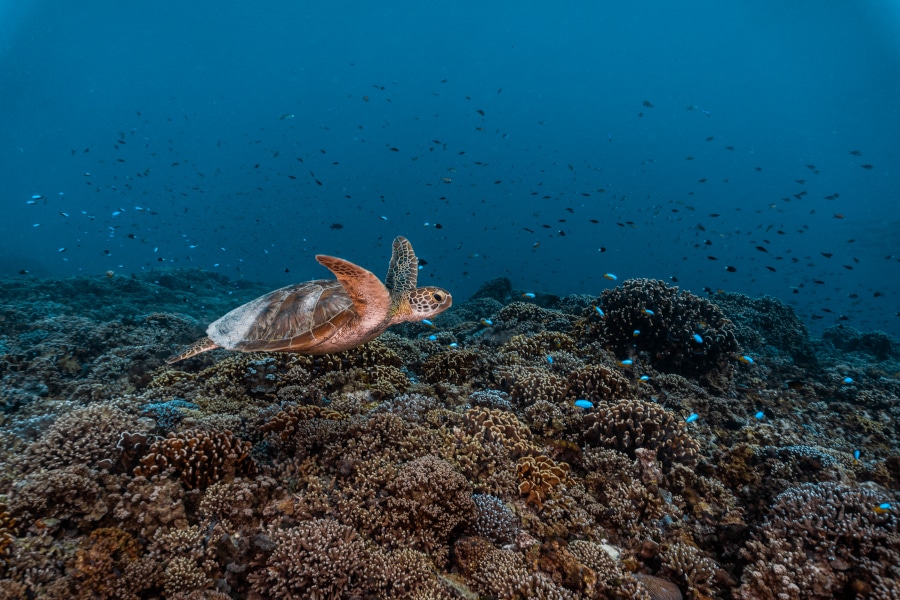
The marine life around the Gili Islands includes both large and small animals.
Some of the most commonly encountered include:
- Green sea turtles
- Hawksbill turtles
- Whitetip and blacktip reef sharks
- Stingrays and other rays
- Octopus
- Cuttlefish
- Moray eels
- Nudibranchs
- Frogfish
- Seahorses
- Ghost pipefish
- Shrimp and crabs
- Reef fish
- Boxfish and cowfish
- Lionfish and scorpionfish
Some animals are almost guaranteed highlights on certain dives, while others require a good guide, patience and a trained eye.
And that is part of what makes diving in the Gili Islands interesting. You never quite know what will be hiding on the reef.

Marine Life While Snorkelling in the Gili Islands
You don’t need to scuba dive to experience the marine life of the Gili Islands.
Many reefs begin close to shore, making turtles, reef fish and colourful coral accessible to snorkellers. Gili Meno, Gili Air and Gili Trawangan all have shallow areas where you can encounter marine life without a dive certification.
Sea turtles are the biggest attraction, but snorkellers can also see schools of tropical fish, rays and, depending on the location and conditions, animals such as octopus, cuttlefish and baby reef sharks.
The experience is different from scuba diving. Snorkelling is best for shallow reef habitats and animals close to the surface, while diving gives you access to deeper reefs and a much greater variety of habitats.
See also:
Snorkelling with Turtles on the Gili Islands
Snorkelling vs Scuba Diving
Sea Turtles: The Stars of the Gili Islands
If there is one animal associated with the Gili Islands, it is the sea turtle.
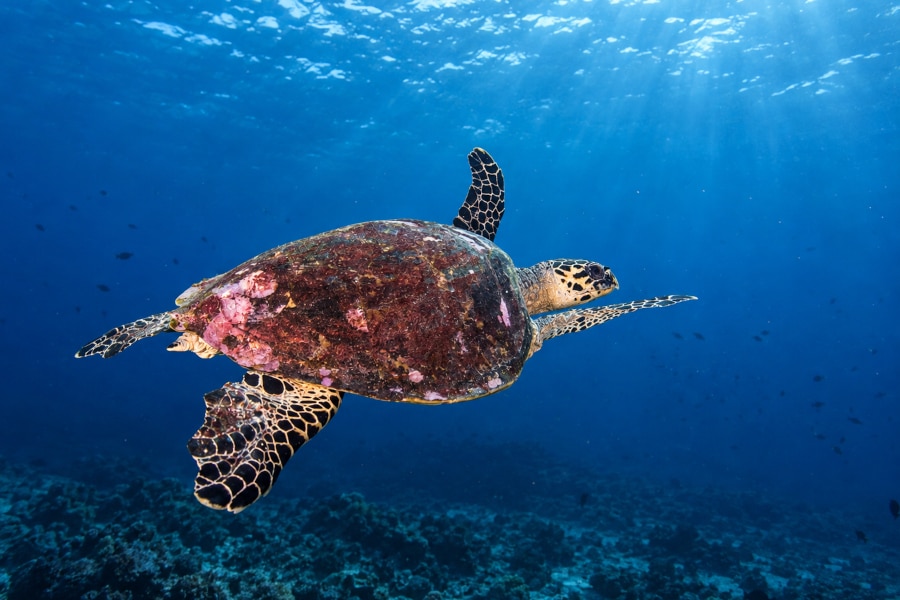
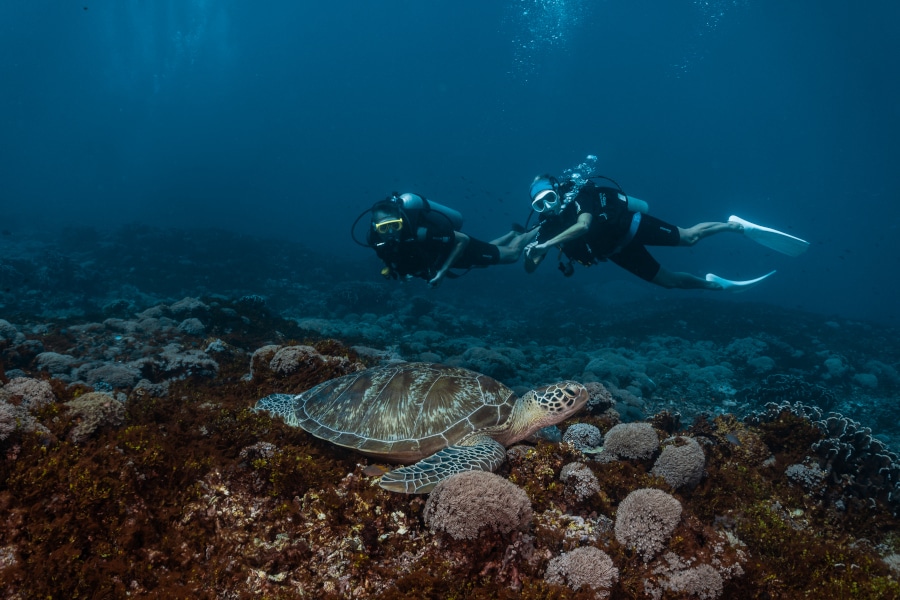
Green turtles are particularly common. They can be seen resting beneath coral ledges, feeding on the reef, visiting cleaning stations or swimming across the reef. Turtle City, Halik, Meno Wall and Bounty are among the sites well known for turtle encounters.
Hawksbill turtles are also found around the islands. They are generally less common than green turtles and can often be seen feeding around coral reefs. Their pointed beak and patterned shell make them relatively easy to distinguish from green turtles once you know what to look for.
Want to learn more?
Read our guides to Gili Islands turtles and the secret behind Gili Meno’s incredible turtle population.
Reef Sharks
Reef sharks are another regular sighting around the Gili Islands.
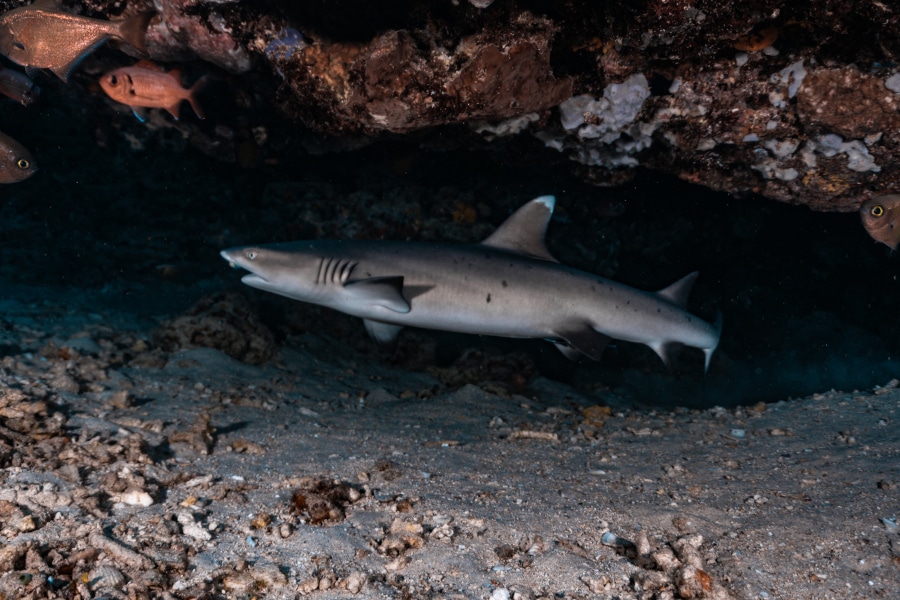
Whitetip reef sharks are the species divers encounter most often. They frequently rest beneath coral ledges, in small caves and under rocky overhangs during the day.
Blacktip reef sharks are also seen, although generally less frequently. They are more active and are often spotted cruising along the reef or around drop-offs.
Both species are naturally cautious around divers.
Whale sharks are a very different story. These enormous filter-feeding sharks are extremely rare around the Gili Islands, so seeing one is a genuinely exceptional encounter.
Shark Point, Halik and Sunset Reef are among the sites where reef sharks are regularly encountered.
Read more:
Gili Islands Sharks: Which Sharks Can You See?

Rays and Larger Marine Animals
The Gili Islands also attract several types of rays.
Stingrays can sometimes be found resting on sandy areas or beneath reef structures, while larger rays and mobulas may occasionally pass through deeper or more exposed sites.
These encounters can be unpredictable. Unlike turtles, which may stay on the reef for much of a dive, rays and larger animals can appear briefly and disappear into the blue just as quickly.
Deep Turbo, Simon’s Reef and Soraya can attract rays and larger pelagic fish because of its deeper profile and nutrient-rich currents.
Read more:
Gili Islands Rays: Manta Rays, Mobulas & Stingrays
Octopus and Cuttlefish
Some of the most fascinating marine life in the Gili Islands is much closer to the reef.
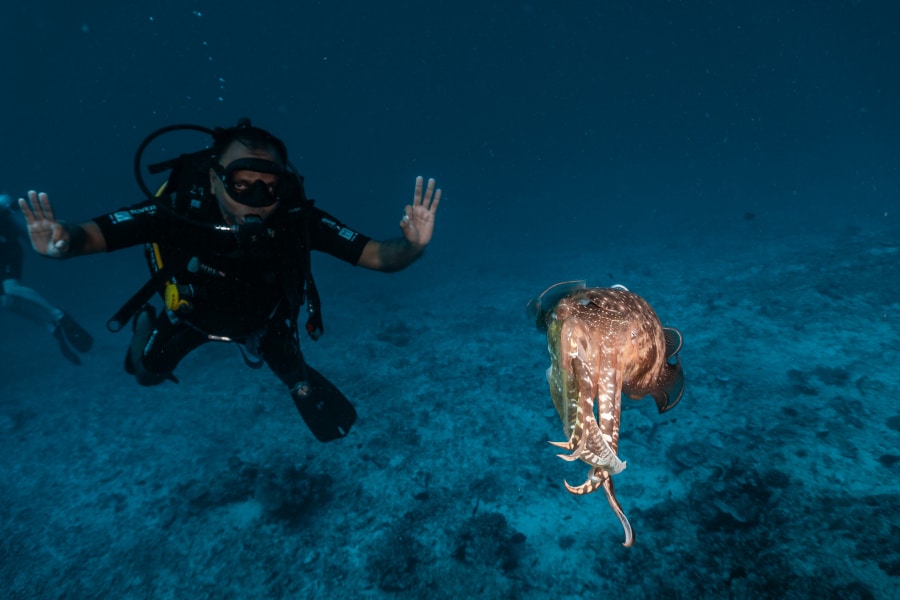
Octopus are masters of camouflage. They can hide in holes, beneath rocks or among the reef and may only become obvious when they move or suddenly change colour.
Cuttlefish are easier to spot when they are hovering above the reef or sandy areas. Their colour changes and body patterns can be spectacular, particularly when they are hunting, communicating or interacting with another cuttlefish.
From August to October, encounters with both octopus and cuttlefish can become particularly interesting as mating activity increases. Halik is especially well known for large cuttlefish during this period.
Read more:
Gili Islands Octopus: The Clever Creatures of the Reef
Gili Islands Cuttlefish: Masters of Colour & Camouflage
The Small Stuff: Macro Marine Life
You don’t have to look for large animals to have an exciting dive.
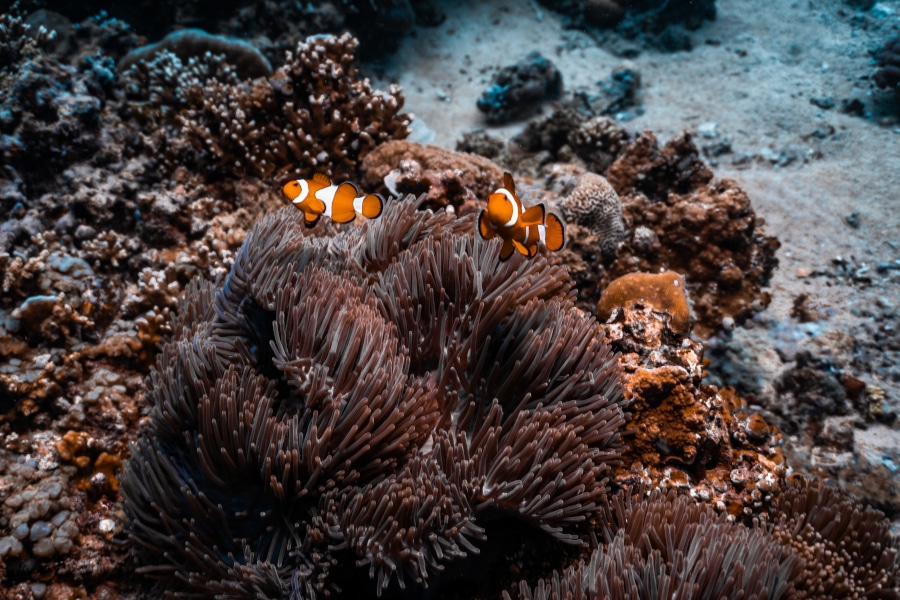
The reefs are home to an impressive range of small creatures. Nudibranchs, flatworms, shrimp, crabs and other tiny animals can be found among corals, rubble and reef structures.
Some of the more unusual sightings include:
- Frogfish
- Leaf scorpionfish
- Ghost pipefish
- Seahorses
- Pipefish
- Tiny gobies and blennies
- Nudibranchs
- Shrimp
- Crabs
- Juvenile fish
Hans Reef, Meno Wall, Meno Slope and Bounty Wreck are particularly popular with divers looking for small marine life.
Frogfish and leaf scorpionfish are especially good examples of how difficult some animals can be to find. Their camouflage allows them to blend almost perfectly into the reef.
Ornate ghost pipefish can also occasionally be found around soft corals and crinoids, including at Bounty Wreck and Meno Slope.
Explore the macro world
Our Gili Islands Macro Marine Life guide goes deeper into the small and unusual creatures you can encounter while diving around the Gilis and Lombok.
Reef Fish
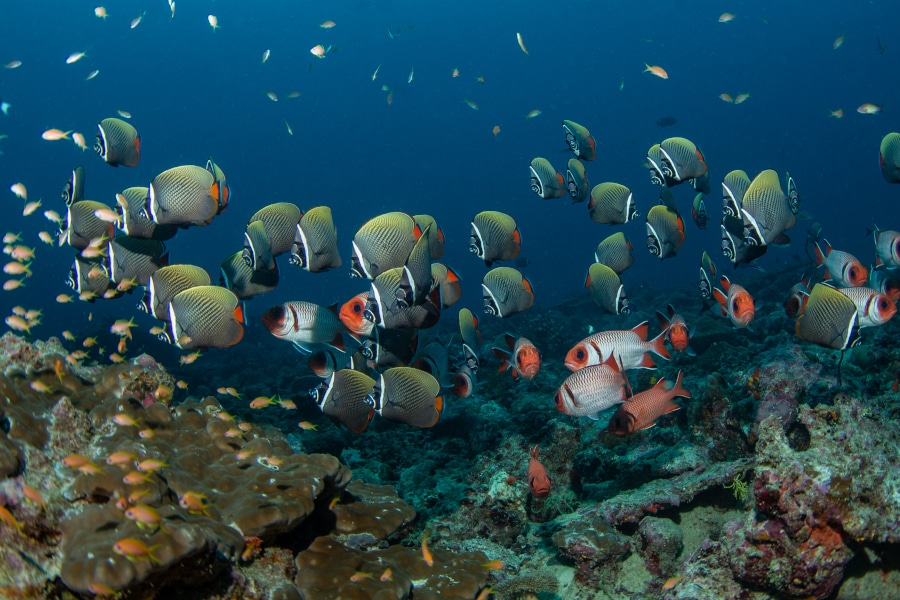
The reefs are also home to an enormous variety of colourful fish.
Schools of fish are common around many dive sites, while individual species can be found in almost every corner of the reef.
Depending on the site, you may encounter:
- Wrasses
- Groupers
- Surgeonfish
- Butterflyfish
- Angelfish
- Parrotfish
- Triggerfish
- Sweetlips
- Emperors
- Goatfish
- Pufferfish
- Boxfish and cowfish
- Fusiliers
- Gobies and blennies
- Lionfish
- Scorpionfish
Some are immediately recognisable. Others can be surprisingly difficult to identify underwater.
Our Reef Fish of the Gili Islands: A Complete Guide to Fish Species will cover the different fish families and the species you are most likely to encounter around the islands.
Moray Eels and Other Reef Predators
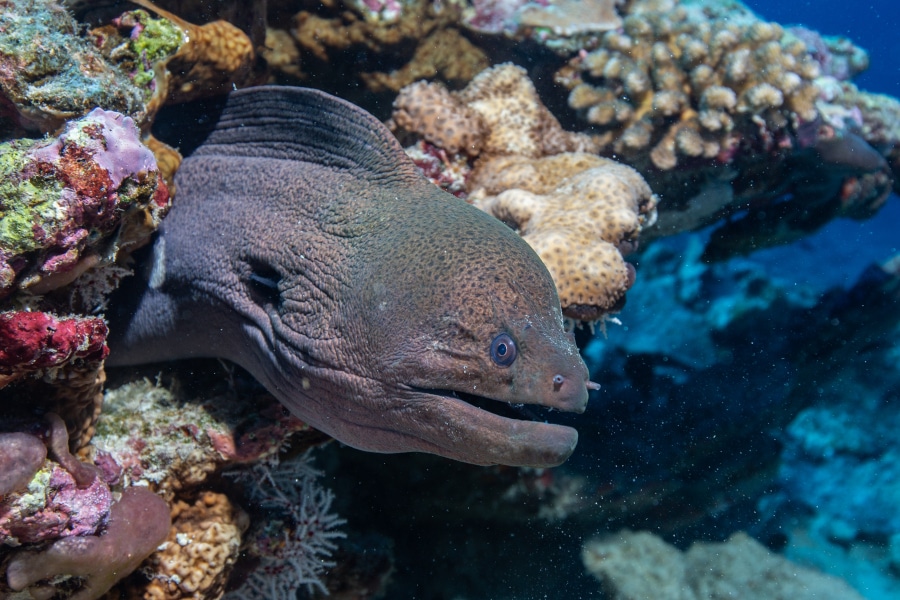
Moray eels are common throughout the Gili Islands.
Most of the time, you will see little more than a head sticking out from a hole in the reef. They can look intimidating, but they generally prefer to keep their distance.
The islands are home to several species, from smaller colourful morays to much larger giant morays. Ribbon eels are also occasionally encountered.
Other reef predators include lionfish, scorpionfish, trevallies and barracuda.
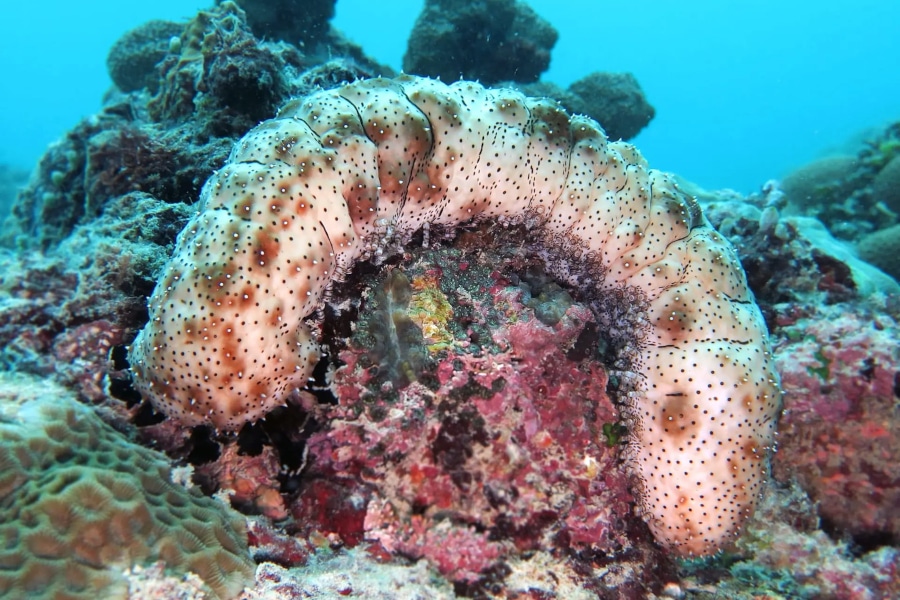
Sea Cucumbers: The Reef Cleaners You Probably Ignore
Sea cucumbers are easy to overlook, but they play an important role in the reef ecosystem. These relatives of starfish and sea urchins feed on organic material in the sand and sediment, helping recycle nutrients and keep the seabed healthy.
Around the Gili Islands, they are commonly found on sandy areas, rubble and around coral reefs.
Read more: Sea Cucumbers Explained: The Reef Cleaners You Probably Ignore
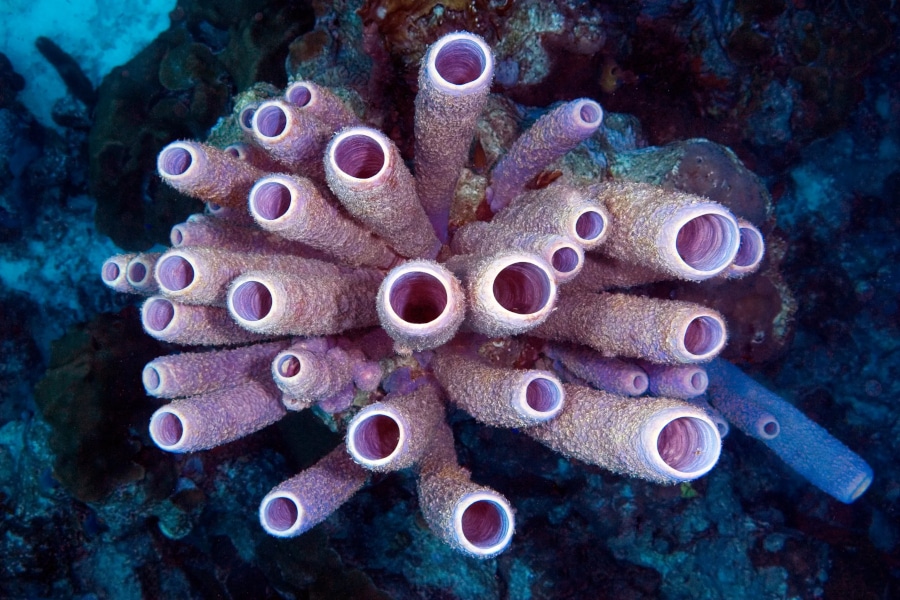
Sponges: The Hidden Life of the Reef
Sponges may look like plants or colourful growths on the reef, but they are actually animals. They filter water as they feed and provide shelter for many small reef creatures.
They are common around the Gili Islands and are an important, if often overlooked, part of the reef ecosystem.
Read more: The Hidden Life of Sponges: Why They Matter to Coral Reefs
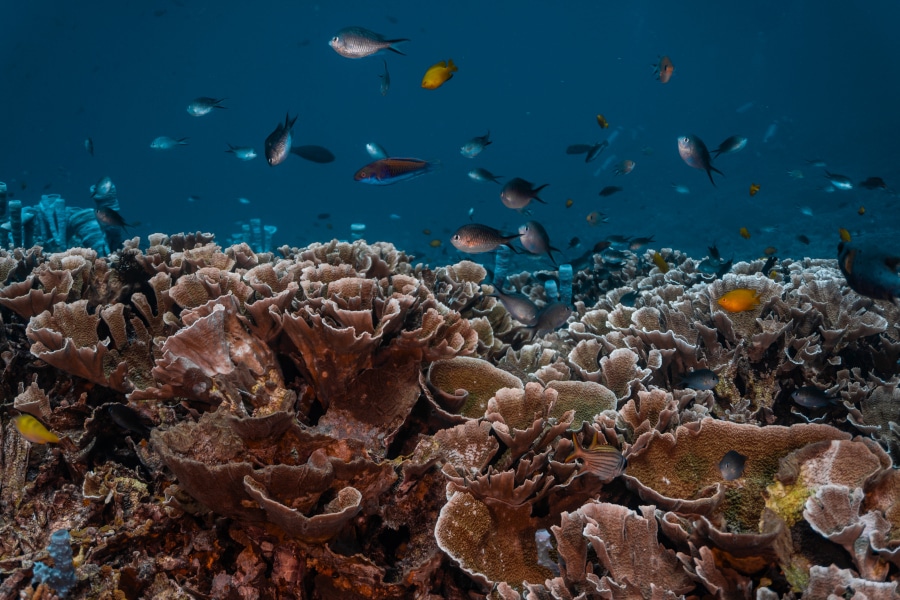
Coral Reefs: The Home of Gili Islands Marine Life
The animals are only part of the story.
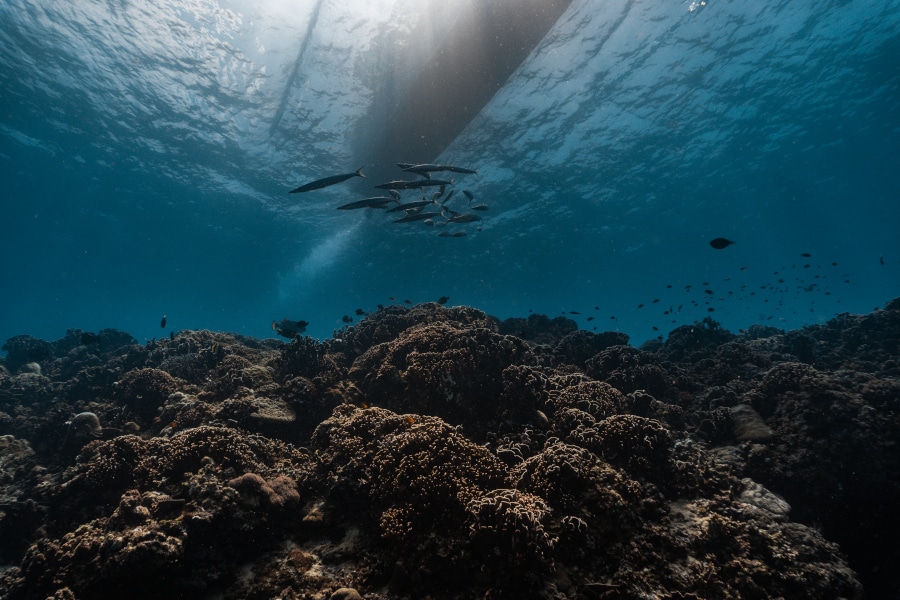
The coral reefs around the Gili Islands provide the structure on which much of this marine life depends. Hard corals, soft corals, sea fans, sponges and artificial reef structures create habitats for countless reef inhabitants.
A single coral head can provide shelter for fish, shrimp and crabs, while sandy patches between reefs may attract rays, gobies and other bottom-dwelling animals.
This is why the same dive site can look completely different depending on where you look.
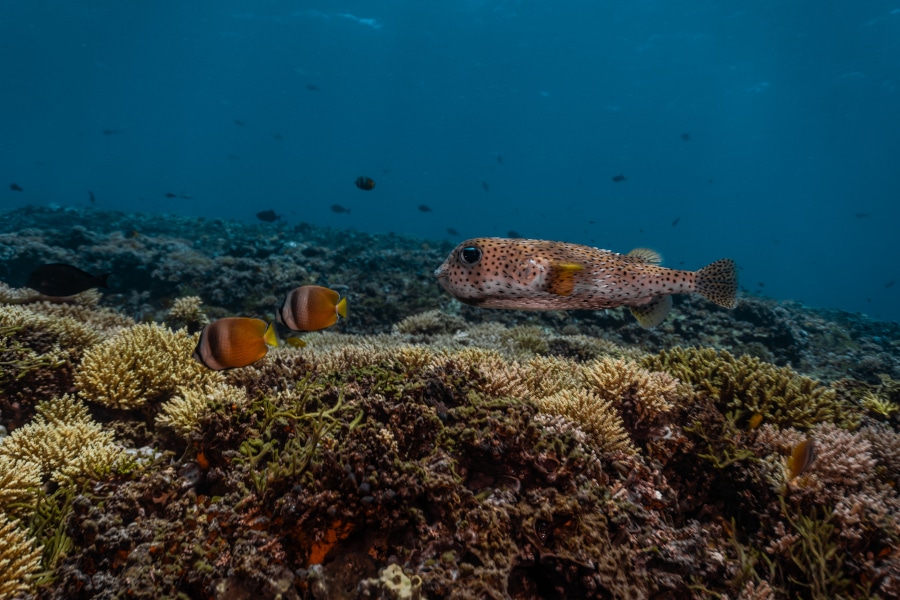
Marine Life Around Gili Meno, Gili Air and Gili Trawangan
There is considerable overlap between the three islands.
You shouldn’t visit Gili Meno expecting one completely different collection of animals from Gili Air or Gili Trawangan. The islands are part of the same surrounding reef ecosystem.
What changes is the habitat, depth, current and structure of each dive site.
A shallow coral garden may be excellent for turtles and reef fish. A deeper reef with stronger current may attract sharks, rays and schooling fish. Sandy areas, rubble and artificial structures can be particularly productive for macro life.
That variety is one of the strengths of diving the Gili Islands.
Marine Life by Dive Site
Different dive sites have different strengths.
Turtles:
Turtle Heaven, Halik, Meno Wall and Meno Slope.
Sharks:
Shark Point, Halik and Sunset Reef.
Macro life:
Hans Reef, Meno Wall, Meno Slope and Bounty Wreck.
For larger schools of fish and deeper marine life:
Shark Point and Glenn Nusa.
For a complete overview of the dive sites, see our Gili Islands Dive Sites: The Complete Guide with Maps.
When Is the Best Time to See Marine Life?
There isn’t one single month when you will see everything.
Turtles, reef fish, morays and many other reef inhabitants can be encountered throughout the year.
Some seasonal behaviour can make particular periods more interesting, though. For example, August to October can be a particularly good time for observing cuttlefish and octopus behaviour associated with mating.
Conditions also change throughout the year. Visibility, currents, tides and water movement all influence which sites are most productive on a particular day.
Marine life simply doesn’t follow a fixed schedule.
How to Watch Marine Life Responsibly
Seeing an animal is exciting. Getting too close can turn that encounter into a problem.
Never touch, chase, ride or feed marine animals. Give turtles and other animals enough space to move naturally, and avoid blocking a turtle’s route to the surface.
Good buoyancy is equally important. Avoid resting on coral, dragging equipment across the reef or accidentally kicking fragile organisms.
The Gili Islands have made significant progress in reef conservation, but the ecosystem still needs protection. Historical destructive fishing damaged parts of the reef, while restoration projects and natural regeneration have helped many areas recover.
Every diver can help protect what they came to see.
Why the Gili Islands Are So Good for Marine Life
The appeal of Gili Islands marine life isn’t just one spectacular animal.
It is the combination.
You might begin a dive watching a green turtle feeding on the reef, pass a resting whitetip shark, spot a moray eel between the rocks and then spend the final few minutes searching for a tiny nudibranch.
Another dive might be completely different.
That variety is what keeps many divers coming back to the Gili Islands year after year. The reefs support everything from large turtles and reef sharks to tiny crustaceans and well-camouflaged macro creatures.
And sometimes the most memorable animal is the one your guide had to point out because you would never have seen it yourself.
Explore the Marine Life of the Gili Islands
Want to learn more about the animals you may encounter underwater?
Turtles
- Gili Islands Turtles: Green & Hawksbill Turtles Up Close
- The Secret Behind Gili Meno’s Incredible Turtle Population
- Best Dive Sites to See Turtles
Sharks & Rays
- Gili Islands Sharks: Which Sharks Can You See?
- Gili Islands Rays: Manta Rays, Mobulas & Stingrays
- Why Sharks Matter: How They Keep Coral Reefs Healthy
- The Return of the Sharks on the Gili Islands
Macro Marine Life
- Gili Islands Macro Marine Life
- Gili Islands Nudibranchs
- Gili Islands Seahorses
- Gili Islands Pipefish
- Ghost Pipefish in the Gili Islands
- Gili Islands Frogfish
Other Marine Animals
- Gili Islands Octopus
- Gili Islands Cuttlefish
- Gili Islands Moray Eels
- Sea Cucumbers Explained
- The Hidden Life of Sponges
Reef Fish
FAQ
What marine life can you see in the Gili Islands?
The Gili Islands are particularly known for green sea turtles and reef sharks, but divers can also encounter hawksbill turtles, rays, octopus, cuttlefish, moray eels, nudibranchs, frogfish, ghost pipefish, shrimp, crabs and a wide variety of reef fish.
Are there sharks in the Gili Islands?
Yes. Whitetip reef sharks are commonly encountered, while blacktip reef sharks are also regularly seen.
Are there turtles in the Gili Islands?
Yes. Green turtles are particularly common, and hawksbill turtles are also encountered around the islands.
Is the Gili Islands good for macro diving?
Yes. The reefs contain nudibranchs, frogfish, ghost pipefish, shrimp, crabs, flatworms and many other small creatures. Lombok also has several dedicated muck-diving sites close to the Gilis.
Can you see marine life while snorkelling?
Absolutely. Turtles and reef fish are particularly easy to encounter while snorkelling, although scuba diving gives you access to a much wider range of habitats and deeper dive sites.