
Located i the south west of Gili Meno, Bounty Wreck is one of the most popular sites for scuba diving in the Gili Islands.
Combining coral reefs, abundant marine life, turtle encounters, and one of the region’s most famous wrecks, it perfectly showcases why Gili Islands diving has become one of Indonesia’s most sought-after underwater experiences.
Some divers come for the turtles.
Others come for the wreck.
Photographers often come searching for frogfish.
While the wreck itself is the star attraction, the real dive site is much larger than many people realise.
In fact, much of the dive takes place away from the wreck altogether.
Where is Bounty Wreck?
Bounty Wreck is located in the channel between Gili Meno and Gili Trawangan. Because of its position, the site is influenced heavily by tides and currents.
This location makes Bounty Wreck one of the most interesting Gili dive sites, but it also means visibility can vary more than at sites such as Sunset Reef or Shark Point.
On good days, visibility can be exceptional.
On other days, nutrient-rich water moving through the channel may reduce visibility slightly.
Fortunately, the abundance of marine life usually makes divers forget about visibility altogether.
Understanding the Dive Route
The route taken around Bounty Wreck depends largely on the season.
During the dry season, from approximately May to November, currents usually flow from north to south.
As a result, the wreck often sits towards the end of the dive.
Divers begin further north and drift gradually towards the wreck.
During periods of stronger current, some dive guides may choose to start near the famous Bask Nest statues. While this can create a fantastic drift dive, there is always the possibility that divers will not reach the wreck.
During the rainy season, currents often reverse direction.
When this happens, the Bounty Wreck becomes one of the first attractions encountered during the dive.
This seasonal change means the site can feel completely different depending on the time of year.
The Main Reef
Many divers assume the entire dive revolves around the wreck.
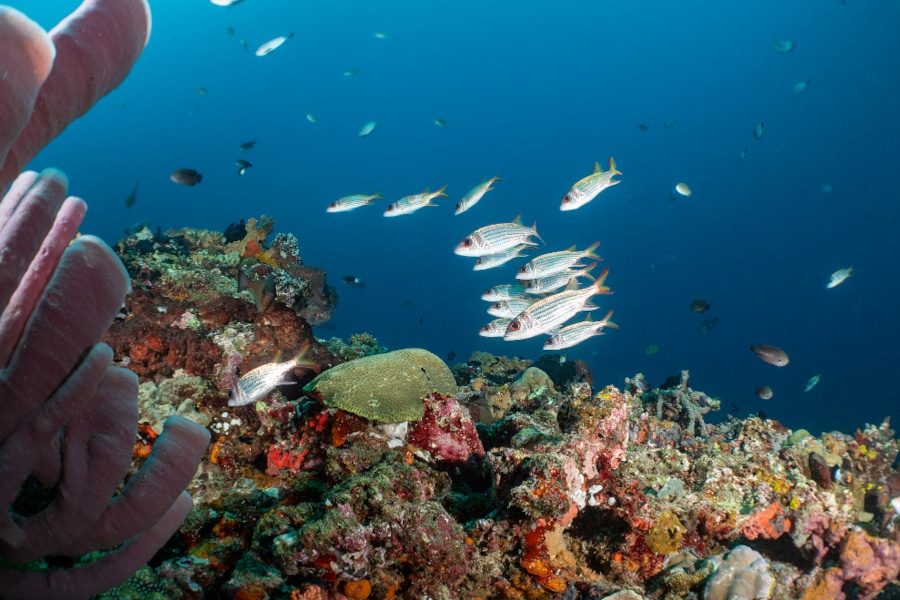
In reality, much of the dive takes place on what many guides would consider part of Meno Slope.
This section consists of coral bommies and sandy patches.
Turtles are everywhere.
It is not unusual to encounter several green sea turtles during a single dive.
Most beginner divers stay on this main reef.
The shallower depths and generally relaxed conditions make it ideal for Open Water divers and those still gaining confidence underwater.
The Hidden Outside Reef
More experienced divers often follow a completely different route.
This is where Bounty Wreck becomes truly special.
Instead of staying on the main reef, guides head towards an outside reef system located further into the channel.
Many local guides consider this one of the hidden gems of diving in the Gili Islands.
In fact, turtle encounters here can sometimes rival or even exceed those at Turtle City.
The outer edge of this reef is covered in beautiful pink soft corals that sway gently in the current.
Schools of fish patrol the reef edge.
Barracuda are regular visitors.
And the gentle drift along the outside reef is often one of the highlights of the entire dive.
Glassfish Rock
Following the outside reef eventually leads to one of the site’s best-kept secrets.
Glassfish Rock.
This small coral formation is usually packed with life.
Thousands of glassfish can sometimes be found sheltering amongst the corals.
Batfish and angelfish frequently gather around the rock.
Ghost pipefish are regular sightings.
Scorpionfish blend perfectly into the reef.
For underwater photographers, this section alone can justify the dive.
And the best part?
Many divers never even know it exists.
Exploring the Wreck
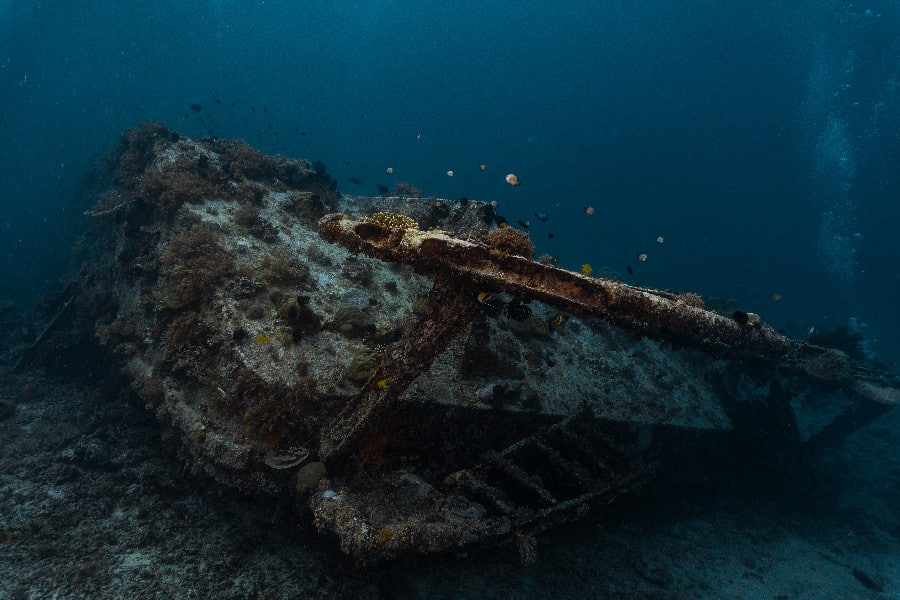
Eventually the route leads to the site’s main attraction.
The Bounty Wreck.
Over the years, the wreck has transformed into a thriving artificial reef covered in corals, sponges, and marine growth.
The northern end of the wreck is often surrounded by a huge school of drum fish.
For many divers, this is one of the most memorable sights in the entire Gili Islands.
The wreck itself is packed with marine life.
Lionfish are common.
Scorpionfish hide amongst the structure.
Nudibranchs can be found on the metal surfaces.
And frogfish are one of the main reasons photographers keep returning.
Patient divers with exceptional eyes may even discover something rarer.
Pontohi seahorses occasionally hide amongst the marine growth covering the wreck.
Finding one is never guaranteed.
But when it happens, it is a very special sighting.
Most dives include at least one complete circuit around the wreck before beginning the ascent.
The Forgotten Bicycles
If no-decompression limits allow, many guides finish the dive with a quick visit to the bicycles located not far from the wreck.
Originally placed as part of an artificial reef project, the bicycles have become miniature wrecks in their own right.
Corals have colonised the frames.
Fish use them as shelter.
And they provide a fun final stop before heading towards the surface.
When Is the Best Time to Dive Bounty Wreck?
Bounty Wreck can be enjoyed year-round.
Both current directions create excellent dives.
However, timing matters.
Friday afternoons are often best avoided.
Many dive centres from Gili Trawangan schedule dives to the wreck at this time, which can make the site significantly busier than usual.
Morning dives are often quieter and provide a more relaxed experience.
Final Thoughts
If you’re researching the best sites for Gili Islands diving, Bounty Wreck deserves a place near the top of your list.
Few dive sites combine wreck diving, coral reefs, drift diving, macro photography, artificial reefs, and turtle encounters in such a compact area.
And that is exactly why it remains one of the most popular and rewarding dive sites in the Gili Islands.
Want to explore more? Check out our Complete Guide to Dive Sites in the Gili Islands for detailed information on every major dive site, including Shark Point, Halik Reef, Turtle City, Deep Turbo, Meno Wall, and many more.