
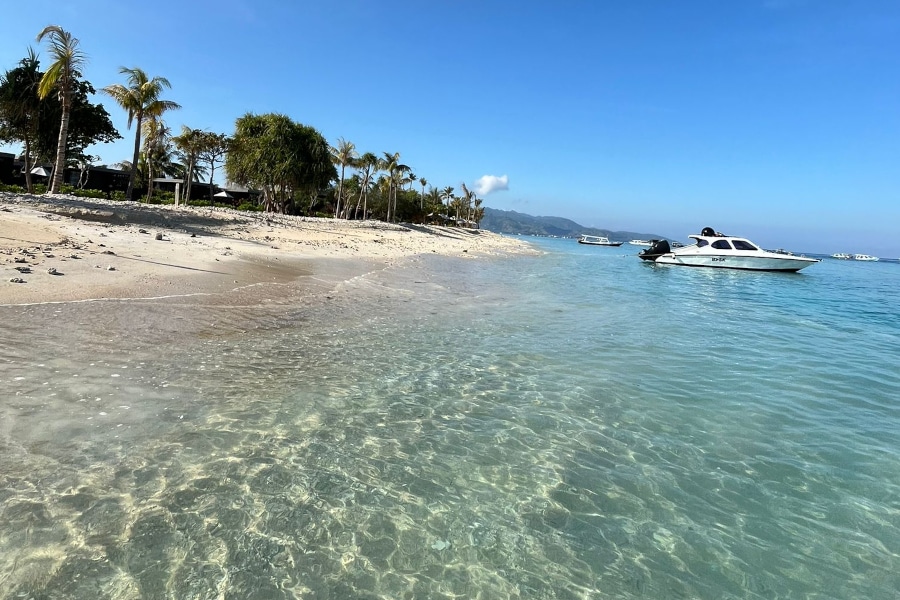
One of the most common questions visitors ask when planning a trip to the Gili Islands is:
“When is the best time to visit the Gili Islands?”
The answer is surprisingly complex.
Whether you’re planning a beach holiday, scuba diving in the Gili Islands, snorkeling with turtles, or simply enjoying island life, understanding the local weather patterns can help you choose the perfect time to visit.
Unlike many destinations in Southeast Asia, the Gili Islands weather is influenced by a unique microclimate, the nearby volcanoes of Lombok, global climate events such as El Niño, and even the famous Wallace Line that separates Bali from Lombok.
This guide explains everything you need to know about the Gili Islands dry season, Gili Islands rainy season, and how the seasons affect diving in the Gili Islands throughout the year.
Understanding the Gili Islands Microclimate
One of the first things long-term residents notice is that weather forecasts are often wrong.
At least for the Gili Islands.
You can stand on Gili Air, Gili Trawangan or Gili Meno and watch heavy rain falling over Lombok while the sun continues shining above your head.
This happens surprisingly often.
The reason is geography.
The Gili Islands are small, flat coral islands located just off the northwest coast of Lombok. Lombok itself is dominated by mighty Mount Rinjani, Indonesia’s second-highest volcano, rising to over 3,700 metres above sea level.
When moisture-filled air arrives from the ocean, Mount Rinjani forces that air upwards.
As the air rises, it cools and releases rain.
Meteorologists call this the orographic effect.
Essentially, Lombok acts like a giant rain catcher.
By the time many weather systems reach the Gili Islands, much of their moisture has already fallen on Lombok.
This creates a noticeably drier climate on the islands.
It is one of the reasons why the Gilis often receive less rainfall than both Lombok and Bali.
For divers, this is excellent news.
More sunshine generally means better visibility, calmer seas, and more comfortable conditions above and below the water.
The Dry Season (May to November)
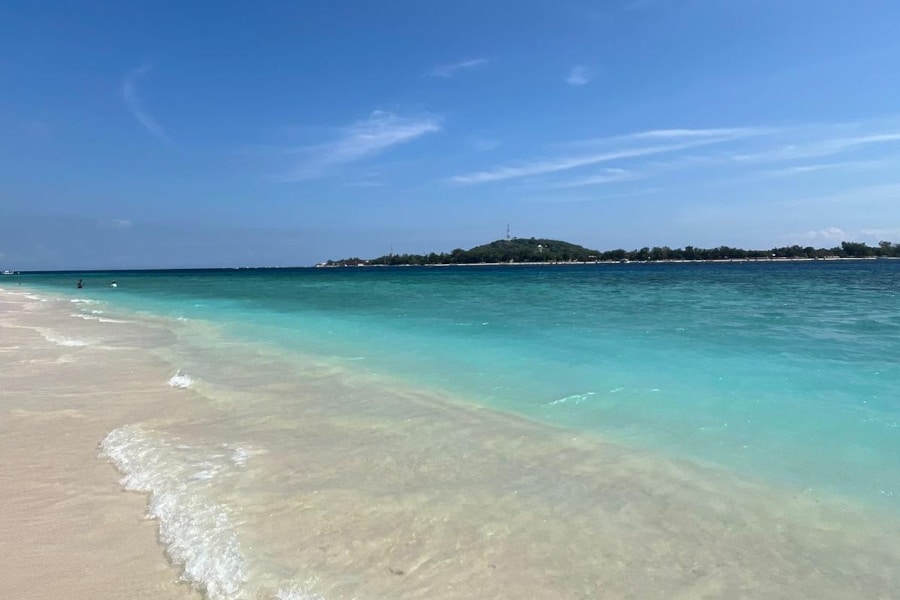
For most visitors, the dry season is considered the best time to visit the Gili Islands.
The dry season generally begins in May and lasts until November.
This period is characterised by:
- Lower rainfall
- Less humidity
- More sunshine
- Excellent visibility
- Consistent diving conditions
For many visitors, the dry season offers the best conditions for Gili Islands diving, snorkeling, island hopping, and beach holidays.
This period is particularly popular amongst divers visiting Gili Trawangan, Gili Meno, and Gili Air because underwater visibility often reaches its annual peak.
For scuba divers, these months are often exceptional.
Visibility regularly reaches 20 to 30 metres and can occasionally exceed that.
Currents tend to be more predictable (yet stronger).
July, August, and September are typically the busiest months.
This is also when many European visitors arrive during their summer holidays.
The southeast trade winds help keep temperatures comfortable despite the tropical climate.
Morning and evening temperatures can feel surprisingly pleasant compared to the hotter months of the year.
Marine life remains abundant.
Turtles can be found just about everywhere, no matter if you are snorkeling or diving.
Reef sharks continue patrolling Shark Point, Halik, and Sunset Reef.
And the healthy coral reefs surrounding Gili Trawangan, Gili Meno, and Gili Air remain vibrant throughout the season.
The Rainy Season (December to April)
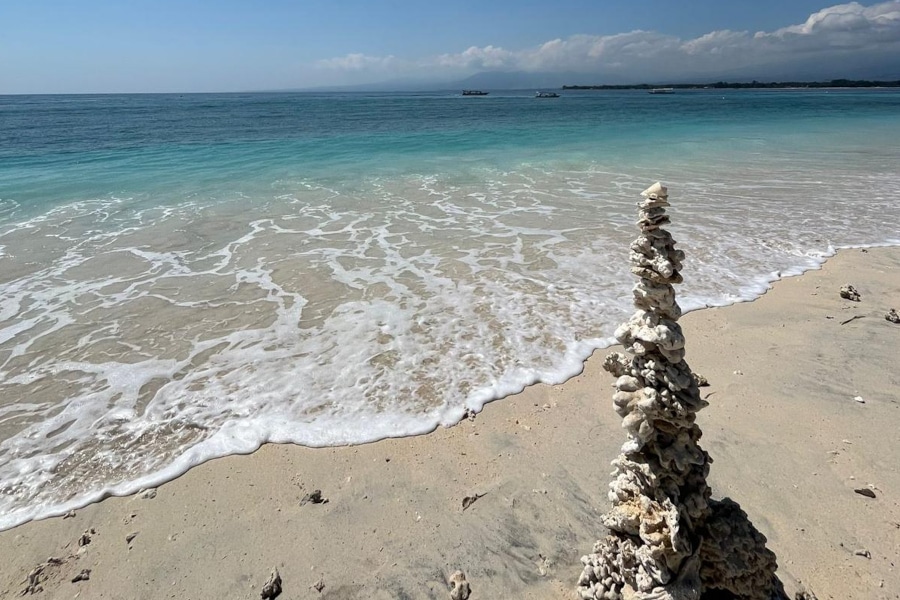
The rainy season usually begins sometime between December and January and continues until March or April.
Many people hear the words “rainy season” and immediately imagine weeks of constant downpours.
That is rarely the case.
The Gili Islands are not Thailand.
They are not the Caribbean.
And they are certainly not London.
Rain often arrives in short bursts.
A heavy shower may last an hour.
Then the sun returns.
Many days remain bright and sunny despite being technically part of the rainy season.
While many travellers worry about visiting during the Gili Islands rainy season, conditions are often much better than expected.
Even during the wettest months, there are usually plenty of opportunities for snorkeling or scuba diving in the Gili Islands, with warm water temperatures and abundant marine life throughout the year.
There are also advantages to visiting during this period.
The islands are quieter.
Accommodation is often cheaper.
Popular dive and snorkel sites (such as the Bask Nest) are less crowded.
And the underwater world remains just as active.
The fish don’t care if it’s raining.
Neither do the turtles.
In fact, many experienced divers enjoy the rainy season because they get to experience the islands without the peak-season crowds.
The Wallace Line: Why Bali and Lombok Are Different
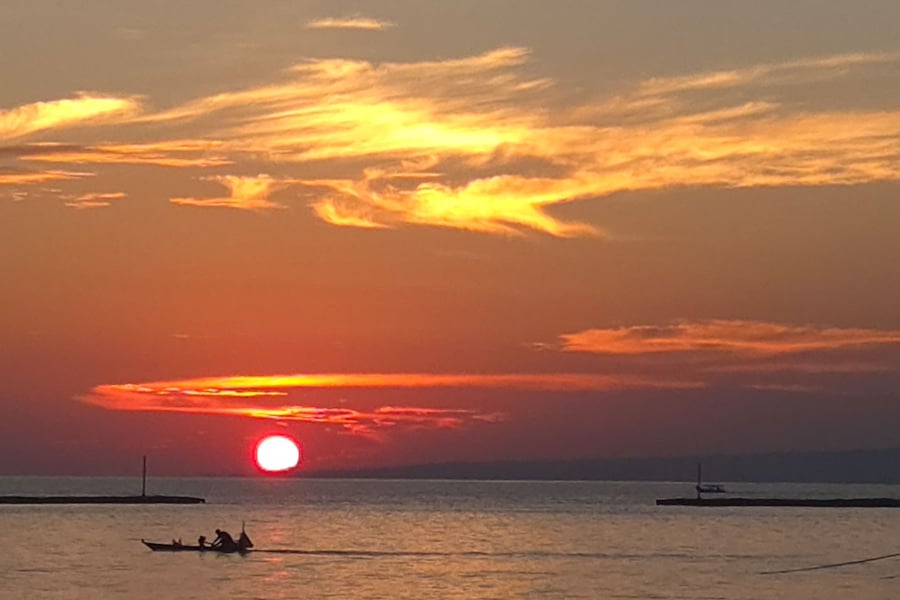
One of the most fascinating things about snorkeling or diving around Lombok and the Gili Islands is that you are located on the edge of two different worlds.
Between Bali and Lombok lies the famous Wallace Line.
Named after British naturalist Alfred Russel Wallace, this invisible boundary separates Asia from Australasia.
Although Bali and Lombok sit only around 35 kilometres apart, they belong to different geological and biological regions.
Bali sits on the Asian continental shelf.
Lombok lies on the edge of the Australasian plate.
For millions of years, the deep Lombok Strait prevented many species from crossing between the two regions.
As a result, wildlife differs noticeably.
Historically, many Asian animals reached Bali but never crossed to Lombok.
Likewise, species from eastern Indonesia and Australia expanded westward only as far as Lombok.
This makes Lombok and the Gili Islands biologically unique.
The same geological differences also influence weather patterns.
Bali generally receives more rainfall than the Gili Islands.
Visitors are often surprised to discover that a week of rain in Ubud may coincide with sunshine in Gili.
This difference is also visible underwater.
Many snorkelers and divers notice differences in marine life between Bali and the Gili Islands, partly because Lombok sits within a transition zone between two biological regions.
This is one of the reasons why Gili Islands marine life can be so diverse.
El Niño: When Nature Ignores the Calendar
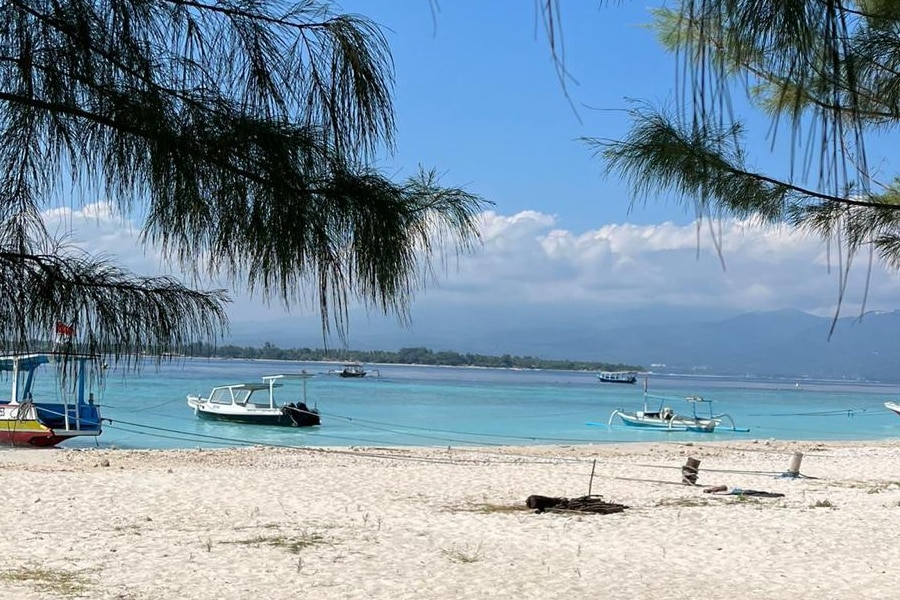
If you spend enough time in Indonesia, you quickly learn that nature doesn’t always follow the textbook seasons.
Every few years, a climate phenomenon known as El Niño develops in the Pacific Ocean.
When this happens, weather patterns across Indonesia can change dramatically.
El Niño often brings:
- Less rainfall
- Longer dry seasons
- Delayed rainy seasons
- Better visibility for diving
A recent example was 2024.
Many residents expected a normal rainy season.
Instead, the Gili Islands experienced only around six weeks of significant rain.
For much of the year, conditions remained unusually dry.
Many operators reported some of the best Gili Islands scuba diving conditions in years.
However, prolonged dry periods can also create challenges for local agriculture and freshwater supplies.
The lesson?
The seasons provide a useful guide.
But nature always has the final say.
The North Storms
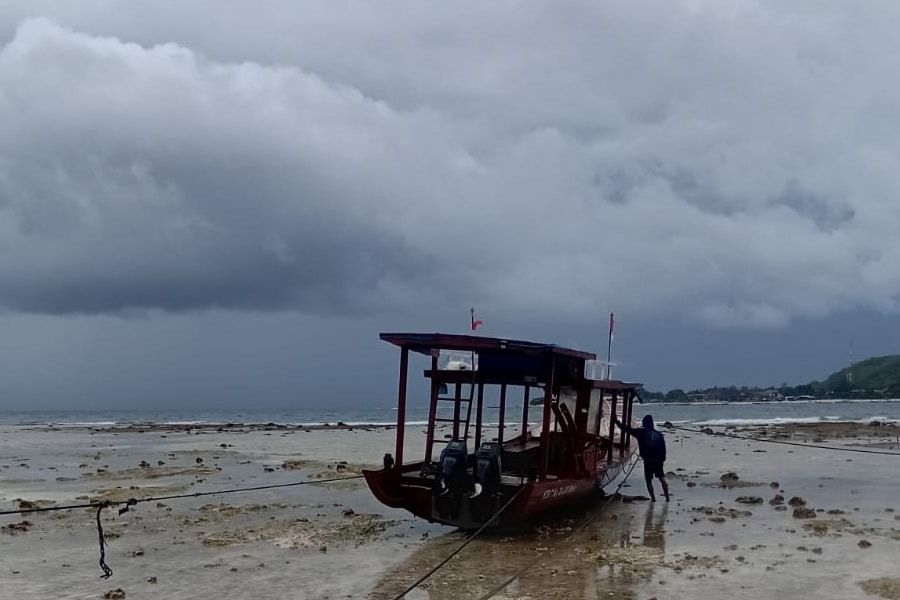
One of the most dramatic weather events in the Gili Islands occurs during the rainy season.
Locals call them the North Storms (Utara is coming!).
Most years, one or two significant north storms develop.
Strong winds arrive from the north.
Waves build rapidly.
Sea conditions change dramatically.
For a few days, life on the islands can feel very different.
Boat transfers may be delayed.
Dive sites on the northern side of the islands may become inaccessible.
Large waves can reach beaches that are normally calm.
For divers, visibility can temporarily decrease and certain Gili Islands diving sites may be unsuitable until conditions improve.
Fortunately, these events rarely last long.
Within a few days, conditions usually return to normal.
For many island residents, north storms are simply part of the annual cycle.
For visitors, they provide a reminder of just how dynamic the ocean can be.
When Is the Best Time to Visit the Gili Islands?
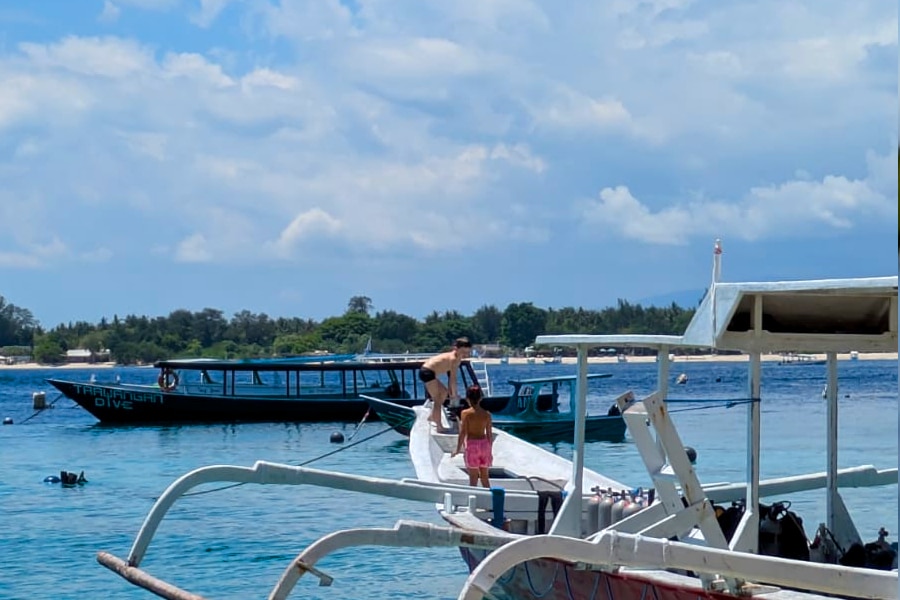
If your main goal is snorkeling or scuba diving in the Gili Islands, the dry season from May to November generally offers the most reliable visibility and weather conditions.
However, the truth is that there is no bad time to visit.
The reefs remain healthy throughout the year.
The turtles, sharks, and colourful reef fish that make Gili Islands diving so famous are present in every season.
Whether you are interested in diving Gili Trawangan, exploring the reefs around Gili Meno, or enjoying the relaxed atmosphere of Gili Air, each season offers something different.
And thanks to the islands’ unique microclimate, even the rainy season often provides far more sunshine than visitors expect.
The turtles will still be here.
The coral reefs will still be thriving.
The sharks will still patrol the reefs.
And the underwater world will continue to provide some of the best diving in Indonesia.
Understanding the seasons simply helps you appreciate why every month in the Gili Islands offers a slightly different experience.