

Part of our Gili Marine Life Guide | Diving with Divine Divers Gili Meno
When divers drop into the turquoise waters around Gili Meno, their eyes naturally dart upward to track grazing green turtles, schooling trevally, and elegant reef sharks gliding along the reefs.
Down on the sandy slopes and between the coral bommies, however, lies an animal that almost everyone ignores: a leathery, motionless sausage resting quietly on the seabed.
To the untrained eye, sea cucumbers might seem like the most boring residents of the reef. Yet beneath that unassuming exterior lies an evolutionary marvel that keeps our local marine ecosystems alive and thriving.
Believed by many to be simple ocean slugs, these creatures are actually echinoderms. They are closely related to sea stars and sea urchins—and they serve as the indispensable custodial crew of the underwater world.
Without sea cucumbers continuously processing the seabed, coral reefs around the globe would rapidly drown in organic waste, toxic sediment, and suffocating algal blooms.
Nature’s Ultimate Vacuum Cleaners
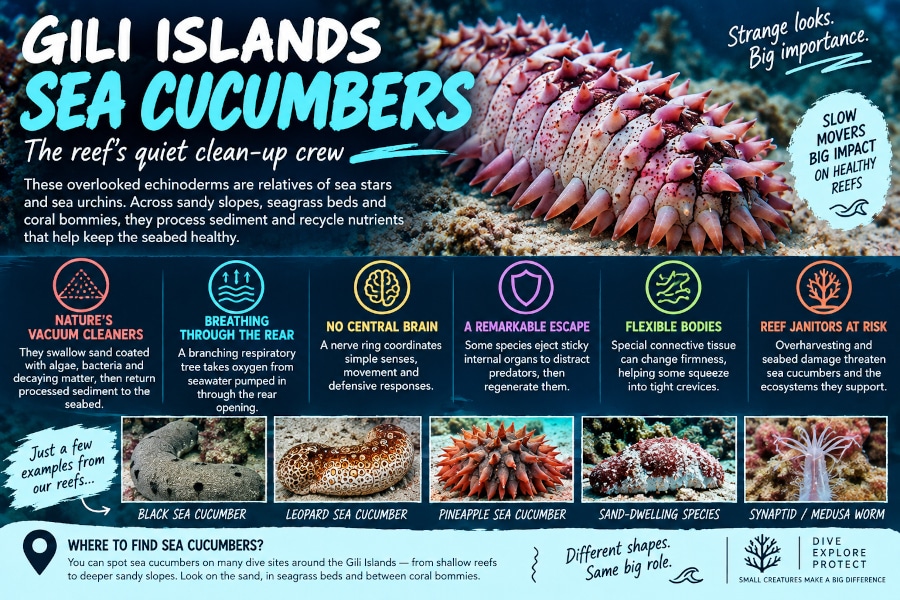
Sea cucumbers are detritivores, functioning as the vacuum cleaners of our coastal ecosystems.
As they crawl across the substrate, they ingest massive quantities of sand coated in microscopic algae, decaying organic matter, and bacteria.
After digesting the edible film covering the grains, they excrete pristine, aerated, nutrient-rich sediment back onto the seafloor.
A single individual can process up to 45 kg of sediment every year. A healthy populations on undisturbed reefs collectively turn over tens of thousands of tons of sand annually.
By churning and oxygenating the seafloor, sea cucumbers prevent the buildup of deadly anaerobic dead zones, At the same time they cycle vital nutrients back into the food web.
Furthermore, their digestive process releases calcium carbonate into the surrounding water. This helps coral polyps construct their stony skeletons and buffers the local reef against ocean acidification.
Fascinating Facts About Sea Cucumbers
Behind their stationary posture and leathery skin lies a collection of biological superpowers. Those feel more like science fiction than marine biology:
Breathing Through Their Rear: Sea cucumbers completely lack lungs or traditional fish gills. Instead, they breathe by rhythmically pumping seawater in and out of a branching internal organ called a respiratory tree. This is connected directly to their anus.
Life Without a Brain: Much like their starfish cousins, sea cucumbers have evolved without a centralized brain. Instead, they rely on a simple nerve ring encircling their esophagus that coordinates basic sensory inputs, locomotive tube feet, and defensive reflexes.
Exploding Guts on Demand: When threatened by a predator, certain species deploy an extreme escape tactic known as evisceration. They violently rupture their own body wall and shoot sticky, toxic internal organs out of their back or front end to tangle and distract attackers. Amazingly, this self-mutilation is non-fatal. The cucumber completely regenerates its lost digestive tract and respiratory organs within a few months.
Uninvited Roommates: Because sea cucumbers pump fresh, oxygenated water through their rear openings, several species of small, slender fish called pearlfish exploit this anatomy for free housing. A pearlfish will spot an open cloaca and slip in tail-first, taking up residence inside the cucumber’s respiratory tree to stay safe from predators.
Shape-Shifting Bodies: Sea cucumbers possess extraordinary “catch collagen” in their connective tissue that can rapidly alter its physical state. Under nervous system control, their skin can transform from rigid and leathery to near-liquid jelly within seconds. This allows them to squeeze into tight rock cracks before firming back up to wedge themselves into place.
Common Sea Cucumbers You’ll Spot Around the Gili Islands
The rubble fields, seagrass beds, and bommies around Gili Meno, Gili Air, and Gili Trawangan are home to several easily recognizable sea cucumber species:
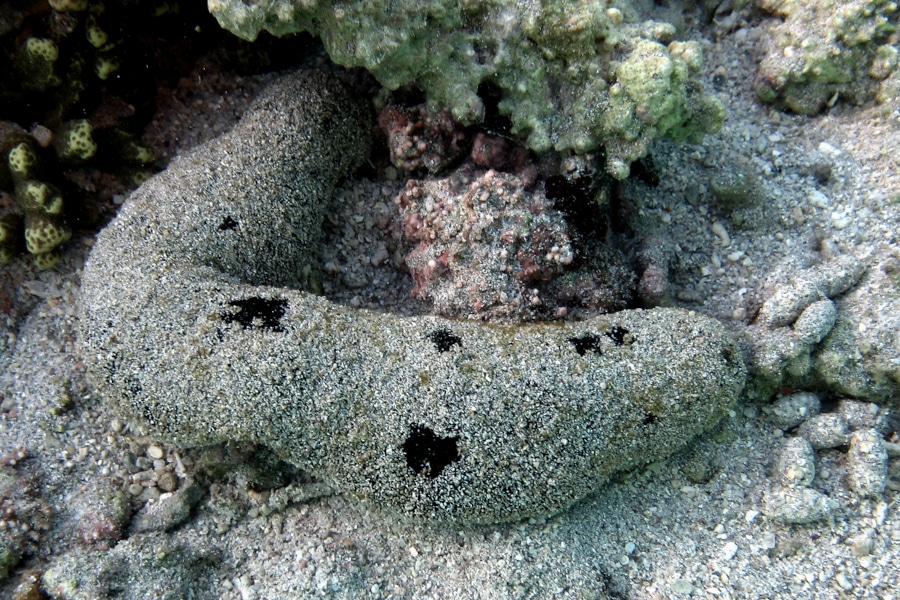
Black Sea Cucumber: Often nicknamed the “lollyfish”. This is the most common sea cucumber seen in shallow water around the Gilis. It has smooth black skin that naturally coats itself in a light dusting of sand, leaving small bare patches that look like spots.
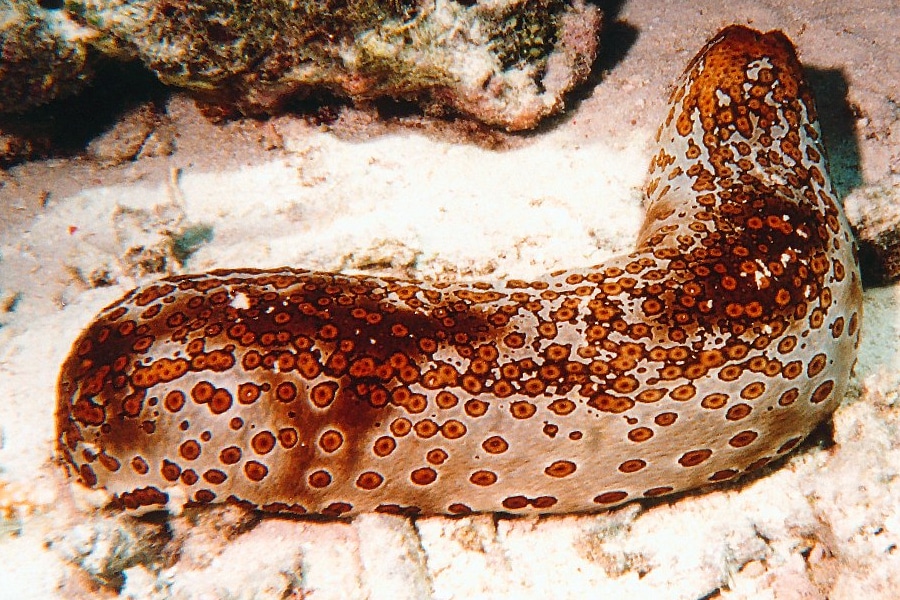
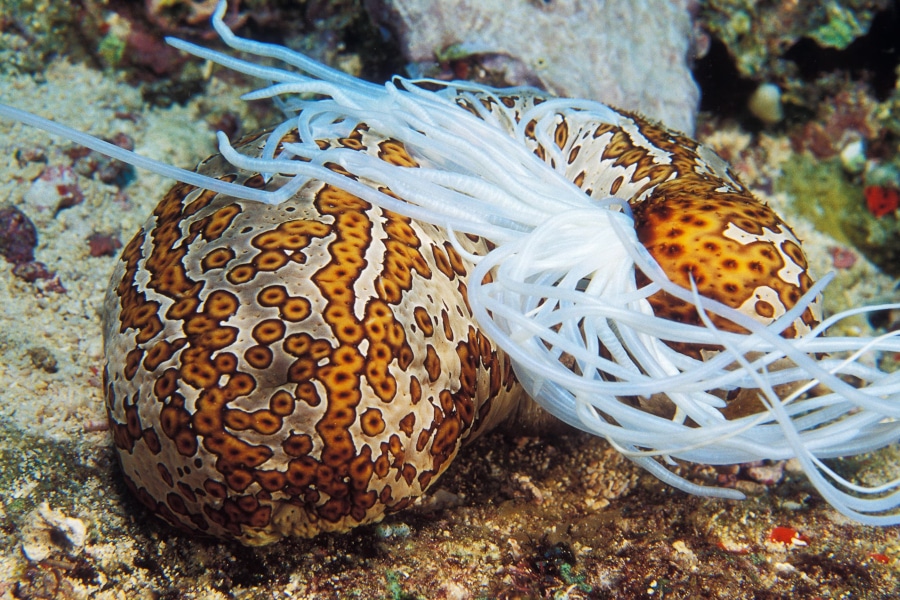
Leopard Sea Cucumber: Highly distinctive and striking. This species features a cream, tan, or grey body densely patterned with dark, eye-like spots that resemble leopard rosettes.
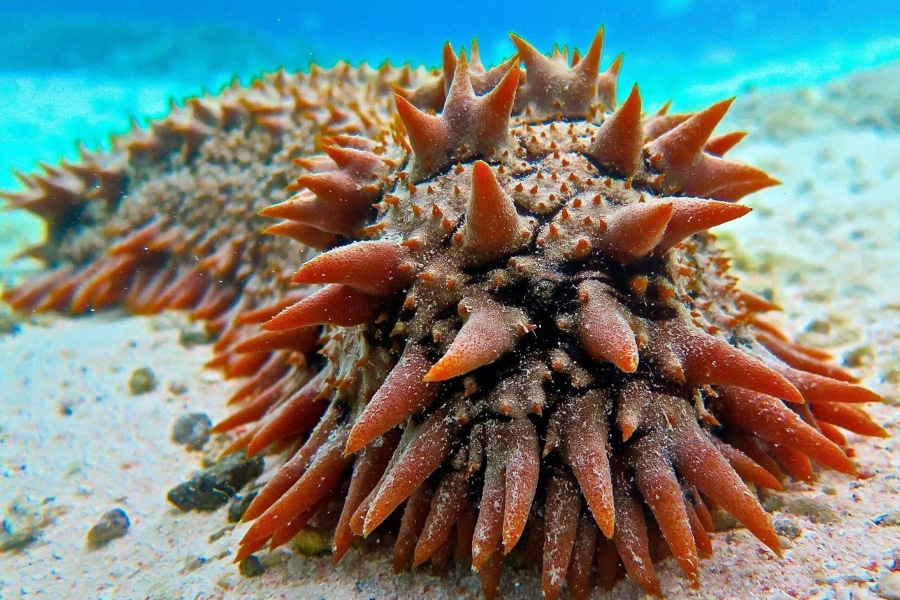
Pineapple Sea Cucumber: A giant among reef invertebrates, this spectacular animal can reach over 70 centimeters in length. It is covered in massive, bright orange, star-shaped teats that look like the skin of a pineapple.
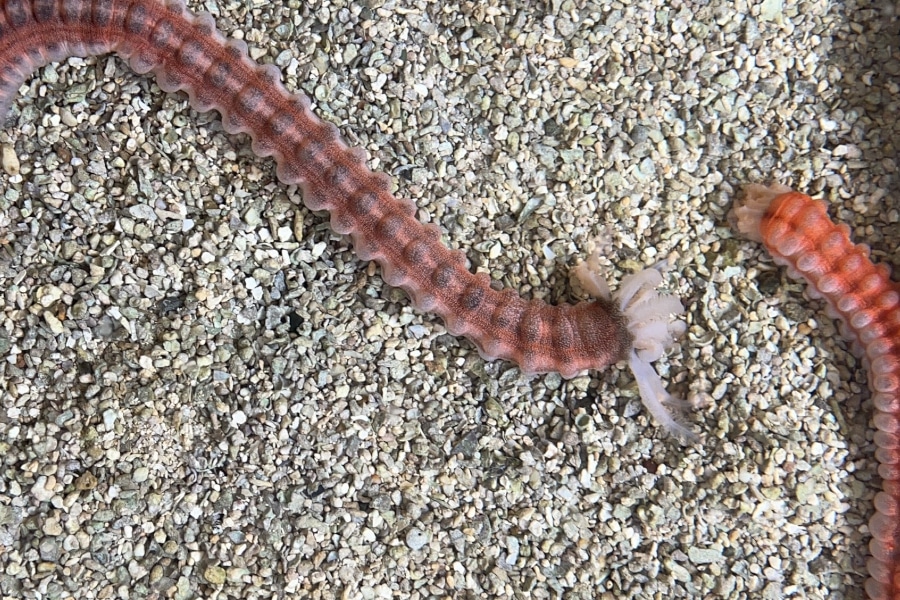
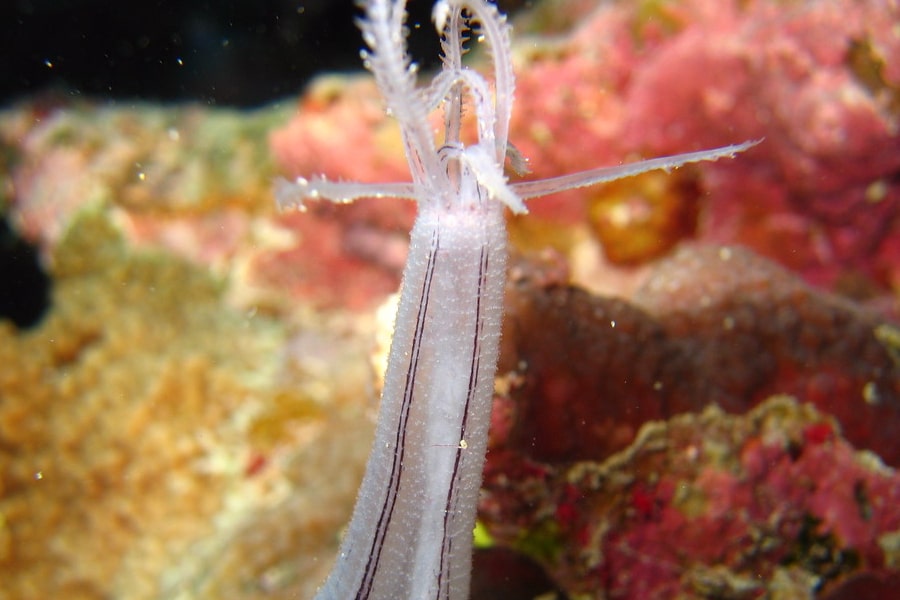
Synaptid Sea Cucumbers (Medusa Worms): Long, translucent, worm-like cucumbers that lack tube feet. They are often found draped across coral branches at night, using feather-like feeding tentacles to collect particles from the current.
Major Threats to the Reef’s Janitors
Despite their remarkable resilience and regenerative abilities, sea cucumber populations worldwide are in steep decline due to intensifying human pressures:
Overfishing for the Delicacy Trade: Over 70 species are heavily harvested, boiled, and dried into a luxury culinary product known as bêche-de-mer or trepang. Driven by immense demand in Asian luxury markets where they are prized as status symbols and traditional tonics. Unsustainable commercial exploitation has driven populations to functional extinction on many tropical reefs.
Explosive Growth in Export Networks: As nearshore stocks collapsed in traditional fishing regions, the global trade expanded into remote and vulnerable waters at an alarming speed. The number of exporting nations worldwide more than doubled from 35 to 83 between 1996 and 2011 alone. This has devastated previously untouched populations before effective management could be established.
Habitat Destruction and Deep-Sea Mining: Because they are slow-moving benthic animals that spend their entire lives bound to the seafloor, sea cucumbers cannot escape physical disturbances. Coastal development, bottom-contact fishing, chemical runoff, and emerging deep-sea mineral extraction destroy the fragile substrate they rely on for nourishment.
Ecosystem Cascades: When commercial harvesters strip sea cucumbers from a reef ecosystem, the loss triggers dangerous environmental chain reactions. Without constant sediment filtration, the seabed turns anoxic, microalgae proliferate uncontrollably, and opportunistic coral pathogens multiply, leading to spikes in coral disease and overall reef collapse. Due to weak enforcement and high profit margins, several key species are now classified as endangered.