

Part of our Gili Marine Life Guide | Diving with Divine Divers Gili Meno
Drifting effortlessly through the deep blue water of the Lombok Strait, jellyfish look like translucent, pulsing works of art. For most of the year, the waters around Gili Meno, Gili Air, and Gili Trawangan are remarkably clear and jellyfish-free. However, shifting ocean currents and seasonal blooms occasionally bring these ancient drifters past our reefs.
While the word “jellyfish” often makes swimmers nervous, most gelatinous creatures we encounter are completely harmless—and visually stunning.
Furthermore, because jellyfish tend to stay near the surface rather than deep underwater, divers rarely cross paths with them during a dive. Understanding where they gather and what causes mystery stings can save divers and snorkelers plenty of confusion.
Let us explore the jellyfish, comb jellies, and seasonal drifters of the Gili Islands, along with practical tips for staying comfortable in the water.
True Jellyfish: Pulsing Ocean Wanderers
True jellyfish have drifted through Earth’s oceans for over 500 million years, predating dinosaurs and sharks. Composed of roughly 95% water, they have no brain, heart, or bones. Instead, they rely on a primitive nerve net to sense light, smell, and orientation.
Mostly on the Surface: Jellyfish are usually found floating near the ocean surface rather than deep underwater along the reef. Once you descend below the top few meters, encounters become much less common.
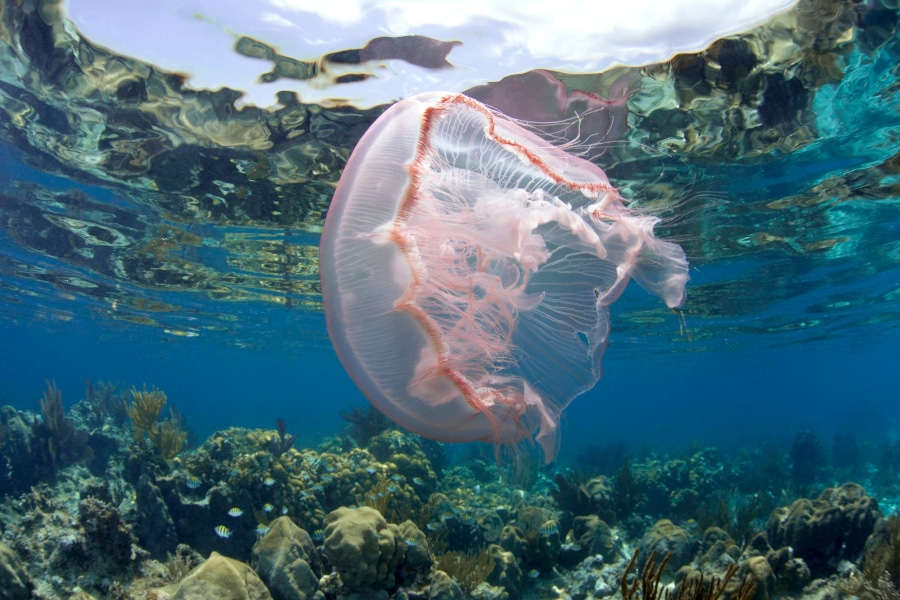
Moon Jellyfish: The most common visitor to our waters. Easily recognized by their translucent, saucer-shaped bells and four horseshoe-shaped reproductive rings in the center. Their trailing tentacles are very short, and their mild sting rarely penetrates human skin.
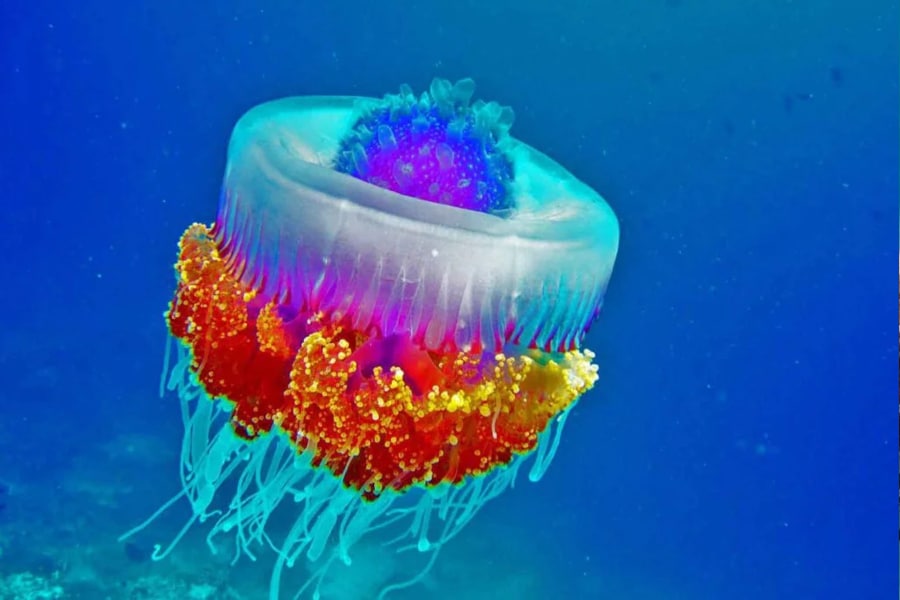
Spotted & Crown Jellyfish: Occasionally carried in by deep-water upwellings, these bells often feature intricate white spots or ruffled purple margins.
Juvenile Fish Nurseries: Look closely beneath a jellyfish bell during a safety stop. You will often spot tiny juvenile trevallies or jacks hiding among the tentacles, using the jellyfish as a floating, stinging shield against larger predators.
Comb Jellies: The Harmless Rainbow Discos
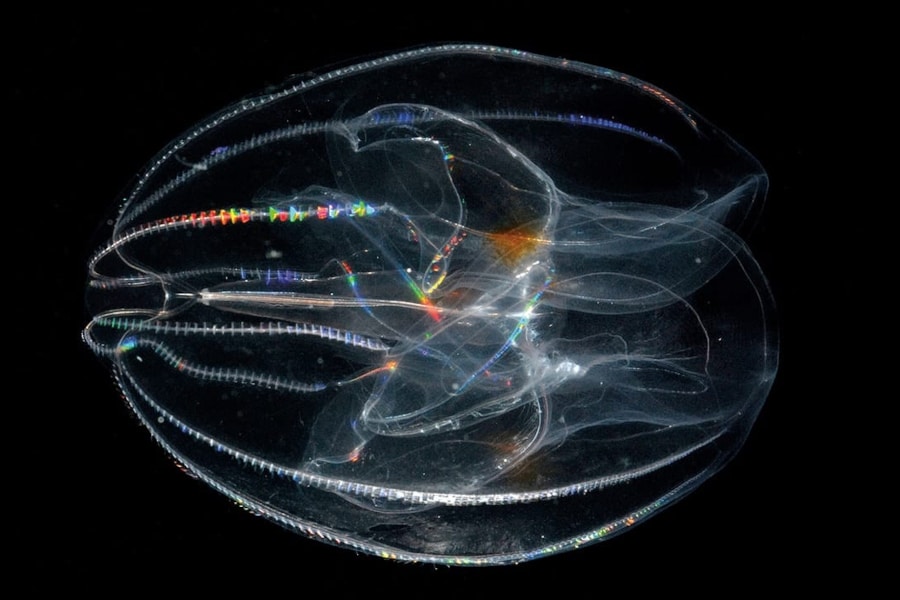
If you spot a shimmering, oval-shaped creature pulsing with neon rainbow lights, you are looking at a Comb Jelly. Despite their name and gelatinous bodies, comb jellies belong to a completely separate species and are not true jellyfish.
Sting-Free Drifters: Comb jellies do not possess stinging cells (nematocysts). Instead, they catch microscopic plankton using sticky cells called colloblasts, making them 100% harmless to divers and snorkelers.
Living Light Shows: They propel themselves using eight rows of tiny, hair-like plates called combs. As these combs beat rhythmically, they diffract ambient sunlight or dive torch beams, creating mesmerizing waves of electric blue, green, and red light along their bodies.
The Portuguese Man o’ War: The Floating Colony
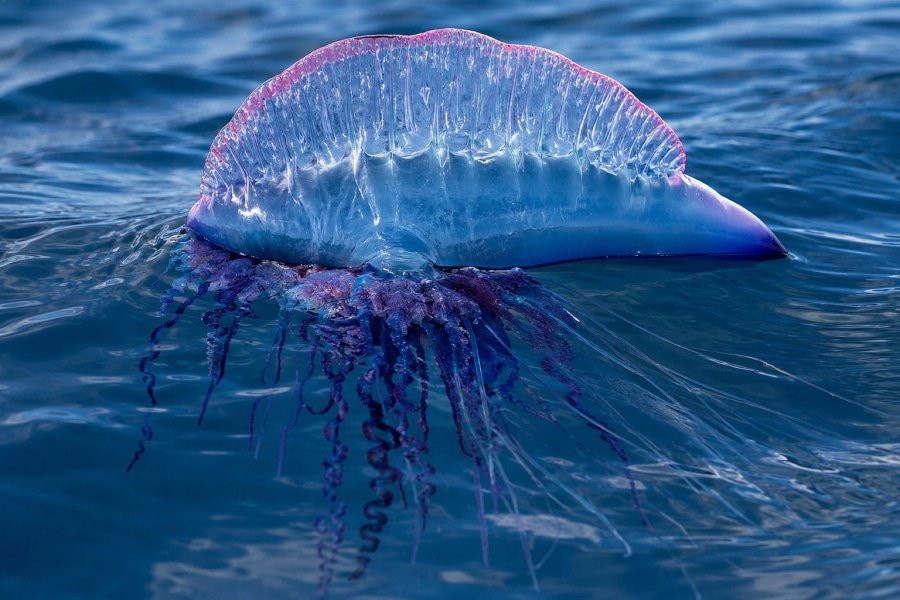
Occasionally but often during the high season months June-October, strong winds and surface currents blow a striking blue-and-purple float across the Gili waters. Known as the Portuguese Man o’ War, this creature is often mistaken for a jellyfish. In reality, it is a floating colony of specialized microscopic organisms working together as one unit.
Wind-Driven Sailors: A gas-filled, translucent bladder acts like a sail above the waterline, catching ocean breezes to drift across tropical seas.
Long Trailing Tentacles: Beneath the float hang thin, blue tentacles that can trail several meters deep. These tentacles deliver a painful, venomous sting designed to paralyze small fish.
Stay Clear of the Surface: Because they float strictly on the surface, divers will not encounter them at depth. However, always check the water surface before ascending from a dive or stepping off the boat when surface blooms occur.
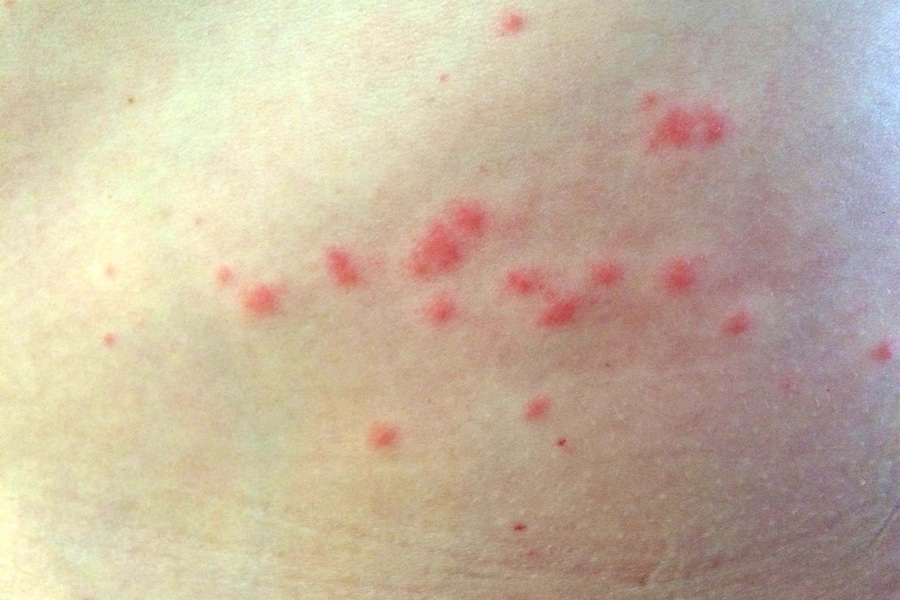
Not Every Sting Is a Jellyfish: “Sea Lice” & Invisible Irritants
Sometimes divers and snorkelers exit the water with tiny red, itchy bumps despite never seeing a single jellyfish. In tropical waters, these minor stings—often called “sea lice” or seabather’s eruption—are usually caused by microscopic planktonic organisms drifting in the current.
Thimble Jellyfish Larvae: Tiny, pinhead-sized larvae of miniature jellyfish can become trapped inside swimwear or wetsuits, triggering mild stinging cells when pressed against the skin.
Baby Sea Anemones: Free-swimming larval stages of sea anemones drift seasonally through the water column before settling onto the reef.
Coral Larvae & Hydroids: During coral spawning seasons or strong currents, microscopic coral planulae and broken fragments of stinging hydroids can brush against exposed skin, causing temporary itching.

What Divers Should Know: Prevention & Sting Care
Encountering jellyfish or seasonal plankton is simply part of exploring a healthy, dynamic ocean ecosystem. A few simple habits keep you well-protected:
Wear Exposure Protection: Wearing a full-length wetsuit, rash guard, or dive skin covers your arms and legs, preventing almost all contact with stinging tentacles and microscopic plankton.
Watch Your Ascent: Because jellyfish gather primarily near the surface, always look upward during your three-minute safety stop at five meters to ensure no drifting bells or trailing tentacles are overhead.
First Aid Is Always Vinegar: If you get stung, your first aid step is always to pour plain household vinegar liberally over the affected area. Vinegar neutralizes unfired stinging cells and stops further venom release. Never rub the skin, as this action triggers unfired cells to discharge more venom. After applying vinegar, carefully remove any visible tentacles with tweezers or the edge of a card.
Explore the Blue with Divine Divers
Whether we are gliding beside serene green turtles, searching coral rubble for macro critters, or watching rainbow comb jellies dance in the current, every dive around Gili Meno brings something new.
Our experienced dive team at Divine Divers Gili Meno monitors local currents and water conditions daily, and we always carry vinegar on our dive boats just in case. We keep our groups small, relaxed, and safe so you can enjoy the best of our underwater world with complete peace of mind.
Book Your Dive with Divine Divers Gili Meno Today and experience the magic of the Gili Islands!