

When divers visit Gili Meno, green sea turtles and vibrant corals usually steal the spotlight among all the marine life.
Yet quiet heroes work day and night beneath the gentle waves.
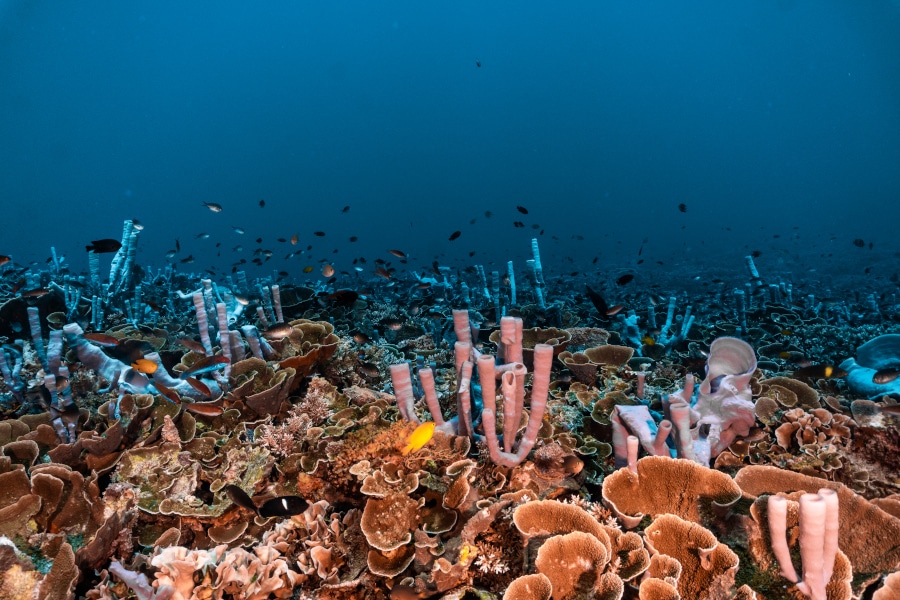
Sea sponges often look like colorful stones, corals or simple underwater plants.
In reality, they are fascinating ancient animals.
They play a vital role in keeping our local reefs healthy, clean, and crystal clear.
What Exactly Is a Sea Sponge?
Sponges belong to the scientific phylum Porifera, which translates directly to pore-bearers. They are among the simplest and oldest multicellular animals on Earth.
Fossil records show sponges have inhabited our oceans for more than 500 million years. They thrived long before dinosaurs roamed the land.
Sponges do not possess eyes, brains, hearts, nerves, or muscles. They also lack internal organs entirely.
Instead, their bodies feature complex networks of tiny canals and specialized chambers. Water constantly flows through these pores to deliver life-giving food and dissolved oxygen.
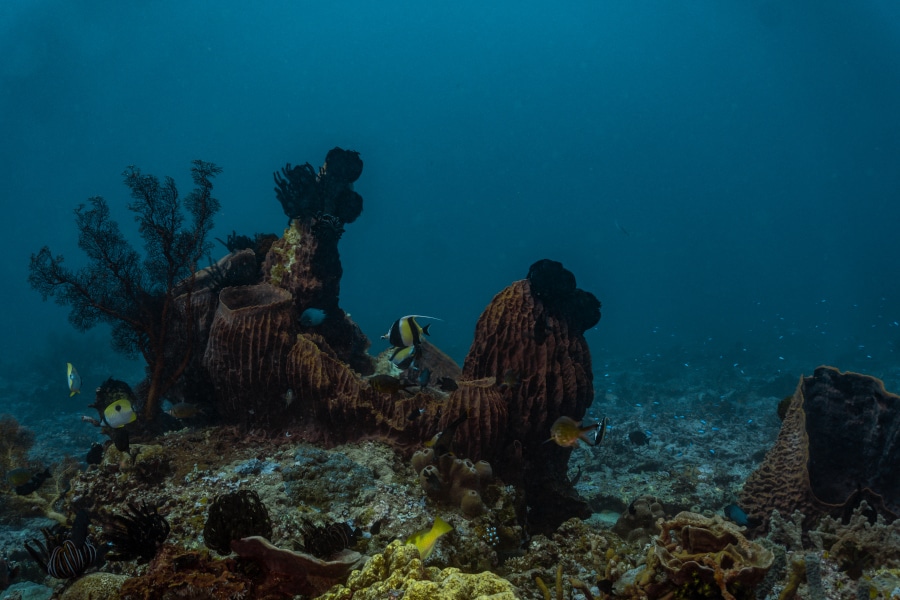
The Ultimate Ocean Water Filters
Sponges act as the primary natural filtration system of the coral reef.
A single small sponge can pump thousands of liters of seawater every single day. They pull water inward to capture microscopic bacteria, viruses, and floating organic matter. This constant pumping action keeps the water around the Gili Islands remarkably transparent.
Without sponges, cloudy water would block sunlight from reaching delicate hard corals.
The Sponge Loop: Feeding the Entire Reef
Most reef creatures cannot digest dissolved organic carbon released by seaweeds and corals.
Sponges solve this major energetic hurdle through a process called the sponge loop. They consume this invisible, dissolved energy and turn it into cellular matter. Then, they shed old cells like tiny flakes of nutritious organic dust.
Crabs, snails, and small reef fish consume these falling flakes with ease.
Sponges convert invisible waste into vital fuel that feeds the wider marine food web.
Nature’s Living Glue
Tropical storms and strong ocean currents can break coral skeletons into loose rubble.
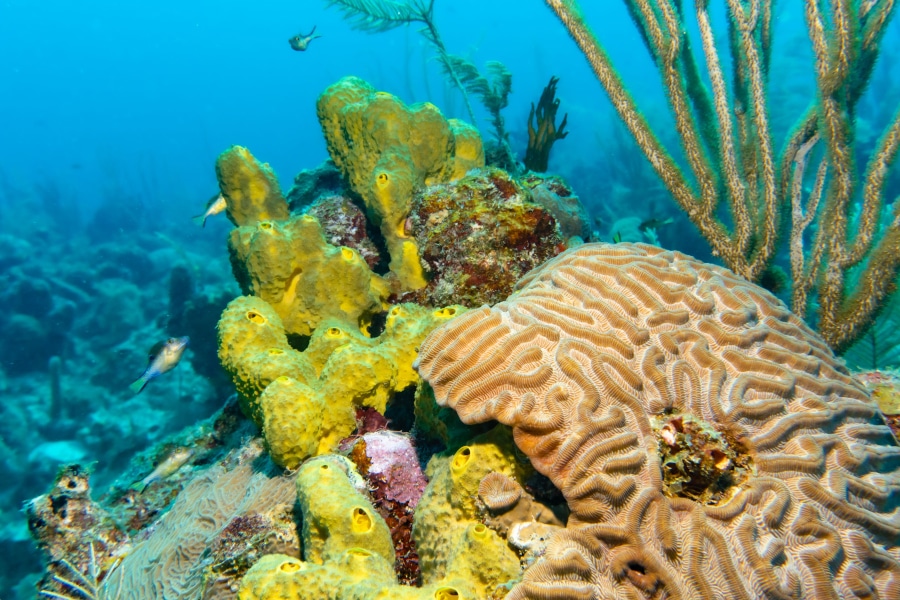
Encrusting sponges grow rapidly over this loose rubble and bind it together. They act like biological cement, stabilizing the shifting reef floor.
This stable foundation allows baby coral polyps to settle, attach, and mature safely.
Teeming Underwater Cities
Sponges also serve as bustling apartment complexes for curious macro life. Their hollow chimneys and internal tunnels provide safe shelter from cruising reef predators.
Look closely inside a barrel sponge during your dive around Gili Meno, you will often spot hairy squat lobsters, snapping shrimp, and juvenile gobies resting inside.
Fascinating Facts About Sponges
Despite their stationary lifestyles, sponges possess extraordinary physical adaptations.
Here are some of the most remarkable secrets hidden inside these living reef engines:
Splinter Skeletons
Sponges do not have bones to hold themselves upright against heavy currents. Instead, their soft bodies rely on a fibrous protein network called spongin.
They reinforce this network with millions of microscopic, razor-sharp needles called spicules. These tiny glass rods are made of silica or calcium carbonate. This structural design makes sponges feel and taste like mouthfuls of splinters to most predators.
Only specialized eaters like hawksbill turtles and nudibranchs can stomach them.
Chemical Warfare and Future Medicines
Sponges cannot swim away when aggressive neighbors threaten their living space.
To win turf wars against encroaching corals and smothering algae, sponges emit potent bioactive chemicals. These compounds prevent rival organisms from overgrowing their porous bodies.
Marine pharmacologists actively collect and study these unique chemical defenses. Researchers use them to develop life-saving human drugs, including antibiotics and anti-tumor cancer treatments.
Asexual Fragmentation and Immortality Tricks
Sponges have nearly unmatched regenerative superpowers.
If a passing boat anchor or rough wave snaps a sponge in half, it does not die. Each broken fragment can reattach to the reef substrate. The detached fragment will reorganize its cells and grow into an entirely new animal.
Scientists have even pushed living sponges through fine mesh sieves in laboratories. The separated cells crawled toward one another and successfully reassembled their bodies.
Centuries of Quiet Life
Many sponge varieties are among the longest-lived creatures on our planet.
Certain deep-water demosponges grow at excruciatingly slow rates.
Marine scientists estimate that massive specimen colonies can live from 500 to over 1,000 years.
A single giant barrel sponge could have started growing during the European Middle Ages.
Major Threats Facing Ocean Sponges
Because sponges are tough, people often assume they can survive anything.
However, modern human activities place immense stress on these ancient animals:
Climate Change and Warming Waters
Rising sea surface temperatures trigger devastating marine heatwaves across the tropics.
Sponges depend heavily on complex internal microbiomes of symbiotic bacteria for survival and nutrition. Prolonged thermal stress breaks down these microbial relationships, leading to tissue necrosis and fatal sponge diseases.
Ocean Pollution and Runoff
Sponges are exquisite filter-feeders, which leaves them vulnerable to dirty water.
Agricultural runoff, coastal chemical pollutants, and microplastics wash into shallow waters. Suspended sediments settle over reefs, clogging microscopic filtration pores and choking off essential water flow.
Overfishing and Destructive Gear
Commercial fishing gear and bottom trawling cause catastrophic structural devastation to benthic ecosystems. Heavy nets bulldoze three-dimensional sponge gardens and shatter towering barrel sponges instantly.
Because large sponges grow slowly, destroyed gardens require decades or centuries to recover.
Sponge Varieties to Spot Around Gili Meno
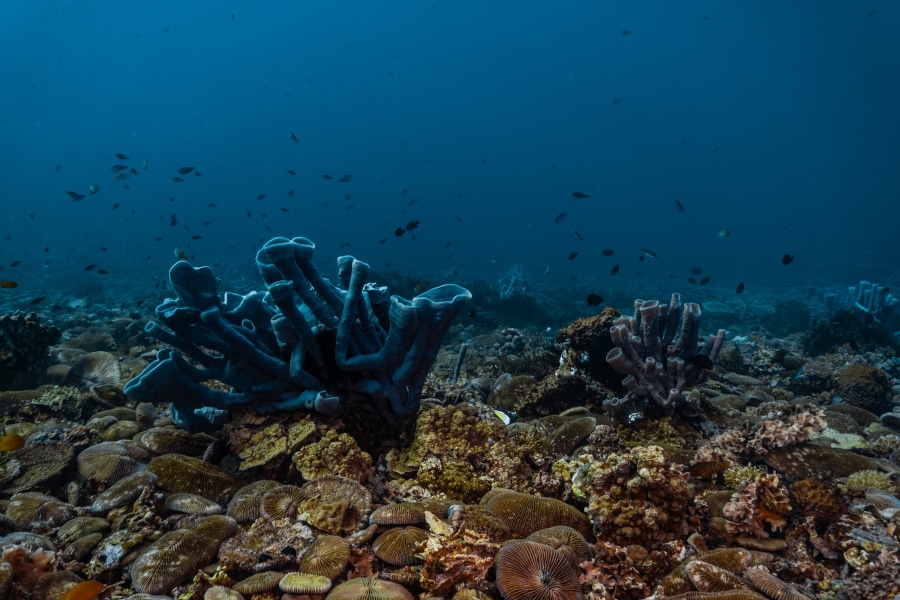
Our dive sites around the Gilis showcase an astonishing variety of sponge shapes:
-
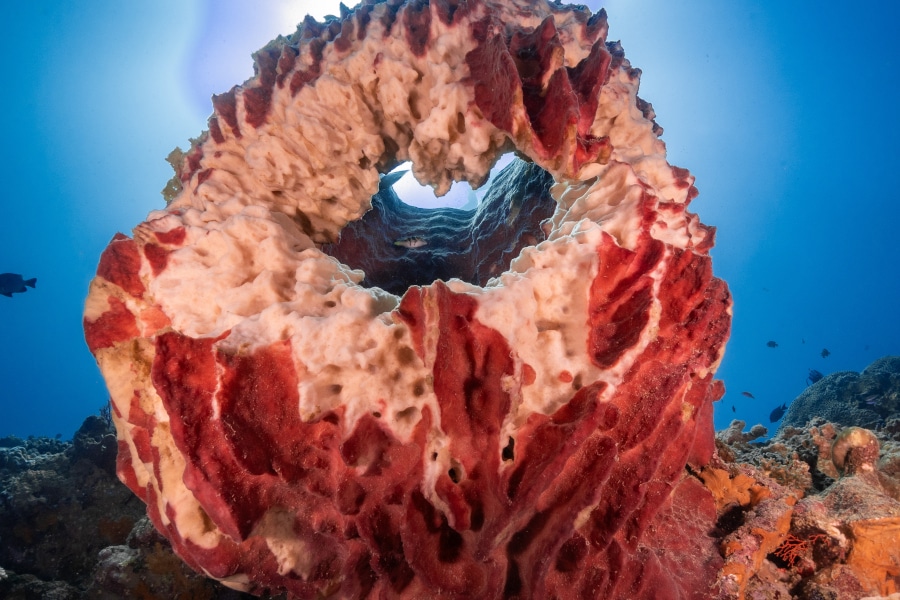
Giant Barrel Sponges: Massive structures known as the redwoods of the reef.
-
Elephant Ear Sponges: Flat, leathery fans oriented broadside toward incoming ocean currents.
-
Tube and Vase Sponges: Fluted vertical pipes displaying bright yellow, neon green, and rich purple shades.
-
Encrusting Sponges: Low-profile carpets painting volcanic boulders and shipwrecks in fiery oranges and blues.
Next time you descend, pause beside a massive barrel sponge at Hans Reef. Watch the opening at the top and imagine the massive river of water moving through it.
You are looking at an ancient biological engine that keeps our island waters clear and thriving.