

Part of our Gili Marine Life Guide | Diving with Divine Divers Gili Meno
Stepping into the clear, warm waters of the Gili Islands brings you face-to-face with an extraordinary underwater world. Within minutes, you can glide over vibrant coral gardens, watch swirling schools of reef fish, spot tiny macro critters hiding in rubble, and share the blue with majestic green sea turtles.
Because we are visitors in their home, how we move and behave underwater matters deeply. Different marine animals face very different threats from human interaction—and some will defend themselves if provoked. Therefore, knowing how to adapt your approach ensures every encounter remains safe, ethical, and natural for both the reef and your own health.
Let us explore how divers and snorkelers can protect the marine life of Gili Meno, Gili Air, and Gili Trawangan.
Respecting Big Marine Animals: Turtles, Sharks & Mantas
Encountering large pelagic animals is a highlight of any trip to the Gilis. However, chasing or crowding them causes immense stress and disrupts their natural behavior.
Sea Turtles: Give Them Room to Breathe
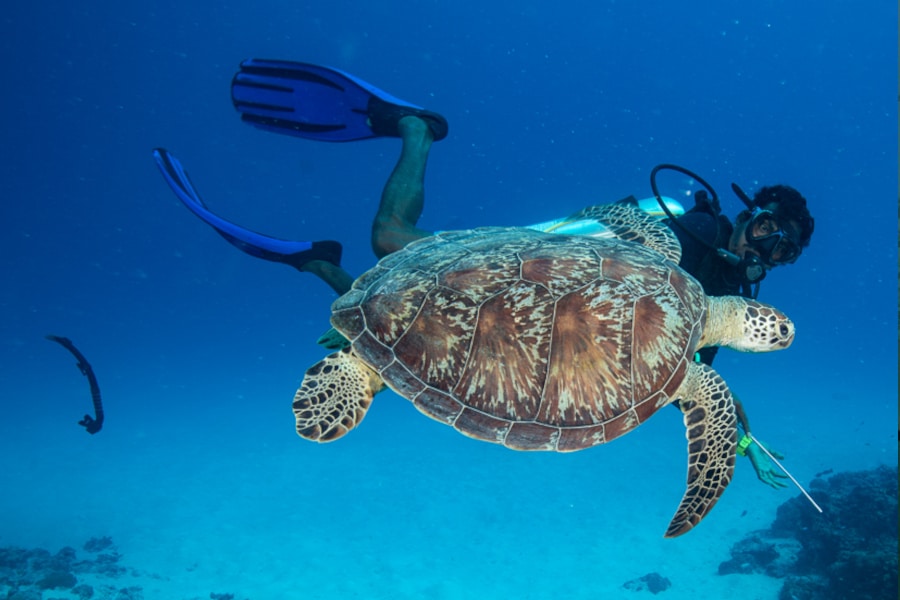
Gili Meno is famous for its resident green and hawksbill turtles. While they often seem calm around people, they are air-breathing reptiles that must regularly swim to the surface.
-
Never Block Their Path Upward: If you hover directly above a resting or swimming turtle, you trap it underwater. Always leave a clear, open path to the surface so it can breathe easily without panic.
-
Keep Your Distance: Stay at least two to three meters away. Approach slowly from the side rather than looming directly over their backs.
-
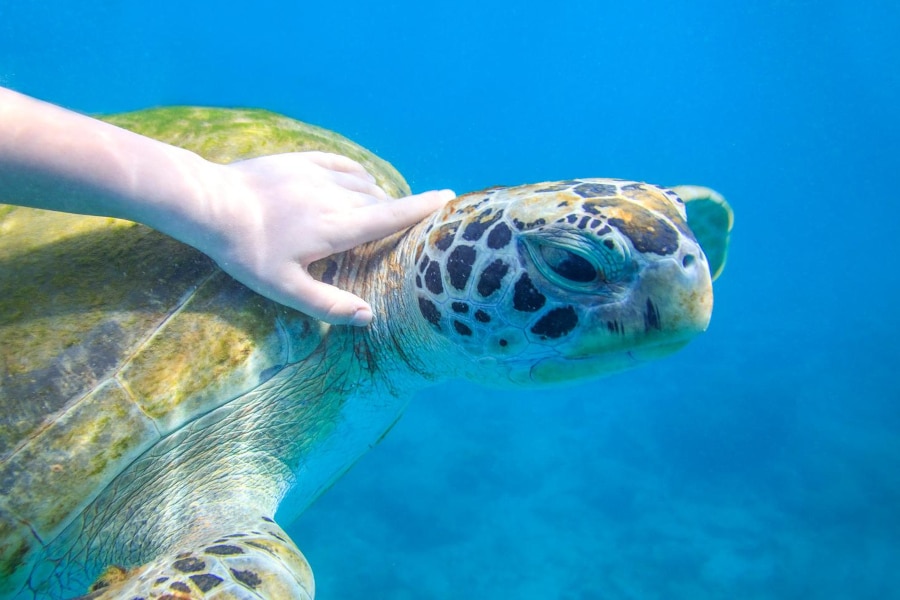
Never Touch Their Shells: Touching a turtle strips away the thin protective mucus layer on its shell and skin, leaving it vulnerable to harmful bacterial and fungal infections. Furthermore, human contact causes severe stress that can drive turtles away from their favorite feeding grounds.
Reef Sharks & Manta Rays: Let Them Come to You
Around sites like Shark Point and Halik, divers often spot blacktip and whitetip reef sharks, and sometimes passing manta rays.
-
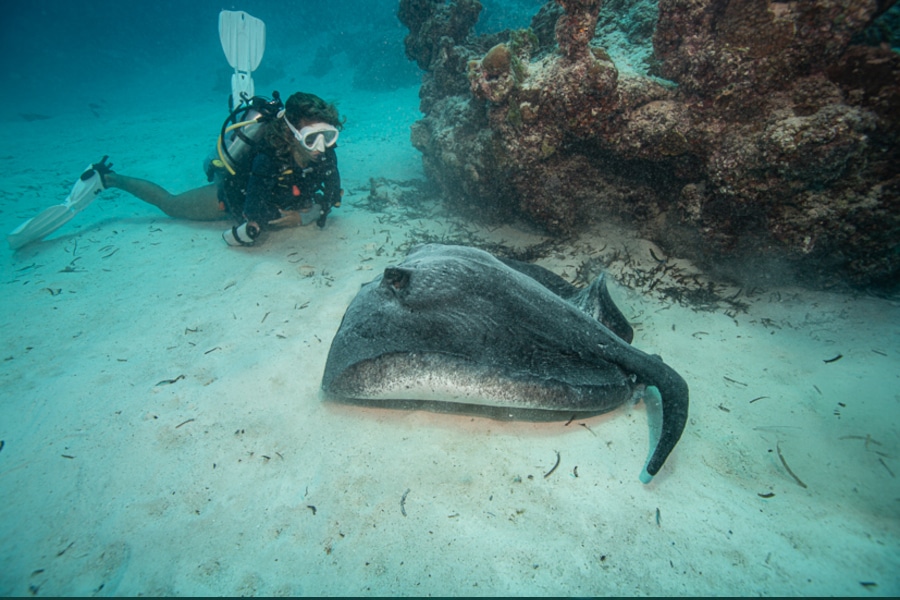
Do Not Chase or Corner Them: Sharks and rays are naturally shy and energy-conscious. Swimming rapidly toward them forces them to burn vital energy fleeing into deeper water.
-
Stay Low and Calm: If you spot a shark or manta, slow your breathing, stay slightly below their level, and hold your position. Often, curiosity will bring them closer on their own terms.
-
Protect the Manta Mucus Coat: Like turtles, manta rays are covered in a vital, slimy mucus layer that shields them from parasites and infection. Never reach out to touch a passing wing.
Observing Reef Fish & Schools Without Stress
From shimmering schools of fusiliers and snappers to grazing parrotfish and shy moray eels, reef fish spend their days hunting, cleaning, and sheltering among the coral.
-
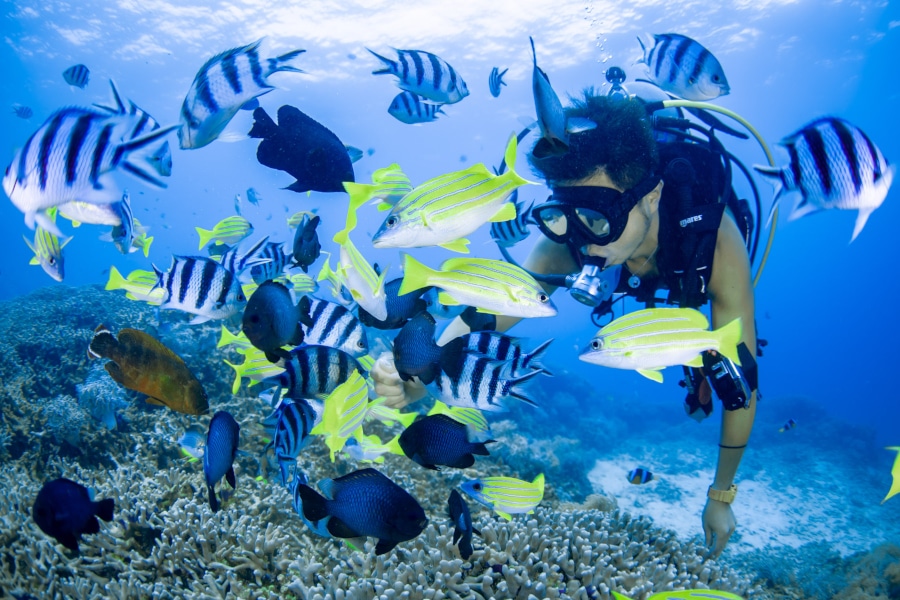
Never Swim Through Fish Schools: Splitting a tight school of fish scatters them into open water, leaving smaller individuals exposed to predators and forcing the group to waste energy regrouping. Instead, hover calmly alongside the school and let them flow around you.
-
Give Cleaning Stations Space: Wrasses and cleaner shrimp operate “cleaning stations” on prominent coral bommies where larger fish line up to have parasites removed. Hover back and watch quietly so you do not interrupt this vital health service.
-
Never Feed Fish: Hand-feeding fish bread, bananas, or boiled eggs disrupts their natural diets, damages their digestive systems, and alters normal reef behavior by turning timid grazers into aggressive beggars.
-
Do Not Shine Lights Directly in Eyes: During night dives or when peering under ledges, aim your dive torch slightly to the side of sleeping fish, moray eels, and octopuses. A bright beam directly in their eyes temporarily blinds them and leaves them vulnerable to nocturnal hunters.
Protecting Smaller Critters, Corals & Filter-Feeders
While big animals and fish need space, smaller reef residents and stationary filter-feeders require precision. Creatures like sponges, tunicates, feather stars, and hard corals cannot swim away when a diver gets too close.
Master Neutral Buoyancy
Good buoyancy is the single most important skill for protecting the reef.
-
Keep Fins Elevated: Avoid swimming vertically or letting your fins dangle downward. A single careless fin kick can shatter decades of fragile branching coral or crush hidden bottom-dwellers.
-
Secure Dangling Gear: Clip your pressure gauge and alternate air source tightly to your body so they never drag across sponges or coral heads.
No Touching—Ever
Even a gentle finger touch can harm tiny reef creatures.
-
Fragile Tissues: Hard corals are covered in microscopic, living polyps that are easily crushed by skin or gloves. Similarly, touching a sea squirt or feather star can tear its delicate body or cause it to shed limbs in distress.
-
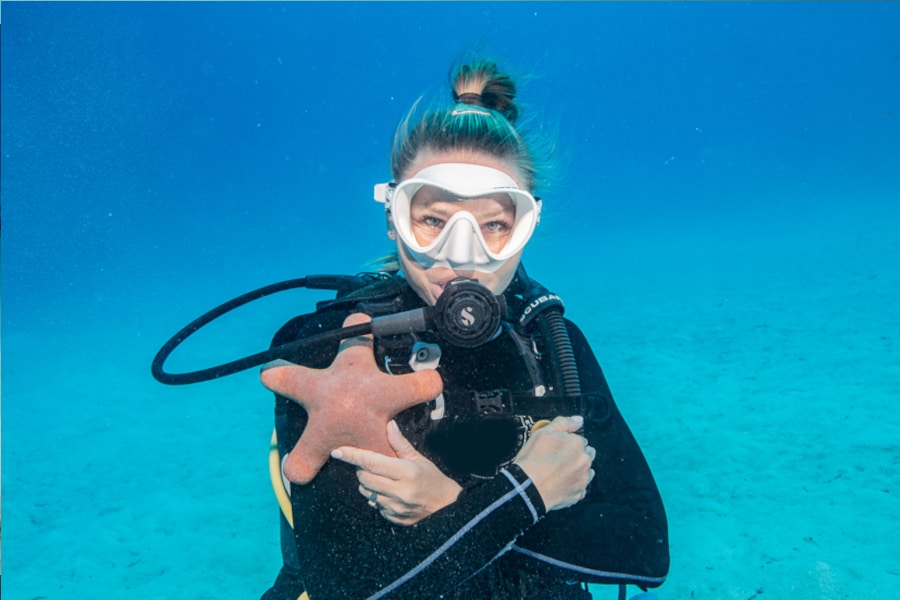
Leave Shells and Critters Alone: Never pick up shells, move sea stars for photos, or prod octopuses out of their crevices. Observe them exactly where they live.
Avoid Stirring Up Silt and Sand
When diving or snorkeling over sandy slopes like Meno Slope or Hans Reef, kicking up clouds of sediment creates major problems for small reef life.
-
Smothering Filter-Feeders: Sponges, tunicates, giant clams, and Christmas tree worms rely on pumping clean water to breathe and trap plankton. Heavy clouds of kicked-up sand clog their delicate feeding systems and suffocate them.
-
Use Frog Kicks Near the Bottom: When hovering close to sand or rubble to admire macro life, switch to a gentle frog kick or back-kick so your water movement stays directed upward rather than downward into the seabed.
Keeping Yourself Safe: Venomous & Territorial Reef Residents
Giving marine life space is not only good for conservation—it is also essential for your own personal safety and health. Several reef residents around the Gili Islands possess potent defenses or fierce parental instincts.
Venomous Ambush Hunters: Scorpionfish & Lionfish
-
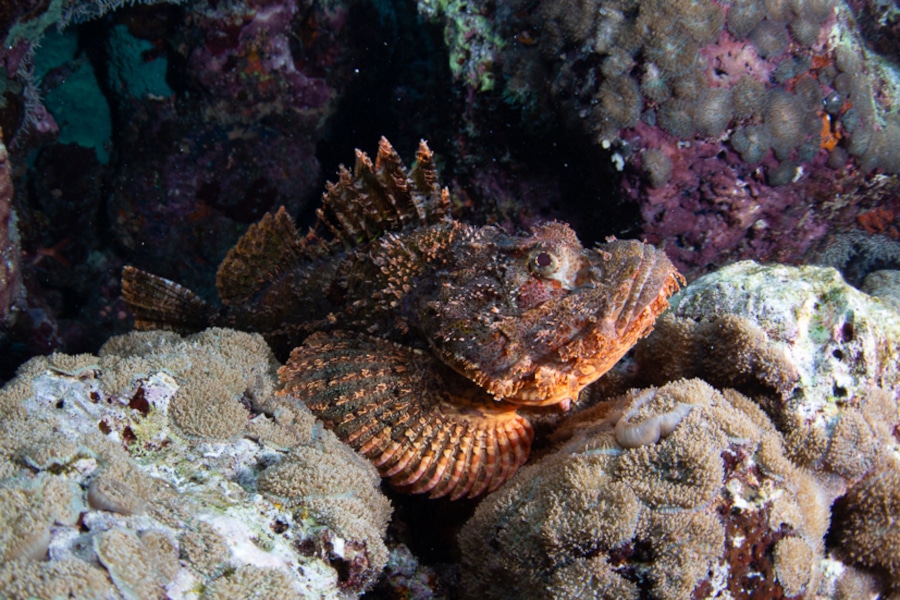
Masters of Camouflage: Scorpionfish and stonefish blend seamlessly into coral rock and rubble, waiting motionless for small prey. Because they are almost invisible, putting a hand on a rock or standing on the seabed can lead to a painful puncture from their venomous dorsal spines.
-
Graceful Yet Venomous: Lionfish hover openly near coral ledges with dramatic, fan-like fins. While they are not aggressive, their long spines carry painful venom. Never corner a lionfish or crowd it closely for a photograph.
Nesting Fish: Giving Triggerfish Space
-
Fierce Parental Defense: During breeding seasons, Titan Triggerfish and other nesting reef fish dig crater-like nests in the sand and rubble. They become fiercely territorial while guarding their eggs and will charge at divers or snorkelers who stray into their territory.
-
Swim Away Horizontally: If a triggerfish displays aggressive behavior or charges, stay calm and swim away horizontally near the bottom rather than straight up—their defensive territory extends upward in an inverted cone shape above the nest.
Extra Tips for Snorkelers at the Surface
Snorkelers have a front-row seat to shallow coral gardens and surfacing turtles, which requires a few extra habits:
-
Never Stand on the Reef: What looks like bare brown rock is often living coral or a well-camouflaged scorpionfish. If you need to adjust your mask, float on your back or swim out over deep, open white sand before putting your feet down.
-
Watch Your Fin Tips in Shallow Water: During low tide, coral heads sit very close to the surface. Keep your body flat and horizontal while kicking gently to avoid clipping coral tips.
Dive and Snorkel Responsibly With Divine Divers
Responsible ocean exploration makes every underwater encounter richer—and keeps everyone safe. When marine animals feel undisturbed, they relax, feed, and display their most fascinating natural behaviors right in front of you.
At Divine Divers Gili Meno, we keep our dive groups small, relaxed, and focused on marine conservation. Our experienced guides are always happy to help you fine-tune your buoyancy, spot well-hidden critters safely, and show you how to enjoy our vibrant reefs without leaving a trace.