
Hidden beneath the open sea north of the Gili Islands lies one of the region’s most spectacular advanced dive sites.
Unlike the colourful coral slopes surrounding the islands, Simon’s Reef rises dramatically from the deep as a series of offshore pinnacles. Huge barrel sponges, towering gorgonian sea fans and deep canyons create an underwater landscape unlike anywhere else in the Gili Islands.
The site is famous for its impressive topography, strong fish life and frequent encounters with white-tip reef sharks, giant trevallies, barracuda and schooling jacks. For many experienced divers, Simon’s Reef is one of the most rewarding dives in the area.
Where Is Simon’s Reef?
Simon’s Reef is located offshore between Gili Meno and Gili Trawangan, north of the islands in open water.
Interestingly, the site lies outside the boundaries of the Gili Matra Marine Park, making it one of the few regularly dived locations beyond the protected reef system surrounding the islands.
Rather than being attached to the reef slope, Simon’s Reef consists of approximately eight separate pinnacles rising from the seabed in a loose figure-eight formation.
The tops of the pinnacles begin at around 16 metres, while their bases descend to approximately 30–35 metres, creating dramatic walls, deep canyons and swim-throughs.
Because the site is fully exposed to the open ocean, tides and currents have a much greater influence than at many of the Gili Islands’ other dive sites.
Why Simon’s Reef Is So Different
Many dive sites in the Gili Islands are characterised by gently sloping reefs or vertical walls.
Simon’s Reef is different.
Here, enormous coral bommies rise from the sandy seabed like underwater mountains. Narrow canyons separate the pinnacles, creating spectacular passages that divers can explore as they weave through the site.
The changing depths and towering reef structures create a true sense of scale. Every turn reveals another canyon, another coral-covered pinnacle or another dramatic swim-through.
It’s a dive site that rewards exploration.
Giant Barrel Sponges and Sea Fans
One of the first things divers notice is the sheer size of the marine life growing on the reef.
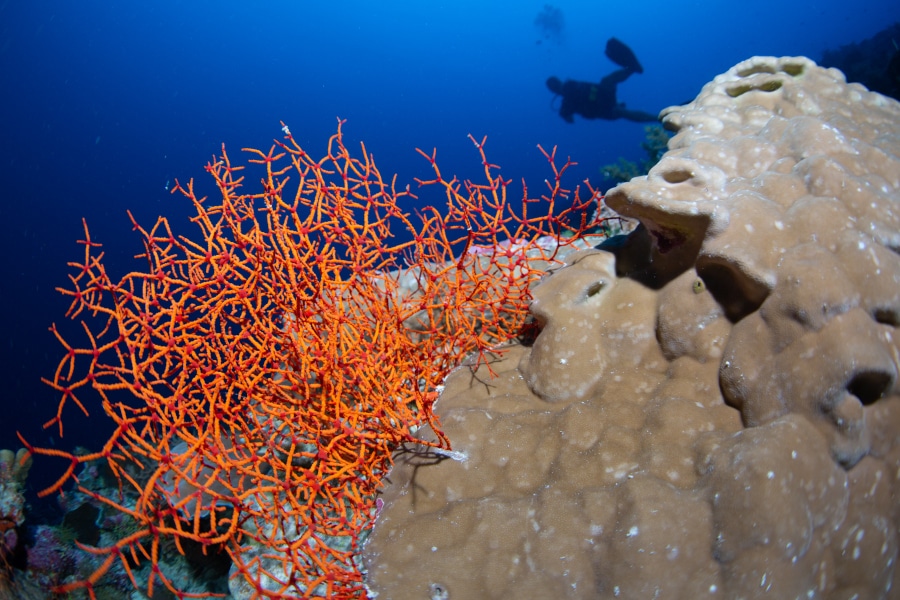
The barrel sponges at Simon’s Reef are among the largest found anywhere around the Gili Islands. Some are so enormous that a diver could comfortably fit inside them.
These giant sponges act as natural cleaning stations and provide shelter for countless reef creatures.
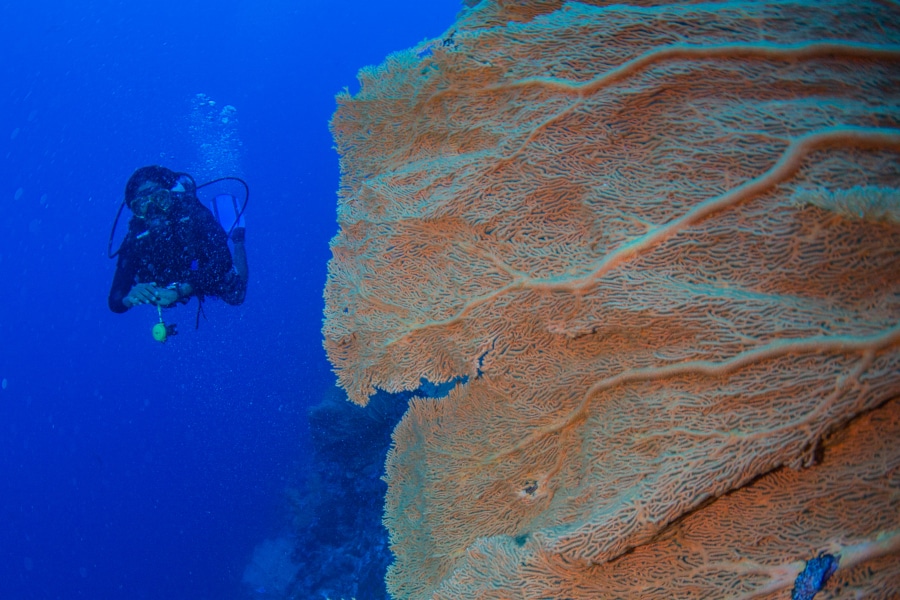
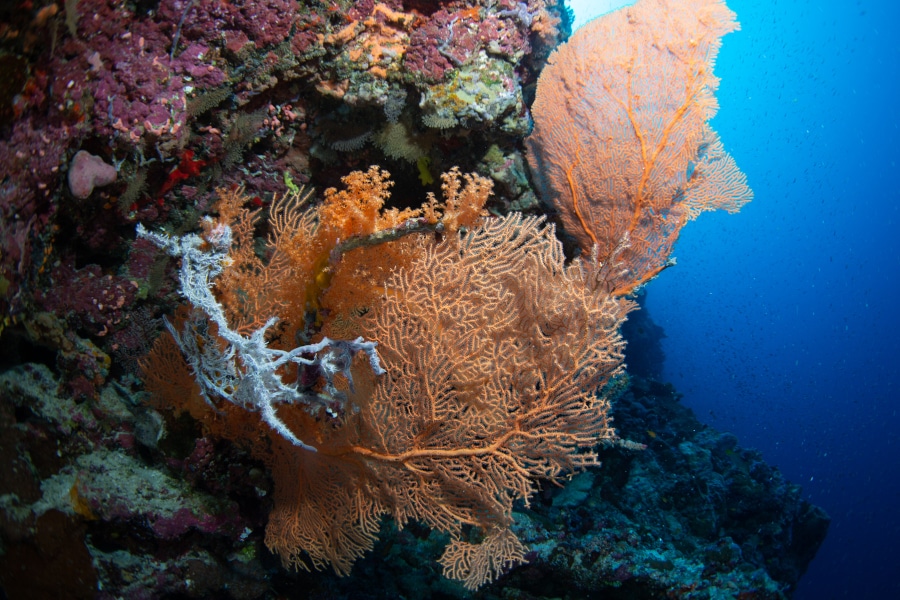
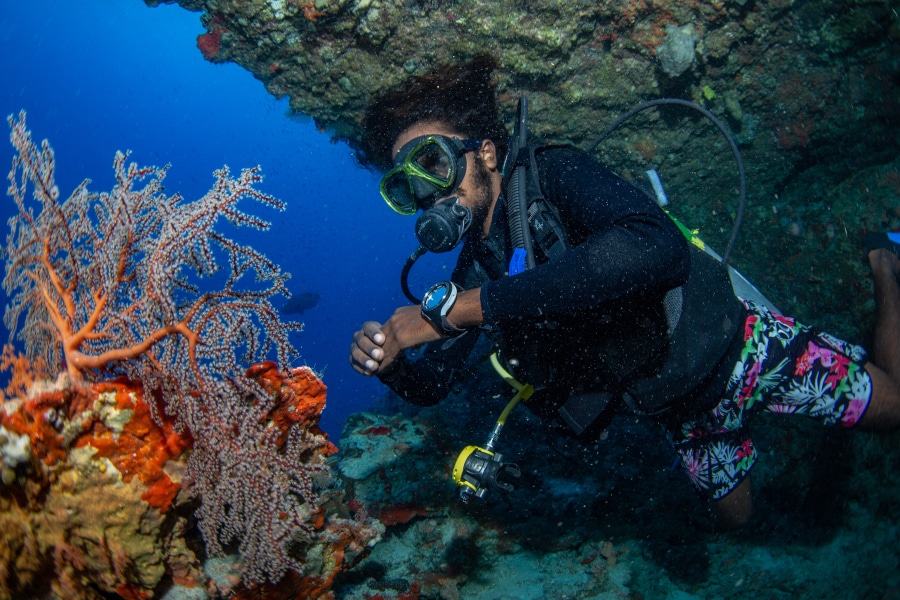
Equally impressive are the large gorgonian sea fans decorating the canyon walls.
Look closely and you may discover one of the ocean’s best-hidden residents.
Pygmy seahorses occasionally camouflage themselves amongst the delicate branches, almost impossible to spot without an experienced guide.
Soft corals cover many of the walls, adding vibrant colour to the already spectacular underwater scenery.
Big Fish Encounters
While Simon’s Reef offers excellent macro opportunities, most divers come here hoping to encounter larger marine life.
The deeper sections of the reef are regularly patrolled by white-tip reef sharks, particularly around the bases of the pinnacles where the sandy seabed meets the reef.
Above the pinnacle tops, the water column is often alive with movement.
Schools of giant trevallies and bigeye jacks patrol the reef, while large groups of barracuda hover effortlessly in the current.
Perhaps the most mesmerising spectacle is provided by the enormous schools of fusiliers.
Sweeping across the reef in shimmering waves, they constantly change direction as they move between the pinnacles, creating one of the most dynamic fish displays in the Gili Islands.
Between the structures, stingrays frequently rest on the sandy bottom.
Meanwhile, moray eels, oriental sweetlips and scorpionfish hide beneath ledges and inside the countless crevices that make this reef such an excellent habitat.
A Dive for Experienced Divers
Simon’s Reef is generally considered an Advanced Open Water dive site.
Its offshore location, depth and changing currents require good buoyancy control and confident diving skills.
The most spectacular parts of the reef lie between 20 and 30 metres, where the canyon walls become more dramatic and shark encounters are most common. Using Nitrox is definitly recomended.
Diving Simon’s Reef
We plan Simon’s Reef dives carefully around the slack tide.
This short period, when tidal movement slows, usually offers the best combination of visibility, manageable currents and active marine life.
The dive typically begins on the up-current side of the reef.
From there, we slowly work our way through the figure-eight layout, exploring the deep canyons before gradually moving onto the shallower pinnacle tops.
One of the highlights comes midway through the dive.
Rather than remaining close to the reef, it’s worth hovering above the pinnacle summits for a few moments.
This is where schools of fusiliers, jacks, barracuda and trevallies gather in the open water, often creating breathtaking scenes all around you.
Want to explore more? Check out our Complete Guide to Dive Sites in the Gili Islands for detailed information on every major dive site, including Shark Point, Halik Reef, Turtle City, Deep Turbo, Meno Wall, and many more.