

Coral reefs around the world are under pressure.
Climate change, coral bleaching, pollution, destructive fishing practices and physical damage from anchors have caused many reefs to decline faster than they can naturally recover.
Fortunately, marine scientists have developed several ways to help damaged reefs recover. One of the most successful is Biorock technology.
Used in countries from Indonesia to the Maldives and the Caribbean, Biorock has transformed damaged seabeds into thriving coral reefs full of marine life.
The Gili Islands are home to one of the world’s largest and longest-running Biorock projects, making them one of the best places to see this remarkable technology in action.
What Is Biorock Technology?
Biorock is a method of restoring coral reefs using a very small electrical current.
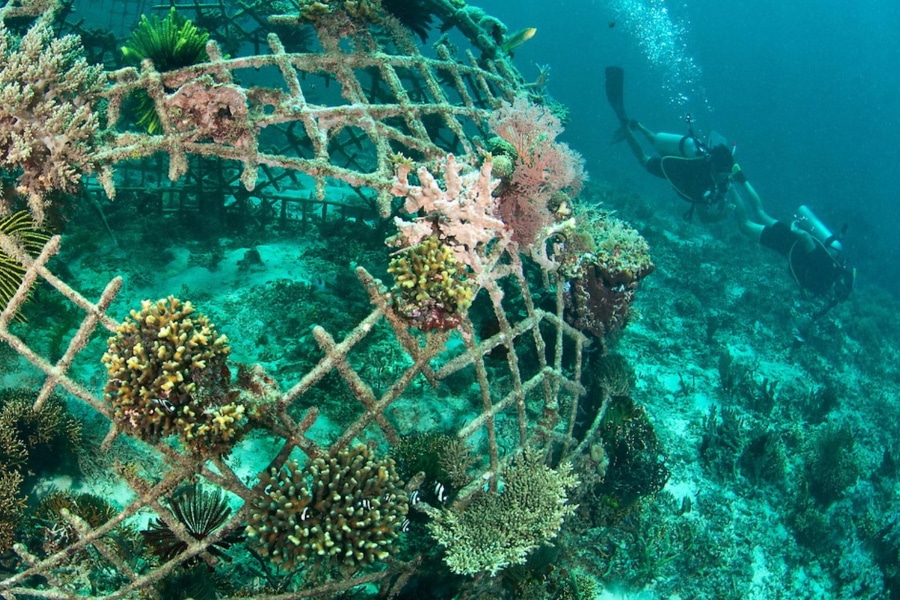
Steel structures are placed on the seabed and connected to a low-voltage power source, usually supplied by cables running from the shore.
When electricity passes through the metal, naturally dissolved minerals in seawater begin to accumulate on its surface.
Over time, these minerals form a layer of limestone, the same material that hard corals use to build their skeletons.
Instead of waiting years for bare metal to become suitable for coral growth, the process creates an ideal surface within weeks.
Once coral fragments are attached, they begin growing into a living reef.
Who Invented Biorock?
The technology was developed during the 1970s by architect Wolf Hilbertz and later refined together with marine biologist Dr. Thomas Goreau.
Hilbertz originally discovered that electrical currents could cause limestone to form naturally in seawater.
Together, they realised the process could help restore damaged coral reefs while creating habitats for countless marine species.
Today, Biorock projects can be found throughout tropical oceans around the world.
How Does It Work?
The science behind Biorock is surprisingly simple.
Seawater naturally contains dissolved calcium and bicarbonate ions.
When a very low electrical current passes through a submerged steel frame, these minerals are attracted to the metal and slowly crystallise into solid limestone.
This process is called mineral accretion.
As the limestone layer thickens, it provides an excellent foundation for corals, coralline algae and other reef-building organisms.
The electrical current is incredibly weak—far less than people imagine—and is harmless to both divers and marine life.
Many fish actually seem attracted to Biorock structures because they quickly become shelter and feeding grounds.
Why Do Corals Grow Faster?
Corals normally spend a great deal of energy producing their calcium carbonate skeletons.
On a Biorock structure, much of that material is already being deposited naturally.
This allows corals to invest more energy into growing tissue rather than building their skeleton from scratch.
Numerous scientific studies have shown that corals attached to Biorock structures often grow significantly faster than those on nearby natural reefs.
Faster growth means damaged reefs can recover much sooner than they otherwise would.
Can Biorock Help Prevent Coral Bleaching?
One of the most fascinating aspects of Biorock technology is its potential to improve coral survival during bleaching events.
Research has shown that corals growing on electrically charged structures often survive periods of unusually warm water better than nearby corals.
Scientists believe the electrical current reduces physiological stress and improves the coral’s ability to cope with high temperatures.
It is important to understand that Biorock does not stop coral bleaching.
If ocean temperatures become too high for too long, corals can still bleach.
However, many studies suggest they recover faster and survive in greater numbers than corals growing elsewhere.
This makes Biorock an exciting tool in the fight against climate change, although it is not a complete solution.
Where Is Biorock Used?
Today, Biorock projects exist in many tropical countries, including:
- Indonesia
- Maldives
- Seychelles
- Papua New Guinea
- Japan
- The Caribbean
- The Pacific Islands
Each project has the same goal: helping damaged reefs recover while providing new habitat for marine life.
The Gili Islands have become one of the best-known examples of the technology’s long-term success.
Biorocks in the Gili Islands
The Biorock project in the Gili Islands began in 2004, when the Gili Eco Trust introduced the technology as part of its coral restoration programme.
Since then, more than 150 Biorock structures have been installed around Gili Trawangan, Gili Meno and Gili Air.
Some of the earliest structures have now disappeared beneath decades of coral growth or even collapsed under the weight of the reef they helped create.
New structures continue to be installed, ensuring the project remains active today. Perfect example is the giant octopus on Halik Reef.
For divers, they provide a fascinating opportunity to witness reef restoration happening in real time.
Does Biorock Replace Natural Coral Reefs?
No.
Biorock should never be seen as a replacement for healthy natural reefs.
The primary goal is to restore damaged areas and provide corals with a head start where natural recovery would otherwise take decades—or might never happen at all.
Protecting existing coral reefs remains far more important than rebuilding damaged ones.
Reducing pollution, preventing anchor damage, improving wastewater treatment and slowing climate change will always be the most effective ways to conserve coral reefs.
Biorock is one tool among many.
Does Every Artificial Reef Become a Biorock?
No.
Many artificial reefs are simply sunken ships, concrete blocks or specially designed reef modules.
While these provide habitat for marine life, they do not use electricity or mineral accretion.
A Biorock is different because it actively encourages limestone formation and accelerates coral growth through a continuous low-voltage electrical current.
Can Divers Visit Biorock Reefs?
Absolutely.
The Biorock dive site on Gili Trawangan allows divers to explore one of the world’s most successful reef restoration projects firsthand.
The site is especially popular with underwater photographers thanks to its abundance of macro life, colourful coral growth and thriving reef fish.
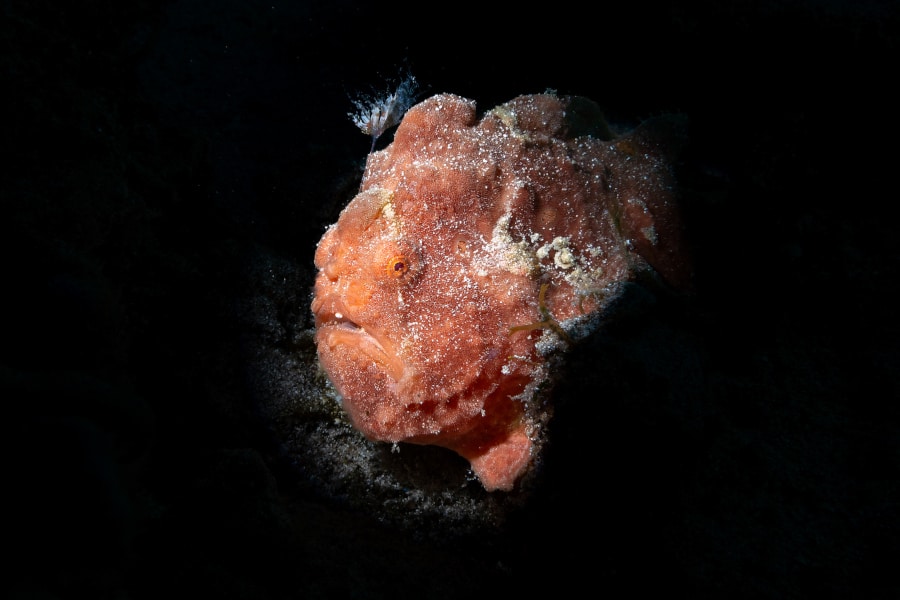
Night dives are particularly rewarding, with octopus, cuttlefish, frogfish and ghost pipefish frequently encountered amongst the coral-covered structures.
Every dive also provides a reminder that conservation efforts really can make a difference.
The Future of Reef Restoration
No technology can solve the global coral reef crisis on its own.
Healthy oceans still depend on reducing greenhouse gas emissions, protecting marine habitats and improving the way we manage coastal environments.
But projects like Biorock demonstrate something equally important.
Given the right conditions—and a little help—coral reefs can recover.
Around the world, scientists continue to improve restoration techniques, while volunteers, conservation organisations and dive centres work together to rebuild damaged ecosystems.
The reefs of the Gili Islands stand as one of the best examples of what long-term commitment to marine conservation can achieve.
Final Thoughts
Biorock technology is one of the most innovative tools available for coral reef restoration.
By combining simple engineering with natural biological processes, it accelerates coral growth, creates habitat for marine life and helps damaged reefs recover more quickly.
It isn’t a miracle cure, and it cannot replace the need to protect healthy reefs.
But it has already transformed damaged seabeds into thriving ecosystems across the world.
If you visit the Gili Islands, take the opportunity to dive the Biorocks. Beneath the colourful corals and schools of fish lies one of marine conservation’s greatest success stories—and proof that, with the right care, nature can be remarkably resilient.
Want to explore more? Check out our Complete Guide to Dive Sites in the Gili Islands for detailed information on every major dive site, including Shark Point, Halik Reef, Turtle City, Deep Turbo, Meno Wall, and many more.