
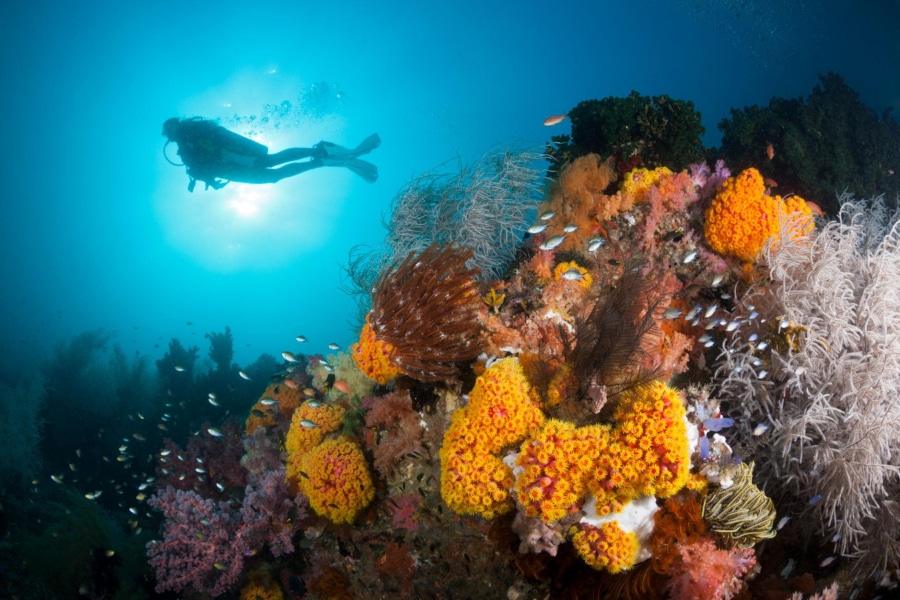
Indonesia is a diver’s dream.
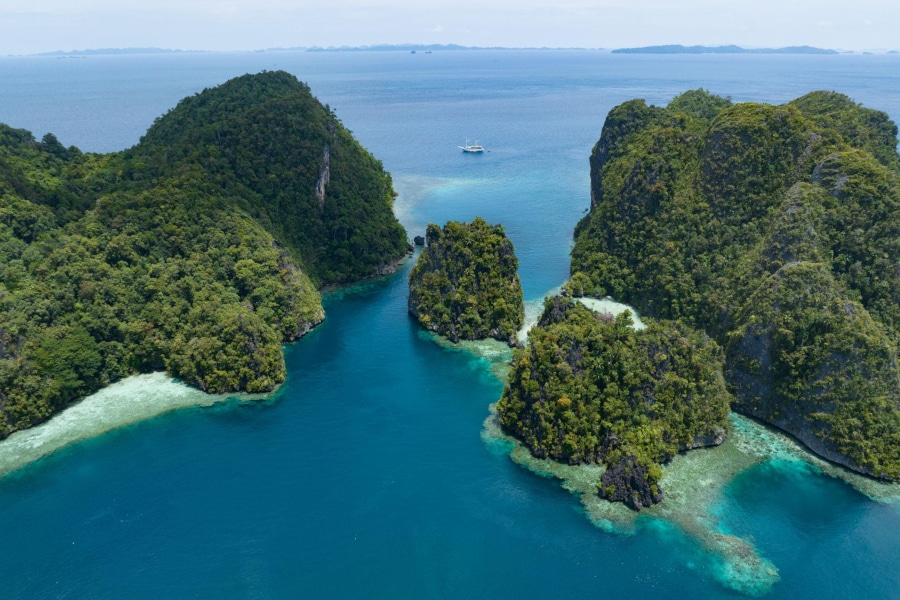
With more than 17,000 islands stretching across the equator, the country sits at the center of the Coral Triangle, often called the “Amazon of the Seas.”
The numbers are staggering.
More than 500 species of coral.
Over 2,000 species of reef fish.
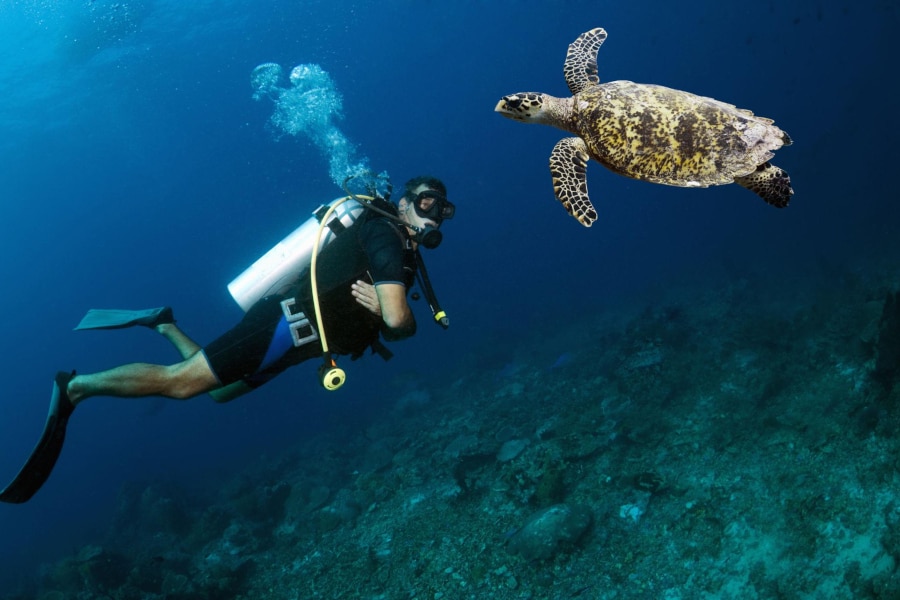
Manta rays, whale sharks, sea turtles, reef sharks, pygmy seahorses, dolphins and countless other marine creatures.
From the reefs of the Gili Islands and Komodo National Park to the biodiversity hotspots of Raja Ampat and Bunaken National Park, Indonesia offers some of the most spectacular diving on Earth.
But this underwater paradise also faces challenges.
And that is why eco diving has become more important than ever.
Indonesia’s Reefs Have Not Always Been Protected
Many divers visiting Indonesia today are amazed by the health of its reefs.
But not all reefs have been so fortunate.
Historically, some areas of Indonesia suffered from destructive fishing practices, particularly blast fishing, also known as dynamite fishing.
The method was simple and devastating.
Explosives were thrown into the water to stun or kill fish, making them easy to collect.
While effective in the short term, the damage to coral reefs was catastrophic.
Entire reef structures built over hundreds of years could be destroyed in seconds.
Large areas of reef throughout Indonesia were affected during previous decades.
The good news?
Things have improved dramatically.
Marine protected areas, stronger enforcement, local conservation initiatives, community education, and sustainable tourism have helped many reefs recover.
And honestly, some of the healthiest reefs in Indonesia today exist because local communities and tourism operators actively chose conservation over destruction.
The Role of Divers
Many people think marine conservation is something only governments or scientists can do.
In reality, divers play a huge role.
Every diver has an impact on the reef they visit.
Good divers leave almost no trace.
Poor diving practices can damage coral, disturb wildlife, and negatively affect fragile ecosystems.
Eco diving is simply about reducing that impact.
And becoming an eco-conscious diver usually makes you a better diver too.
What Is Eco Diving?
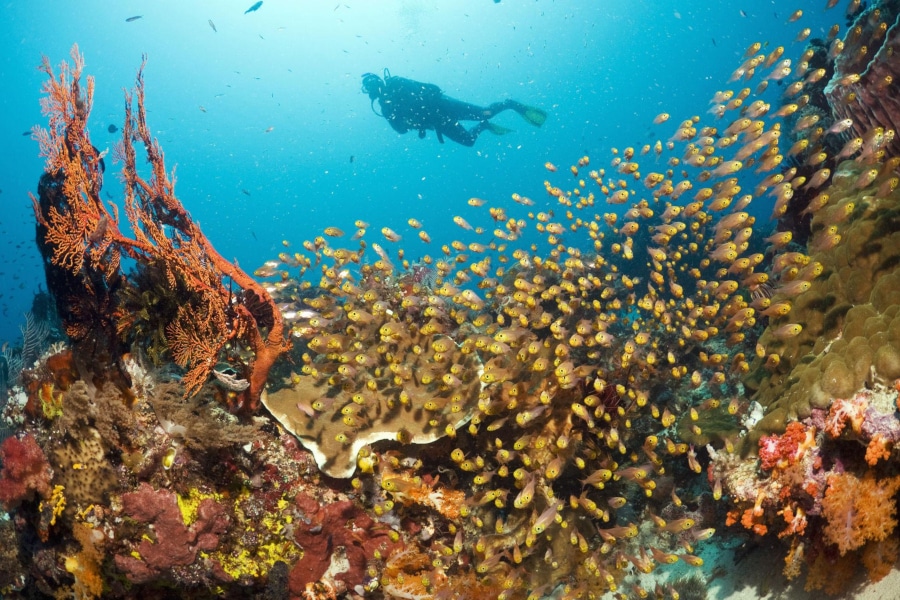
Eco diving means enjoying the underwater world while actively helping to protect it.
That includes:
- Maintaining good buoyancy
- Avoiding contact with coral
- Respecting marine life
- Reducing plastic waste
- Supporting conservation initiatives
- Choosing responsible dive operators
The goal is simple:
Leave the reef exactly as you found it.
Why Green Fins Matters
One of the easiest ways to support sustainable diving is by choosing dive centers that take environmental responsibility seriously.
This is where Green Fins comes in.
Green Fins is an internationally recognized conservation initiative that helps dive centers reduce their environmental footprint through practical standards and best practices.
Green Fins members commit to:
- Protecting coral reefs
- Promoting responsible diving
- Reducing waste
- Improving environmental education
- Supporting marine conservation
Because operators influence thousands of divers every year.
Small improvements multiplied across an entire dive industry create significant positive change.
Not Every Eco Dive Center Is Green Fins
It is important to remember that many excellent eco-conscious dive centers are not Green Fins members.
Some operators actively support:
- Reef restoration
- Shark conservation
- Turtle protection
- Community cleanups
- Marine education
The key is looking for operators that genuinely invest in protecting the marine environment rather than simply talking about it.
The Gili Islands: A Local Success Story
The Gili Islands provide a great example of how tourism and conservation can work together.
Organizations such as:
- Gili Eco Trust
- Gili Shark Conservation
- Project Penyu
have helped improve marine protection, support reef conservation, and increase awareness among both locals and visitors.
At Divine Divers Gili Meno, sustainability is integrated into daily operations through environmental education, buoyancy training, waste reduction, marine awareness programmes, beach cleanups. This is all showcased by the Green Fins Gold Certification.
As the only Green Fins Gold member on the Gili Islands, Divine Divers demonstrates how dive tourism can actively contribute to reef protection while still providing outstanding diving experiences.
The Future of Diving in Indonesia
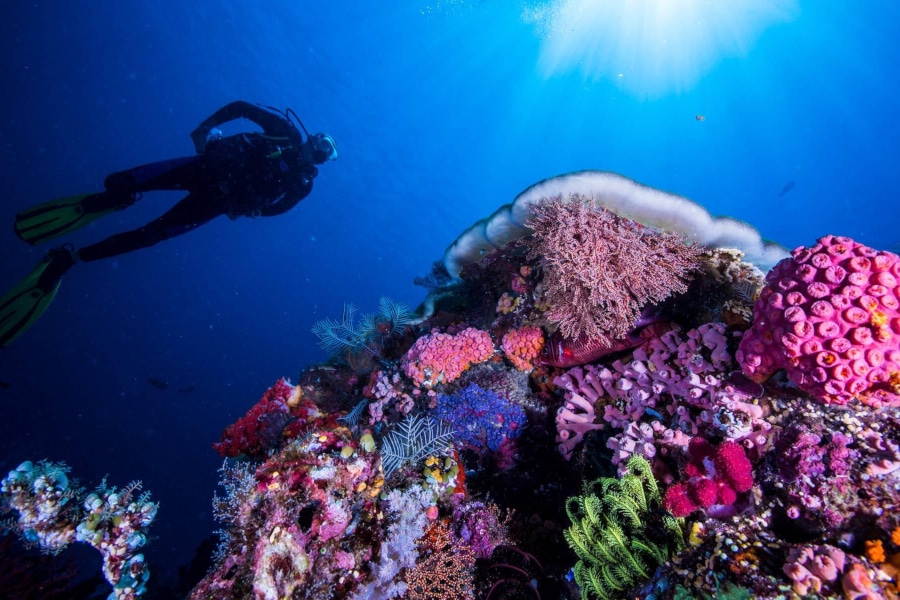
Indonesia’s reefs are among the country’s greatest treasures.
But they are not guaranteed to remain healthy forever.
Climate change, pollution, and growing tourism continue to create challenges.
Fortunately, there is also reason for optimism.
More divers are choosing eco-conscious operators.
Communities are embracing marine conservation.
Dive centers are adopting sustainable practices.
Every responsible diver becomes part of that solution.
Because protecting Indonesia’s reefs is not only about preserving beautiful dive sites.
It is about ensuring that future generations can experience the same turtles, coral gardens, sharks, manta rays, and incredible marine biodiversity that make diving in Indonesia so extraordinary today.