
“What’s the difference between soft coral and hard coral?”
Good question, right?
At first glance, the answer seems obvious.
Hard corals look hard.
Soft corals look soft.
But the reality is much more interesting.
The distinction between soft and hard corals is one of the most important concepts in marine biology and helps explain how coral reefs are formed, why some reefs support more marine life than others, and why the reefs of the Gili Islands are part of the most biodiverse marine region on Earth.
Understanding the difference will completely change the way you look at a coral reef.
First Things First: What Is a Coral?
Before comparing soft and hard corals, it is important to understand what a coral is.
Corals are animals.
Not plants, rocks or underwater trees.
Corals belong to a group of animals known as Cnidarians, making them relatives of jellyfish and sea anemones.
Each coral colony consists of thousands of tiny animals called polyps.
Together, these polyps form the structures we recognise as coral reefs.
Both soft corals and hard corals are made up of coral polyps.
The difference lies in how they grow and the structures they create.
Hard Corals: The Architects of the Reef
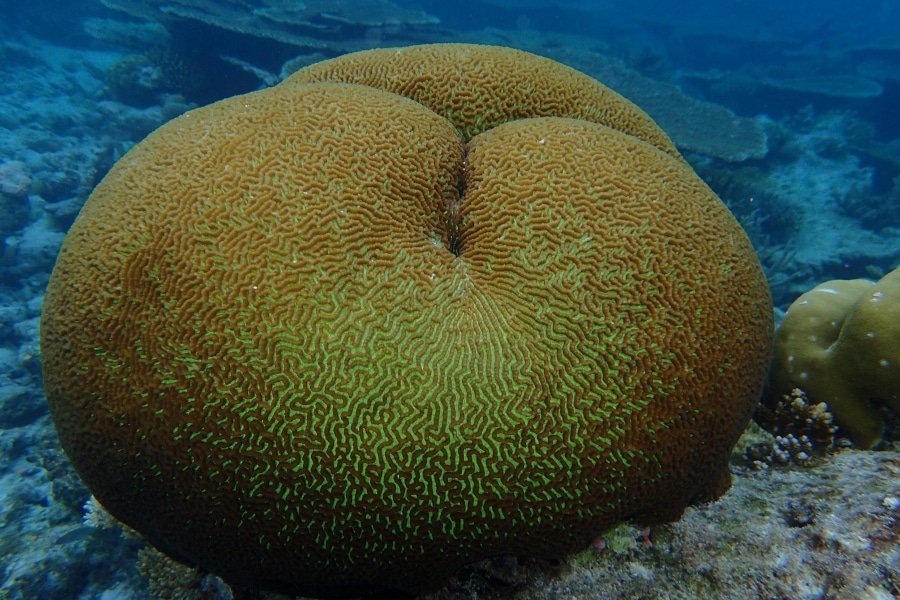
Hard corals are the true builders of coral reefs.
Scientists refer to them as stony corals because they produce hard skeletons made from calcium carbonate.
Over hundreds and thousands of years, these skeletons accumulate and form the reefs that snorkelers and divers explore today.
Without hard corals, there would be no coral reefs.
No Shark Point, Halik Reef, no Meno Wall or Sunset Reef.
Every major reef structure in the Gili Islands was built by generations of hard corals.
How Hard Corals Grow
Hard corals come in many shapes.
Common growth forms include:
- Branching corals
- Table corals
- Massive corals
- Brain corals
- Encrusting corals
- Foliose corals
- Columnar corals
Each growth form creates different habitats for marine life.
Some provide shelter for juvenile fish.
Others create hiding places for turtles, moray eels, and reef sharks.
Together they form the complex underwater cities that support thousands of species.
Where Hard Corals Grow
Because hard corals contain symbiotic algae called zooxanthellae, they require sunlight.
For this reason, hard corals are most abundant in:
- Shallow reefs
- Clear tropical waters
- Areas with good water circulation
In the Gili Islands, hard corals dominate many of the most famous dive sites.

Soft Corals: The Colour of the Reef
Soft corals are very different.
Unlike hard corals, they do not build massive limestone skeletons.
Instead, they contain tiny internal structures called sclerites that provide support while allowing flexibility.
As a result, soft corals sway with the current.
They move and bend.
They create motion throughout the reef.
This movement is often one of the first things divers notice underwater.
Why Soft Corals Are So Colourful
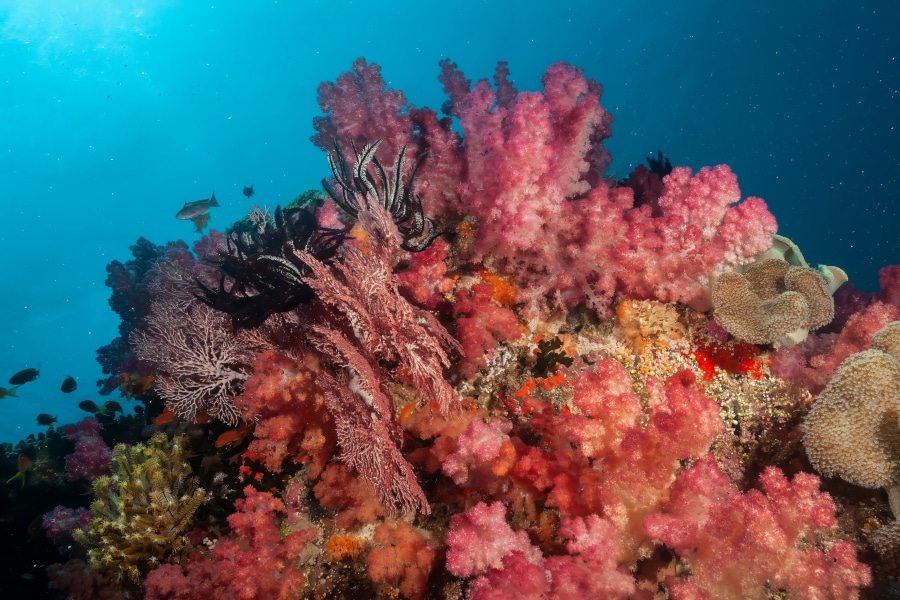
Many of the brightest colours found on coral reefs belong to soft corals.
Bright pink.
Orange.
Purple.
Yellow.
Red.
Soft corals often contain pigments that help protect them from sunlight and other environmental stresses.
This makes them particularly popular with underwater photographers.
Where Soft Corals Grow
Soft corals thrive in locations where currents are stronger.
The constant flow of water delivers food and nutrients directly to the coral polyps.
This is why soft corals are often found:
- On reef slopes
- Along reef edges
- In channels
- On current-swept ridges
Some of the best examples in the Gili Islands can be found at:
- Soraya
- Deep Turbo
- Shark Point
- Bounty Wreck’s outside reef
- Turtle City
The pink soft coral gardens at Bounty Wreck or at Turtle City are particularly beautiful.
Which Coral Type Is Better?
The answer is simple.
Neither.
Healthy reefs need both.
Hard corals build the reef.
Soft corals increase biodiversity and add complexity.
A healthy reef contains a mixture of many different coral species and growth forms.
The most spectacular reefs in the Coral Triangle typically contain both.
This diversity creates habitat for thousands of marine species.
What Is NOT a Coral?
This is where many divers get surprised.
Several common reef organisms are frequently mistaken for corals.

Sponges
Sponges are animals.
Many divers mistake large barrel sponges for coral colonies.
However, sponges belong to a completely different group of animals and filter water rather than using coral polyps.
The giant sponge corals often seen at Hans Reef where turtles rest are actually sponges, not corals.
Anemones
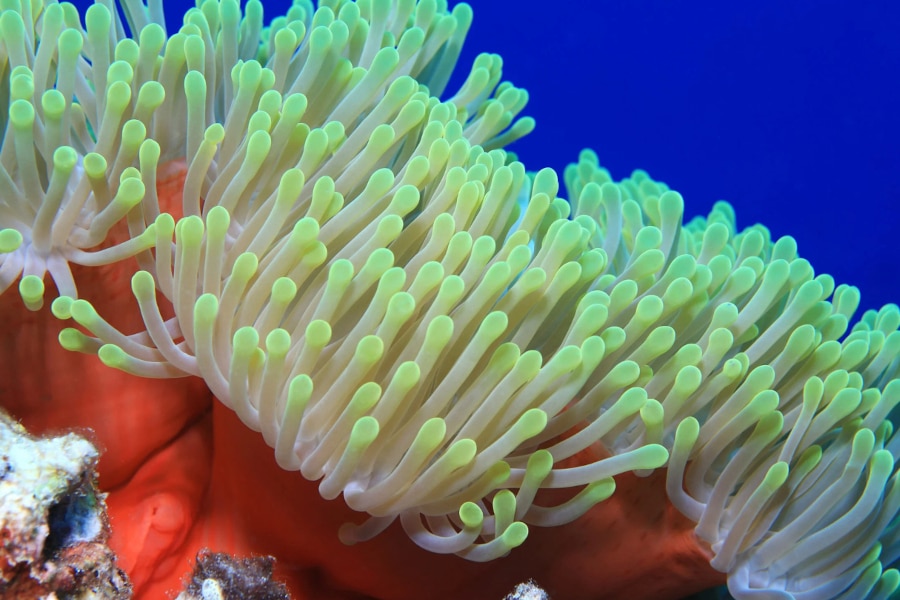
Anemones are close relatives of corals but are not corals themselves.
Unlike corals, they do not build colonies that form reefs.

Algae and Seaweed
Many beginners assume seaweed growing on reefs is coral.
It isn’t.
Seaweed is a plant-like organism that plays a completely different ecological role.
Why Coral Diversity Matters
One of the reasons the Coral Triangle contains the highest marine biodiversity on Earth is the incredible diversity of corals.
Different coral species create different habitats.
Different habitats support different animals.
Some fish prefer branching corals.
Others live amongst soft corals.
Certain nudibranchs feed only on specific coral species.
Some turtles prefer reefs dominated by sponges.
The greater the coral diversity, the greater the overall biodiversity.
Threats Facing Both Soft and Hard Corals
Although soft and hard corals are different, both face similar threats.
These include:
- Climate change
- Coral bleaching
- Pollution
- Sedimentation
- Physical damage
- Destructive fishing practices
Healthy reefs are generally more resilient.
This is why conservation and sustainable diving practices remain so important.
What Snorkelers and Divers Should Look For
When getting into the water next time, try looking beyond the fish.
Notice the structure of the reef itself.
Ask yourself:
- Is this a hard coral or a soft coral?
- Is it building the reef or decorating it?
- What fish are using it as shelter?
- How does current influence its shape?
Once you start recognising these differences, every underwater adventure becomes more interesting.