

A night dive changes the Gili Islands completely.
The reef you know from daytime diving is still there, but the animals are different. Moray eels leave their holes, octopus begin hunting, crustaceans become much more active and many fish settle down for the night.
Even familiar dive sites can feel completely different after sunset.
For us, these are some of the best places around the Gili Islands for night diving:
- Meno Wall
- Meno Slope
- Bounty Wreck
- Hans Reef
- Gili Air Harbour for a dusk shore dive and mandarin fish
Each site offers something different.
Meno Wall – the classic Gili Islands night dive
If you only do one night dive in the Gili Islands, Meno Wall is one of our top choices.
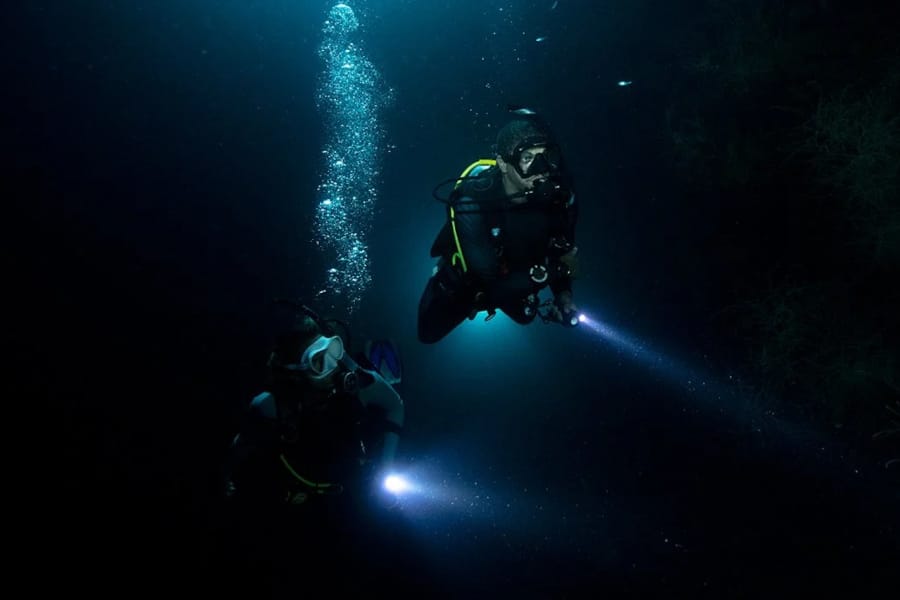
The western side of Gili Meno drops from shallow water down towards a sandy bottom at around 30 metres. During the day, the wall is known for turtles, reef fish and its impressive underwater terrain. At night, the character changes completely.
The overhangs and crevices become much more interesting.
Octopus come out to hunt, moray eels become more active, and crustaceans are everywhere. Lobsters, crabs and shrimp become much easier to spot when you slowly work your way along the wall with a torch.
You can also encounter sleeping fish tucked into the reef, lionfish hunting in the torch beam and the occasional Spanish dancer (a nudibranch) moving across the reef.
The wall can have current, so conditions matter. On a calm evening, however, it makes an excellent night dive.
Meno Slope – a quieter night on the reef
Meno Slope is a gentler alternative to the wall.
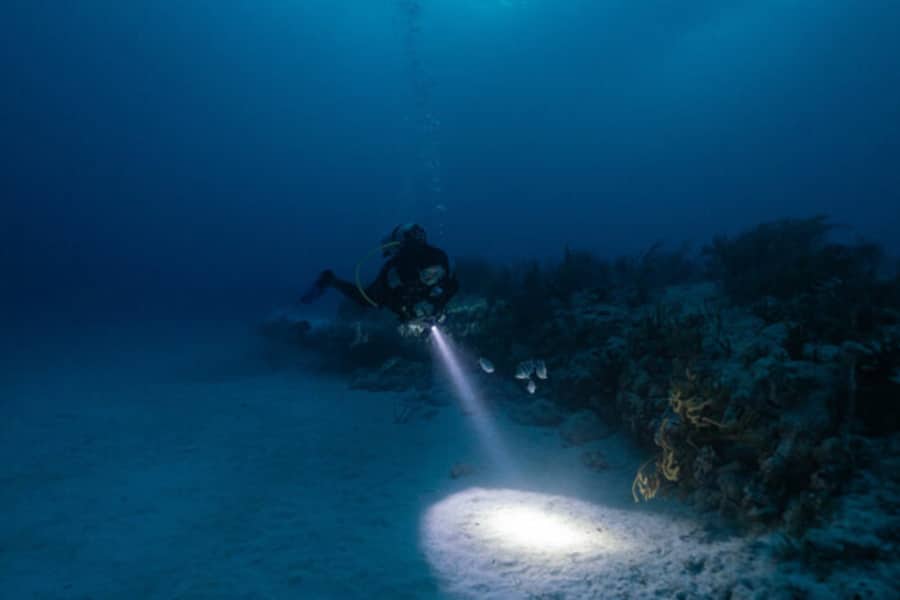
The site consists of a sandy slope with coral formations, sponges and plenty of smaller marine life. During the day, turtles are one of the main attractions, while the slope is also known for macro life including nudibranchs, ghost pipefish and other small creatures.
At night, the focus changes.
The reef becomes much quieter, and the sandy areas and coral bommies are worth exploring slowly with a torch. Look into holes and underneath coral ledges for sleeping fish, crabs, shrimp and hunting predators.
It is a good choice if you prefer a relaxed night dive rather than a dramatic wall.
Bounty Wreck – a macro playground after dark
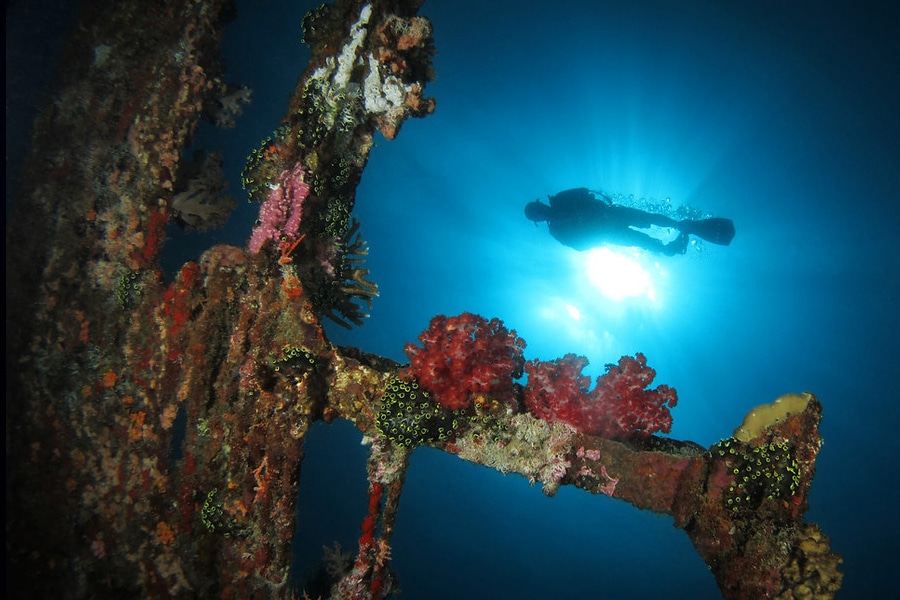
The Bounty Wreck is not a traditional shipwreck. It is the remains of a former floating pontoon that ended up on the seabed and has since become a heavily encrusted artificial reef.
During the day, it is already one of our favourite sites for macro life. Frogfish, ghost pipefish, scorpionfish and other small creatures can be found around the structure.
At night, bring your torch and slow down.
The coral-covered structure provides countless hiding places for nocturnal creatures. Look underneath the wreck, around the coral growth and into the darker areas where animals shelter during the day.
The combination of relatively shallow depth and little current makes Bounty particularly enjoyable for a night dive.
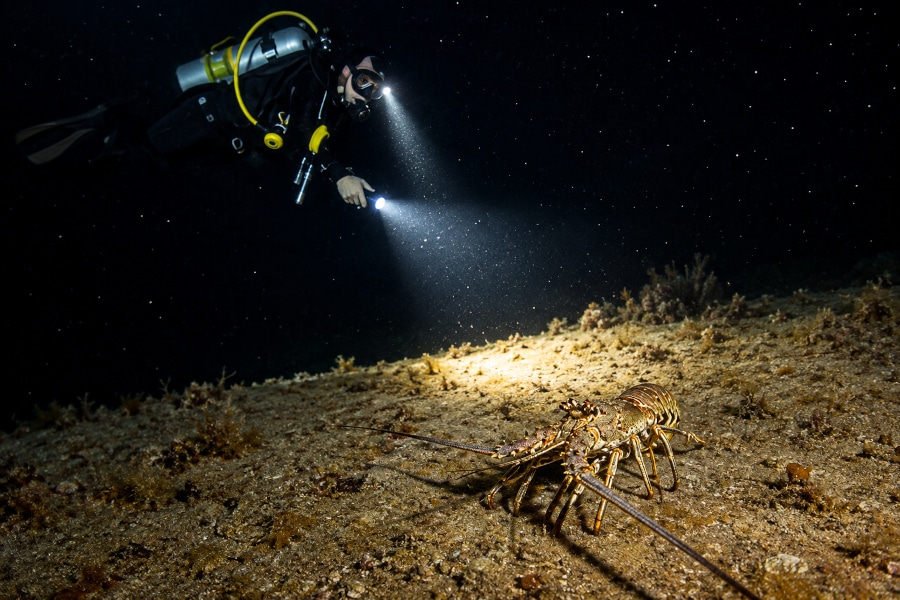
Hans Reef – for the macro lovers
If you enjoy searching for tiny animals, Hans Reef is one of the sites we would put high on the list.
Hans Reef is already known as one of the Gili Islands’ macro hotspots, with frogfish, nudibranchs, ghost pipefish and other unusual creatures regularly associated with the site.
At night, the search becomes even more interesting.
Rather than swimming a long distance, this is a site where it pays to move slowly and let your torch do the work.
Check the rubble.
Look around small coral formations.
Look underneath ledges.
And don’t forget to look at the sand.
Night diving here is less about covering distance and more about finding the small things.
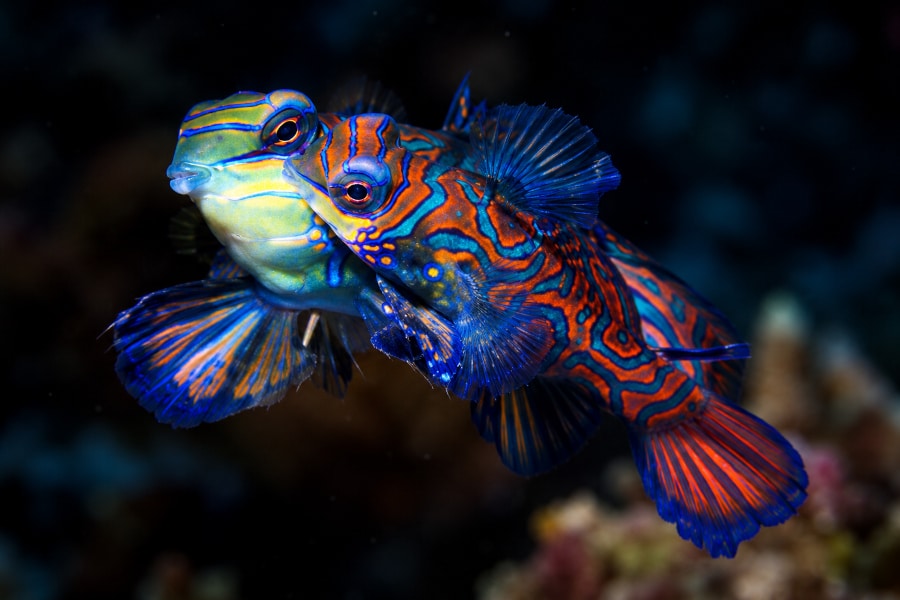
Gili Air Harbour – the dusk dive for mandarin fish
This one is slightly different.
Gili Air Harbour is best experienced as a dusk dive rather than a traditional night dive.
And the reason is one very special fish: the mandarin fish.
As daylight fades, mandarin fish emerge from the staghorn coral where they spend much of the day hiding. Around dusk, males and females perform a short mating display, rising above the coral together before disappearing back into the reef.
The timing is important.
You want to enter while there is still some light and be in position as the sun goes down. The actual mating behaviour happens during a relatively short window around sunset.
And the best part?
You can do it as a shore dive.
There is no need to take the boat out for this one. The harbour site is directly accessible from shore, making it an unusual and very convenient macro dive.
Once the mandarin fish have finished their display and darkness has arrived, you can continue the dive and explore the harbour as a night dive.
The shallow slope contains seagrass, rubble and staghorn coral, and other nocturnal creatures start appearing as the light disappears. Seahorses, pipefish, ghost pipefish, and octopus are among the small creatures that can be encountered here.
Which night dive should you choose?
| Dive site | Best for | Type |
|---|---|---|
| Meno Wall | Octopus, crustaceans, morays, Spanish dancers | Night dive |
| Meno Slope | Relaxed reef and macro diving | Night dive |
| Bounty Wreck | Frogfish, macro life, crustaceans | Night dive |
| Hans Reef | Nudibranchs, frogfish, unusual macro life | Night dive |
| Gili Air Harbour | Mandarin fish and macro life | Dusk + night shore dive |
If you love bigger nocturnal activity, choose Meno Wall.
If you prefer a relaxed reef dive, Meno Slope is a great option.
For macro and artificial-reef life, choose Bounty.
For serious critter hunting, Hans Reef is hard to beat.
And if you want something completely different, go to Gili Air Harbour at dusk and watch the mandarin fish mating.
What makes night diving in the Gili Islands special?
The great thing about night diving here is that you don’t necessarily need a completely different set of dive sites.
You aren’t just diving the reef at night. You’re seeing a different version of it.
For more about the animals you may encounter, explore our Gili Islands Marine Life guide and our complete Gili Islands dive-site guide.