

Gili Air Harbour is a dive site with a story. What was once a nice reef stretching east from the harbour and around the corner towards the eastern side of Gili Air has changed considerably with coastal development. Today, those eastern sections are no longer accessible to divers, and the site has become concentrated on the western side of the harbour.
But don’t write it off.
For macro photographers and critter hunters, Gili Air Harbour is still one of the more interesting muck diving sites on the Gili Islands.
The underwater landscape is a mixture of sand, moorings, anchor lines, scattered rubbish and, around 50 metres from shore, surprisingly beautiful coral blocks. These small patches of reef are where the dive really comes alive.
From Reef Diving to Muck Diving
The harbour used to offer a very different diving experience. The reefs extending eastwards were once an attraction, and the site became particularly famous for its mandarin fish at dusk.
Today, coastal development has made those areas inaccessible, so the character of the dive has changed.
The western section is now much more of a muck dive, where the excitement comes from searching rather than simply following a reef.
The sandy bottom may look ordinary at first. Then you start looking closely.
Around the coral blocks, moorings and anchor lines, small creatures are everywhere. For underwater photographers, this can turn into a rewarding treasure hunt.
Coral Blocks Full of Life
One of the biggest surprises at Gili Air Harbour is the coral.
Around 50 metres from shore, beautiful coral blocks rise from the sandy bottom. They may not be enormous, but they are packed with marine life and provide an important contrast to the surrounding muck environment.
Look carefully around the blocks and you can find many of the subjects that macro photographers love:
- Mandarin fish
- Frogfish
- Scorpionfish
- Pipefish
- Ghost pipefish
- Shrimp
- Nudibranchs
The challenge is spotting them.
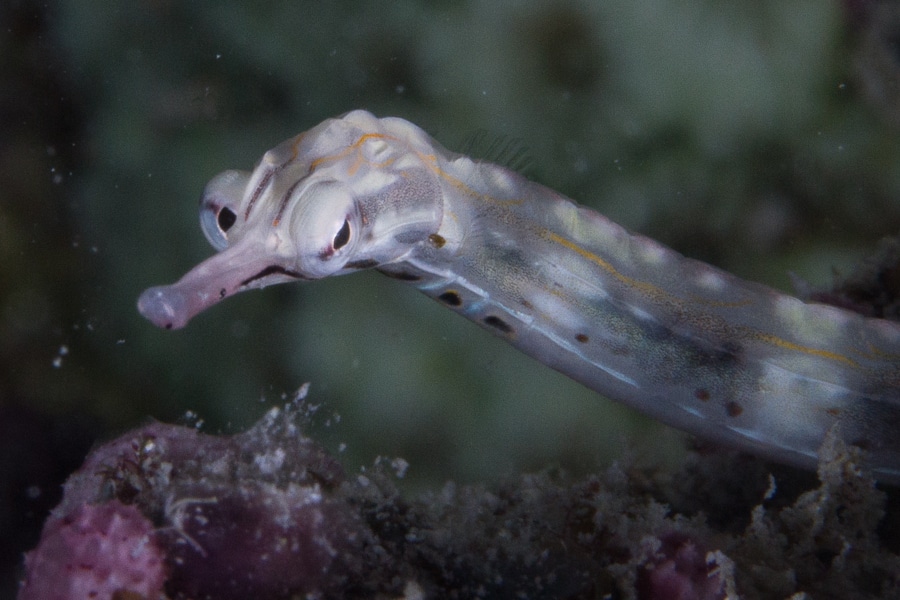
A frogfish can disappear against a coral block. A pipefish can look like part of the reef. A tiny nudibranch may be crawling across a surface right in front of your mask.
This is where the slow pace of muck diving around the Gili Islands becomes so rewarding.
Mandarin Fish
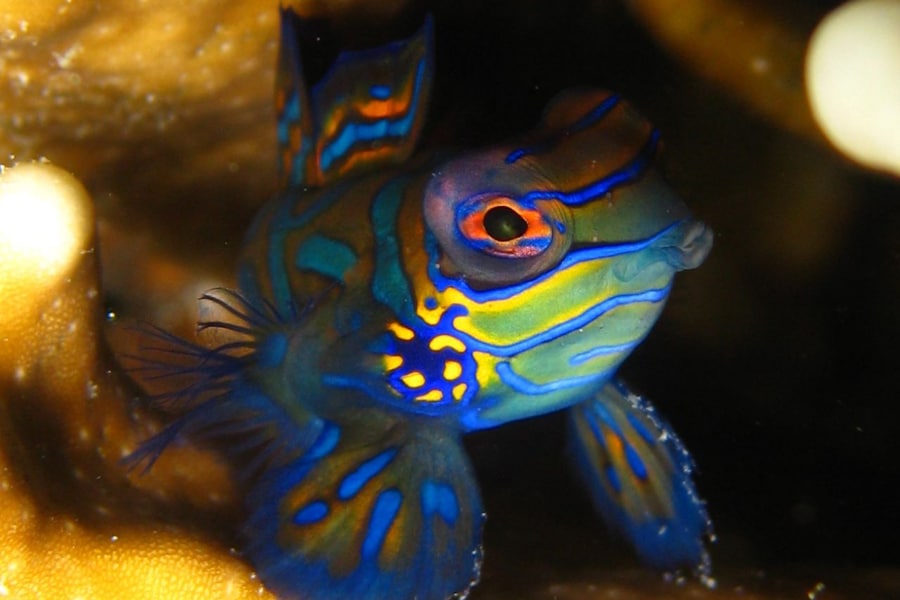
Mandarin fish remain one of the site’s most exciting residents.
They are famous for their incredible colours and are a favourite subject for underwater photographers. The original dusk dives around the eastern reef are no longer possible, but mandarin fish can still be found around the current dive area.
They are small and quick, so photographing them requires patience. Don’t chase them around the reef. Instead, settle into position and wait for the fish to appear.
Sometimes the best strategy is simply to stop moving.
Moorings and Anchor Lines
The harbour environment has also created plenty of artificial structures for marine life to use.
Moorings and anchor lines have become covered in marine growth and provide shelter for small creatures. They are worth examining carefully, particularly if you’re looking for pipefish, shrimp, nudibranchs and other cryptic macro life.
For photographers, these structures can be surprisingly productive. A single mooring line can contain several different subjects if you take the time to inspect it properly.
Rubbish Has Become Part of the Reef
Unfortunately, rubbish is also abundant around the harbour.
Old discarded objects have become incorporated into the underwater environment and, over time, some have become covered in marine growth or used as shelter by small animals.
It is certainly not something we want to see in the ocean. But as with other muck dive sites, even human-made objects can become habitats for marine life.
For a diver, this means that almost anything can be worth a closer look.
A piece of rubbish might be empty—or it might be hiding a shrimp, nudibranch or small octopus.
We don’t move or rearrange anything for photographs. We simply observe what has already made its home there.
Shore Diving Only
Gili Air Harbour is now accessible only as a shore dive. Boat drop-offs are no longer permitted because the harbour has become too busy with boat traffic.
This means the dive begins from the beach and follows the current western section of the site.
Once underwater, the relatively compact area makes it easy to slow down and concentrate on the small details rather than covering large distances.
Good buoyancy is particularly important around the sandy sections. A careless fin kick can stir up the bottom and quickly reduce visibility, making it much harder to photograph or even spot the smaller creatures.
Why Photographers Like Gili Air Harbour
Gili Air Harbour doesn’t offer the dramatic scenery of a wall dive or a large coral garden.
Its appeal is completely different.
It is about the hunt.
You might spend several minutes searching a coral block and find nothing—then suddenly discover a frogfish, a colourful nudibranch or a pair of mandarin fish.
For underwater photography, that unpredictability is part of the fun.
The combination of muck habitat, coral blocks and artificial structures gives photographers plenty of opportunities to experiment with macro compositions and lighting. And because the site is relatively shallow, there is often plenty of time to spend with a subject once you find it.
A Different Side of Diving in the Gili Islands
Gili Air Harbour is a good example of how diverse diving in the Gili Islands can be.
The Gilis are famous for turtles, coral reefs and drift diving, but just a short walk from the island’s beach you can find a completely different underwater environment.
Here, the reef meets the muck.
If you enjoy muck diving, macro photography and the thrill of finding creatures that other divers swim straight past, Gili Air Harbour is worth exploring.