

The Gili Islands are famous for turtles, coral reefs and drift diving, but there is also plenty for divers who enjoy looking for smaller marine life.
Macro diving is all about slowing down and looking closely. Instead of focusing on large animals or dramatic reef scenery, you search for frogfish, seahorses, ghost pipefish, nudibranchs, shrimp, pipefish and other small creatures hiding among coral, seagrass and rubble.
Muck diving takes this a step further. Rather than diving primarily on a coral reef, muck sites are usually made up of sand, silt, rubble and scattered structures. They may look relatively ordinary at first, but these environments can support an extraordinary variety of unusual and well-camouflaged animals.
For underwater photographers, both types of diving can be incredibly rewarding.
Around the Gili Islands and Lombok, there are several excellent sites for macro photographers—but they offer very different experiences.
Macro Diving on the Gili Islands
Most macro opportunities around the Gili Islands are found on traditional reef and mixed-habitat dive sites rather than dedicated muck sites. Gili Air Harbour is the exception, with its sandy bottom, coral blocks, moorings and artificial structures making it a true muck-style dive.
Bounty Wreck
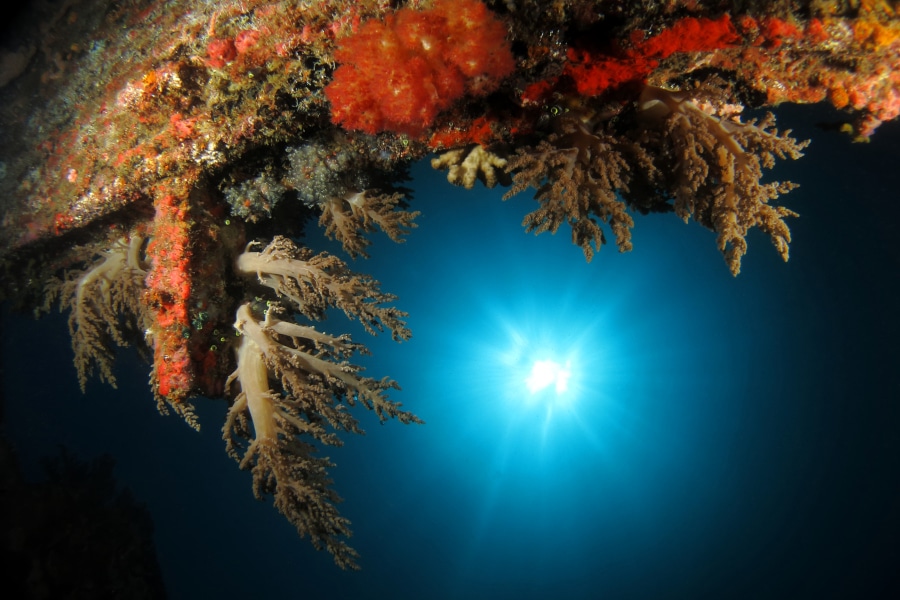
Bounty is best known for its underwater structures and wreck, but it also offers plenty of opportunities for macro photography.
The dive usually begins along Meno Slope, where many turtles can be found. Around the Bounty wreck, hawksbill turtles are often seen feeding, while the outer reef in front of Glassfish Rock is known for sleeping green turtles.
For macro photographers, however, it is worth looking beyond the turtles. The reef structures and surrounding areas can reveal smaller marine life, making Bounty a good combination of larger animals, coral and macro subjects.
Hans Reef
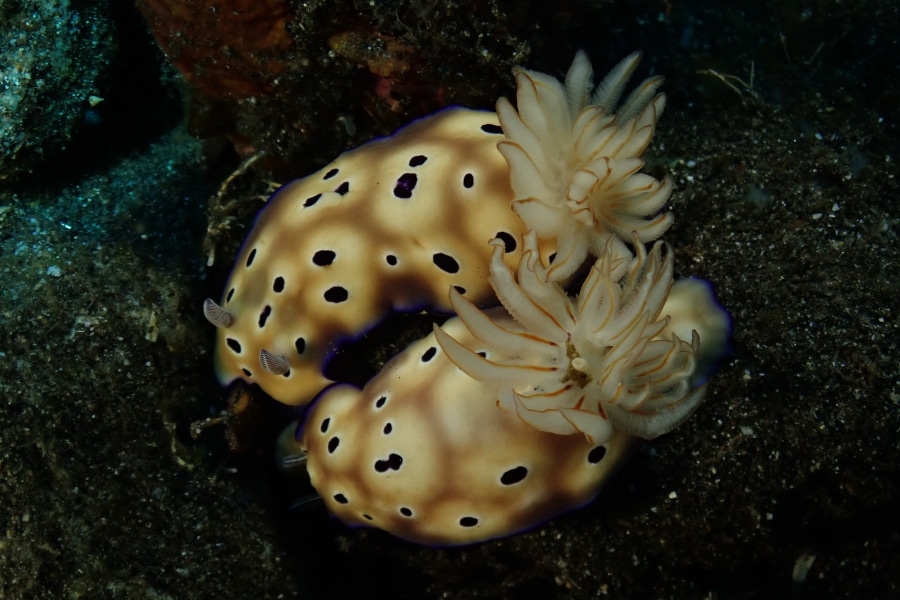
Hans Reef is another site where larger marine life and macro subjects can be found on the same dive.
The outside pinnacle is a particular highlight. Beautiful coral growth, massive sponges and large sponge corals provide habitat for marine life, while turtles are often found sleeping inside the sponge corals.
The reef itself is also worth exploring carefully. Look beyond the turtles and examine the coral and sponge growth for smaller subjects that make interesting photographic compositions.
Gili Air Harbour
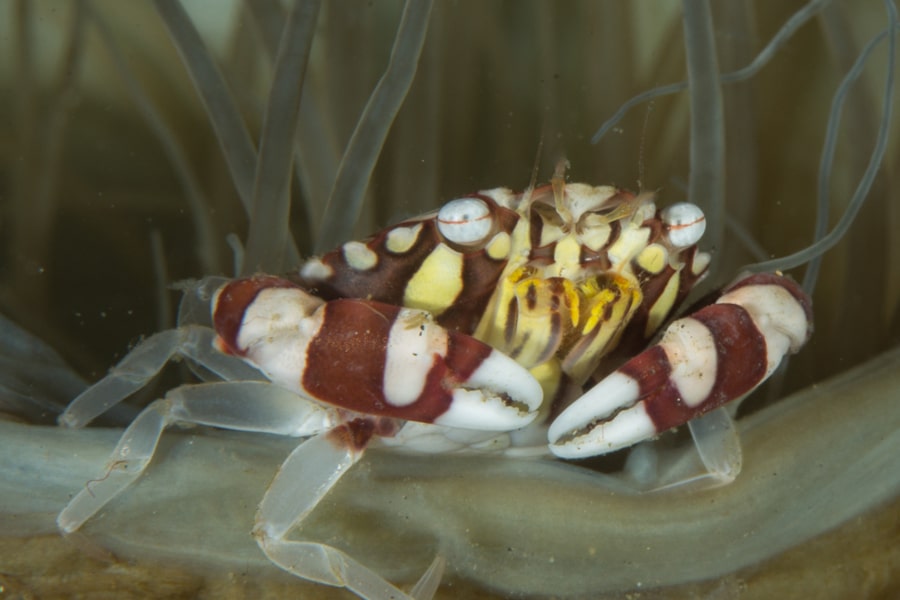
Gili Air Harbour is the one true muck-style dive on the Gili Islands in this collection.
The site has changed considerably over the years. Coastal development has made the eastern reef sections that were once accessible to divers impossible to explore, so the dive is now concentrated mainly on the western side and is conducted from shore.
The underwater landscape consists of sand, moorings, anchor lines, rubbish and, around 50 metres from shore, beautiful coral blocks.
These coral blocks are surprisingly rich in marine life. Mandarin fish, frogfish, scorpionfish, shrimp, pipefish, ghost pipefish and a wide variety of nudibranchs can all be found around the site.
For underwater photographers and critter hunters, the combination of muck habitat and coral blocks makes Gili Air Harbour a rewarding place to slow down and search.
Muck Diving on Lombok
For dedicated muck diving near the Gili Islands, Lombok is where things become particularly interesting.
The sites on Lombok have sandy, silty and rubble-covered bottoms that provide habitat for unusual and cryptic species rarely encountered on the coral reefs around the Gili Islands.
The three sites below—Kecinan, Mentigi Bay and Teluk Nare—each have their own character, but all offer excellent opportunities for macro photography.
Kecinan
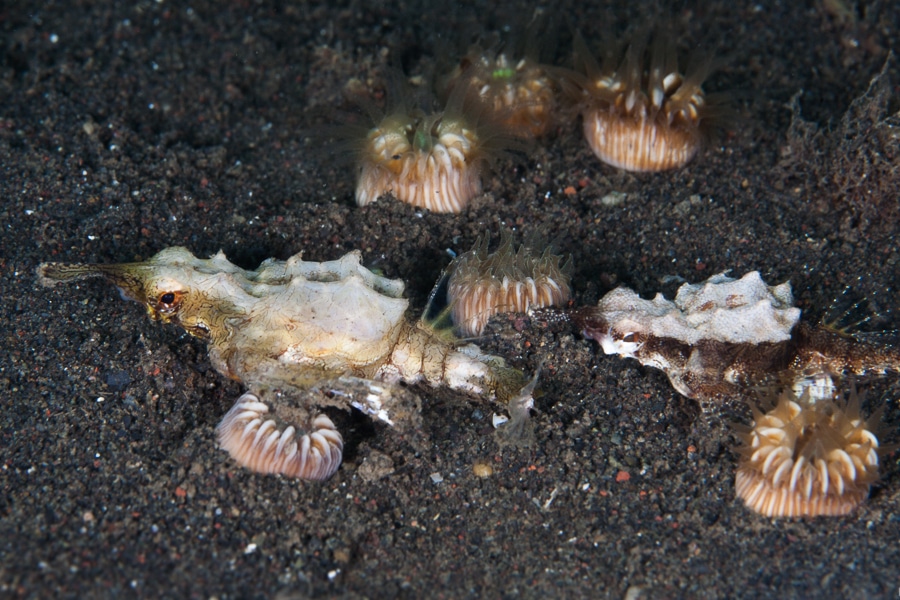
Kecinan is probably one of the favourite sites in the area for macro photographers and critter hunters.
This large bay offers enough material for two or even three dives, with sandy areas, rubble, seagrass, anchor lines, mooring blocks, artificial reef structures and scattered coral blocks.
The shallow seagrass is particularly productive for seahorses. Around the anchor lines and mooring blocks, you can find pipefish, ghost pipefish, scorpionfish, flying gurnards, frogfish and octopus.
Further into the bay, artificial reef structures are covered in coral and marine life. Leaf fish, more frogfish, seahorses and even turtles can turn up.
Towards the western side there are fewer anchor lines, but the sandy bottom remains full of life.
Kecinan is classic muck diving: the less you rush, the more you see.
Mentigi Bay
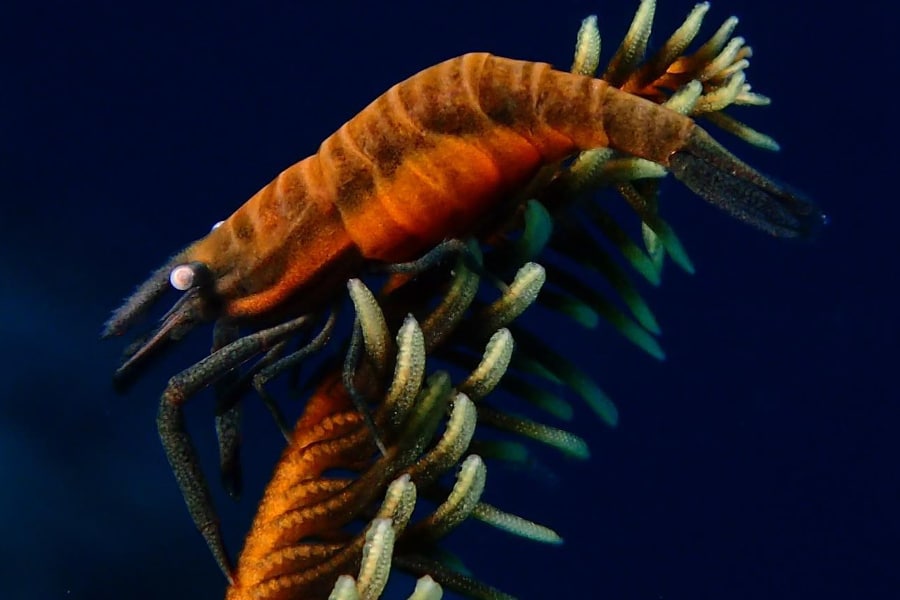
Located next to Kecinan, Mentigi Bay, also known as Seahorse Bay, is a sheltered muck dive on the north western coast of Lombok.
The bay is often protected from the stronger currents affecting many of the Gili Islands’ dive sites, creating calm conditions that are particularly well suited to macro photography.
The sandy and sloping bottom is home to seahorses, frogfish, ribbon eels, pipefish, ghost pipefish, stargazers, scorpionfish and sand-burying crabs.
If you’re lucky, you may also encounter a flamboyant cuttlefish or mimic octopus moving across the sand.
The shallow seagrass around 5–8 metres is especially interesting for seahorses and ghost pipefish.
Good buoyancy is essential here. The sandy bottom can easily be stirred up, quickly reducing visibility. Stay just above the substrate and move slowly.
Teluk Nare
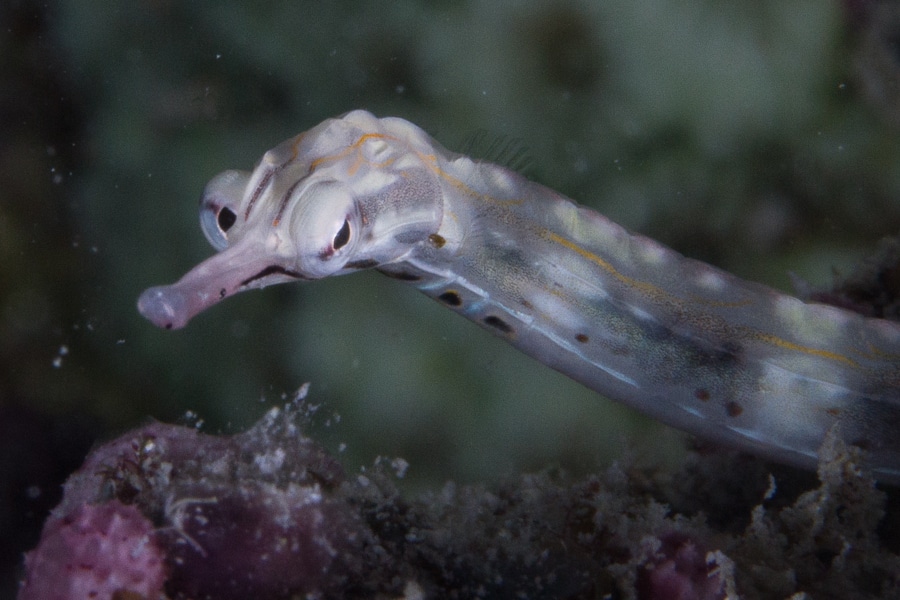
Also known as Teluk Nara or Magic Pier, Teluk Nare is one of the most famous muck dive sites near the Gili Islands.
The site centres around a working jetty whose pilings, crossbeams and surrounding rubble have developed into an artificial reef. The structures are covered in sponges, soft corals and marine growth, creating an extraordinary concentration of small animals.
Frogfish, ghost pipefish, nudibranchs, stargazers, waspfish and mantis shrimp are among the possible encounters.
Teluk Nare has changed considerably, however. The harbour is now a major speedboat hub, and boat traffic can be severe.
For safety, diving is better concentrated towards the eastern or western ends of the bay rather than directly underneath the main jetty.
Which Macro Site Should You Choose?
Each site offers something different.
- Dedicated muck diving: Kecinan, Mentigi Bay and Teluk Nare on Lombok offer the greatest variety of unusual, sand-dwelling and cryptic marine life.
- For a muck dive without leaving the Gili Islands: Gili Air Harbour is the obvious choice, with its sandy habitat, coral blocks and artificial structures.
- Combining macro subjects with reef diving: Hans Reef and Bounty offer a different experience, where coral, turtles and smaller marine life can all feature on the same dive.
- Variety: Kecinan is hard to beat. The large bay contains several different habitats and enough subjects for multiple dives.
- Calm macro photography: Mentigi Bay is particularly rewarding, especially if you enjoy slowly searching sandy habitats.
- Artificial structures and an incredible concentration of critters: Teluk Nare is a classic muck dive.
Critters are not your thing? Explore all the dive sites around the Gili Islands with our complete guide, including maps and detailed information for each site.