

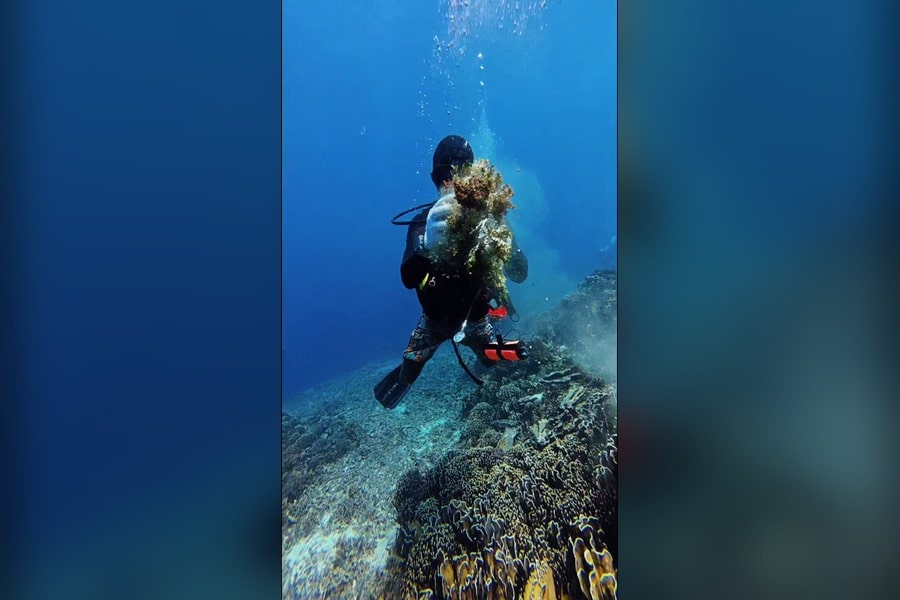
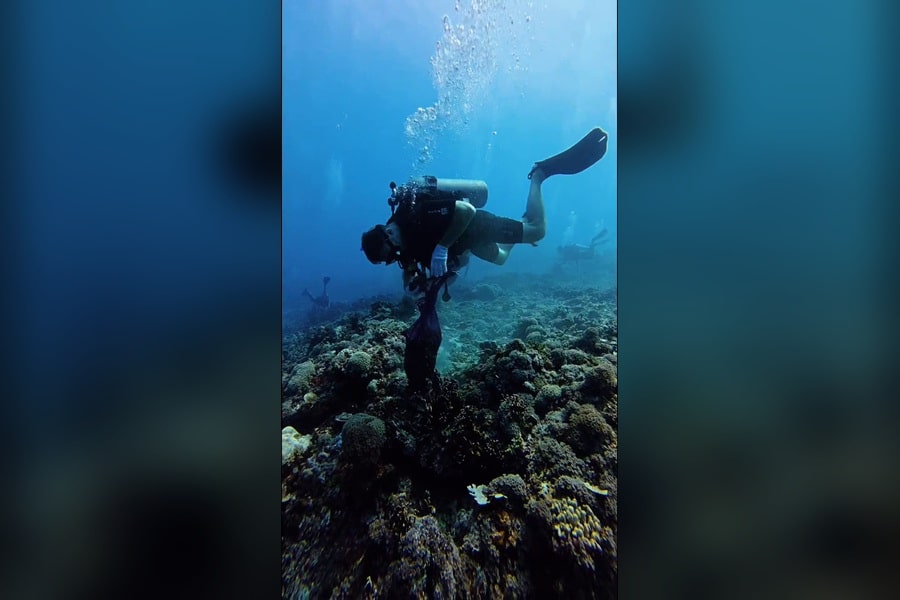
More than 100 divers from Gili Trawangan, Gili Meno and Gili Air joined forces on 4 November 2026 for a large-scale underwater cleanup off Gili Trawangan. Their mission was to remove excessive Halimeda growth from some of the most heavily affected sections of reef.
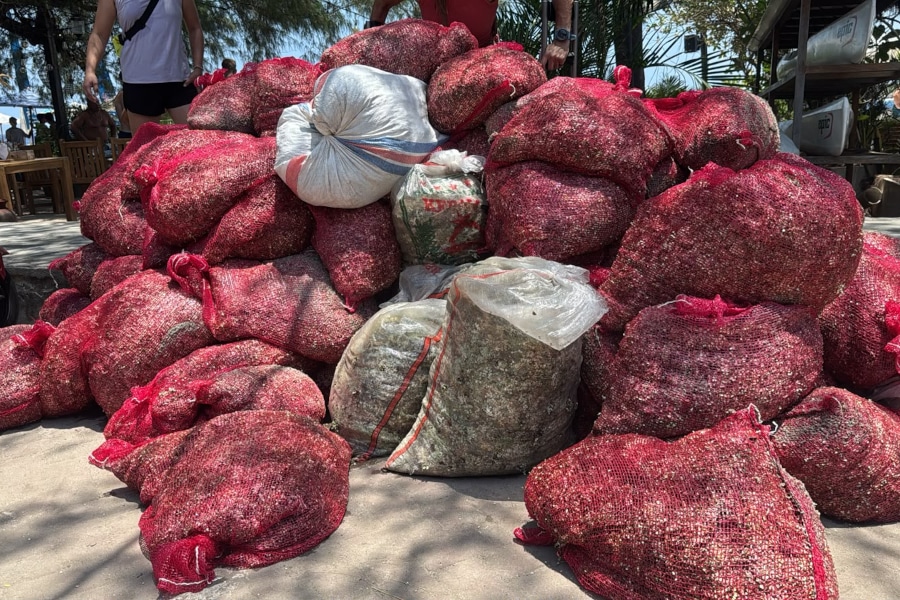
Together, the teams collected an impressive 1,279 kg of algae. Despite the considerable effort and number of divers involved, however, the cleanup covered only a small portion of the affected reef.
The scale of the operation highlights just how extensive the situation has become and why continued monitoring and research are so important.
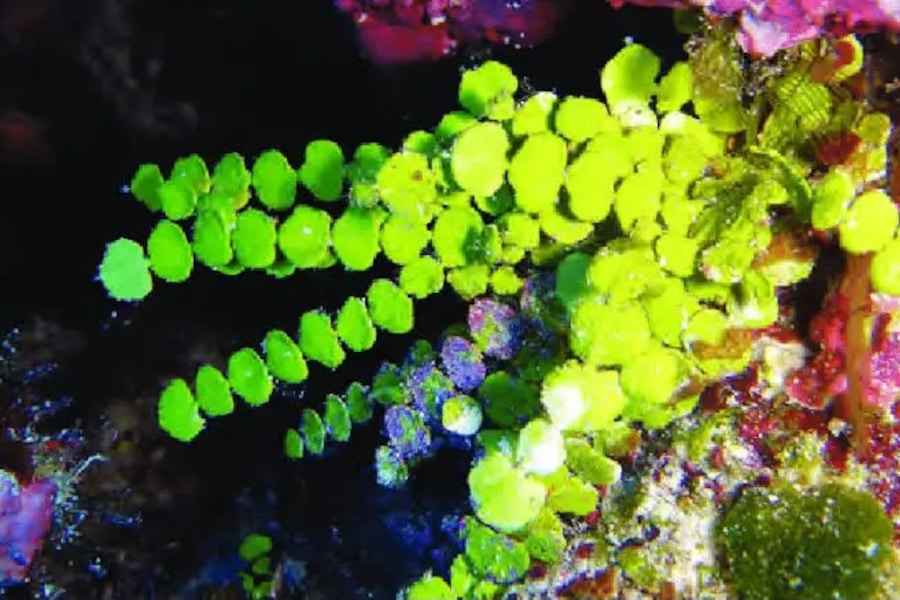
What is Halimeda, and why can excessive growth become a problem?
Halimeda is a genus of green marine algae commonly found in tropical waters, including around the Gili Islands. Unlike many other types of seaweed, Halimeda has small, connected segments that contain calcium carbonate – the same mineral found in coral skeletons and limestone.
This gives the algae a slightly firm, sometimes chalky structure. As Halimeda grows and eventually breaks down, its calcium carbonate contributes to the formation of carbonate sand and sediments that help shape tropical reef environments.
In normal quantities, Halimeda plays a natural role in the marine ecosystem. Its presence is not a problem in itself.
The concern arises when growth becomes unusually dense or spreads rapidly across large areas of reef. Extensive algal cover can occupy space that would otherwise be available to corals and other reef organisms. It may cover living coral, compete for space and make it more difficult for young corals to settle and establish themselves.
A sudden increase in one species can also indicate that something in the local ecosystem may have changed. Nutrient availability, water conditions, grazing pressure and other environmental factors can influence algal growth, although the specific reasons behind the current situation around Gili Trawangan have not yet been established.
This is why the outbreak deserves attention. Removing some of the densest growth may help protect particularly affected reef patches, but understanding what is driving the expansion is essential to finding a long-term solution.
A rapidly expanding area of affected reef
BKKPN Kupang documented extensive Halimeda cover in this section of reef in November 2025. Subsequent surveys recorded affected areas stretching along approximately 1.5 kilometres of reef, at depths ranging from 5 to 18 metres.
In the two months before the November 2026 cleanup, the algae appeared to spread particularly quickly.
Divers taking part in the operation witnessed the extent of the growth first-hand. Some sections were covered so densely that the affected patches extended across areas comparable in size to football pitches.
Survey teams also reported observing fewer anthias and parrotfish in the affected area. Whether this is directly connected to the Halimeda growth remains unclear and requires further investigation.
Why targeted removal was considered necessary
Following their latest surveys, Oceans 5 Gili Air and Gili Eco Reef Conservation reached out to dive centres across the three Gili Islands to organise a coordinated response.
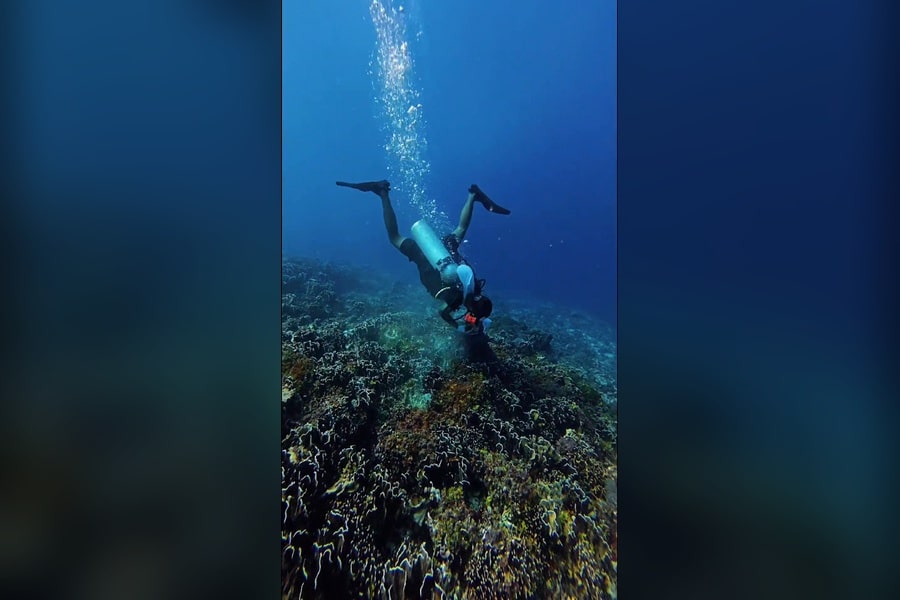
Rather than attempting to clear the entire affected area, the decision was made to focus on some of the most heavily covered patches while further research into the outbreak continues.
All three islands lie within the Gili Matra Marine Protected Area, where activities are regulated through designated marine zoning. The cleanup operations received approval from the relevant marine conservation authorities, and representatives from the authorities participated in the first event on 4 November.
The aim is not to remove Halimeda from the ecosystem altogether. It is to address unusually dense growth in selected areas while gathering information that may help explain why the expansion has occurred.
Three islands, one conservation effort
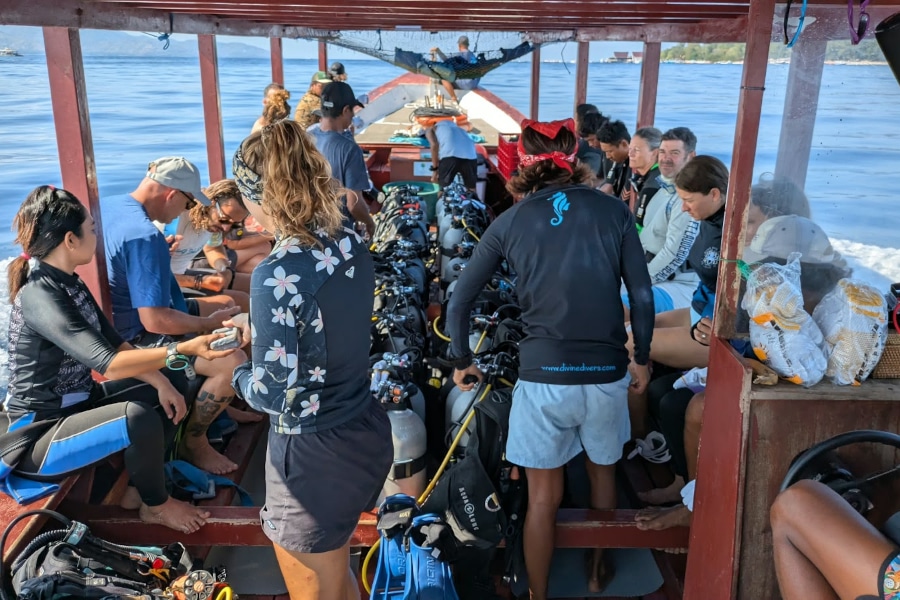
Organising an operation of this size required cooperation between dive centres across Gili Trawangan, Gili Meno and Gili Air.
Within just a few weeks, participating operators coordinated boats, diving equipment, collection bags and gloves. Before entering the water, all divers received a briefing explaining the purpose of the activity and how to collect the algae.
The following dive centres provided boats:
Gili Trawangan: DSM Dive and Trawangan Dive
Gili Meno: Divine Divers
Gili Air: Moana, Blue Marlin and Oceans 5 Gili Air
Divers from additional centres also volunteered their time and effort. The operation depended on everyone working together – from collecting algae underwater to bringing the filled bags aboard and helping weigh the results.
A big thank you goes to every diver, boat crew member, organiser and volunteer who contributed to the day.
What happens to the collected algae?
The material collected during the cleanup is not simply being discarded.
Samples are being provided to the University of Mataram and the marine conservation authorities for further research. Studying the algae may help improve understanding of the outbreak and support future monitoring.
Other collected material is being transported to designated sites where it can be composted.
The next cleanup and the importance of long-term monitoring
A second and final cleanup in this series is scheduled for 2 December 2026.
However, removing algae is only one part of the response. Without understanding the conditions behind the unusually dense growth, there is no guarantee that the affected areas will not experience further expansion.
After the second operation, the plan is to carry out regular reef surveys and monitor water quality at fixed GPS locations and consistent depths. Water samples will be collected weekly, following a standardised schedule.
The monitoring programme is intended to continue for at least two years. This will allow the teams to compare seasonal changes, observe differences between high and low seasons and investigate how changing currents and water conditions may relate to the development of the outbreak.
The results will be important in helping determine what is happening beneath the surface and how best to protect the reefs in the long term.
Protecting the reefs of the Gili Islands together
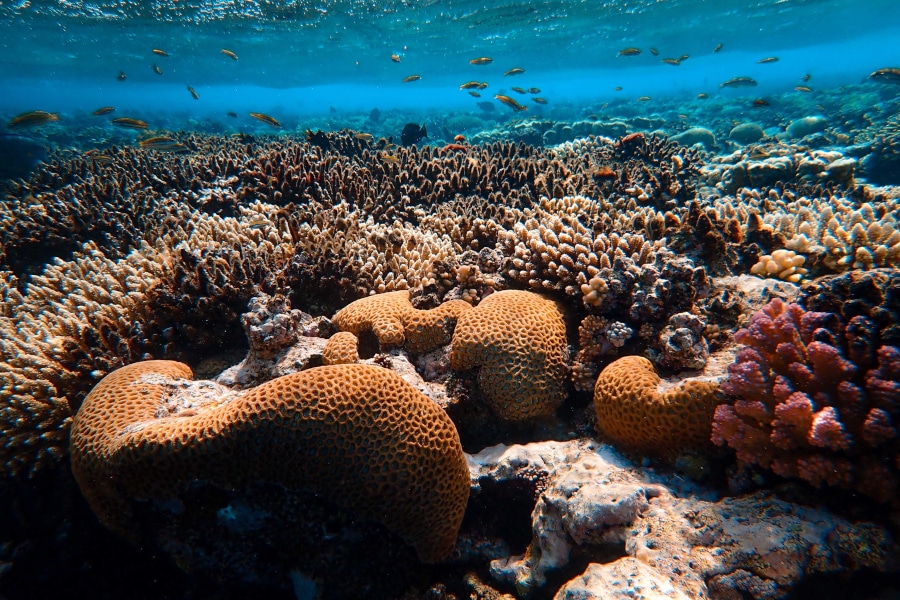
The 4 November cleanup demonstrated what can be achieved when dive centres, conservation organisations, authorities and individual divers work towards a shared goal.
Removing 1,279 kg of Halimeda was a significant collective effort, but it represents only a small step in addressing a much larger situation.
The priority now is to combine practical conservation work with reliable scientific monitoring. By understanding the changes taking place on the reef, we can make better decisions about how to protect the marine environment around Gili Trawangan, Gili Meno and Gili Air for the future.
Healthy reefs need more than occasional cleanups. They need long-term observation, cooperation and informed action.