
Some people know they should never stand on a coral reef.
Others also understand why touching coral can cause damage.
But one of the greatest threats to coral reefs often happens long before anyone enters the water.
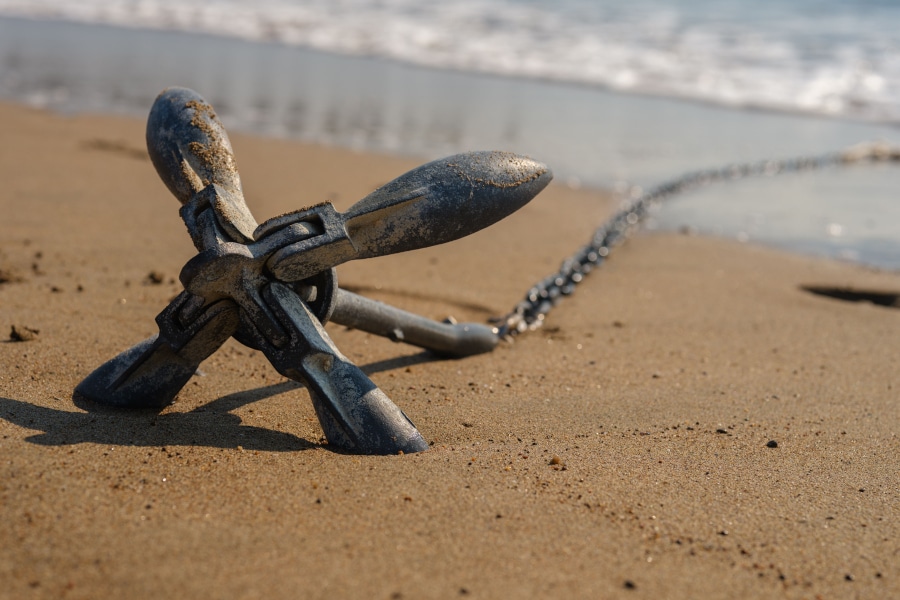
It begins when a boat drops its anchor.
For just a few seconds, an anchor may seem harmless.
After all, it’s only touching the reef for a moment.
Unfortunately, the reality is very different.
An anchor and its chain can destroy coral colonies that have taken decades—or even centuries—to grow.
The damage is immediate.
The recovery can take years.
Coral Reefs Grow Slowly
One of the reasons anchor damage is so serious is because corals are slow-growing animals.
Some fast-growing branching corals may grow 10 to 20 centimetres each year.
Many massive corals grow only a few millimetres annually.
Some of the large coral heads divers admire today may have started growing long before modern scuba diving even existed.
When an anchor breaks a mature coral colony, nature cannot simply rebuild it in a few months.
Recovery often takes decades.
It Is Not Just the Anchor
Many people imagine the anchor itself causing the damage.
In reality, the anchor chain is often far more destructive.
As the boat moves with wind, waves and current, the chain sweeps back and forth across the seabed.
This heavy chain drags across living coral.
Branching corals snap.
Soft corals are torn away.
Large coral colonies lose decades of growth in just a few minutes.
One poorly placed anchor can leave a visible scar across the reef.
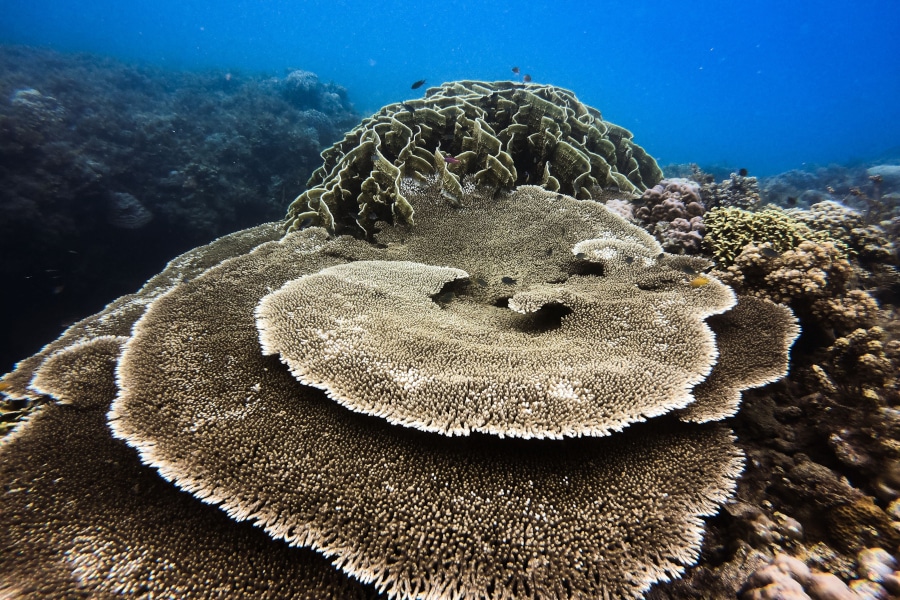
Unfortunately, the large table corals at Deep Turbo are a sobering example of just how destructive anchors can be. In 2017, a large boat anchor was dropped directly onto the reef, destroying coral colonies that had taken many years to grow.
The Hidden Damage
Some damage is obvious.
Broken corals.
Fresh rubble.
Destroyed branching colonies.
But other impacts are harder to see.
Broken corals become more vulnerable to disease and bleaching.
Sediment stirred up by the chain can settle on nearby corals.
Damaged colonies provide fewer hiding places for fish and invertebrates.
Over time, biodiversity declines.
A single anchor does not destroy an entire reef.
But repeated anchor damage across hundreds of boats every year slowly changes the entire ecosystem.
Why This Matters in the Gili Islands
The Gili Islands are one of Indonesia’s most popular diving and snorkelling destinations.
Every day, dozens of dive boats, snorkelling boats, fishing boats and transport vessels operate around the islands.
Without proper management, repeated anchoring would quickly damage many of the reefs that make the islands famous.
Fortunately, the Gili Islands have become a great example of how local conservation can solve this problem.
Mooring Buoys: A Simple Solution
The best way to protect coral reefs is surprisingly simple.
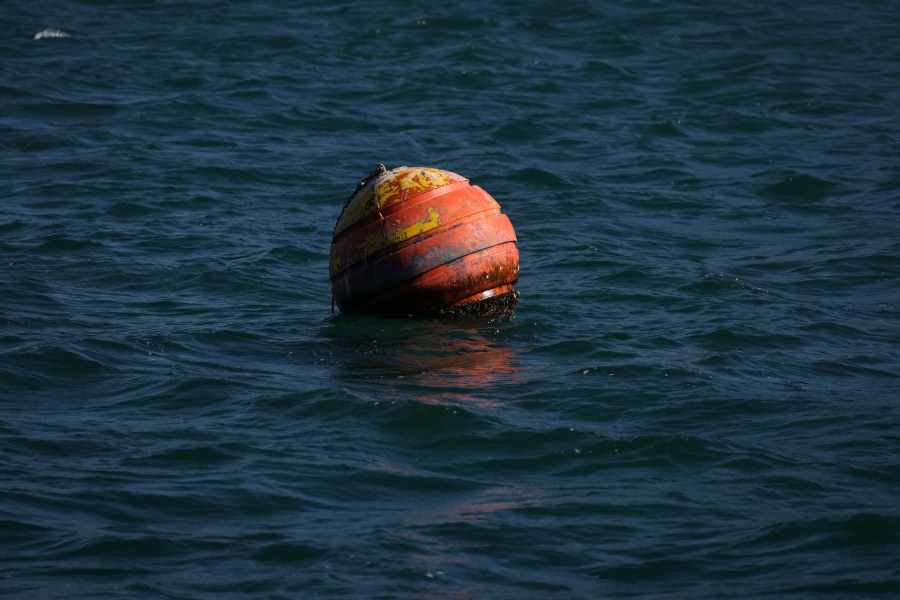
Instead of dropping an anchor, boats attach to a permanent mooring buoy.
A mooring buoy is connected to a fixed system installed in sandy areas or securely anchored away from fragile corals.
The boat ties directly to the buoy.
No anchor is needed.
No chain drags across the reef.
It is one of the simplest and most effective conservation measures available.
The Mooring Buoy Project
One of the most successful conservation initiatives in the Gili Islands has been the installation and maintenance of permanent mooring buoys.
Today, many of the islands’ most popular dive and snorkel sites are equipped with mooring buoys.
This allows dive and snorkel boats to secure safely without damaging the reef below.
Thousands of dives take place every year using these moorings.
Without them, many of the coral gardens surrounding the islands would look very different today.
It is one of those conservation successes that many visitors never notice.
And that is exactly the point.
When it works well, nothing gets damaged.
In fact on the Gili Islands it is now forbidden to throw.
Anchor Damage Is Not Always Intentional
It is important to remember that most boat operators do not want to damage coral reefs.
Sometimes conditions make anchoring difficult.
Strong current.
Wind.
Poor visibility.
Equipment failure.
The problem is rarely one careless captain.
The problem is repeated pressure over many years.
That is why proper infrastructure, education and responsible boating practices are so important.
Coral Damage Affects Marine Life
Healthy coral reefs provide homes for thousands of animals.
When corals are broken, the effects spread throughout the ecosystem.
Fish lose shelter.
Cleaner stations disappear.
Juvenile fish lose nursery habitat.
Coral-feeding species decline.
Predators eventually become less common.
A damaged coral colony affects far more than the coral itself.
Entire reef communities depend on healthy reef structures.
Why Artificial Reefs Cannot Replace Natural Reefs
Artificial reefs and coral restoration projects are valuable conservation tools.
But they cannot instantly replace ancient coral reefs damaged by anchors.
A mature reef has developed over hundreds or even thousands of years.
Its complexity cannot simply be recreated overnight.
The best conservation strategy will always be protecting healthy reefs before they are damaged.
Prevention is far easier than restoration.
Every Mooring Buoy Saves a Reef
It is easy to overlook something as simple as a floating buoy.
But every time a dive or snorkel boat ties onto a mooring instead of dropping an anchor, countless coral colonies remain untouched.
Fish keep their homes.
Corals continue growing.
The reef remains healthy for future generations.
Sometimes the most effective conservation solutions are also the simplest.