

If you’ve ever gone snorkeling or scuba diving in the Gili Islands and wondered why there are so many turtles, reef fish, sharks, nudibranchs, corals, and strange underwater creatures, the answer lies in a region known as the Coral Triangle.
Many divers visit Indonesia because they’ve heard it offers some of the best diving in the world.
What most people don’t realise is that this isn’t an accident.
Indonesia sits at the very heart of the most biodiverse marine ecosystem on Earth.
A place often called the Amazon Rainforest of the Seas.
A place so rich in marine life that nowhere else on the planet comes close.
Welcome to the Coral Triangle.
What Is the Coral Triangle?
The Coral Triangle is a vast marine region that stretches across six countries:
- Indonesia
- Malaysia
- The Philippines
- Papua New Guinea
- Timor-Leste
- Solomon Islands
Together, these countries contain the highest concentration of marine biodiversity found anywhere on Earth.
The region covers approximately 6 million square kilometres of ocean and coastal habitat.
Within this relatively small area lives an astonishing variety of marine life.
Scientists have recorded:
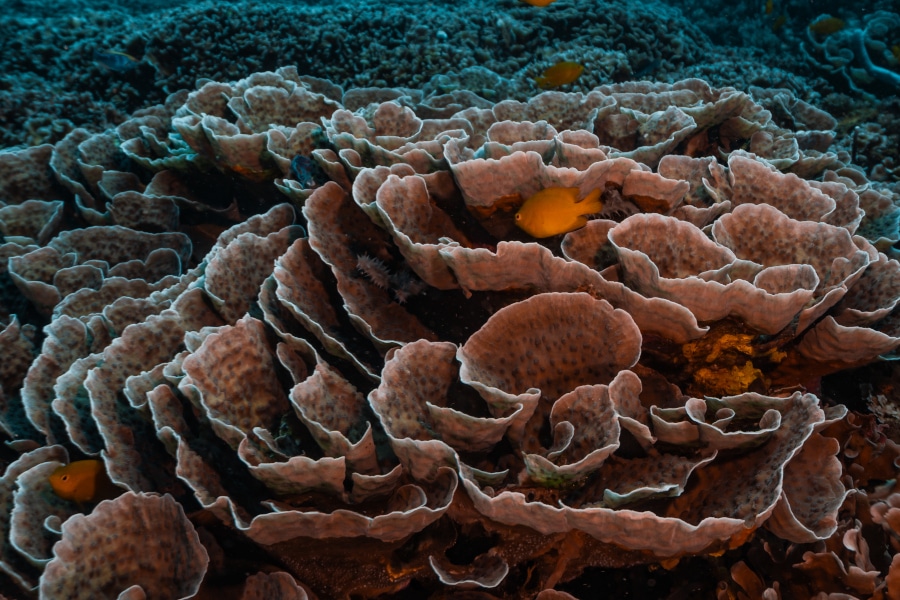
- More than 600 species of reef-building corals
- Over 2,000 species of reef fish
- Six of the world’s seven marine turtle species
- Hundreds of shark and ray species
- Thousands of molluscs, crustaceans, and other marine animals
To put this into perspective, the entire Caribbean contains fewer than 70 species of reef-building corals.
The Coral Triangle contains more than 600.
Nowhere else even comes close.

Why Is the Coral Triangle So Important?
Imagine visiting a rainforest that contained:
- The greatest number of bird species
- The greatest number of mammals
- The greatest number of insects
- The greatest number of plants
all in one place.
That is essentially what the Coral Triangle represents underwater.
It is the global centre of marine biodiversity.
Many species found throughout the Indian and Pacific Oceans originated here.
The Coral Triangle acts as a giant biological engine, producing larvae, fish populations, and coral species that help populate reefs throughout the wider Indo-Pacific region.
In many ways, the health of coral reefs across the planet is connected to the health of the Coral Triangle.

Why Does So Much Life Exist Here?
Scientists have debated this question for decades.
Several factors appear to be responsible.
Millions of Years of Stability
Unlike many parts of the world, the Coral Triangle has experienced long periods of environmental stability.
Species had time to evolve and diversify.
New species appeared without widespread extinction events wiping them out.
Warm Tropical Waters
Corals thrive in warm water.
The Coral Triangle sits almost entirely within the tropics, providing ideal conditions for reef growth.
Ocean Currents
The region is influenced by powerful ocean currents that transport nutrients and marine larvae across vast distances.
These currents help connect reef systems and support enormous biodiversity.
A Complex Geography
Indonesia alone contains more than 17,000 islands.
This creates countless isolated habitats.
Over millions of years, species adapted to different conditions and evolved into new forms.
The result is extraordinary biodiversity.

Indonesia: The Heart of the Coral Triangle
While six countries share the Coral Triangle, Indonesia is widely considered its centre.
More coral species are found in Indonesia than anywhere else on Earth.
Many of the world’s most famous diving destinations are located here:
- Raja Ampat
- Komodo National Park
- Alor
- Wakatobi
- Bunaken
- Lembeh Strait
- The Gili Islands
Each destination offers something different.
Yet all are connected by the same extraordinary marine ecosystem.
The Coral Triangle and the Gili Islands
Many divers are surprised to learn that the reefs surrounding Gili Trawangan, Gili Meno, and Gili Air are part of the Coral Triangle.
The Gili Islands may be small.
But they benefit enormously from their location.
The healthy reefs around the islands support:
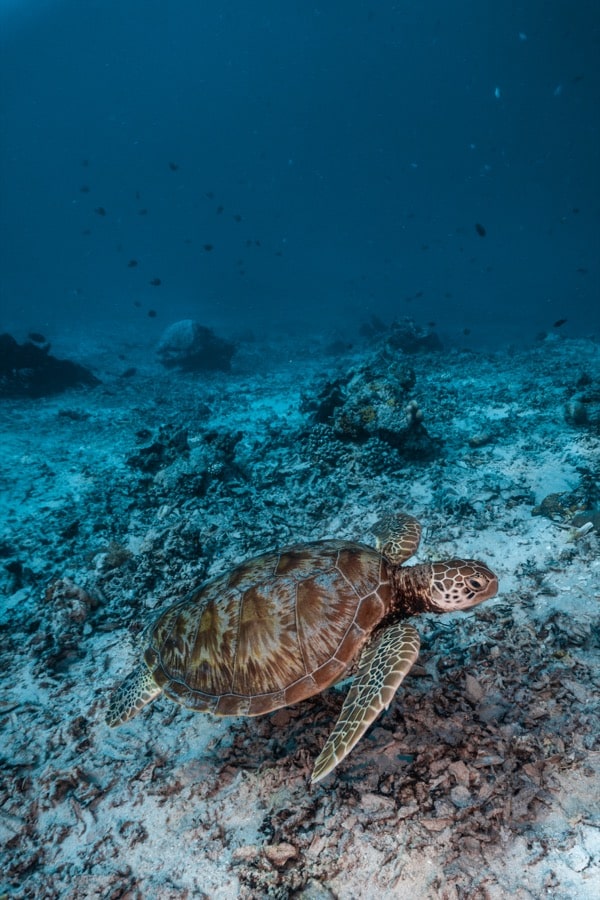
- Green sea turtles
- Hawksbill turtles
- Whitetip reef sharks
- Blacktip reef sharks
- Octopus
- Frogfish
- Ghost pipefish
- Seahorses
- Moray eels
- Hundreds of reef fish species
Every dive site around the Gilis reflects this biodiversity.
Whether you’re diving Shark Point, Halik Reef, Meno Wall, Sunset Reef, Bounty Wreck, or Hans Reef, you are experiencing a small part of the Coral Triangle.
Why the Gili Islands Have So Many Turtles
Visitors often ask why turtles are so common in the Gili Islands.
The answer is habitat.
Healthy coral reefs create ideal feeding and resting areas.
The combination of hard corals, soft corals, sponges, algae, and seagrass beds provides everything turtles need.
Because the reefs remain relatively healthy, turtle populations continue to thrive.
This is one reason why the Gili Islands are considered one of the best places in Indonesia to see sea turtles while scuba diving or snorkeling.
More Than Just Fish
When people think of biodiversity, they often think of fish.
But biodiversity includes much more.
The Coral Triangle is home to:
Corals
The building blocks of the reef.
Molluscs
Including octopus, cuttlefish, squid, and countless sea snails.
Crustaceans
Crabs, shrimp, lobsters, and other invertebrates.
Echinoderms
Sea stars, sea cucumbers, and sea urchins.
Marine Mammals
Dolphins, dugongs, and whales.
Each group plays a role in maintaining reef health.
The Coral Triangle and Scuba Diving
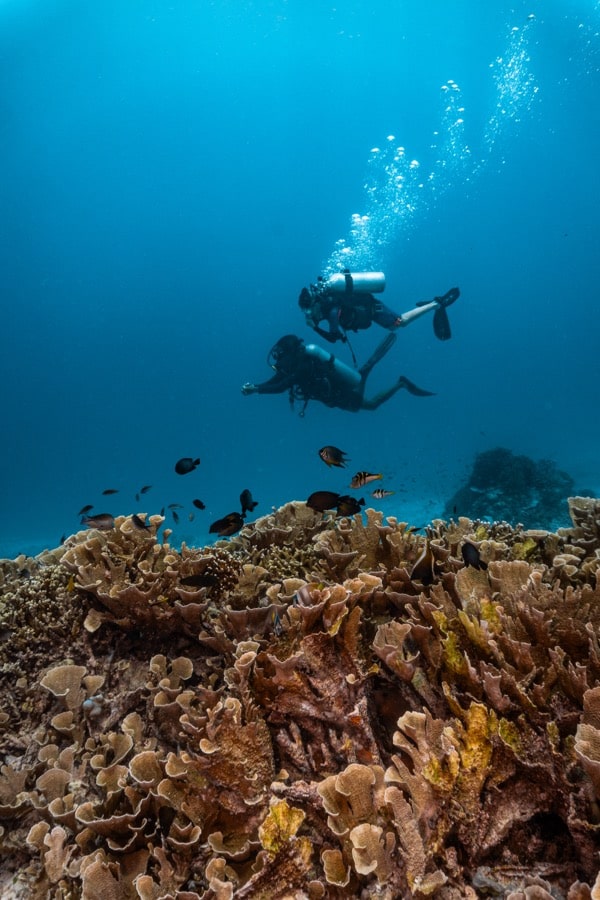
The Coral Triangle is one of the main reasons Indonesia has become a world-famous diving destination.
Divers visiting Indonesia often encounter:
- More fish species
- More coral species
- More macro life
- More reef diversity
than almost anywhere else on Earth.
This is why many experienced divers eventually find themselves returning to Indonesia again and again.
There is simply so much to explore.
Even after hundreds of dives, most people feel they have only scratched the surface.
Threats Facing the Coral Triangle
Despite its incredible biodiversity, the Coral Triangle faces serious challenges.
Climate Change
Rising ocean temperatures increase the risk of coral bleaching.
Plastic Pollution
Marine debris affects reefs and marine life throughout the region.
Overfishing
Unsustainable fishing practices can disrupt entire ecosystems.
Coastal Development
Sedimentation and pollution can damage fragile reef systems.
Tourism Pressure
Without responsible management, tourism can harm the very ecosystems people come to enjoy.
The future of the Coral Triangle depends on balancing economic development with environmental protection.

Reasons for Hope
Fortunately, there are many reasons to be optimistic.
Across Indonesia and the wider Coral Triangle, conservation efforts are expanding.
Marine protected areas continue to grow.
Coral restoration projects are becoming more effective.
Sustainable diving initiatives are helping reduce tourism impacts.
Awareness among divers is increasing every year.
Many local communities now recognise that healthy reefs are worth far more than damaged ones.
Why Every Snorkeler and Diver Should Care
You don’t need to be a marine biologist to appreciate the Coral Triangle.
Every turtle encounter, reef shark sighting, school of fusiliers. Every frogfish and every coral-covered reef exists because of this remarkable ecosystem.
Understanding the Coral Triangle helps explain why diving in Indonesia feels different.
The biodiversity is not your imagination.
It is real.
And it is unlike anything found elsewhere on Earth.