
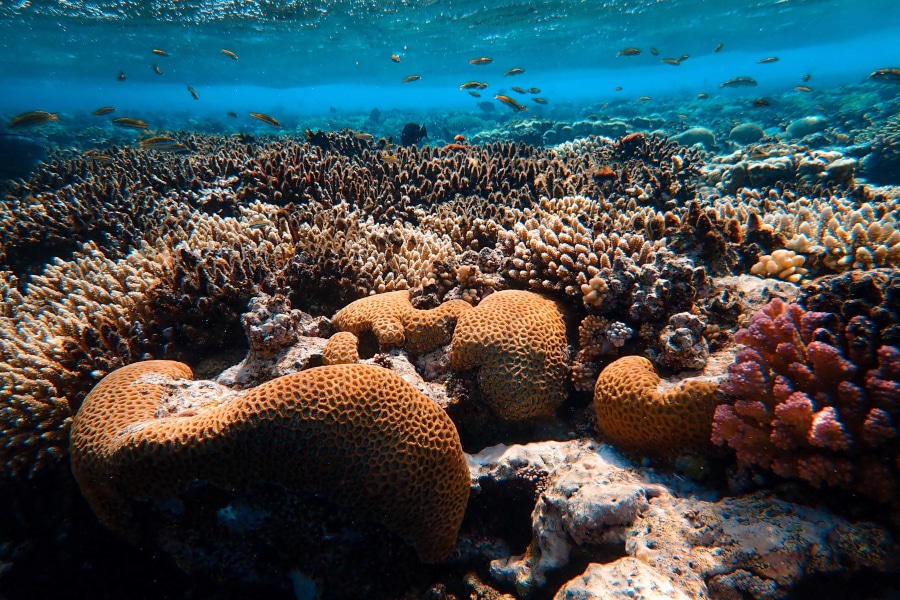
When you snorkel or dive a coral reef, it is easy to think you are looking at something permanent.
Solid.
Unchanging.
In reality, every coral reef is constantly growing.
Tiny coral polyps build new limestone skeletons every single day.
Storms reshape it.
Old corals die.
The reef is constantly changing.
The colourful reef you admire today is the result of thousands of years of growth, competition and natural engineering.
Understanding how coral reefs grow makes every snorkel or dive even more fascinating.
Every Reef Starts with One Tiny Coral
Every coral reef begins with a single coral larva.
After drifting through the ocean, the larva settles onto a hard surface.
It transforms into a tiny coral polyp.
The polyp starts producing a limestone skeleton.
Then it divides.
Again.
And again.
Soon, one coral becomes a colony.
Over time, thousands of colonies begin growing next to one another.
Slowly, they create an entire reef.
Tiny Builders with Incredible Patience
Corals grow slowly.
Very slowly.
Some fast-growing branching corals may grow between 10 and 20 centimetres each year.
Massive corals often grow only a few millimetres annually.
A coral head the size of a dining table may be hundreds of years old.
Entire reefs require thousands of years to develop.
This is why coral damage is such a serious problem.
Nature simply cannot replace centuries of growth overnight.
Building with Limestone
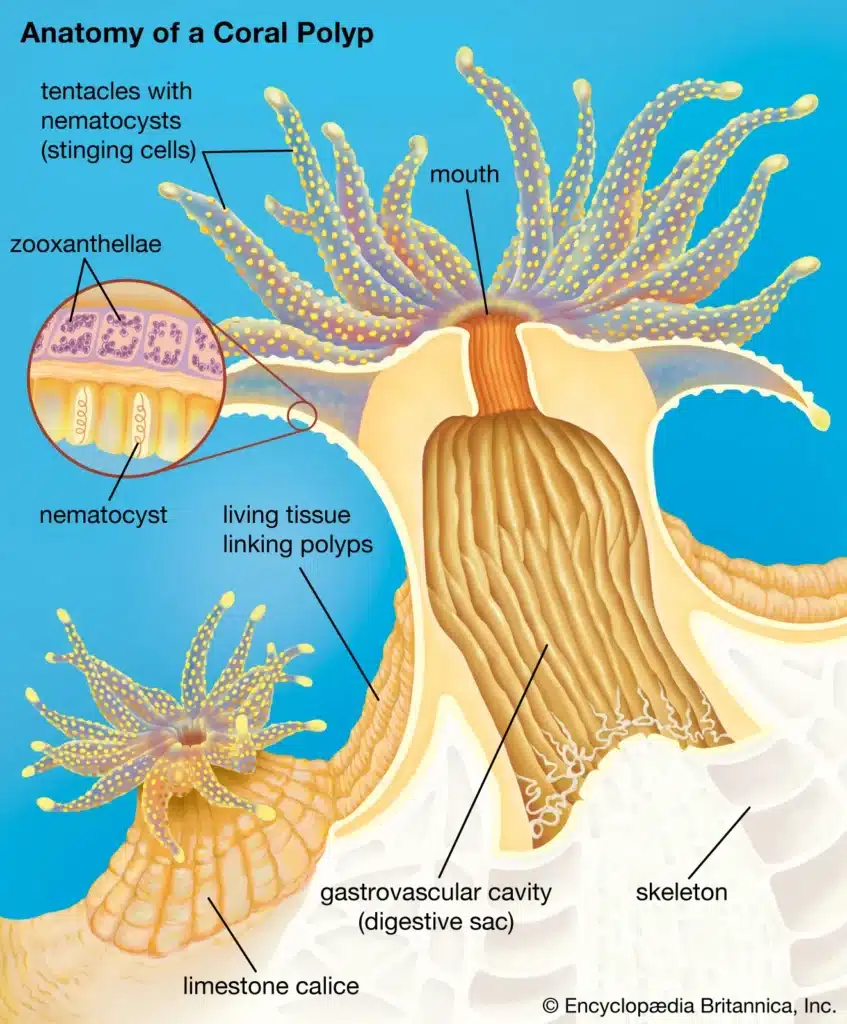
Hard corals create reefs by producing skeletons made from calcium carbonate.
As each coral polyp grows, it deposits a thin layer of limestone beneath itself.
When a polyp dies, its skeleton remains.
New polyps grow on top.
Generation after generation.
Layer upon layer.
Slowly, the reef grows upward and outward.
The Reef Never Stops Growing
People often imagine coral reefs as finished structures.
In reality, reefs are constantly changing.
New corals settle.
Old colonies die.
Storms or anchors break corals.
Sponges compete for space.
Even while one part of the reef is being damaged, another part is growing.
Healthy reefs are dynamic ecosystems.
They are always rebuilding themselves.
Fish Help Coral Reefs Grow
Corals do not build reefs alone.
Healthy fish populations are essential.
Parrotfish and surgeonfish constantly remove algae.
Without them, algae would smother young corals before they had a chance to grow.
Cleaner fish keep larger animals healthy.
Predators maintain balance throughout the ecosystem.
Every fish contributes to reef growth in some way.
The reef is a team effort.
Reef Builders and Reef Breakers
Not every animal helps build the reef.
Some slowly wear it down.
Parrotfish scrape tiny amounts of limestone while feeding.
Sea urchins graze the reef surface.
Sponges bore into dead coral.
Storms break large colonies.
At first this may sound negative.
But these natural processes are essential.
Broken coral becomes sand.
New surfaces become available for young corals.
Healthy reefs depend on both growth and erosion.
Nature maintains the balance.
The Different Types of Coral Reefs
Not all coral reefs look the same.
Scientists generally recognise three main reef types.
Fringing Reefs
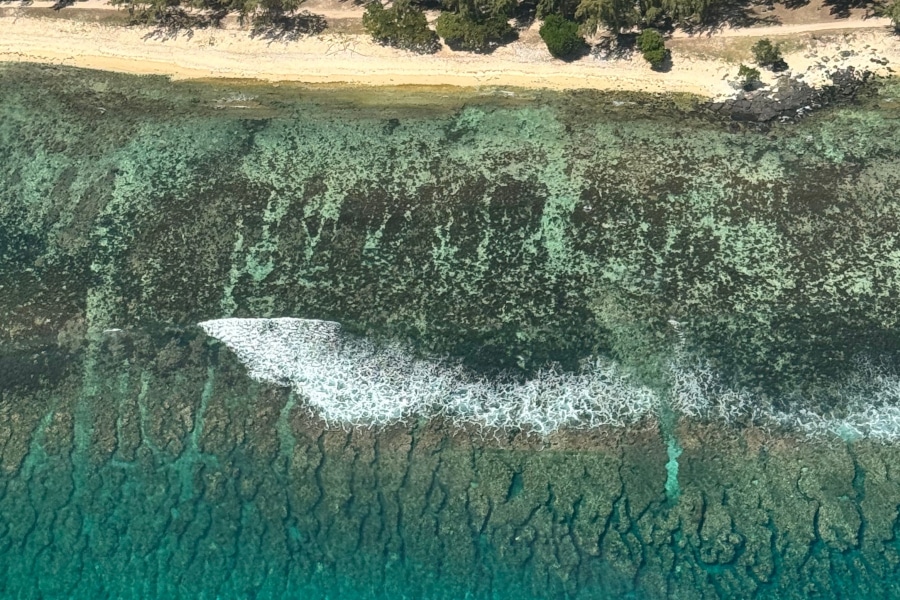
Fringing reefs grow directly alongside islands or coastlines.
They are the most common type of reef in the Gili Islands.
Barrier Reefs
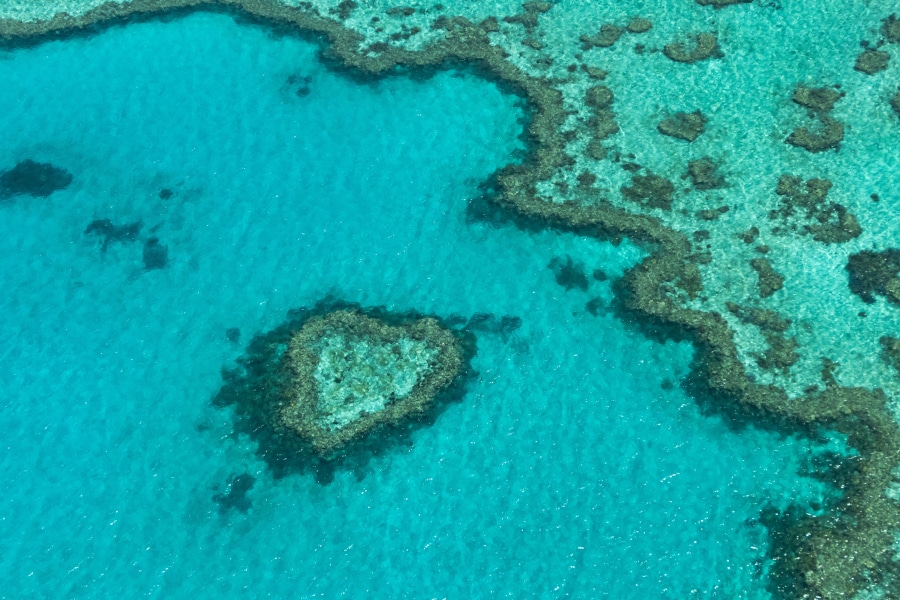
Barrier reefs grow farther offshore, separated from land by a deeper lagoon.
The most famous example is Australia’s Great Barrier Reef.
Barrier reefs can stretch for hundreds of kilometres.
Atolls
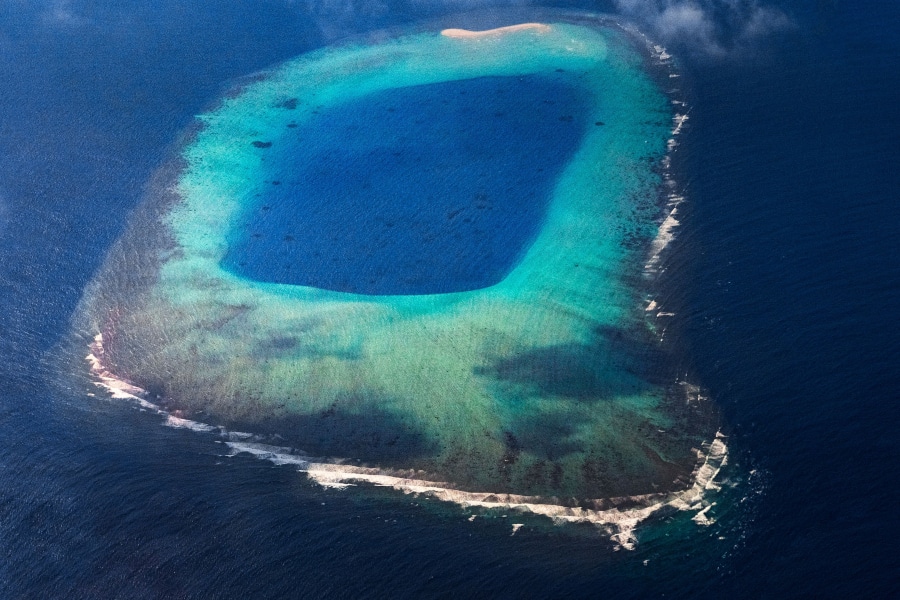
Atolls begin as fringing reefs around volcanic islands.
Over millions of years, the volcano slowly sinks beneath the ocean.
The coral continues growing upwards.
Eventually only a ring-shaped reef remains surrounding a central lagoon.
Some of the world’s most beautiful tropical islands (Maldives) are coral atolls.
Why the Gili Islands Have Healthy Reefs
The Gili Islands provide excellent conditions for coral growth.
Warm tropical water.
Plenty of sunlight.
Relatively clear conditions.
Location within the Coral Triangle.
These conditions allow hundreds of coral species to thrive.
Combined with healthy fish populations, they create some of Indonesia’s most beautiful coral reefs.
When Coral Reefs Stop Growing
Unfortunately, reefs cannot grow forever if conditions become unsuitable.
Coral growth slows when:
- Water temperatures become too high.
- Pollution increases.
- Sediment covers corals.
- Fish populations decline.
- Algae dominate the reef.
- Physical damage becomes too frequent.
If coral growth becomes slower than reef erosion, reefs gradually shrink.
This is why conservation is so important.
Nature’s Greatest Architects
Perhaps the most remarkable thing about coral reefs is that no single coral builds them.
Every colony contributes a tiny piece.
Over hundreds and thousands of years, millions of individual animals create enormous underwater cities that support thousands of other species.
No engineer could build something so complex.
Only nature.
What Divers Can Do
Healthy reefs continue growing every day.
Divers can help by allowing that growth to continue.
Maintain excellent buoyancy.
Avoid touching corals.
Respect marine life.
Support conservation projects.
Choose environmentally responsible dive operators.
Protect the fish that help reefs grow.
Every healthy coral colony contributes to the future of the reef.