

Part of our Gili Marine Life Guide | Diving with Divine Divers Gili Meno
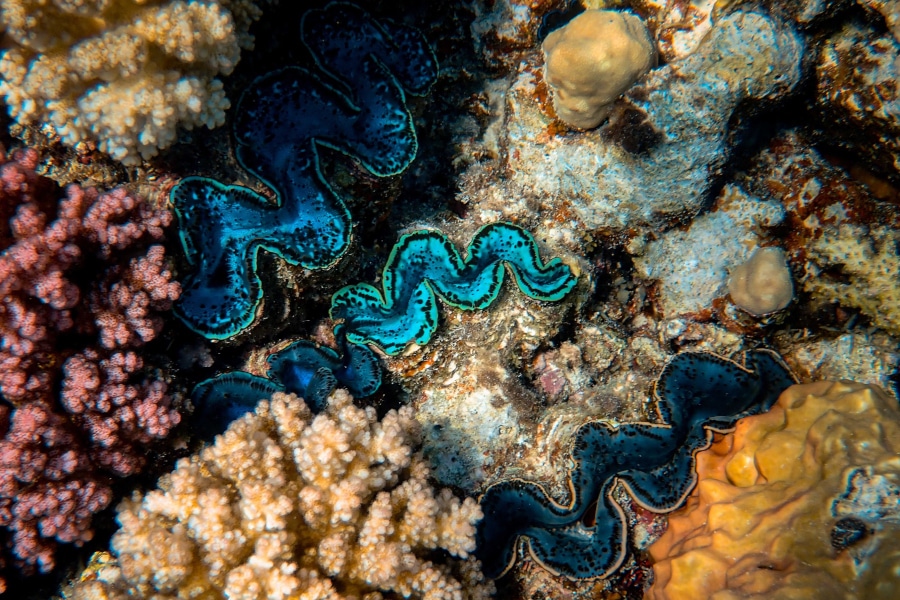
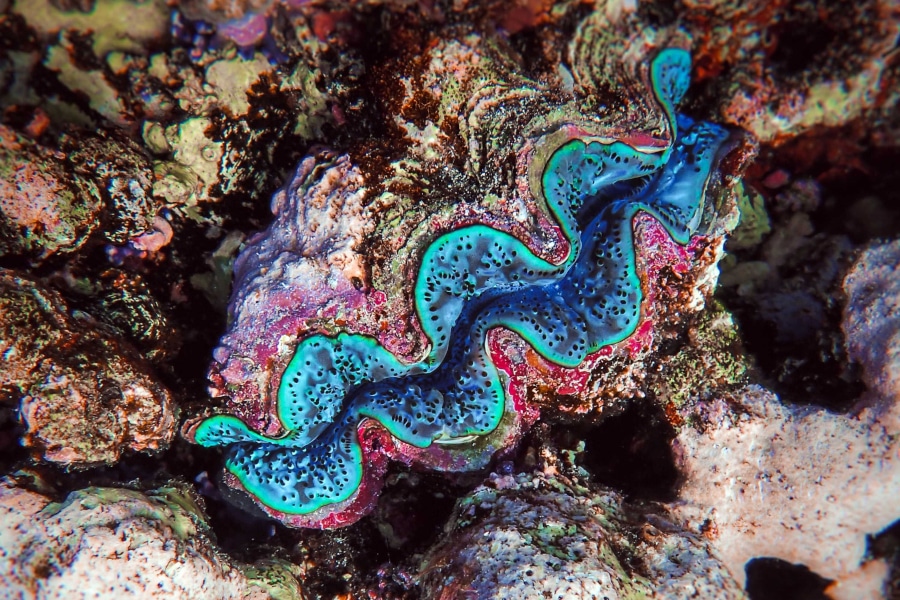
Tucked between coral boulders or wedged into shallow limestone crevices, flashes of electric blue, emerald green, and deep gold catch the sunlight filtering through the turquoise water. Approach slowly, and you will see a pair of heavy, fluted shells parted just enough to reveal a fleshy, psychedelic mantle that pulses gently with the current.
Giant clams are among the most mesmerizing invertebrates on the reef. Often depicted in old maritime folklore as man-eating monsters lurking to trap unsuspecting divers, these gentle giants are actually peaceful bivalves that function more like living greenhouses than predators.
Let’s take a look beneath the shell to explore how giant clams survive, why they are vital to the reefs of Gili Meno, and the serious challenges facing their populations today.
Solar-Powered Animals: The Photosynthetic Partnership
While most bivalves like oysters and mussels feed exclusively by filtering microscopic plankton from the water column, giant clams have evolved a much more sophisticated energy system: they run on solar power.
Inside the fleshy, exposed lip of their mantle live millions of symbiotic microscopic algae called zooxanthellae—the very same microscopic partners that power hard corals. During the day, the clam opens its shell wide and extends its colorful mantle toward the sun. The algae absorb sunlight, photosynthesize, and produce sugars and nutrients, passing up to 70–90% of this energy directly to the host clam.
To maximize this process, the clam’s mantle contains specialized lens-like cells called iridocytes. These microscopic crystal cells scatter light deep into the tissue folds, allowing the sun to penetrate thick layers of algae without burning the clam’s flesh. The breathtaking electric blues, peacock teals, and shimmering greens you see while diving are not just decorative—they are an advanced optical system designed to focus light.
5 Fascinating Facts About Giant Clams
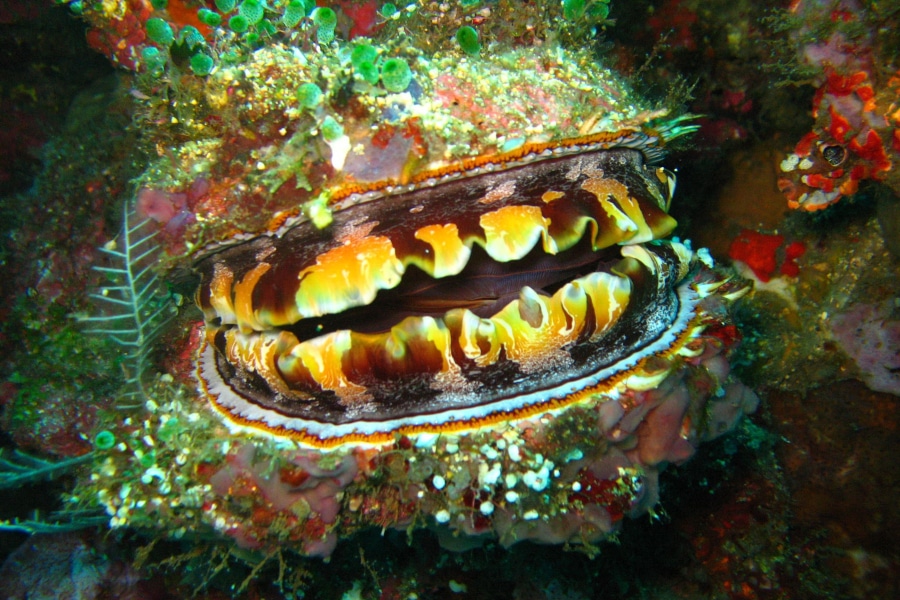
Behind their colorful lips and heavy limestone armor, giant clams possess remarkable biological superpowers:
-
Centuries on the Reef: The largest species, Tridacna gigas, can live for over 100 years, growing to more than 1.2 meters (4 feet) across and weighing up to 250 kilograms (550 lbs).
-
Built-in Siphon Jets: Giant clams feature two distinct siphons: an incurrent siphon (a wide slit with tentacle-like guards) to draw in seawater and nutrients, and an excurrent siphon (a tubular cone) that shoots filtered water, waste, and reproductive gametes out into the current like a water cannon.
-
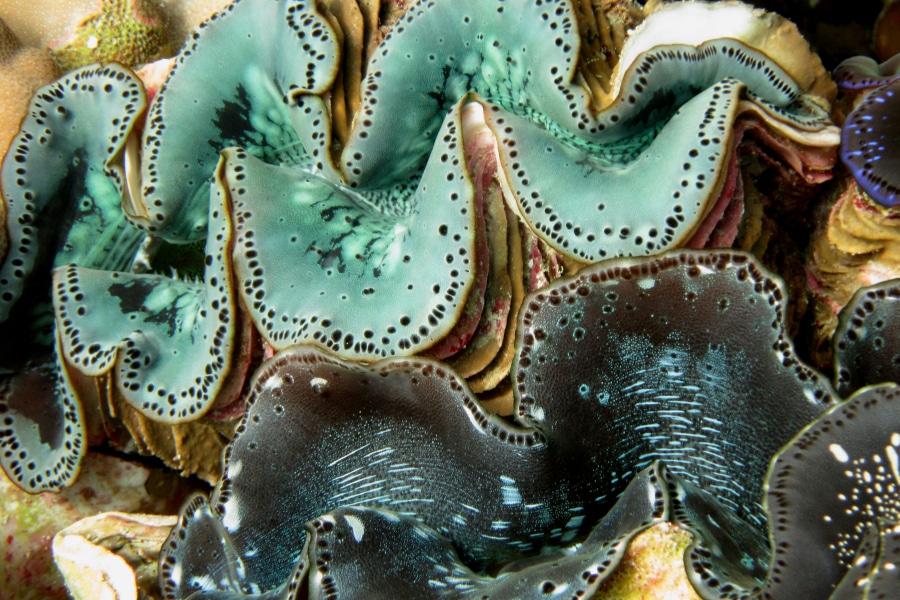
Hundreds of Tiny “Eyes”: If you cast a shadow over a giant clam, you will notice its fleshy mantle instantly twitch or pull back into the shell. Scattered across the mantle edge are hundreds of pinhole light receptors called ocelli. While they cannot resolve complex images, they immediately sense shifts in light and dark, warning the clam when a fish—or diver—approaches.
-
Synchronized Spawning Events: Giant clams are sequential hermaphrodites; they start life as males and develop female reproductive capabilities as they mature. To reproduce, entire populations release millions of sperm followed by clouds of eggs into the water simultaneously, coordinated by lunar cycles and chemical pheromones.
-
Myth-Busting the “Man-Trappers”: Contrary to old Hollywood dive films, giant clams cannot suddenly snap shut fast enough to trap a diver’s foot or leg. Their closing reflex is slow and deliberate, driven by a powerful adductor muscle that seals the shells gradually to protect its soft tissues from grazing fish.
Why Giant Clams Are Disappearing: A Fragile Future
Across Southeast Asia and the wider Indo-Pacific, wild giant clam populations have declined drastically over the last few decades. On many reefs where hundreds once thrived, only scattered individuals remain. Several species are now listed as Vulnerable or Endangered on the IUCN Red List.
Their decline is driven by a combination of severe human pressures:
-
Historical Overharvesting: For generations, giant clams were heavily targeted for subsistence food and the luxury seafood trade. The massive adductor muscle is considered a culinary delicacy in parts of East Asia, commanding high prices that fueled relentless extraction.
-
The “White Gold” Shell Trade: In recent decades, heavy poaching has been driven by the carving industry. As international bans on elephant ivory tightened, giant clam shells were harvested en masse to be carved into luxury jewelry, statues, and decorative home ornaments—often referred to as “marine ivory.”
-
Slow Growth and Reproductive Bottlenecks: Giant clams are broadcast spawners. Because fertilization happens in open water, adult clams must live in close proximity to one another for eggs and sperm to meet. When harvesting thins a population below a critical density threshold, successful reproduction drops to near zero, leading to local reproductive extinction.
-
Climate Change and Ocean Warming: Because giant clams rely entirely on symbiotic algae, they suffer from the same thermal bleaching that affects hard corals. When water temperatures stay too high for too long, clams expel their zooxanthellae, turning a stark, translucent white. Without their algal partners, they slowly starve unless temperatures return to normal.
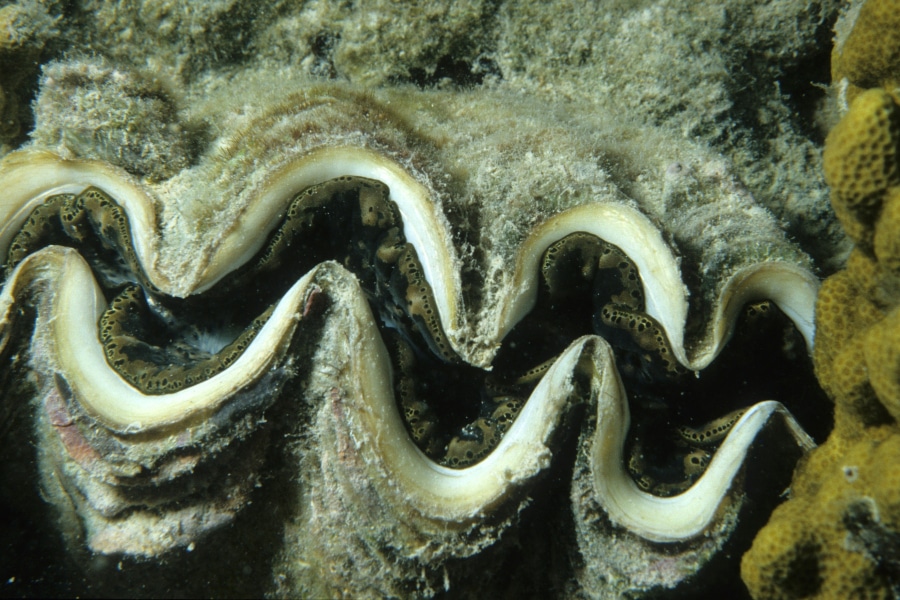
Around the Gili Islands, while the massive Tridacna gigas is extremely rare, smaller hardy species like the Fluted Giant Clam and the Boring Giant Clam can still be spotted wedged into hard coral structures and limestone boulders.
Best Sites to Spot Giant Clams Around Gili Meno
Because giant clams rely on sunlight for energy, they prefer clear, shallow waters where sunlight easily penetrates:
-
Meno Slope & Meno Wall: The sunny coral patches in the shallower sections (5 to 12 meters) right off Gili Meno are home to colorful giant clams burrowed securely into large coral heads.
-
Turtle City: As you drift past the coral bommies, check the sunny plateaus and upper sections of the reef structure for vibrant blue and gold mantles basking in the current.
-
Halik & Shallow Turbo: Along the upper ridges of Halik and Shallow Turbo, healthy hard coral formations provide safe anchor points for fluted giant clams displaying scalloped, leafy shell ridges.
Diver Etiquette: How to Admire Giant Clams Respectfully
-
Mind Your Shadow: To photograph their mantles fully extended, approach low from the side so your body doesn’t cast a shadow over their light-sensing ocelli.
-
Never Touch or Poke: Touching a clam’s mantle causes it to slam its valves together in defense. This expels valuable water, stresses the animal, and expends significant amounts of its stored energy.
-
Keep Buoyancy Sharp: Many boring giant clams embed themselves into living hard corals. Ensure your fins remain well clear of the reef floor when stopping to look closely.
Explore the Reefs with Divine Divers
Every dive around Gili Meno offers a chance to connect with the intricate, interconnected life that makes coral reefs so resilient. From solar-powered giant clams to cruising reef sharks and peaceful green turtles, our waters are packed with stories waiting to be discovered.
Whether you are completing your Open Water certification or joining us for morning fun dives, our experienced dive team will help you spot the hidden treasures of the Bali Sea.