

Most dive sites are famous because of dramatic walls, reef sharks or colourful coral reefs.
Biorocks is different.
It has become one of the most recognisable dive sites in the Gili Islands not because nature created it, but because people helped rebuild it.
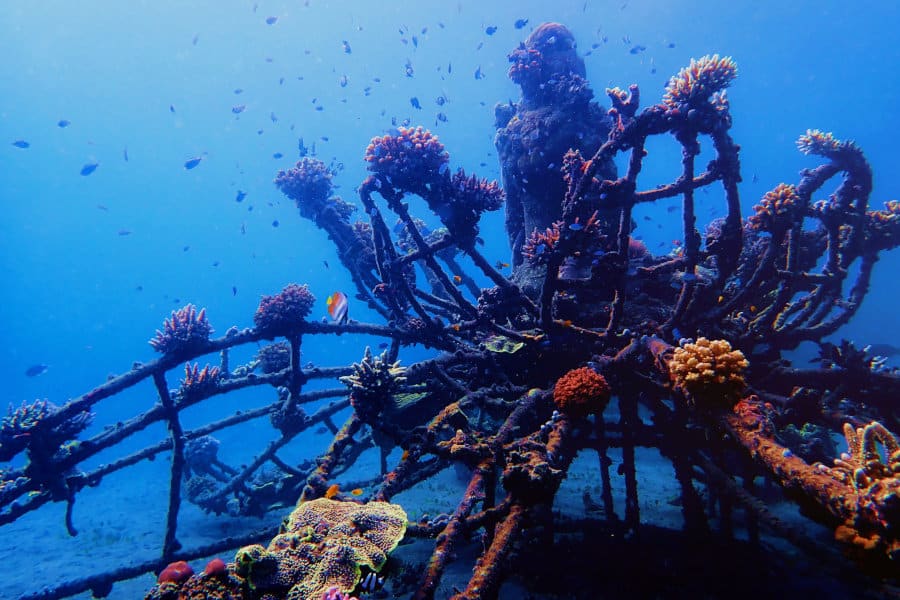
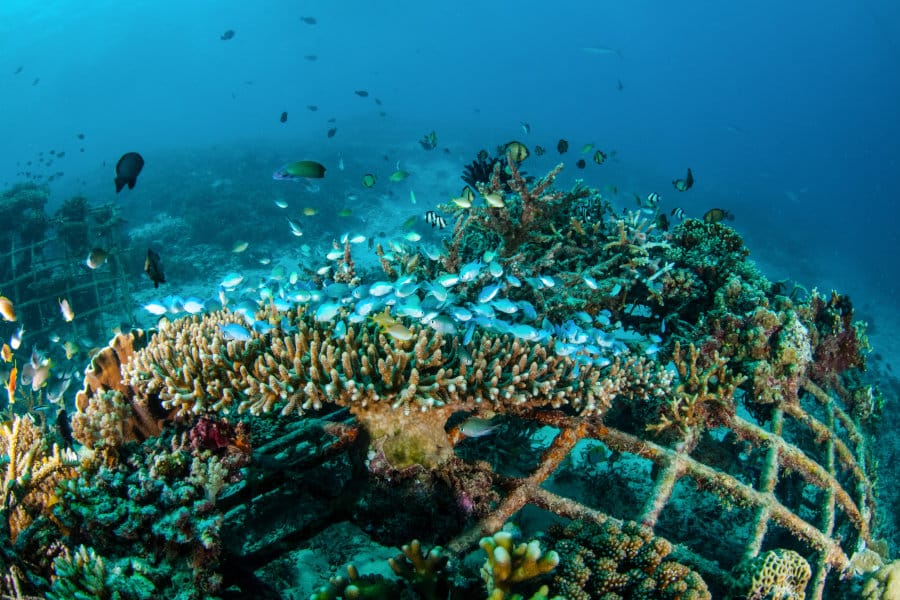
Scattered across the seabed o the eastern shores of Gili Trawagan are dozens of steel structures covered in thriving hard corals, soft corals and thousands of reef fish. Together they form one of the world’s largest and longest-running Biorock reef restoration projects, demonstrating how damaged reefs can recover when given a helping hand.
For divers, it offers something unique: the chance to watch coral restoration in action while enjoying a relaxed dive full of turtles, fascinating macro life and healthy reef communities.
Where Are the Biorocks?
The original Biorocks are located off the eastern coast of Gili Trawangan, close to the harbour.
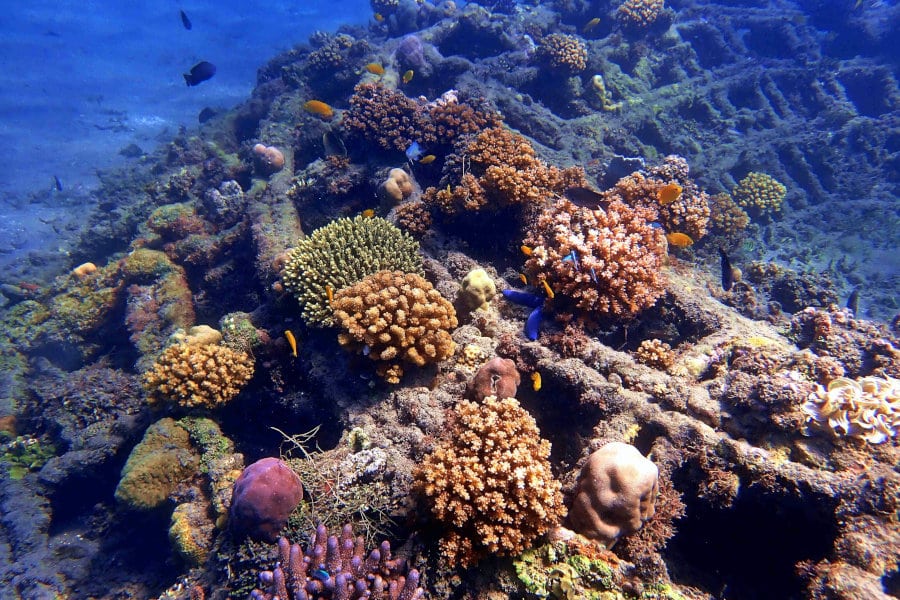
Numerous individual Biorock structures are spread across the area, each at a different stage of coral growth. Some are only a few years old, while others have become almost completely hidden beneath living coral colonies
What is BioROCK?
Rather than being a natural reef, a Biorock starts as a steel framework placed on the seabed.
A very low electrical current passes through the structure, encouraging naturally dissolved minerals in seawater to form a layer of limestone around the metal.
Corals quickly attach to this mineral coating and grow significantly faster than on many natural reefs.
The result is a rapidly developing artificial reef that provides shelter for fish, crustaceans and countless other marine organisms.
If you’d like to learn more about the science behind the technology, read our article Biorock Technology Explained.
Why WAS IT NEEDED?
Although the Gili Islands are still home to beautiful and healthy coral reefs, not every area escaped damage.
Historically, destructive fishing practices such as dynamite and cyanide fishing damaged parts of the reef, while anchors, bleaching events and warming oceans have placed additional pressure on coral ecosystems.
The Biorock project was created to help damaged reefs recover while increasing awareness about marine conservation throughout the Gili Islands.
Today, it has become one of the region’s greatest environmental success stories.
THE STORY OF THE GILI ECO TRUST
The Biorock project in the Gili Islands is coordinated by the Gili Eco Trust, a non-profit organisation founded in 2000 by local dive centres.
The first Biorock structures were installed in 2004, and since then more than 150 structures have been placed around the islands.
Some of the earliest frames have now disappeared beneath decades of coral growth or collapsed under the weight of the reef they helped create.
New structures continue to be added, ensuring the project remains active today.
What WILL YOU SEE UNDERWATER?
Biorocks isn’t a site for dramatic drop-offs or strong drift dives.
Instead, it’s a place to slow down.
Large coral colonies have transformed many of the metal frames into vibrant reefs filled with life.
Patient divers are rewarded with a surprising variety of marine species.
The site is particularly well known for:
- Giant frogfish
- Ghost pipefish
- Razorfish and shrimpfish
- Octopus
- Cuttlefish
- Scorpionfish
- Cleaner shrimp
- Nudibranchs
- Green sea turtles
The combination of artificial structures and healthy coral growth creates countless hiding places for macro life, making Biorocks one of the best underwater photography dive sites in the Gili Islands. Whether you’re carrying a DSLR, mirrorless camera or compact setup, there is always something interesting hiding amongst the coral-covered structures.
A DIFFERENT DIVE EVERY YEAR
One of the fascinating things about diving Biorocks is that it never stays the same.
Every year, more coral covers the metal structures.
Fish populations continue to increase.
Areas that were once bare steel slowly become indistinguishable from natural reef.
Returning divers often notice just how much the site has changed since their previous visit.
A FANTASTIC NIGHT DIVE
Although Biorocks is enjoyable during the day, many local dive guides believe it truly comes alive after sunset.
As darkness falls, octopus begin hunting across the reef, cuttlefish emerge from their daytime hiding places and countless crustaceans venture out onto the coral structures. Ghost pipefish, frogfish and scorpionfish are often easier to spot at night, making this one of the best night dives in the Gili Islands.
The shallow depth, calm conditions and abundance of macro life make Biorocks a favourite site for underwater photographers looking to capture behaviour rather than simply colourful scenery.
DIVE CONDITIONS HAVE CHANGED
Biorocks was once considered one of the best beginner dive sites in the Gili Islands.
However, the area has changed considerably over the years.
The harbour on Gili Trawangan has gradually expanded towards the Biorock sites, and fast boats travelling between Bali, Lombok and the Gili Islands now regularly pass overhead during the day.
While the dive itself remains relatively shallow and currents are usually mild, this increased boat traffic means careful dive planning is essential.
For this reason, Biorocks is no longer considered an ideal beginner dive site. Divers should have good buoyancy control and remain aware of their surroundings at all times. Surface marker buoys should always be deployed before surfacing, and ascents should be carried out under the supervision of an experienced guide.
Fortunately, night dives are considerably quieter, with very little boat traffic and an entirely different underwater atmosphere.
INSIDER TIP
Don’t rush from one structure to the next.
Spend several minutes around each Biorock.
Many of the site’s most interesting residents, including ghost pipefish, frogfish and octopus, rely on camouflage and only reveal themselves to patient divers.
Want to explore more? Check out our Complete Guide to Dive Sites in the Gili Islands for detailed information on every major dive site, including Shark Point, Halik Reef, Turtle City, Deep Turbo, Meno Wall, and many more.