
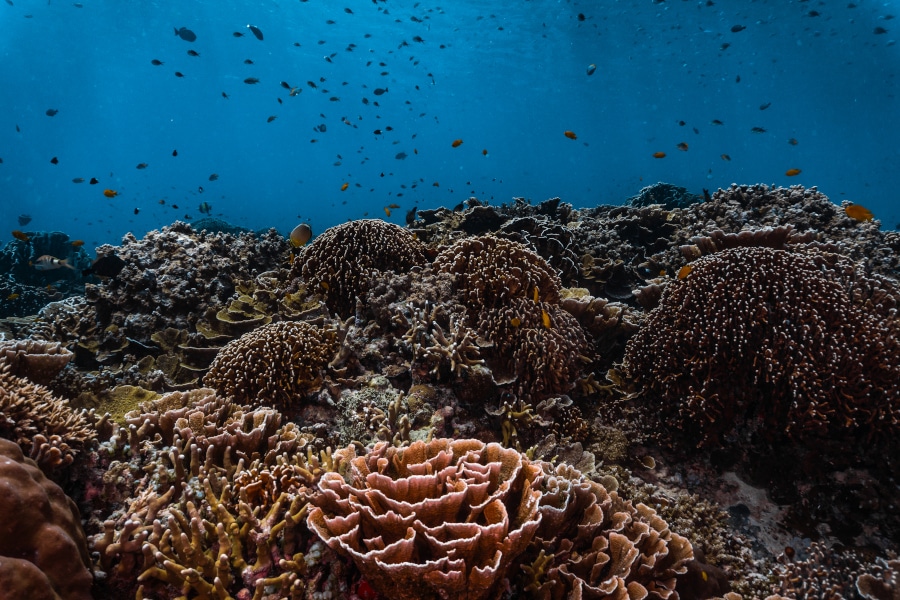
When most people think about scuba diving in the Gili Islands, they think about turtles.
Or sharks.
Or perhaps the crystal-clear water surrounding Gili Trawangan, Gili Meno, and Gili Air.
But there is one thing that makes all of these encounters possible.
Without healthy coral reefs, there would be no Turtle City, or Shark Point.
No thriving marine ecosystem attracting divers from around the world.
Coral reefs are the foundation of life in the ocean. They support thousands of marine species, protect coastlines, provide food and income for millions of people, and create some of the most spectacular scuba diving destinations on Earth.
Yet many divers swim over coral reefs without truly understanding what they are looking at.
This guide explores how coral reefs function, why they are so important, what makes a reef healthy, the threats facing reefs around the world, and why the reefs of the Gili Islands are part of one of the most important marine ecosystems on the planet.
Welcome to the Coral Triangle
Before we look at the reefs surrounding the Gili Islands, it helps to understand the bigger picture.
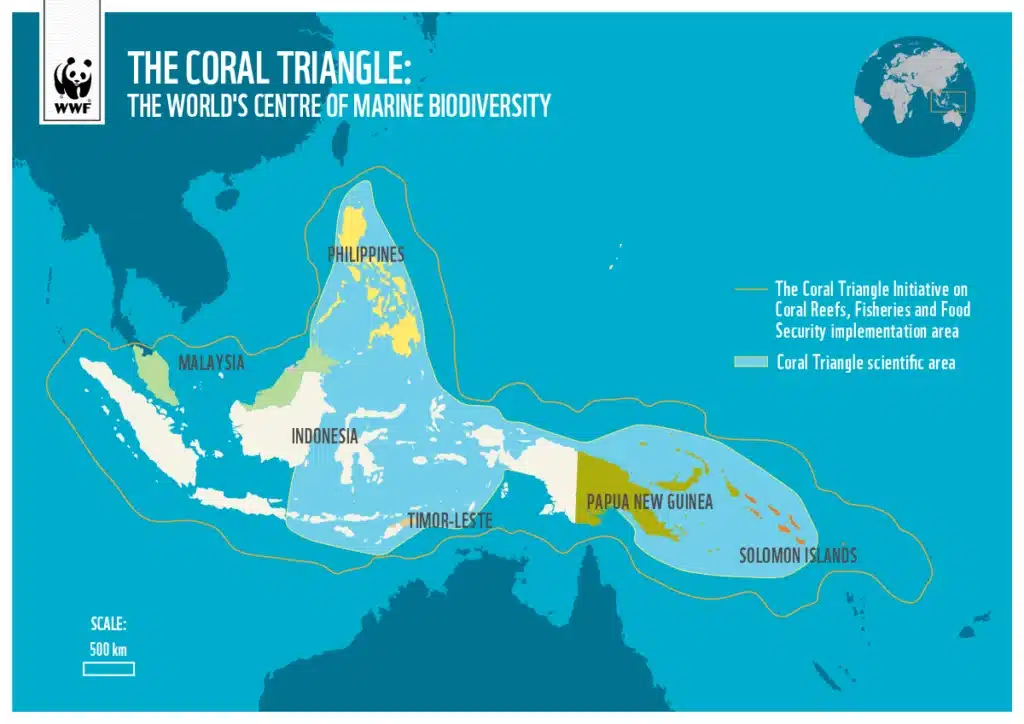
The Gili Islands sit inside a region known as the Coral Triangle.
Stretching across Indonesia, Malaysia, Papua New Guinea, the Philippines, Timor-Leste, and the Solomon Islands, the Coral Triangle is often called the Amazon Rainforest of the Seas.
The comparison is not an exaggeration.
Nowhere else on Earth contains such a concentration of marine biodiversity.
The Coral Triangle is home to:
- More than 600 species of reef-building corals
- Over 2,000 species of reef fish
- Six of the world’s seven marine turtle species
- Hundreds of shark and ray species
- Thousands of molluscs, crustaceans, and other marine animals
Indonesia lies at the very heart of this biodiversity hotspot.
The reefs surrounding Gili Trawangan, Gili Meno, and Gili Air are connected to a vast network of reefs stretching across the Indonesian archipelago.
This is one of the reasons why Gili Islands diving and snorkeling is considered some of the best in Indonesia.

What Exactly Is a Coral?
One of the most common misconceptions among new divers is that corals are plants.
They aren’t.
Corals are animals.
More specifically, they are tiny marine animals called polyps that live together in colonies. These colonies build calcium carbonate skeletons which gradually form the reef structures we see underwater.
A single coral polyp is small.
Very small.
But over hundreds and thousands of years, millions of these tiny animals create enormous reef systems.
Some coral reefs visible today have been growing for thousands of years.
Corals survive thanks to an extraordinary partnership with microscopic algae called zooxanthellae.
The algae live inside the coral tissue.
The coral provides shelter and access to sunlight.
The algae provide nutrients through photosynthesis.
This relationship is one of the most successful partnerships in nature.
Without it, coral reefs could not exist.
Would you like to learn more about corals? Here

Why Coral Reefs Matter
Coral reefs are far more important than most people realise.
Despite covering less than 1% of the ocean floor, they support approximately 25% of all marine species.
Think about that for a moment.
One quarter of all marine life depends on reefs.
That includes:
- Turtles
- Reef sharks
- Moray eels
- Octopus
- Frogfish
- Seahorses
- Butterflyfish
- Angelfish
- Barracuda
- Groupers
And thousands of other species.
Coral reefs also protect coastlines from waves and storms while supporting the livelihoods of more than 500 million people worldwide.
Without coral reefs, many tropical islands would be far more vulnerable to erosion and storm damage.
The Gili Islands themselves benefit enormously from the protection provided by the surrounding reefs.
Hard Corals: The Architects of the Reef
When divers talk about coral reefs, they are usually referring to hard corals.
Hard corals are the builders.
They create the limestone structures that form the reef itself.
Over time, these structures grow into the coral gardens, walls, ridges, bommies, and slopes that divers explore today.
Hard corals come in many different shapes. Learn more about those shapes here.
Soft Corals: The Colour of the Reef
While hard corals build reefs, soft corals add much of the colour.
Unlike hard corals, they do not build large limestone skeletons.
Instead, they sway in the current.
They create movement.
They create colour.
And they provide habitat for countless marine creatures.
The pink soft coral gardens on the outside reef at Bounty Wreck are among the best examples in the Gili Islands.
Soft corals are often particularly abundant at current-swept sites such as Soraya, Deep Turbo, and parts of Shark Point.
You find more about the different coral types here.

What a Healthy Reef Looks Like
Many snorkelers and divers assume that colourful equals healthy.
Sometimes that is true.
Sometimes it isn’t.
Marine biologists evaluate reef health using several indicators.
High Coral Coverage
Healthy reefs are dominated by living coral rather than dead coral, rubble, or algae.
Diversity of Coral Species
A healthy reef contains many different coral species and growth forms.
Lots of Fish
Fish populations are one of the easiest ways to judge reef health.
Large schools of fusiliers, surgeonfish, butterflyfish, and snappers indicate a productive ecosystem.
Predators
Healthy reefs support predators.
Sharks.
Moray eels.
Barracuda.
Trevallies.
These species help maintain balance throughout the ecosystem.
Juvenile Marine Life
Baby fish.
Young corals.
Juvenile turtles.
These indicate successful reproduction and long-term resilience.
The Reefs of the Gili Islands
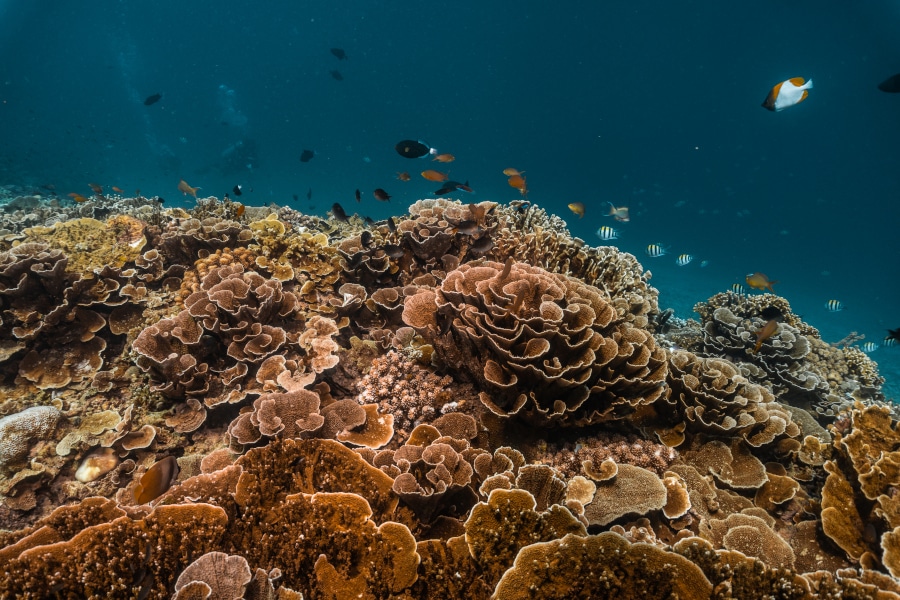
One of the reasons people fall in love with the Gili Islands is the variety of reef habitats.
Each dive and snorkel site offers something slightly different.
Shark Point
Healthy hard coral gardens.
Soft corals along the ridges and the wreck.
Strong currents.
Large predators.
Halik Reef
Beautiful coral ridges.
Healthy hard and soft corals.
Excellent turtle habitat.
Sunset Reef
Outstanding coral coverage.
Large table corals.
Exceptional visibility.
Meno Wall
A mixture of wall diving, coral gardens, and sponge habitats.
Bounty Wreck
Artificial reefs combined with natural coral growth. Both soft and hard coral.
Hans Reef
Coral restoration projects and macro habitats.
Together, these sites create a remarkably diverse ecosystem within a relatively small area.

Threats Facing Coral Reefs Worldwide
Coral reefs face challenges unlike any other time in history.
Climate Change
The biggest threat is rising sea temperature.
When corals become stressed by heat, they expel their zooxanthellae.
This process is known as coral bleaching.
Without the algae, corals lose both their colour and their primary source of energy.
Repeated bleaching events can kill entire reef systems.
Ocean Acidification
Increasing carbon dioxide levels make it harder for corals to build skeletons.
Overfishing
Removing key species disrupts ecological balance.
Coastal Development
Sedimentation can smother coral reefs.
Plastic Pollution
Marine debris damages both coral and marine life.
Threats Facing the Reefs of the Gili Islands
While many of the reefs around the Gili Islands remain relatively healthy, they are not immune.
Tourism Pressure
The popularity of the Gili Islands creates challenges.
More visitors means greater pressure on fragile ecosystems.
Anchors
Historically, anchors caused significant damage.
Fortunately, permanent mooring systems have greatly reduced this threat.
Poor Buoyancy
Many coral injuries occur accidentally.
A single fin kick can damage coral that took decades to grow.
Waste and Pollution
Small islands face unique waste-management challenges.
Climate Change
Like reefs everywhere, the Gili Islands face increasing pressure from warming oceans.

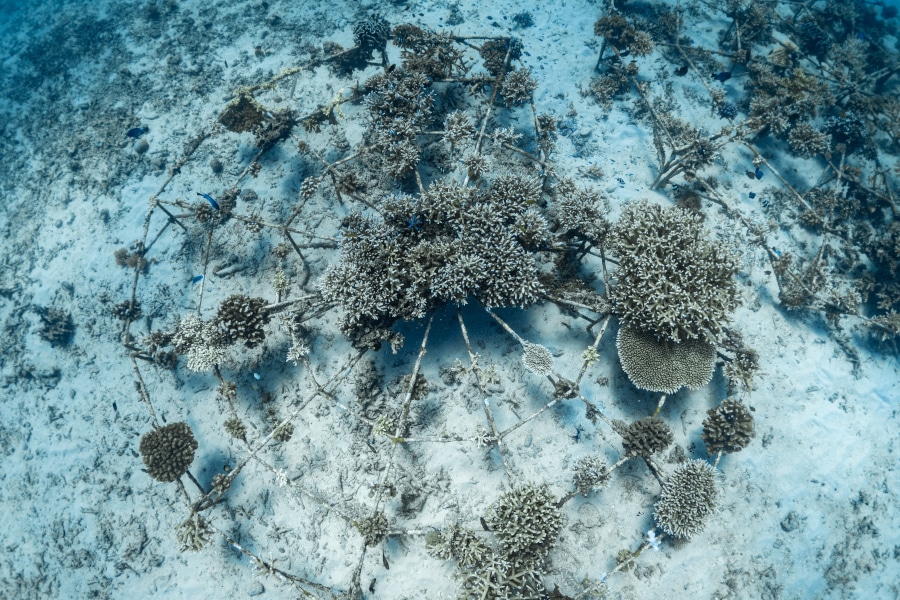
Coral Restoration in the Gili Islands
Fortunately, there is good news.
The Gili Islands have become a regional leader in coral restoration.
Artificial reef projects have created new habitat.
Coral nurseries are helping damaged areas recover.
Several dive sites now include restoration projects that divers can observe during their dives.
Hans Reef, Biorocks, and several other locations showcase how active conservation can help support reef recovery.
While restoration cannot solve climate change, it can improve local resilience and accelerate recovery following disturbances.
How Divers Can Help Protect Coral Reefs
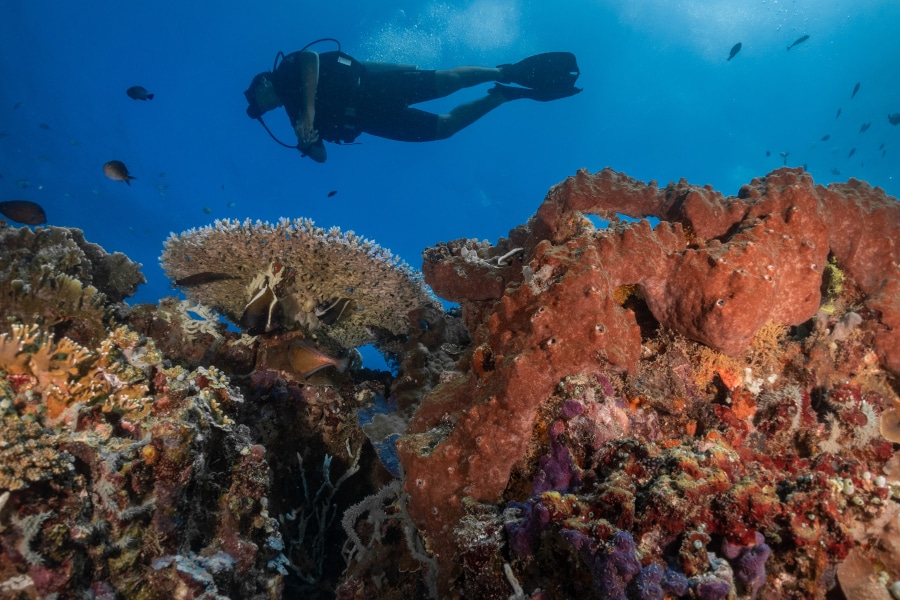
Protecting reefs does not require becoming a marine biologist.
Small actions make a huge difference.
Master Your Buoyancy
Good buoyancy prevents accidental contact.
Never Touch Coral
Corals are living animals.
Touching them can cause damage or disease.
Choose Reef-Safe Sunscreen
Some chemicals can harm coral larvae.
Don’t Chase Wildlife
Respect marine life.
Observe without interfering.
Support Responsible Dive Centres
Choose operators that are Green Fins members or otherwise follow sustainable diving practices.
Participate in Clean-Ups
Many conservation organisations organise regular reef and beach clean-ups. On Gili Meno a Trash Hero is conducted every Sunday.

The Future of Coral Reefs
Coral reefs face significant challenges.
There is no denying that.
But there is also reason for hope.
Many reefs are proving more resilient than scientists once expected.
Conservation awareness is increasing.
Coral restoration techniques continue improving.
And more divers than ever are becoming advocates for ocean protection.
The future of coral reefs will depend on decisions made over the coming decades.
Every snorkeler and every diver can play a role.
Protected reefs matter.
Every coral colony matters.
Final Thoughts
The next time you go snorkeling or scuba diving in the Gili Islands, take a closer look at the reef beneath you.
Look beyond the turtles, the sharks and the schools of fish.
Everything begins with the coral.
These tiny animals have spent thousands of years building the underwater world we enjoy today.
They create habitat, support biodiversity and protect islands.
And they make some of the best diving in Indonesia possible.
Understanding coral reef health is about more than learning marine biology.
It is about understanding the foundation of life in the ocean.
And once you understand that, you’ll never look at a coral reef the same way again.