

The Gili Islands are a fantastic destination for underwater photography. Clear tropical water, colourful reefs and plenty of marine life give photographers a lot to work with.
But not every dive site is the same. Some are better for wide-angle images and larger animals, while others reward you for slowing down and searching the reef for tiny subjects.
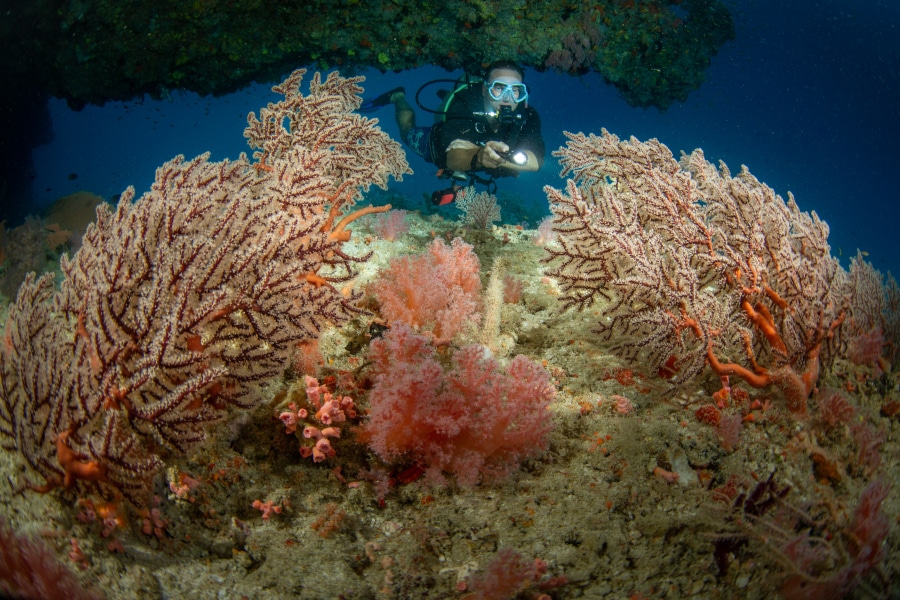
Best Dive Sites for Wide-Angle Photography
If you enjoy wide-angle underwater photography, look for large reef formations, good visibility and bigger marine life. These are some of our favourite sites around the Gili Islands.
Soraya
Soraya is an excellent choice for underwater landscape photography.
The site has impressive deeper reef ridges and large coral formations that work beautifully with a wide-angle lens. The deeper sections can also bring plenty of fish into the frame.
It is a site where you can capture the reef itself rather than focusing on one particular animal.
Glenn Nusa
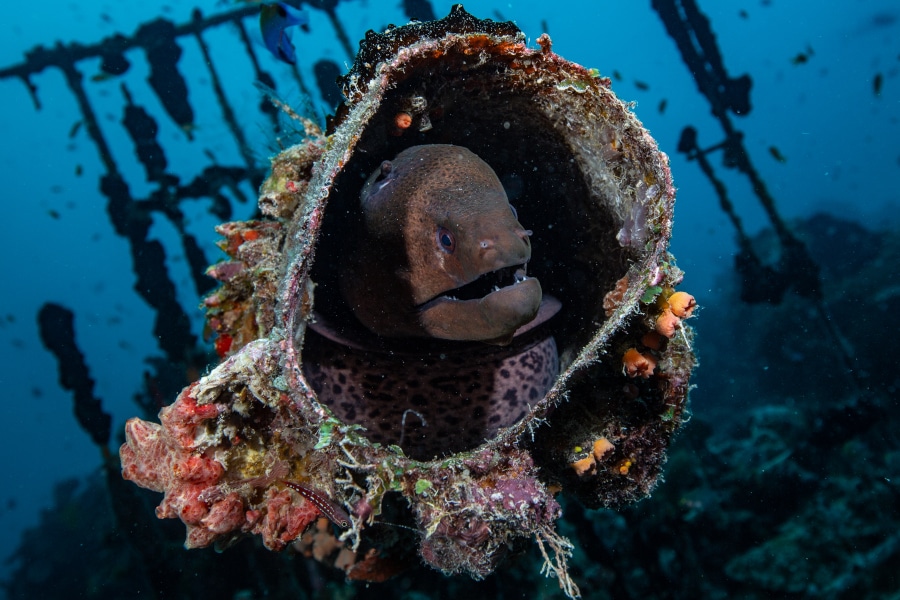
Glenn Nusa combines a wreck with the surrounding reef, giving you plenty of opportunities for wide-angle photography.
The wreck provides a strong subject for larger compositions, while the surrounding reef and marine life add colour and movement.
It is also a good site to keep your camera ready for larger animals passing through.
Turtle City
Turtle City is an obvious choice for photographers who want turtles.
The main pinnacle is covered in colourful soft coral and provides a beautiful background for turtle photographs. Try positioning yourself slightly below the turtle and shooting towards the blue for a more dramatic image.
The turtles also tend to make good subjects because you can often observe them rather than chasing them around the reef.
Hans Reef – Outside Reef
The outside reef at Hans Reef is one of our favourite places for a very specific turtle photograph.
Turtles are often found sleeping among the large sponge corals, sometimes in exactly the kind of setting that makes an incredible wide-angle image.
The combination of turtle, sponge corals and surrounding reef gives you a much more interesting photograph than simply taking a picture of a turtle swimming in open water.
Shark Point
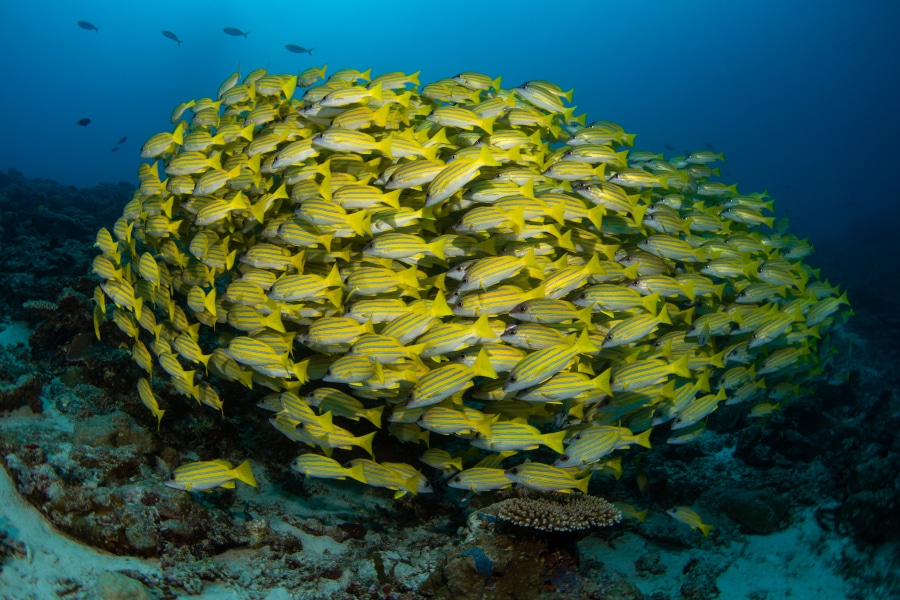
For obvious reasons, Shark Point is one of the best wide-angle dive sites in the Gili Islands.
Reef sharks are the main attraction, but the deep ridges and surrounding reef also give you plenty of opportunities to create larger underwater scenes.
A wide-angle lens is ideal here. Position yourself where you can capture the shark with the reef or blue water behind it rather than simply filling the entire frame with the animal.
Halik
Halik gives underwater photographers two excellent subjects: turtles and sharks.
The shallow reef around 5 metres is particularly good for turtle photography because of the amount of natural light. If conditions allow you to go deeper, sharks can also be encountered around 10–12 metres.
This gives Halik a lot of flexibility. You can spend the dive photographing turtles in shallow water or look for larger animals deeper on the reef.
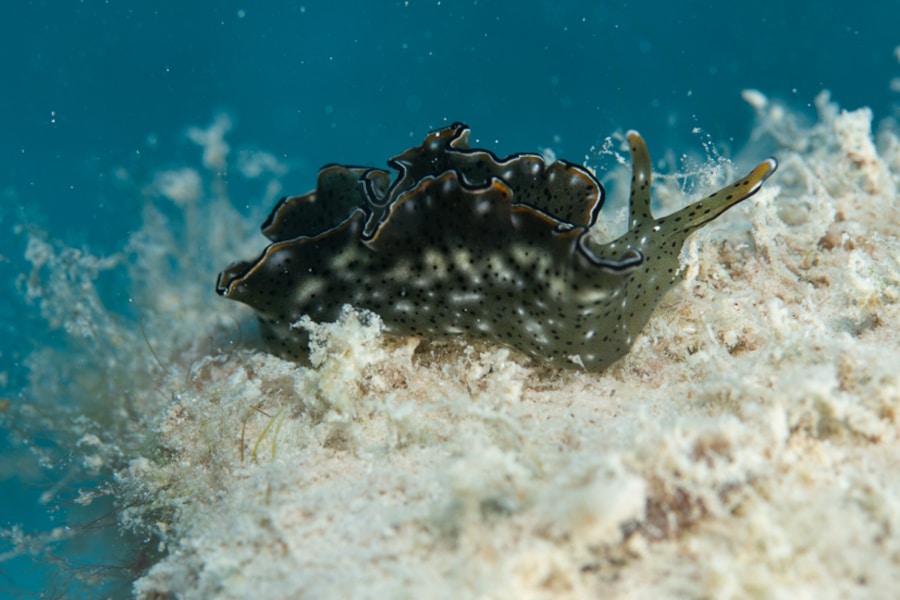
Best Dive Sites for Macro Photography
The Gili Islands are not only about turtles and sharks. If you slow down and start looking closely, the reefs are full of smaller subjects that are easy to miss.
For macro photography, Bounty, Hans Reef and Meno Wall are excellent choices. But some of the best macro diving is just across the water on Lombok, where dedicated muck dive sites offer a completely different experience.
Bounty
Bounty is a great site for finding smaller marine life around the wreck and surrounding reef.
Keep an eye out for seahorses, frogfish, leaf fish and pipefish hiding among the structures and reef.
The wreck creates plenty of places for small animals to hide, so it is worth taking your time and checking the details rather than simply swimming past.
Hans Reef
Hans Reef is one of the best sites for combining beautiful coral with interesting macro subjects.
Look closely around the reef for nudibranchs, frogfish, leaf fish and flying gurnards.
The artificial reef structures and coral-covered areas provide plenty of hiding places. It is a rewarding site for photographers who enjoy searching for unusual subjects.
Meno Wall
Meno Wall is another good option for macro photography.
Around the reef you can find gobies, nudibranchs and leaf fish, often hiding among the coral or close to the reef floor.
The shallow coral garden around 8–10 metres also provides plenty of natural light, which can be particularly useful for macro photography.
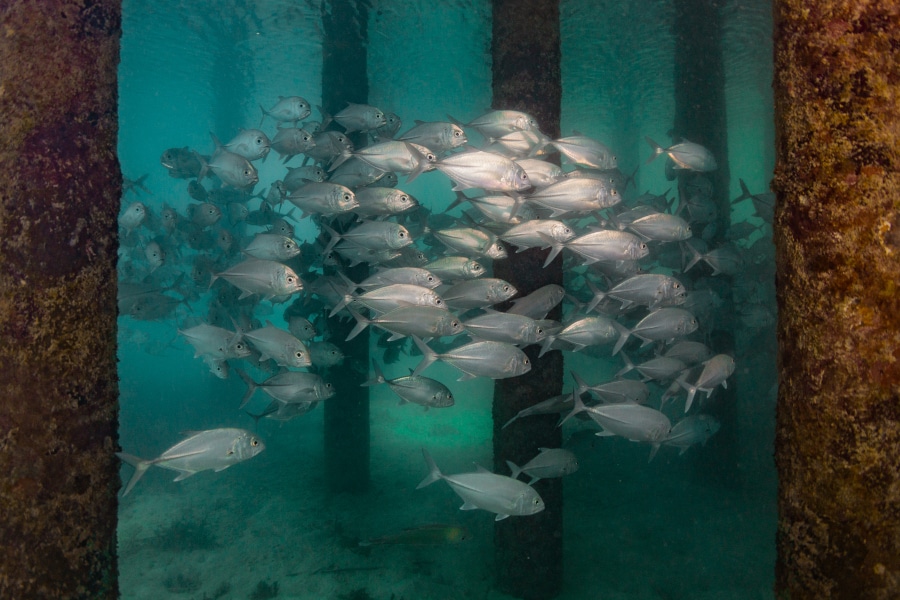
Muck Diving on Lombok
If you really love macro photography and strange underwater creatures, it is worth making the short trip across to Lombok.
Kecinan, Mentigi Bay and Teluk Nare offer a completely different type of diving. Instead of colourful coral reefs, you are searching sandy bottoms, rubble, seagrass and artificial structures for creatures that are incredibly easy to overlook.
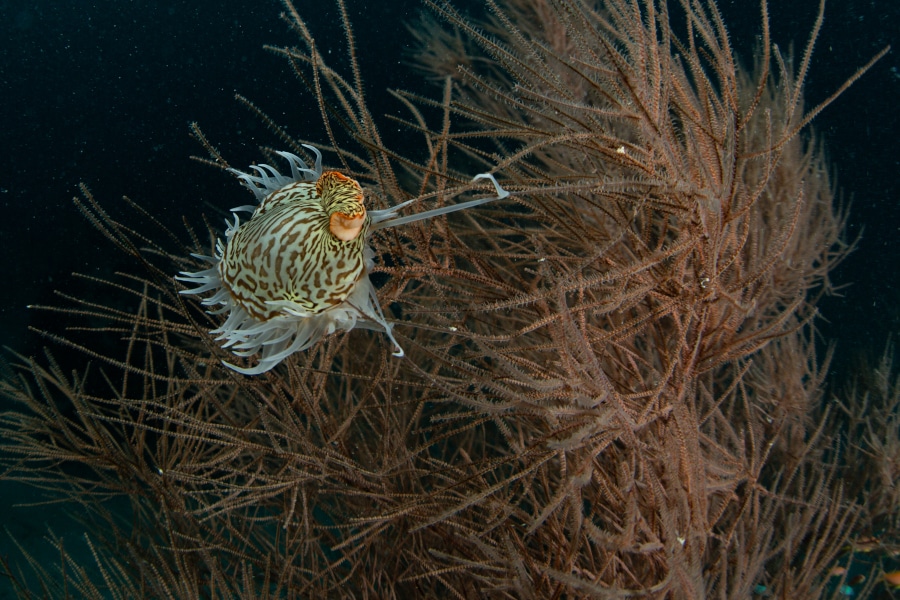
Kecinan
Kecinan is one of our favourite macro sites near the Gili Islands.
The large bay offers enough different habitats for several dives. In the shallow seagrass, you can look for seahorses, while the rubble and sandy areas are home to ghost pipefish, pipefish, scorpionfish, flying gurnards, frogfish and octopus.
The anchor lines and mooring blocks are particularly interesting. Look carefully and you may also find leaf fish, turtles and other unusual creatures hiding around them.
For macro photographers, Kecinan is a proper critter-hunting dive.
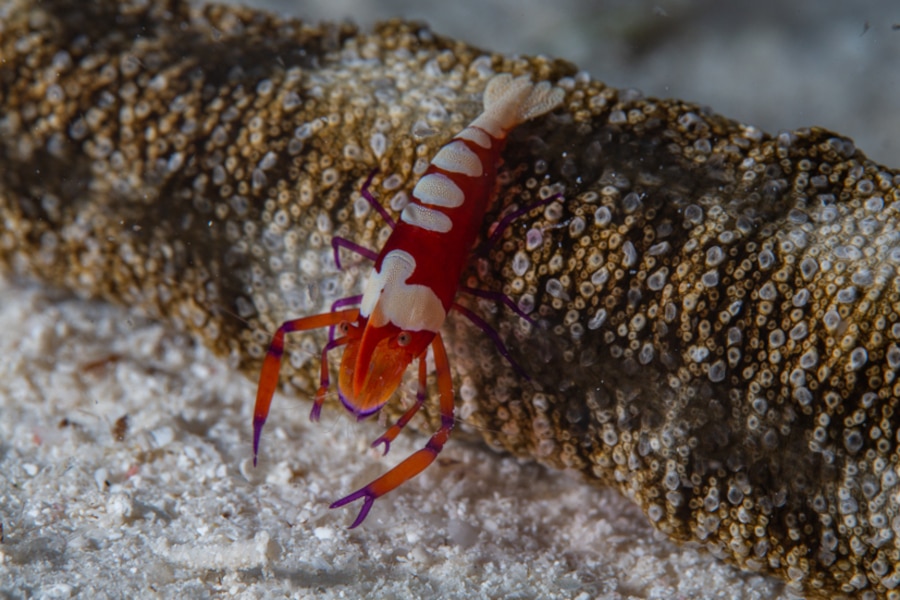
Mentigi Bay
Mentigi Bay, also known as Seahorse Bay, is another excellent muck diving site on Lombok.
The sheltered bay has sandy and silty areas, seagrass and rubble where an impressive variety of marine life can be found.
Seahorses, frogfish, ribbon eels, pipefish, ghost pipefish, stargazers and devil scorpionfish are among the highlights.
You can also encounter flamboyant cuttlefish, mimic octopus and sand-burying crabs.
The calm conditions make Mentigi Bay particularly enjoyable for photographers. Many of the animals stay relatively still, giving you time to compose the shot properly.
Teluk Nare
Teluk Nare, also known as Magic Pier, is one of the most unusual muck dives in the area.
The working pier has created a maze of pilings, crossbeams, rubble and other structures covered with sponges, soft corals and hydroids.
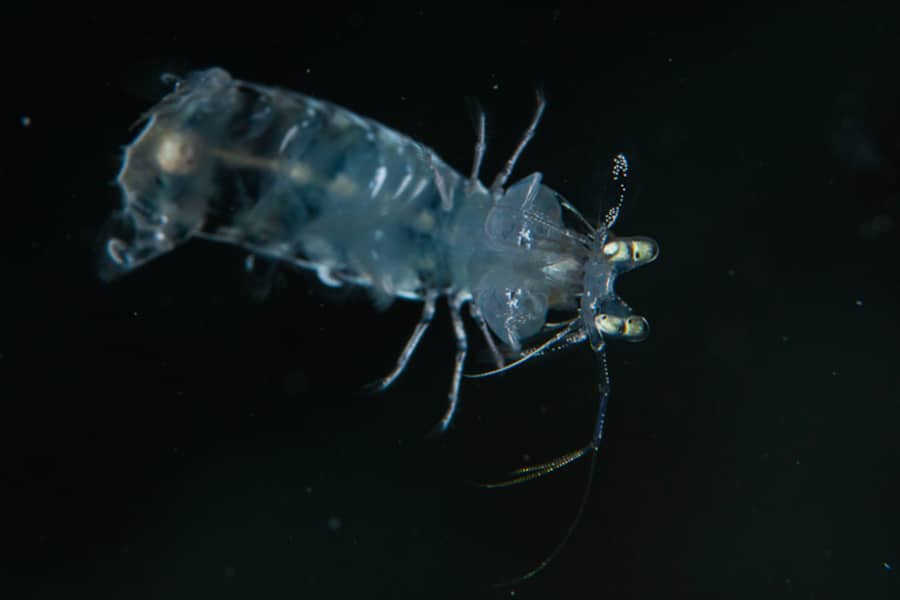
Look closely and you can find frogfish, ghost pipefish, nudibranchs, stargazers, waspfish, peacock mantis shrimp, decorator crabs, ribbon eels and mimic octopus.
It is a completely different kind of underwater photography from shooting turtles on a coral reef. You never quite know what you will find.
Wide Angle or Macro?
The dive sites around the Gili Islands and Lombok give underwater photographers both options.
For turtles, sharks and large reef scenes, take the wide-angle setup and head to sites such as Halik, Shark Point, Turtle City, Soraya or the outside reef at Hans Reef.
If your favourite subjects are frogfish, nudibranchs, pipefish and other small creatures, Bounty, Hans Reef and Meno Wall are excellent choices.
And if you really want to go hunting for weird, unusual and often wonderfully bizarre marine life, make the trip to Lombok. Kecinan, Mentigi Bay and Teluk Nare are among the area’s best muck diving sites for macro photography.
The best part is that these sites are close enough to the Gili Islands to include them in your diving holiday.