

Part of our Gili Marine Life Guide | Diving with Divine Divers Gili Meno
Stroll into the shallow turquoise shallows of Gili Meno or glide over our fringing reef crests, and you will quickly notice them: dark, spiky spheres nestled in coral crevices or dotting the pale sand.
For many swimmers and new divers, sea urchins are seen merely as underwater hazards to avoid. Their long, needle-sharp spines certainly demand respect and good buoyancy control. Yet beneath that intimidating exterior lies one of the most critical unsung heroes of the marine world.
Far from being mindless ocean pincushions, sea urchins are the dedicated “lawn mowers” of the reef. Without their non-stop grazing, the vibrant coral gardens around the Gili Islands would look drastically different—and far less alive.

The Reef’s Essential Herbivores
Coral reefs exist in a constant, high-stakes turf war between hard corals and fast-growing marine algae.
Algae grow far faster than stony corals. If left unchecked, turf algae and fleshy seaweed will quickly smother living coral polyps. They will block out sunlight and prevent free-swimming coral larvae from finding a hard surface to attach and grow.
Enter the sea urchin.
Sea urchins are armed with a specialized mouth structure known as Aristotle’s lantern—a complex, five-toothed beak made of calcium carbonate. They scrape rocks and dead coral clean day and night. By trimming down macroalgae, they clear valuable real estate for baby corals to settle, while giving established colonies room to thrive. Along with herbivorous reef fish like parrotfish and surgeonfish, urchins are essential balance-keepers of the entire ecosystem.
Common Sea Urchins Around the Gili Islands
The reef flats, seagrass beds, and drop-offs around Gili Meno, Gili Air, and Gili Trawangan host several fascinating species:
Long-Spined Sea Urchin
The most common and easily recognizable urchin in the Gilis. They feature pitch-black, brittle spines that can reach over 30 centimeters in length. Look closely at the center of the body (the test) to spot a vivid orange or red ring surrounding the anal cone, accented by glowing, iridescent blue dots. They are abundant along shallow lagoons and under coral ledges at Meno Slope and Halik.
Banded / Needle-Spined Urchin
Often confused with the long-spined sea urchin, this striking urchin features thick primary spines displaying high-contrast bands of black-and-white or deep brown-and-white. Fine, darker secondary spines sit between the banded needles, giving it a dramatic, patterned appearance. They can be found along the reefs of Shark Point and Meno Wall.
Collector Urchin
The eccentric decorator of the urchin family. This species has short, relatively blunt spines and uses its thousands of tiny, sticky tube feet to pick up loose shells, pebbles, and seagrass blades. By covering itself in debris, it creates clever camouflage against predators. At the same time it shields its delicate body from intense tropical sun rays along shallow reefs.
Slate Pencil Urchin
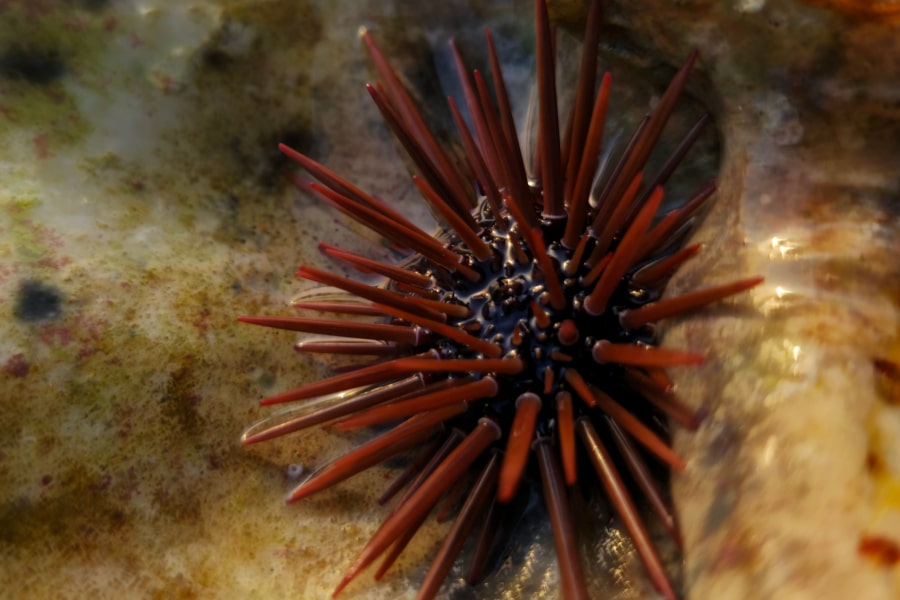
One of the most unusual finds on the reef. Instead of sharp, needle-like spines, it features thick, heavy, blunt clubs rounded at the tips. Colored in rich mahogany or burnt orange, these stout spines allow the urchin to wedge itself firmly into surf-swept crevices and high-current drop-offs without getting dislodged.
Fire Urchin
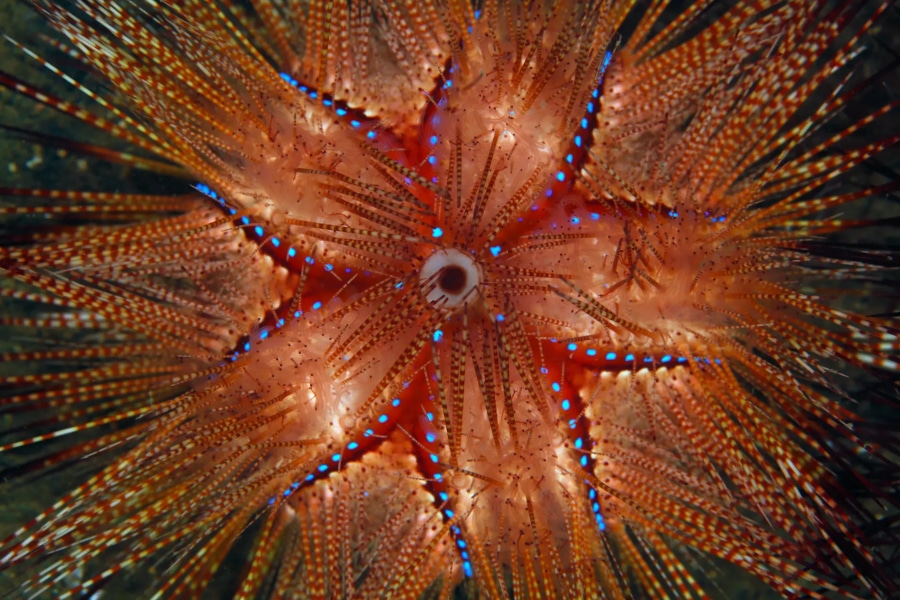
A true macro photographer’s dream. Found along deeper rubble slopes and wrecks like the Bounty Wreck and Hans Reef. This soft-bodied urchin displays glowing bands of fiery red, orange, and purple. The tips of its short spines are tipped with tiny, bead-like venom globes. It often serves as a living home for rare symbiotic critters like the dazzling Coleman Shrimp and tiny zebra crabs.
Fascinating Facts About Sea Urchins
Self-Sharpening Teeth: An urchin’s five internal teeth grow continuously throughout its life to replace worn edges. The microscopic structure of the teeth allows them to fracture in a way that keeps the scraping edges permanently razor-sharp. That allows them to chew through solid limestone rock.
Walking on Hydraulics: Urchins do not just rely on their spines to move. Extending between their spines are hundreds of slender, transparent tube feet powered by a hydraulic water vascular system. These feet can grip surfaces with surprising suction, haul the urchin up vertical walls, or right the animal if it gets flipped over.
Eyes All Over Their Bodies: Urchins possess no centralized eyes. They react immediately when a shadow passes overhead. Research reveals that their entire body acts as a compound eye. Light-sensitive cells cover their skin and the dense arrangement of their spines allow them to detect directional light and approaching predators.
Centuries in the Making: While shallow tropical urchins typically live for several years, certain cold-water species, like the Red Sea Urchin, are among the longest-lived creatures on Earth. Some individuals are over 200 years old without showing signs of biological aging.
What Happens When Urchin Populations Collapse?
The importance of sea urchins became glaringly obvious to marine biologists during the 1980s in the Caribbean. An unknown waterborne pathogen wiped out over 95% of the sea urchin population in a matter of months.
Without these spiky lawn mowers grazing the seabed, turf algae exploded uncontrollably. Within years, vast stretches of thriving coral reefs were smothered under thick blankets of seaweed, turning complex, colorful ecosystems into desolate algal flats.
Protecting urchin populations around the Gili Islands is vital to ensuring our reefs stay resilient against rising sea temperatures and climate stress.
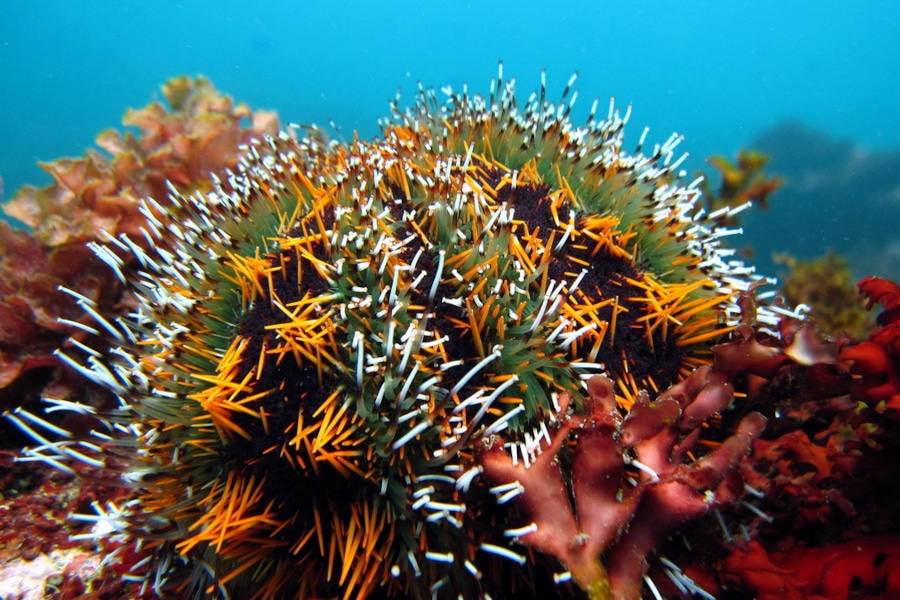
Diver Etiquette: How to Dive Around Urchins Safely
Master Neutral Buoyancy: The easiest way to avoid an accidental encounter is good buoyancy. Always keep your fins elevated above the reef, especially when swimming through narrow swim-throughs or examining coral heads.
Never Use the Reef as a Handhold: Urchins frequently tuck themselves deep into shaded rock fissures. Never reach blindly into a hole or press a hand against dead coral without looking first.
Mind the Fire Urchin: While common long-spined urchins cause a painful mechanical puncture, the Fire Urchin delivers a genuine sting from its venom-tipped globes. Enjoy its fiery colors and resident shrimp from a respectful distance!
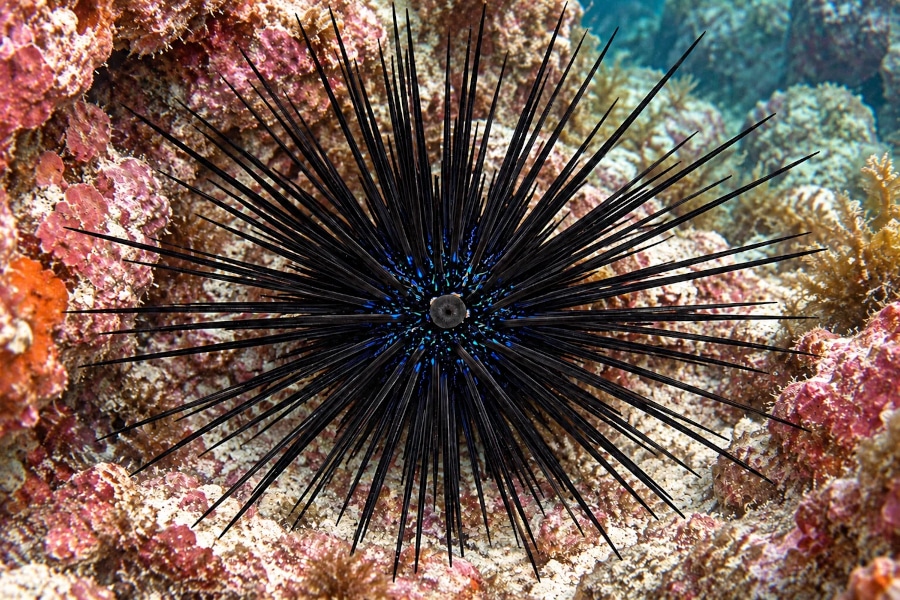
Discover the Hidden Reef Life
Every creature on the reef—from grazing green turtles and schooling barracudas to the humble, algae-chomping sea urchin—plays a role in keeping Gili Meno’s underwater paradise alive.
Whether you are looking to fine-tune your buoyancy, embark on your very first dive course, or discover the tiny critters hiding inside coral bommies. Our friendly, experienced dive team is here to show you the best of the Gili Islands.