

Not every dive when diving the Gili Islands needs to be deep. Some of the best dive sites in the Gili Islands have beautiful reefs in relatively shallow water, with plenty of marine life and lots of natural light.
Shallow diving is also a great option when you want a relaxed dive, spend more time taking photographs or simply enjoy the reef without worrying about depth.

Halik
Halik is one of the best sites for a shallow dive in the Gili Islands.
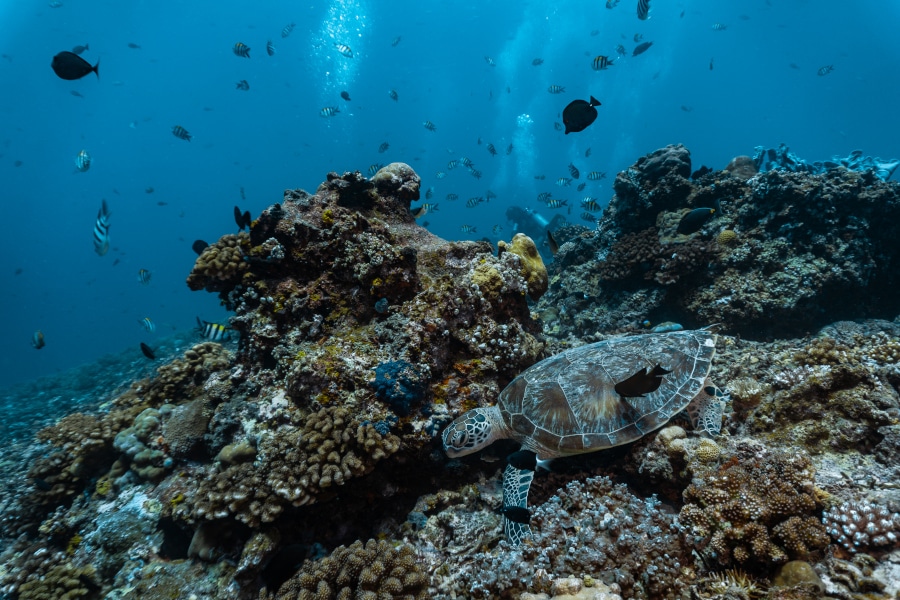
Around 5 metres, the reef is full of turtles. It is common to see several during a single dive, with smaller green turtles and hawksbills both making appearances.
If you continue slightly deeper, between 10 and 12 metres, there is also a chance to see sharks. This makes Halik a great site when you want to combine a very shallow reef with the possibility of seeing larger marine life.
Shallow Turbo
Shallow Turbo has a little bit of everything.
There is a small wall at around 7–10 metres, while the top reef is shallow, colourful and absolutely packed with fish. Turtles are also regularly found around the reef.
It is an easy site to explore without needing to go deep, and there is plenty to keep you interested throughout the dive.
Hans Reef
Hans Reef is not just about macro diving.
The main reef is covered in beautiful coral and has several interesting artificial reef structures to explore. These structures have become home to plenty of marine life and add something different to the natural reef.
The shallow sections are bright and colourful, making Hans Reef a great choice for a relaxed reef dive.
Bounty
Bounty is best known for its wreck, but there is more to explore around the site.
During the low season, when there is less boat traffic, it can be possible to visit the Bask Nest. The shallow areas around the Meno Slope also offer plenty of marine life, including turtles.
With its mix of reef, wreck and marine life, Bounty works well for divers who want to explore different environments during one dive.
Meno Wall
The wall itself continues into deeper water, but you don’t need to follow it down.
The top reef at around 8–10 metres is a delightful coral garden. It is colourful, full of life and easy to explore at a comfortable depth.
For a shallow reef dive, this is one of the nicest sections of Meno Wall.
Turtle City
Turtle City (also called Turtle Heaven) is famous for its large turtles, which often hang around the main pinnacle. The top of the pinnacle is at around 10–12 metres, making it accessible to divers of all experience levels.
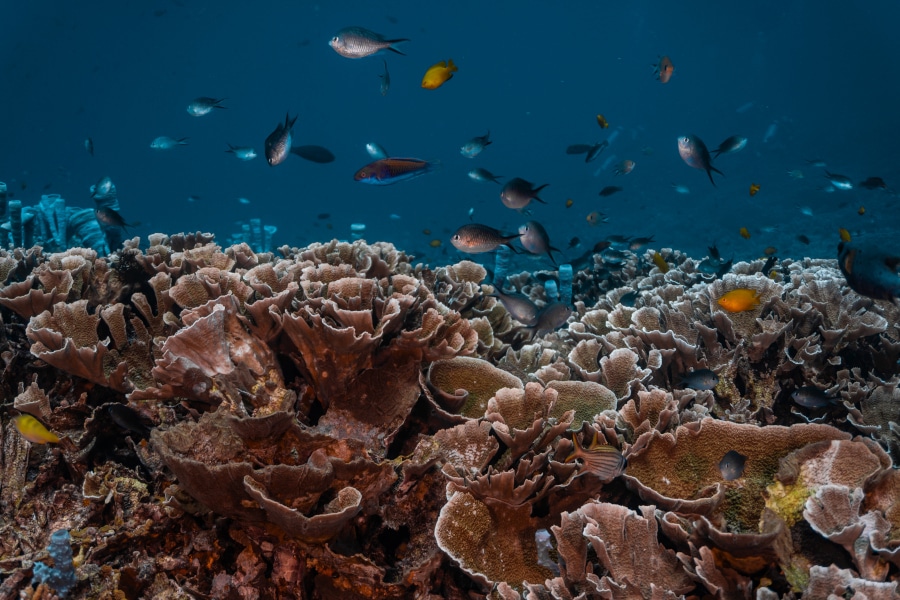
But there is no need to leave the main reef or go deeper to enjoy the site. The main reef is beautifully covered in coral, with plenty of blue sponges and branching corals creating a colourful reef full of life.
You can also drift along the reef at 4–10 metres and still get the full Turtle City experience. You won’t feel like you’re missing out by staying shallow. In fact, the colourful reef and abundant marine life make the shallow section a great choice for beginners and experienced divers alike.
Air Wall
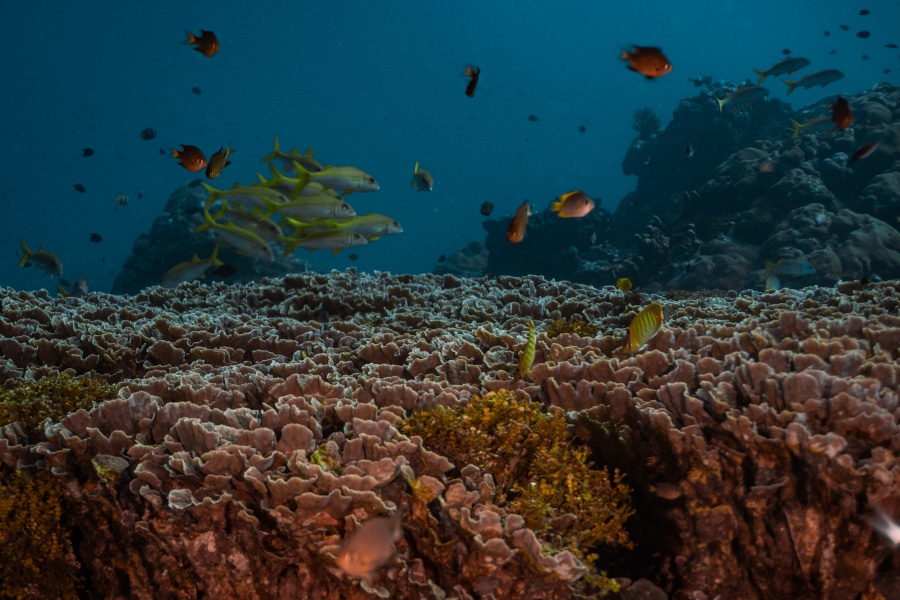
Air Wall drops into deeper water, but the far shallows are where you want to be for a relaxed shallow dive.
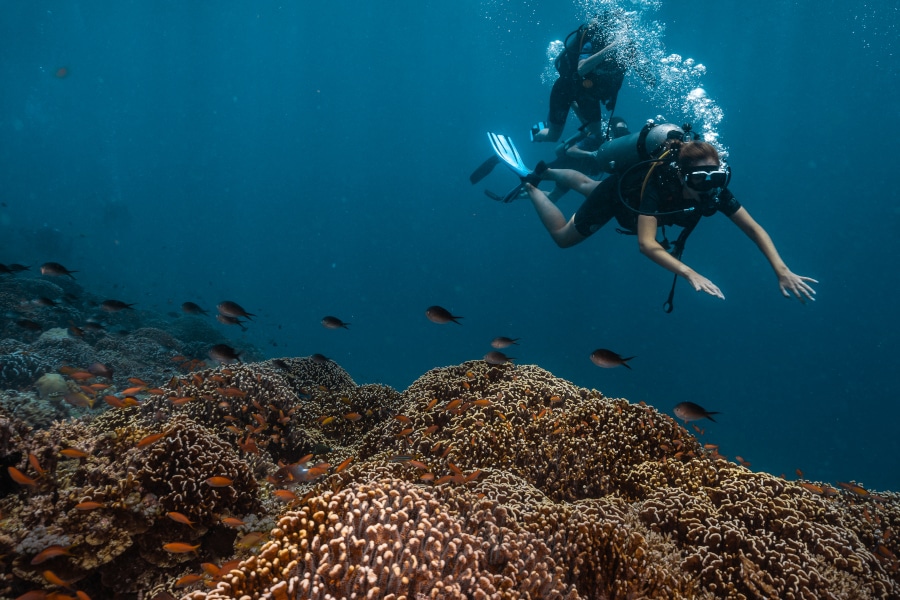
The 5-metre area is beautiful, with plenty of coral and marine life. It is bright, colourful and easy to explore.
It is also one of our favourite areas for divers who prefer to stay very shallow.
Sunset Reef
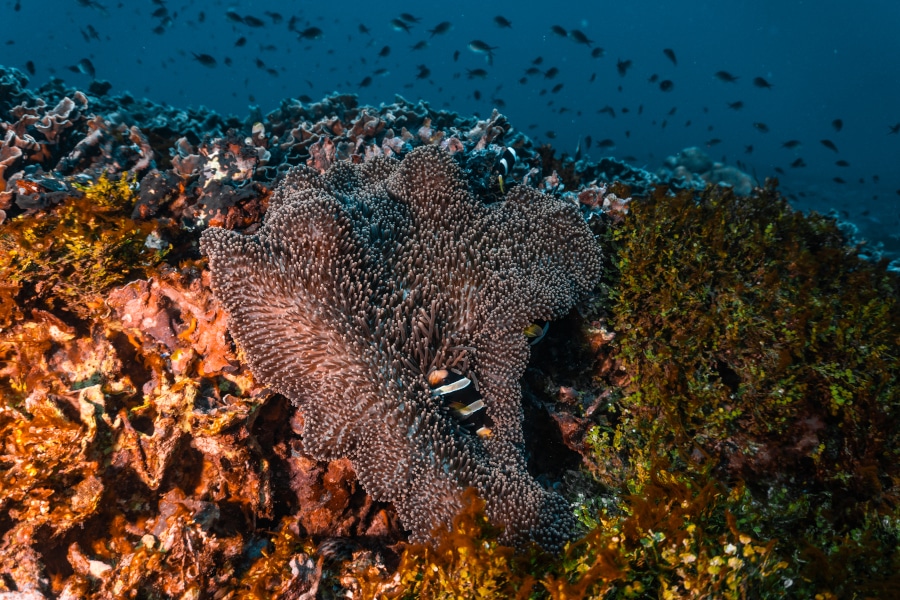
Sunset Reef starts with a drop to around 10 metres, after which the dive becomes an easy exploration of a large coral plateau.
The plateau is covered in coral and offers plenty to see without needing to descend much further.
One thing to keep in mind is the sea state. When there are big waves, the shallow plateau can experience some surge.
Shallow Diving for Children and Nervous Divers
If you’re looking for the best shallow dive sites in the Gili Islands for children or very nervous first-time divers, the shallow areas of Halik, Air Wall and Shallow Turbo are especially good choices.
For someone who is nervous about scuba diving, being told that the dive will go to 12 metres can feel intimidating. There is no reason to start there.
The shallow areas around 5 metres give new divers the chance to experience a real coral reef while remaining very close to the surface. There is plenty of natural light, the reef is easy to see and there is lots of marine life to keep the dive interesting.
Halik for Children
Halik is particularly special for a first shallow dive because of the turtles.
At around 5 metres, there is often plenty of activity on the reef. Seeing a turtle swimming past while you are still getting comfortable underwater can completely change the experience for a nervous diver.
For children who already meet the requirements for scuba diving, this can be a fantastic introduction to diving in the Gili Islands.
Air Wall for Nervous Divers
The far shallows of Air Wall are another excellent option.
At around 5 metres, you can stay over the beautiful shallow reef without needing to approach the deeper wall. The area is bright, colourful and easy to explore.
For a nervous diver, this can make a big difference. You can concentrate on breathing, buoyancy and enjoying the underwater environment rather than worrying about depth.
Shallow Turbo for a First Dive
Shallow Turbo is also a great choice for first time divers.
The top reef is shallow and full of fish, while turtles can often be found around the site.
This makes the site easy to adapt to the diver. You can stay around 5 metres or gradually explore deeper sections as confidence grows.
Why Shallow Diving Works So Well for Beginners
A first scuba dive should be about becoming comfortable underwater. There is no prize for going deep.
Staying shallow means there is plenty of natural light and the surface is never far away. It also allows instructors to focus on the diver rather than simply completing a particular depth profile.
For children especially, the experience should feel fun rather than overwhelming. Seeing turtles, colourful coral and schools of fish can quickly turn nervousness into excitement.
You don’t need to go deep to have an amazing first dive. Sometimes 5 metres is more than enough.